
Choosing the right Toyomi baby food maker for your household depends on balancing your daily meal preparation routine, your kitchen’s spatial limits, and your target budget. Parents often face the choice between a highly integrated, multi-functional steamer-blender and a simpler, more compact blending appliance. Because product lineups, specific model numbers, and exact technical specifications change over time, the most reliable decision comes from matching your child’s current developmental stage with the safety labels, material declarations, and capacity limits of the models currently on the market. By focusing on how you plan to prepare meals—whether through small, fresh daily portions or large weekly batches—you can select an appliance that simplifies weaning without cluttering your countertop.
Define Your Weaning Stage and Batch Cooking Needs
Before looking at specific appliance features, you must evaluate your family’s daily feeding routine and meal preparation style. The weaning journey progresses rapidly from smooth, single-ingredient purees to chunkier textures and eventually to soft family meals. If you prefer preparing fresh, single-serve meals for your baby every day, a compact all-in-one steamer and blender is highly efficient. These integrated units allow you to steam a small portion of vegetables or meat and blend them in the same container, minimizing cleanup and preserving water-soluble nutrients.
Conversely, if your schedule favors batch cooking—where you prepare large quantities of purees over the weekend and freeze them in silicone trays—a standalone blender with a larger capacity may be more practical. Batch cooking requires a container that can handle larger volumes without overloading the motor. Using a small-capacity baby food maker for large batches can lead to overheating, requiring you to work in tedious, repetitive cycles.
Products mentioned in this guide
![Toyomi 0.7L Electric Mini Slow Cooker [SC 700] *Suitable as Baby Cooker*](https://img.lazcdn.com/g/p/4af29cff6996d17fc56359de4fc9c2d4.jpg_400x400q80.jpg_.webp)
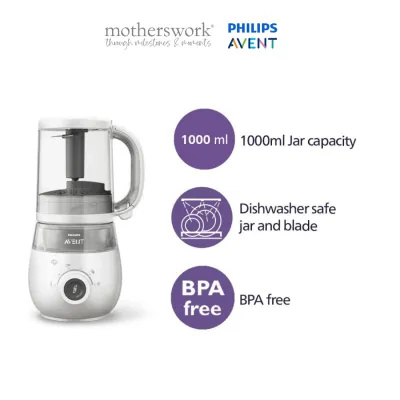
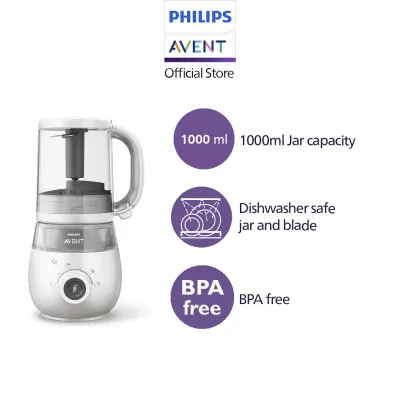
Prices are valid at publication and may change. Please refer to the product page for the latest price.
Kitchen space is another critical factor, especially in typical apartments where countertop real estate is highly prized. A multi-functional appliance that combines steaming and blending into a single footprint saves valuable space by eliminating the need for separate pots, steamers, and blenders. However, if you already own a reliable food steamer or use a traditional stovetop setup, a small, dedicated mini blender might be all you need to achieve the right food consistency. Measure your available counter space and consider where the appliance will sit during daily use, ensuring it is close to a power outlet and has enough clearance above it for steam to escape safely.
Compare Core Features Across Toyomi Models
When comparing different Toyomi baby food makers or blenders, your first step should always be to inspect the product packaging, labels, and user manuals for food-grade material declarations. Because these appliances process hot food that your baby will consume, verifying that all plastic components in contact with food are certified BPA-free is essential. Many modern models utilize high-borosilicate glass or food-grade stainless steel for their blending jars and blades, which offer excellent resistance to staining, odors, and thermal shock.

Next, evaluate the blending power and blade configuration of the models you are considering. Achieving the ultra-fine, silk-like consistency required for the initial stages of weaning requires sharp, durable blades and a motor capable of high-speed rotation. As your baby grows and transitions to textured foods, you will need an appliance that offers precise control over the blending duration, allowing you to pulse the food into coarser chops rather than pureeing it completely. Check the manufacturer’s specifications for variable speed settings or manual pulse functions that give you this flexibility.
For multi-function models, pay close attention to the steaming capabilities and water tank design. A transparent or easily accessible water tank allows you to monitor water levels and ensure the heating element does not run dry. Look for models equipped with an automatic shutoff safety feature, which turns off the heating element once the water in the reservoir is fully depleted or when the steaming cycle finishes. This prevents overheating and protects the appliance from electrical damage.
Finally, always review the manufacturer’s stated limitations regarding maximum processing volumes and recommended food types. Some compact baby food makers are designed strictly for soft fruits, vegetables, and pre-cooked meats, and attempting to process hard, frozen, or raw ingredients could damage the blades or strain the motor. Understanding these operational boundaries beforehand ensures you use the appliance safely and prolongs its operational lifespan.
Assess Budget and Practical Value
Evaluating the financial investment of a Toyomi baby food maker requires looking beyond the initial purchase price to consider long-term utility and versatility. In the local market, basic mini blenders generally occupy a lower S$ price tier, making them an attractive option for budget-conscious parents or those who only plan to make purees occasionally. All-in-one steamer-blenders sit at a higher S$ price point due to their dual-function heating and blending technology, but they offer significant convenience that can save you time during busy weekdays.
To maximize the practical value of your purchase, consider whether the appliance can be repurposed once your child transitions to solid family meals. A high-quality blender or food processor can easily transition to general kitchen duties, such as grinding spices, blending marinades, whipping up homemade sauces, or making single-serve smoothies. If you choose a highly specialized baby food maker with a very small capacity, its utility may decline significantly after the weaning phase, lowering its overall value-for-money proposition.
Additionally, factor in the potential long-term costs and availability of replacement parts. Over months of daily use, components like silicone sealing rings, blending blades, and water tank caps can wear down or become stained. Before finalizing your choice, check if the brand or local distributor offers easily purchasable replacement parts. Choosing a model with readily available spares ensures you can quickly replace a worn gasket or blade without having to purchase an entirely new appliance, saving you money and reducing electronic waste.
Verify Authenticity and Warranty Before Buying
To ensure you receive a genuine product that meets local safety standards, always purchase your Toyomi baby food maker from authorized online retailers, official brand stores, or reputable department stores. Buying from unauthorized third-party sellers on online marketplaces may expose you to counterfeit goods, parallel imports lacking local safety marks, or units with incompatible electrical plugs. Genuine products distributed locally are designed to operate safely on standard voltage and come with the appropriate safety certifications.
A key advantage of buying through official channels is the provision of a valid local warranty. Verify the warranty period—which typically spans one year for small kitchen appliances—and understand what is covered, such as motor defects or electrical failures. Familiarize yourself with the process for claiming repairs or replacements, including the location of the local service center and whether you need to register the product online immediately after purchase.
Upon receiving your appliance, perform a thorough inspection before its first use. Check that the packaging is intact, all listed accessories are present, and the user manual is written in clear, accessible language. Inspect the power cord for any signs of damage and ensure the safety locking mechanisms engage smoothly. Running a brief test cycle with plain water, as recommended by many manufacturers, helps verify that both the heating and blending functions operate correctly before you introduce actual food.
Frequently Asked Questions (FAQ)
Can I use a regular Toyomi blender instead of a dedicated baby food maker?
Yes, you can use a regular Toyomi blender to prepare baby food, provided you pay close attention to batch sizes and material safety. Standard kitchen blenders often have larger jars designed for family-sized portions, which means they may struggle to blend very small quantities of food effectively, as the ingredients can get trapped under or around the blades without being fully pureed. If you use a standard blender, you will likely need to prepare larger batches of food at once and freeze the excess. Additionally, you must verify that the blender jar is made of heat-resistant, BPA-free materials if you plan to blend warm, freshly cooked ingredients. A dedicated baby food maker, by contrast, is specifically engineered to steam and finely puree small, single-serving portions safely and efficiently.
How do I clean and descale the steaming function safely?
Keeping the steaming component hygienic requires regular cleaning of all removable parts and periodic descaling of the water reservoir. After each use, wash the blending jar, blades, and steaming basket in warm, soapy water, or place them in the dishwasher if the manufacturer’s instructions explicitly state they are dishwasher-safe. To clean the water tank and remove mineral buildup caused by tap water, you should descale the unit periodically. Check your user manual for the approved descaling method, which commonly involves adding a mixture of water and food-grade white vinegar or citric acid to the reservoir, running a steam cycle, and then rinsing the tank thoroughly with clean water. Avoid using harsh chemical descalers or abrasive cleaning pads, as these can damage the heating element and leave harmful residues.

Community discussion
Share your experience or ask a question. Comments are reviewed before publication.