
Choosing a breast pump is one of the most significant decisions you will make during your breastfeeding journey. The right device does more than just express milk; it supports your physical comfort, helps maintain your milk supply, and integrates seamlessly into your daily routine. For mothers in Singapore, balancing career demands, family life, and personal recovery requires a reliable system. Spectra pumps are highly regarded for their customizable settings and closed-system designs, but selecting the ideal model depends entirely on your unique lifestyle, pumping frequency, and budget. By evaluating how and where you plan to pump, you can find a model that feels like a supportive partner rather than an added chore.
Identify Your Pumping Needs and Daily Routine
Before comparing specific pump models, it is essential to map out your daily schedule and clarify your primary pumping goals. Your routine dictates whether you need a heavy-duty workstation or a highly portable, discreet device.
First, assess your expected pumping frequency. If you plan to exclusively pump—meaning your baby receives breast milk primarily via bottles—you will require a robust, hospital-grade motor designed to handle multiple sessions a day without losing suction power. Conversely, if you plan to nurse directly and only pump occasionally to build a freezer stash or relieve engorgement, a lighter, less intensive model will easily suffice.
Products mentioned in this guide
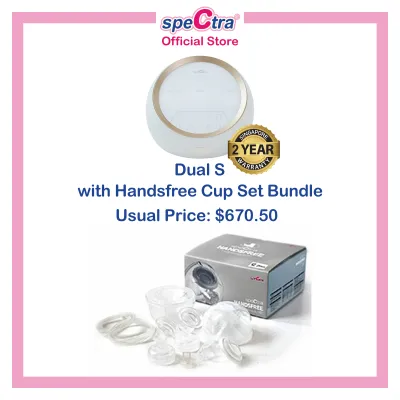
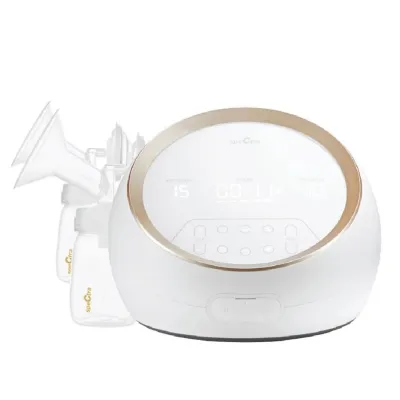
Prices are valid at publication and may change. Please refer to the product page for the latest price.
Next, evaluate your mobility requirements. Consider where you will spend the majority of your day. If you are returning to an office environment, commuting via public transport, or traveling frequently, a bulky plug-in unit is highly impractical. You will need a compact, lightweight pump with a reliable rechargeable battery that can easily slip into a work tote. On the other hand, if you work from home or plan to stay at home with your baby, a larger, plug-in desktop model can remain set up in a dedicated nursing corner, eliminating the need to constantly pack and unpack your gear.
Finally, do not overlook noise sensitivity and discretion. Pumping in a quiet office cubicle, a shared nursing room, or next to a sleeping baby in a quiet HDB flat at midnight requires a motor that operates with minimal vibration and sound. Reviewing user feedback regarding noise levels and looking for models with quiet motor technology can prevent stressful pumping sessions in shared or quiet spaces.
Understand the Main Spectra Pump Categories
Spectra offers several distinct categories of breast pumps, each engineered to address specific user profiles and environments. Understanding these structural differences is key to narrowing down your options.

Full-size double electric pumps represent the brand’s heavy-duty offerings. These units are typically larger and designed for desktop use, featuring powerful motors built for durability and frequent daily use. They excel in providing highly customizable suction strengths and cycle speeds, allowing you to mimic a baby’s natural nursing pattern closely. While some models in this category include built-in rechargeable batteries, their overall size and weight make them best suited as stationary hubs for home or dedicated office setups.
Portable and compact electric pumps bridge the gap between power and mobility. These models are significantly smaller, often fitting in the palm of your hand, and are equipped with integrated rechargeable batteries. While their motors may not have the extreme longevity of full-size desktop units under exclusive-pumping conditions, they offer ample suction power for working mothers who need to pump two to three times during a shift. Their lightweight design makes them highly convenient for packing into a diaper bag or handbag.
Wearable and hands-free options represent the latest evolution in pumping convenience. These devices fit entirely inside a standard nursing bra, eliminating external tubing and dangling bottles. This design allows you to multitask, whether you are responding to emails, preparing a meal, or caring for your baby. However, hands-free pumps often have smaller milk collection capacities and may require more precise positioning to ensure efficient milk expression.
Manual pumps are simple, non-electric devices operated by hand. They require no power source, making them completely silent and highly reliable backups. While they are not practical for frequent or exclusive pumping due to the physical effort required, they are excellent for occasional use, travel, or quickly relieving pressure when you are away from your main electric unit.
Match Your Profile to the Right Spectra Pump Type
To simplify your decision, you can match your daily lifestyle profile to the category that best aligns with your goals and budget.
If you fall into the high-frequency or exclusive pumping profile, your primary focus should be motor durability, dual-pumping efficiency, and advanced comfort features. Exclusive pumping demands a motor that can run for hours each day without degrading. In this scenario, investing in a full-size double electric pump is highly recommended. The ability to adjust both the vacuum strength and the cycle speed independently allows you to find the exact settings that trigger your let-down reflex comfortably, maximizing your milk yield over long-term use.
For working mothers and on-the-go profiles, portability and battery life are the non-negotiable priorities. If your daily routine involves commuting and pumping in various locations, a compact electric pump with a robust rechargeable battery is the ideal match. This setup allows you to maintain your pumping schedule without constantly searching for an electrical outlet. If your job requires constant movement or multitasking, pairing a compact pump with hands-free collection cups—or opting for a fully wearable model—can provide the ultimate flexibility to work and pump simultaneously.
If you are on a budget or only plan to pump occasionally, cost-effectiveness and simplicity should guide your choice. You do not need to invest in a premium, multi-feature electric system if you only pump once or twice a week. A basic, entry-level single electric pump or a high-quality manual pump will meet your needs perfectly without a significant financial commitment. This approach keeps your initial costs low while still providing a reliable method to express milk when necessary.
Key Specifications and Accessories to Verify Before Buying
Once you have identified the right category, you must verify several technical and logistical details before making your final purchase to ensure a smooth experience.
First, check flange sizing and compatibility. The flange is the breast shield that contacts your skin; an incorrect size can cause severe friction, pain, and a reduction in milk output. Spectra pumps typically come with standard flange sizes, but you must measure your nipple diameter according to the manufacturer’s guidelines to determine if you need to purchase alternative sizes separately.
Second, review the suction strength and cycle settings. Look for models that offer a massage mode (a fast, shallow suction to stimulate milk flow) and an expression mode (a slower, deeper suction to draw milk out). Having adjustable levels within both modes ensures you can customize the pump to your comfort level on any given day.
Third, verify the power source and battery specifications. If you choose a portable model, check the average battery life per charge and the charging interface. Models that charge via standard USB ports offer greater convenience for charging in the car or via a power bank while commuting in Singapore.
Finally, confirm the warranty coverage and local after-sales support. Ensure you purchase from an authorized retailer in Singapore to secure a valid local warranty. Breast pump motors are mechanical devices that can occasionally experience issues; having access to a local service center for troubleshooting, repairs, or replacement parts is invaluable for avoiding disruptions to your pumping schedule.
Frequently Asked Questions (FAQ)
Can I use the same breast pump for multiple children?
While the physical motor unit of a closed-system breast pump can often be used for a subsequent pregnancy if it is still within its operational lifespan, you must replace all wearable accessories. Over time, plastic and silicone parts like tubing, flanges, backflow protectors, valves, and membranes degrade, which can compromise suction strength and hygiene. Always perform a thorough visual inspection of the motor unit, and purchase a completely fresh set of compatible accessories for each child to ensure optimal performance and safety.
How do I know if my flange size is correct?
You can determine if your flange size is correct by observing your nipple during a pumping session. Your nipple should move freely in and out of the tunnel without rubbing against the sides, and very little of the surrounding areola should be pulled into the tunnel. If you experience persistent pain, friction marks, or notice that your breasts do not feel empty after a session, your flange may be too large or too small. If you are unsure, consult a certified lactation professional to receive a precise measurement and personalized guidance.

Community discussion
Share your experience or ask a question. Comments are reviewed before publication.