
Selecting the ideal Spectra breast pump in Singapore requires balancing your daily routine, physical workspace, and breastfeeding goals. For mothers returning to office environments or managing active households, the decision often comes down to portability versus raw power. While some models offer hospital-grade suction with a plug-in design, others prioritize rechargeable batteries and compact frames for on-the-go convenience. By evaluating where, how often, and for how long you plan to pump, you can identify the specific Spectra unit that seamlessly integrates into your lifestyle.
Understanding Your Pumping Lifestyle and Needs
To find the right pump, start by mapping out your typical day. If you are a working mother preparing to return to an office in Singapore, consider your daily commute. Commuting via the MRT or bus with a heavy, bulky pump can quickly become exhausting. You will need to evaluate whether you have a dedicated desk where a pump can remain plugged in, or if you will be moving between meeting rooms and shared workspaces where power outlets are scarce.
Navigating the transition back to work after maternity leave is a significant milestone for many mothers. Planning your pumping schedule around office hours, meetings, and commutes requires a clear strategy. By identifying your primary pumping locations early, you can avoid the stress of carrying incompatible gear or struggling to find private spaces during busy workdays.
Products mentioned in this guide
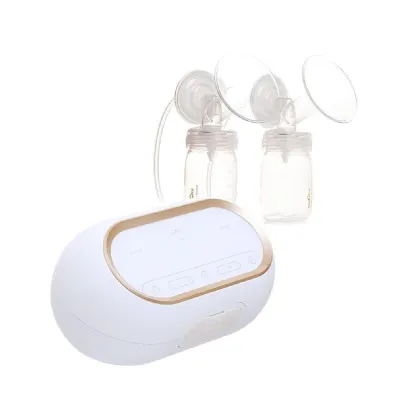
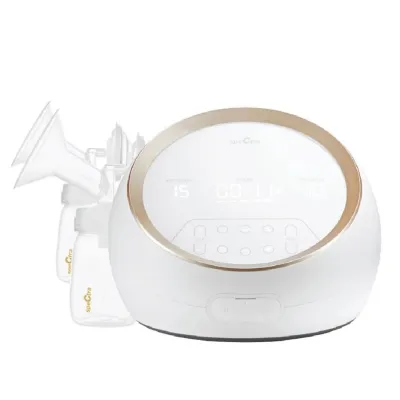
Prices are valid at publication and may change. Please refer to the product page for the latest price.
For stay-at-home mothers, mobility needs are often different but equally demanding. You might need to move around the house to tend to a toddler or manage household chores while pumping. In this scenario, a lightweight, hands-free, or highly portable unit that slips into a pocket or clips to a waistband may be far more practical than a stationary tabletop model, even if the stationary model offers slightly more advanced settings.
Your pumping frequency is another critical factor. Exclusive pumping—where your baby receives breast milk solely from a bottle—demands a robust, durable motor designed for frequent daily use. If you only plan to pump occasionally to relieve engorgement or build a modest freezer stash, a simpler, more budget-friendly model will likely suffice.
Finally, establish a realistic budget. A breast pump can be a significant investment, but it is helpful to view it through the lens of utility. If you plan to pump multiple times a day for a year or more, investing in a premium, highly durable model is highly practical. For shorter transition periods or occasional use, a mid-range or compact model offers excellent value without overextending your budget.
Key Spectra Specifications to Compare
When comparing different Spectra models, several technical specifications directly impact your daily comfort and convenience. The first is the power source. Spectra offers both plug-in-only models and units with built-in rechargeable batteries. If you choose a plug-in model, you will always need to be near a wall outlet. Rechargeable models offer freedom of movement, but you must verify the manufacturer’s stated battery life to ensure it can last through your typical workday or travel itinerary without needing a charge.

Portability is defined by weight and physical footprint. Some hospital-grade Spectra models are designed as sturdy tabletop units. While they often feature convenient carry handles, they are relatively heavy and take up substantial space in a commuter bag or office drawer. In contrast, compact models are designed to be palm-sized and lightweight, making them highly suitable for travel, though they may have smaller motors.
Another physical feature to consider is the presence of an LED display and a nightlight. Many mothers find themselves pumping in low-light conditions, such as during late-night or early-morning sessions while the baby is sleeping. A clear, backlit screen that displays your session timer and current vacuum level, along with an adjustable nightlight, can make these quiet hours significantly more manageable without needing to turn on bright overhead lights.
Suction strength and cycle adjustments are vital for comfort and milk expression efficiency. Spectra pumps generally feature a “massage mode” to stimulate letdown, followed by an “expression mode” to draw milk. Look closely at the product specifications for the number of vacuum levels and cycle speeds available. A wider range of adjustments allows you to fine-tune the pump to match your body’s sensitive needs, which can change from day to day.
Lastly, consider flange and parts compatibility. Spectra pumps typically use a closed system, which prevents milk from backflowing into the tubing and motor, ensuring hygiene. However, flange sizes vary, and using the incorrect size can cause discomfort or reduce milk output. Check whether the model you are considering includes multiple flange sizes in the box, or if you will need to purchase compatible accessories separately.
Matching Your Routine to the Right Pump Type
If your daily routine involves a busy commute, frequent travel, or working in shared office spaces, a portable, battery-operated model is highly recommended. Models like the Spectra S1 or the Spectra 9 Plus feature rechargeable batteries that eliminate the need to hunt for a power outlet. The compact design of portable models allows you to pump discreetly in various settings, whether you are in a temporary meeting room or traveling.
For mothers who primarily pump at a fixed station—such as a dedicated home office, a private lactation room at work, or a specific spot on the sofa—a plug-in, standard double pump like the Spectra S2 or the Spectra Dual S is an excellent choice. Because these models do not rely on internal batteries, they are often more budget-friendly than their rechargeable counterparts while still delivering consistent, hospital-grade suction. They are ideal for exclusive pumpers who require a heavy-duty motor for multiple daily sessions.
When evaluating specific models, you will also encounter the choice between single-motor and dual-motor systems. Dual-motor models allow you to adjust the suction settings independently for each breast, which is highly beneficial if you experience different levels of sensitivity or milk flow on each side. Single-motor models apply the same suction level to both sides simultaneously, which is standard and highly effective for most routines but offers less individual customization.
If your priority is maximum hands-free mobility to manage light household chores, care for other children, or handle quick top-ups, look into compact or wearable options. These smaller units can often be paired with hands-free collection cups that fit directly inside your nursing bra. While they may not offer the extensive cycle adjustments of larger tabletop models, their convenience for multitasking is unmatched.
Before making your final decision, it is highly beneficial to verify your workplace facilities. Reach out to your human resources department or colleagues to confirm if your office provides a dedicated lactation room equipped with reliable power outlets and comfortable seating. If a private room with outlets is guaranteed, you may not need to pay a premium for a battery-operated model, allowing you to opt for a robust plug-in unit instead.
What to Verify Before Purchasing
Before finalizing your purchase, there are several critical details to verify to ensure safety and long-term usability. First, always confirm that you are buying from an authorized distributor in Singapore. Purchasing from authorized sources ensures that the pump meets local electrical safety standards and comes with a valid local manufacturer’s warranty. This is particularly important for plug-in models, which must feature a compatible plug and voltage rating suitable for Singapore’s electrical grid.
Next, carefully review the list of included accessories. Some packages only include a single breast shield set, while others come as complete double-pumping kits with multiple flange sizes, bottles, and spare valves. Knowing exactly what is in the box helps you calculate the true cost, as you may need to purchase additional flanges or storage bags separately to suit your specific physical dimensions and storage routine.
Finally, examine the manufacturer’s cleaning and sterilization guidelines for the specific model. While the closed-system design keeps the tubing dry and free from milk, other parts like the breast shields, valves, and bottles require regular washing and sterilization. Ensure that the materials are compatible with your preferred sterilization method—whether that is steam, boiling water, or UV sterilizers—to prevent premature wear or damage to the silicone components.
Frequently Asked Questions (FAQ)
Can I use a plug-in Spectra pump at work if I do not have a private room?
Using a plug-in Spectra pump without a private room can be challenging, as these units require a continuous connection to a wall outlet and limit your physical mobility. If your workplace lacks a dedicated lactation space, you may find yourself searching for power outlets in less-than-ideal locations. Before relying on a plug-in model, consult your employer’s lactation policies or HR department to explore available accommodations, or consider opting for a battery-operated model that allows for greater flexibility in semi-private spaces.
Are all Spectra flanges and bottles interchangeable across different models?
While many Spectra accessories share a similar design, they are not universally interchangeable across every single model line. Standard wide-neck bottles and backflow protectors generally fit popular models like the S1, S2, and 9 Plus, but compact or wearable models may require specific adapters or proprietary collection cups. Always consult the manufacturer’s official compatibility chart before purchasing spare parts or mixing accessories from different product lines to ensure a secure, airtight seal.

Community discussion
Share your experience or ask a question. Comments are reviewed before publication.