
Baby-proofing your home is an evolving process that must adapt to your child’s physical abilities. When it comes to electrical safety, choosing the right socket cover is one of the most critical decisions you will make to protect your curious explorer. The most effective approach is not relying on a single product, but rather using a strategic combination of plug-in caps, sliding plate covers, and full box enclosures tailored to your child’s developmental stage and your home’s layout.
In Singapore, where homes are equipped with Type G three-pin sockets, baby-proofing presents unique structural factors. These outlets feature individual manual switches and built-in internal shutters designed to block foreign objects. However, these built-in shutters are not completely childproof against a determined toddler who learns by mimicking adults. To create a secure environment, you must evaluate how different cover types perform against a child’s growing strength, fine motor skills, and natural curiosity.
Assess Your Home's Electrical Risks and Your Child's Development Stage
Diagnosing your home’s specific electrical risk profile begins with observing your child’s physical milestones. Around six months of age, infants begin to roll and crawl, bringing them eye-to-eye with low-level wall outlets. At this stage, their interaction is primarily visual and tactile; they may touch the outlet or attempt to mouth it.
Products mentioned in this guide
![[Local Seller!] Baby Safety Electrical UK 3pin Power Outlets Socket Cover Plug Caps Japan Brand KM1037 - 5pcs](https://img.lazcdn.com/g/p/ea9601dbec0eaea46fd1122e080ef0b2.jpg_400x400q80.jpg_.webp)
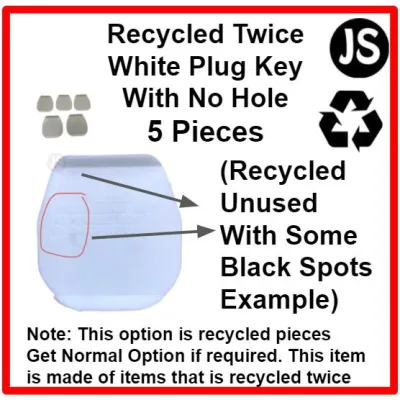
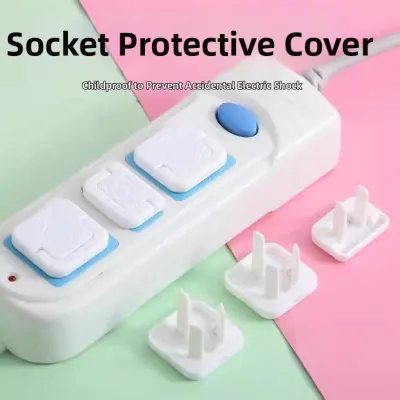
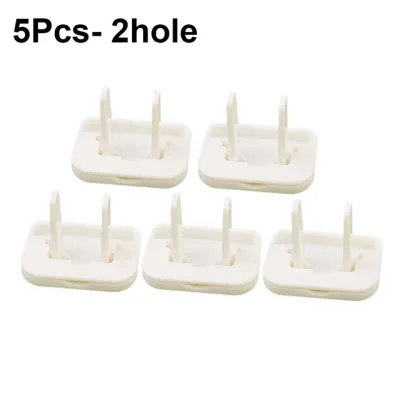
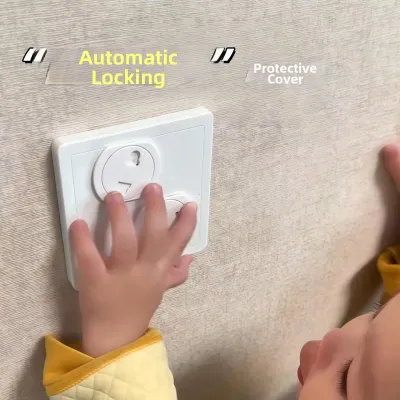
Prices are valid at publication and may change. Please refer to the product page for the latest price.
By nine to twelve months, babies typically develop the pincer grasp, which is the ability to hold small objects between the thumb and index finger. This milestone is a critical turning point for electrical safety. It enables them to grip, pinch, and potentially pull out loose objects, including poorly fitted outlet plugs.
As your child transitions into toddlerhood, from one to three years, their physical strength and problem-solving skills increase. They quickly learn that switches can be flipped and plugs can be pulled out of the wall. This is when the risk of electrical shock peaks, as toddlers actively try to insert toys, keys, or hairpins into open sockets, or pull on live appliance cords.
To address these risks, conduct a thorough room-by-room audit of your home’s electrical layout. In Singaporean apartments, wall sockets are frequently positioned along skirting boards at a height that is easily accessible to a crawling baby. Identify high-risk zones that require immediate attention:
- Low-level wall sockets: Found in bedrooms, living rooms, and hallways.
- Clustered power strips: Often located behind TV consoles, under study desks, or near bedside tables.
- Exposed cords: Such as those connected to fans, air purifiers, vacuum chargers, or nursery baby monitors.
- Kitchen island outlets: Often situated at counter height but reachable if a toddler pulls themselves up.
Compare the 3 Main Types of Socket Covers
To choose the right protection, you must understand how the three main types of socket covers function, their practical benefits, and their limitations. A successful baby-proofing strategy matches different designs to specific areas of the home based on how often those outlets are used and how easily a child can access them. The primary comparison criteria include ease of adult use, security against child removal, and compatibility with standard Type G sockets.

Plug-In Caps (Outlet Plugs)
Plug-in caps are individual plastic inserts with prongs that mimic a standard plug. You push them directly into the socket holes to block access to the live ports.
These caps are highly effective for low-traffic areas, such as sockets hidden behind heavy wardrobes, beds, or bookshelves, where plugs are rarely inserted or removed. They are also useful for high-up sockets that are out of reach but still require basic protection from dust or occasional curiosity.
However, plug-in caps have notable limitations. Removing them can be difficult for adults, often requiring a special plastic key, a coin, or strong fingernails. Conversely, if a cap is loose or cheaply made, a persistent toddler with a strong pincer grasp may eventually succeed in prying it out. Once removed, these small plastic pieces pose a severe choking hazard. Additionally, in humid climates, low-quality plastic caps can degrade over time, becoming brittle and prone to snapping inside the socket holes.
Sliding Plate Covers (Self-Closing Plates)
Sliding plate covers replace your existing wall socket faceplates. They feature integrated, spring-loaded shutters on the exterior. To plug in an appliance, you must insert the plug prongs into the cover, slide the plate to align with the internal socket holes, and push the plug all the way in. When you pull the plug out, the faceplate instantly slides back into its closed position, blocking the holes automatically.
This mechanism is highly convenient for frequently used sockets, such as those in the kitchen, hallway, or utility area where you regularly plug in vacuum cleaners, iron boxes, or phone chargers. They eliminate the hassle of removing and replacing loose caps, ensuring the outlet is never accidentally left exposed.
The primary limitation of sliding plate covers is the installation process. Because they replace the physical faceplate, they require basic electrical work, including turning off the main power supply. Furthermore, finding sliding plates that are fully compatible with Singapore’s square Type G wall boxes can be challenging, as many mass-market designs are manufactured for rectangular US-style outlets. You must carefully verify the dimensions and screw hole alignments before purchasing.
Full Box Covers (Power Strip and Outlet Boxes)
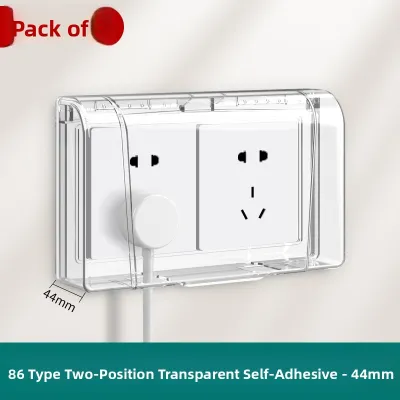
Full box covers are protective plastic enclosures that fit over the entire socket and any plugged-in cords. They feature a hinged cover that snaps shut with a child-resistant latch, which typically requires a double-action squeeze or an adult-sized hand span to open. The plugged-in cables exit through small, narrow slots at the bottom of the box.
These enclosures are indispensable for outlets that must remain permanently plugged in, such as those powering your Wi-Fi router, refrigerator, television, or nursery baby monitor. They prevent toddlers from pulling out active plugs—which can damage appliances or disrupt home systems—and protect them from touching live prongs if a plug is partially pulled out. They are also the ideal solution for floor-level power strips.
The main drawback of full box covers is their physical size. They are bulky, protrude significantly from the wall, and can be visually unappealing. They also require sufficient clearance around the outlet, meaning you cannot push furniture flush against a wall where a box cover is installed. Additionally, they may not accommodate oversized power adapters, smart plugs, or side-angled cables.
Match the Right Socket Cover to Your Child's Age and Room Layout
To simplify your baby-proofing plan, match these cover types to your child’s age and your home’s layout.
Match by Age and Milestone
Infants and Early Crawlers (6–12 months): At this stage, your primary goal is to block access to empty sockets. Use high-quality, snug-fitting plug-in caps for all unused low-level wall outlets. For any power strips on the floor, immediately install full box covers to prevent your baby from touching open ports or chewing on live plugs.
Toddlers and Climbers (1–3 years): Toddlers possess the manual dexterity to remove simple plug-in caps. Upgrade your low-level, high-traffic wall outlets to sliding plate covers. For outlets that power essential appliances, replace plug-in caps with locked full box covers to ensure your child cannot pull the plugs out.
Older Children (3+ years): As children grow, physical barriers can be gradually phased out. Start transitioning to active safety education. Teach your child that electricity is dangerous, explain why they must never touch outlets or plugs, and supervise them closely as they learn to use household appliances under guidance.
Room-by-Room Baby-Proofing Layout
Living Room: This area typically has the highest concentration of electronics. Use heavy-duty full box covers for the media console area to secure the TV, soundbar, and router plugs. Use sliding plates for open wall sockets where you plug in the vacuum cleaner or fan.
Nursery and Playroom: Keep this zone completely secure. Use sliding plate covers on all wall outlets, and ensure no loose cords are within reach of the crib or playpen. If you use a baby monitor or nightlight, secure the plug with a wall-mounted box cover.
Kitchen: Most kitchen outlets are located on countertops out of reach of toddlers. However, if you have a kitchen island with low-level sockets, protect them with sliding plates to prevent curious hands from reaching them while you are cooking.
Installation, Maintenance, and Safety Boundaries
Proper installation and regular maintenance are essential to ensure your baby-proofing measures remain effective over time.
When installing plug-in caps, inspect each unit for manufacturing defects, such as thin or warped prongs. Push the cap firmly into the socket until it sits completely flush against the faceplate, leaving no gaps for tiny fingernails to grip.
For sliding plate covers or any product that requires replacing the socket faceplate, safety is paramount. Always switch off the main circuit breaker at your home’s distribution board (DB box) before starting. Use a reliable voltage tester on the socket to confirm there is absolutely no electrical current flowing through it. Carefully unscrew the old faceplate, attach the new sliding cover according to the manufacturer’s instructions, and secure the screws. If the wiring looks corroded, if you encounter unexpected wire configurations, or if you feel uncomfortable handling electrical components, stop immediately and hire a licensed electrician.
Establish a routine maintenance schedule to check your baby-proofing devices every few months. Inspect plastic caps and boxes for signs of wear, cracking, or discoloration caused by UV exposure or heat. Test sliding plates to ensure the spring-loaded shutters snap back instantly when a plug is removed. If a mechanism feels sticky, loose, or fails to close completely, replace the unit immediately.
Remember the safety boundaries of these products. Socket covers are designed to prevent accidental contact; they do not resolve underlying electrical hazards. If a wall socket is loose, cracked, warm to the touch, or produces a sparking sound, do not cover it up. These are signs of a potentially dangerous electrical fault. Stop using the outlet immediately, leave it uncovered so it remains visible as a hazard, and contact a licensed electrician to repair or replace the fixture. Lastly, always store spare plug-in caps in a secure, high cabinet to prevent them from falling into your child’s hands and becoming a choking hazard.
Frequently Asked Questions (FAQ)
Are socket covers a choking hazard?
Yes, small plug-in caps can become severe choking hazards if a child manages to pull them out of the wall socket. To minimize this risk, only use plug-in caps that fit exceptionally tight and have a completely flat, low-profile design that cannot be gripped by tiny fingers. Once your child develops the pincer grasp and the strength to pull them out, transition to sliding plate covers or locked full box covers.
Do I need to baby-proof power strips as well as wall sockets?
Yes, power strips require even more attention than standard wall outlets. Because they sit on the floor or low surfaces, they are highly accessible to crawling babies. They present multiple open sockets, tempting switches, and a cluster of loose cords that children can pull or chew on. Always secure power strips inside specialized full box covers designed to enclose the entire strip and its plugged-in cables safely.

Community discussion
Share your experience or ask a question. Comments are reviewed before publication.