
Selecting the right baby food maker is a key decision as your little one transitions to solid foods. The ideal Pigeon baby food maker for your household depends on your baby’s current feeding stage, your preferred batch size, and your overall budget. While manual grinding sets offer a highly portable, cost-effective, and hands-on way to prepare tiny, fresh portions, electric models provide automated convenience and consistent pureeing for larger batches. Rather than a single option being universally superior, the best choice is the one that aligns with your daily kitchen routine and your child’s developmental milestones.
Pigeon Baby Food Maker Types: Manual vs. Electric
Pigeon offers distinct categories of food preparation tools designed to assist parents through the weaning journey. Understanding the fundamental differences between these types helps you narrow down which operational style fits your lifestyle.
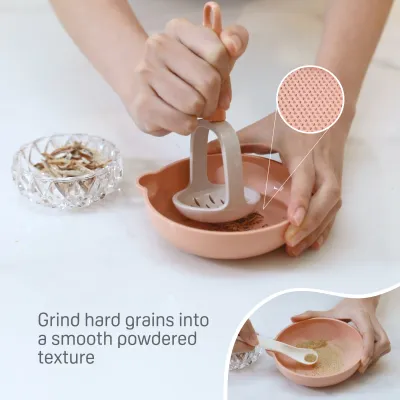
Manual grinding sets are classic, multi-piece kits that typically include a mortar, pestle, straining net, grater, and juicer. These components stack together compactly, making them highly efficient for preparing single-serving meals right before feeding. Because they require no electricity, they operate silently and can be used anywhere, from a dining table to a restaurant. They are designed primarily for mashing soft-cooked vegetables, scraping fruits, and straining juices in small, immediate quantities.
Products mentioned in this guide

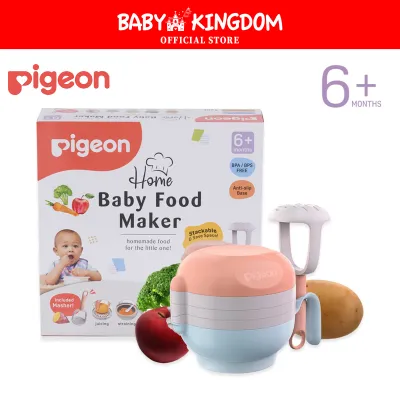
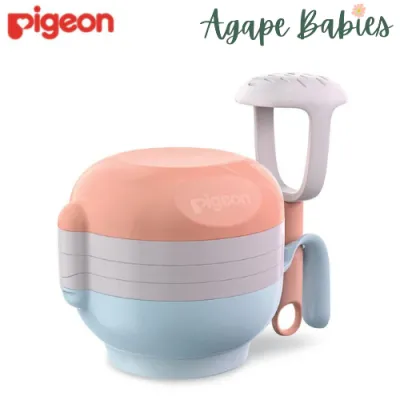
Prices are valid at publication and may change. Please refer to the product page for the latest price.
Compact electric blenders or food choppers represent the automated side of the lineup. These appliances use motorized blades to chop, blend, or puree ingredients within seconds. They are engineered to handle slightly larger volumes than manual sets, making them suitable for parents who prefer to prepare several days of food at once. The electric motor does the heavy lifting, which reduces physical hand fatigue during meal preparation.
Multi-function electric appliances, where available in specific regional lineups, combine steaming and blending capabilities in a single unit. These systems allow you to cook raw ingredients and puree them in the same container, minimizing cleanup and preserving nutrient-rich cooking liquids. When considering these models, it is essential to verify the specific features listed on the packaging, as product availability and exact specifications can vary by market.
Key Features to Compare Before Buying
When evaluating different models, focusing on practical, daily usability factors will ensure you select a tool that remains helpful throughout your weaning journey.

Capacity and batch sizing should be your first consideration. A baby’s appetite starts incredibly small, often requiring only a teaspoon or two of puree per meal. Manual sets are perfectly scaled for these micro-portions, allowing you to prepare just enough food without leaving leftovers stuck to the sides of a large container. Conversely, if you plan to freeze portions in silicone trays for the week, an electric model with a larger bowl or jar volume is much more practical.
Material safety and maintenance are critical when preparing food for an infant. You should look for clear BPA-free labels on all plastic components that come into contact with food. Additionally, examine how easy the parts are to clean. Manual sets have multiple textured surfaces, such as grater teeth and fine mesh strainers, which require prompt rinsing and thorough scrubbing to prevent food residue from drying. Electric models have sharp blades and rubber gaskets that must be carefully disassembled and cleaned to maintain proper hygiene.
Power and texture control determine how much effort you must exert to achieve the correct food consistency. Manual grinding relies entirely on physical effort, which gives you precise, tactile control over the texture but can be tiring for firmer foods. Electric models offer motorized power, usually controlled by a simple pulse button. This allows you to quickly transition from smooth purees to chunkier textures by varying the duration and frequency of your presses.
Matching the Model to Your Feeding Stage and Lifestyle
Your baby’s developmental stage and your family’s daily routine play a significant role in determining which food maker will get the most use.
During the early weaning stage, which typically begins around six months of age, babies require incredibly smooth, completely lump-free purees. Manual grinding sets with fine strainers are excellent for this phase, as they allow you to press cooked vegetables through a mesh to remove any fibrous pieces. Small-capacity electric blenders can also achieve this ultra-smooth consistency quickly, provided there is enough liquid in the jar to keep the blades moving effectively.
As your baby transitions into mid-to-late weaning, their developmental needs change. They will begin to tolerate and require chunkier textures, small soft pieces, and finger foods to practice chewing. At this stage, the grater and mortar in a manual set remain useful for creating textured mashes. However, an electric chopper becomes highly convenient for quickly dicing soft-cooked meats and vegetables into uniform, manageable bits for older babies.
Portability and caregiver convenience are also major lifestyle factors. If your baby spends time at a grandparent’s house or a daycare facility, a manual grinding set is incredibly easy to pack into a diaper bag. It requires no power outlets, makes no noise that might disrupt a sleeping baby, and can be used on the go. On the other hand, if you do most of your meal prep at home on weekends, an electric model parked on your kitchen counter offers the speed and hands-free convenience needed for busy schedules.
Price Expectations and Where to Verify Authenticity
Understanding the relative cost structure and knowing how to source genuine products will help you make a secure purchase.
In terms of relative price positioning, manual entry-level sets sit at a highly accessible price tier. They represent a low-risk investment for parents who are unsure how long they will prepare specialized baby food. Electric models and multi-function appliances sit at a higher price tier due to their motorized components, heating elements, and electronic controls. When evaluating these S$ cost differences, consider the expected duration of use; while manual sets are highly durable and can transition to general kitchen tasks like juicing lemons or grinding spices, electric models save significant time during the peak months of food preparation.
Because baby feeding products come into direct contact with your child’s food, verifying product authenticity is paramount. Counterfeit or unauthorized replica products may use substandard plastics that leach harmful chemicals when heated or washed. To ensure safety, always purchase your Pigeon products from authorized retailers, official brand stores on major e-commerce platforms, or established physical baby specialty stores in Singapore.
When shopping online, look for official store badges and verify that the seller is an authorized distributor. Be cautious of listings with unusually low prices or those shipping from unverified overseas sellers, as these may not meet local safety standards. Checking customer reviews for packaging photos and official holographic seals can also help confirm you are receiving a genuine product.
Decision Framework: Which Pigeon Model Fits You?
To finalize your decision, weigh your daily preparation habits against the specific capabilities of each model type.
You should choose a manual grinding set if you prefer to prepare small, fresh, on-demand portions for each meal. This option is also ideal if you travel frequently, need a quiet preparation method, or want a highly budget-friendly entry point into making baby food. The manual components are straightforward, durable, and require no electrical outlets, making them a versatile addition to any diaper bag or kitchen cabinet.
You should choose an electric blender or chopper if you prefer to prepare larger batches of food to freeze for later use. This model type is best for parents who want to save time, prefer hands-free operation, and need consistent texture control for processing a wider variety of soft ingredients. The motorized power makes quick work of meal prep, allowing you to manage busy schedules more effectively.
Before finalizing an online purchase of an electric model, always verify that the specific appliance’s voltage, plug type, and local warranty terms are fully compatible with Singapore electrical standards. Importing models designed for other regions can lead to safety hazards or leave you without customer support if the motor requires servicing.
Frequently Asked Questions (FAQ)
Can I use a Pigeon manual food maker for meat and hard vegetables?
Manual grinding sets are designed primarily for soft, cooked foods, soft fruits, and very small amounts of tender, well-cooked meat. Hard vegetables, such as raw carrots or sweet potatoes, cannot be processed safely or effectively with manual graters or strainers without prior cooking. Always boil, steam, or bake tough ingredients until they are completely soft before attempting to mash or grind them. Refer to the manufacturer’s included instruction leaflet for specific food restrictions, and consult your pediatrician to ensure the food texture aligns with your baby’s current chewing and swallowing development.
Are Pigeon electric baby food makers dishwasher safe?
The cleanability of Pigeon electric baby food makers depends entirely on the specific component you are washing. Removable parts, such as plastic blending jars, lids, and certain blade assemblies, are often safe for the top rack of a standard dishwasher, but you must verify this in your specific model’s user manual to prevent heat warping. The motor base, power cord, and any electrical housing must never be submerged in water or placed in a dishwasher; these parts should only be wiped down with a damp cloth. Always consult the care label and instruction manual before cleaning to avoid damaging the electrical components or compromising safety.

Community discussion
Share your experience or ask a question. Comments are reviewed before publication.