
Selecting the right breast pump is a highly personal decision that directly impacts your breastfeeding journey, physical comfort, and daily schedule. If you are considering an Imani breast pump, the ideal model for your routine depends on how often you plan to pump, where you will be using the device, and your personal preferences for mobility versus suction customization. Because individual routines and physical needs vary, finding the right fit requires evaluating the specific design features, power options, and maintenance requirements of each model against your daily lifestyle. By focusing on how a pump integrates into your routine rather than searching for a universal “best” option, you can make a practical choice that supports your feeding goals.
Identify Your Primary Pumping Scenario
Before comparing specific models, it is essential to define your primary pumping context. Your daily schedule and the frequency of your pumping sessions will dictate which features are non-negotiable and which ones are secondary. For instance, a parent who is exclusively pumping requires a highly durable setup that can withstand multiple sessions every day without a drop in performance. On the other hand, someone who primarily breastfeeds directly and only pumps occasionally for relief or to build a modest freezer stash will have very different requirements.
Your physical environment also plays a significant role in this decision. If you are returning to a busy office environment or need to pump while managing household chores, hands-free operation and low-profile designs become highly valuable. Pumping in shared spaces or during virtual meetings requires a discreet setup that fits comfortably inside your clothing and operates quietly. Conversely, if you have a dedicated, private space at home or a personal office where you can sit undisturbed, a stationary setup with a traditional motor might be perfectly suitable.
Products mentioned in this guide
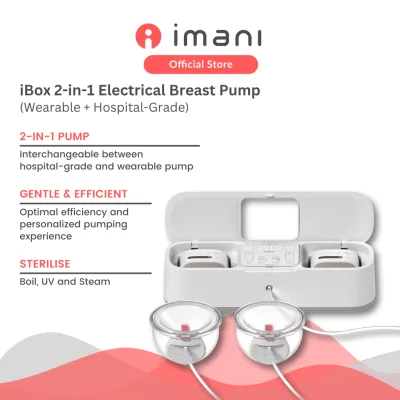
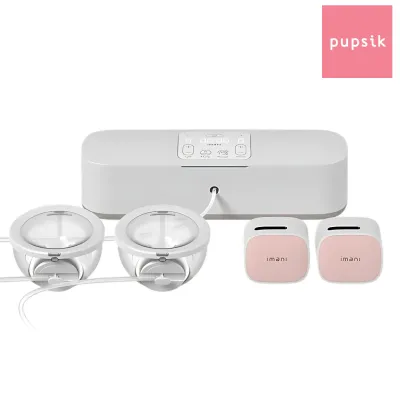
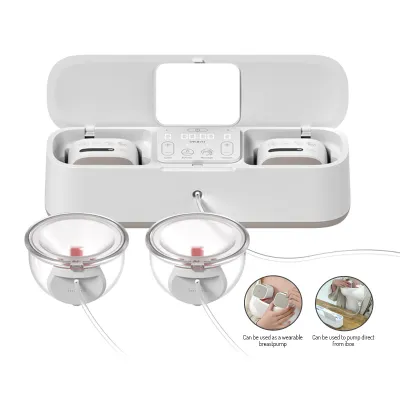
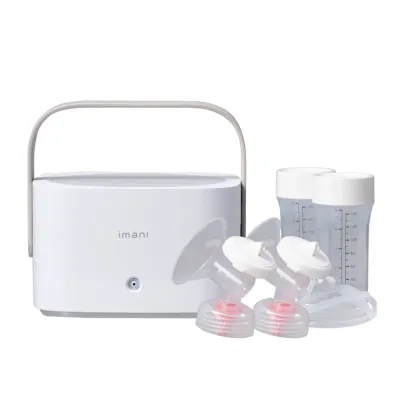
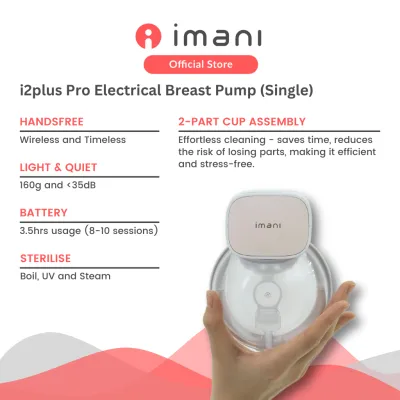
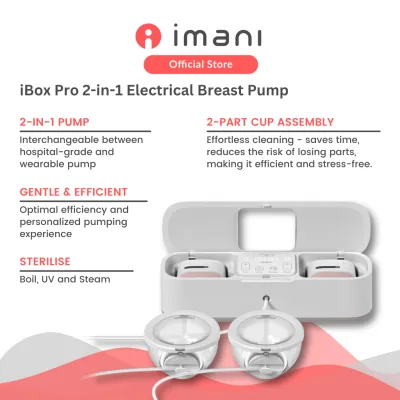
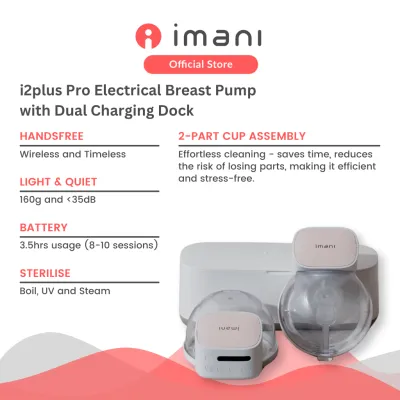
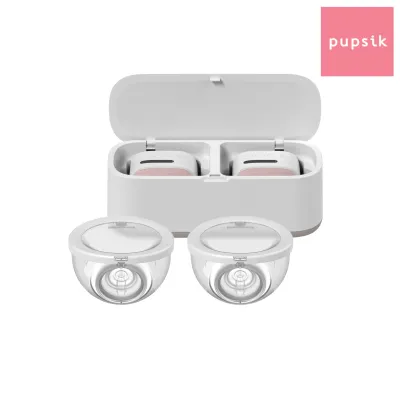
Prices are valid at publication and may change. Please refer to the product page for the latest price.
Mobility needs further refine your choices. Consider whether you will be pumping primarily at a single desk, moving around your home, or traveling frequently. Stationary pumping allows you to use larger, plug-in units that often offer highly stable suction profiles. If your routine involves constant movement, commuting, or traveling, you will need to prioritize lightweight, battery-operated designs that fit easily into a diaper bag or work tote without adding unnecessary bulk.
Compare Imani Models by Form Factor and Portability
Imani offers breast pumps in several form factors, each designed to address specific lifestyle needs. Understanding the physical design and portability of these options is the first step in narrowing down your choices.

Wearable and hands-free designs are engineered for maximum mobility. These models typically feature integrated motors that sit directly on the collection cups inside your nursing bra, eliminating external tubing entirely. While this design offers unparalleled freedom of movement, allowing you to walk, write, or care for your baby while pumping, there are trade-offs to consider. Wearable units can feel heavier on the breast due to the combined weight of the motor, battery, and collected milk. Additionally, because the motor must be compact, the suction customization options may differ from larger models. It is crucial to check the manufacturer’s stated weight and profile dimensions to ensure the cups will fit comfortably within your existing nursing bras.
Portable or compact models offer a middle ground between wearable freedom and traditional power. These systems usually feature a small, lightweight external motor unit that can be clipped to a waistband or slipped into a pocket, connected by tubing to wearable collection cups or standard bottles. This design keeps the weight on your breasts minimal while still allowing you to move around. When evaluating these models, balance the convenience of a compact motor against the presence of tubing, and verify the battery life to ensure it aligns with your typical time away from a power outlet.
Traditional double electric pumps are the classic choice for dedicated, stationary pumping. These models utilize a larger, more robust desktop motor unit that typically requires a direct connection to an electrical outlet or a larger rechargeable battery pack. While they are the least portable option, they often provide the most stable and highly customizable suction profiles, with independent controls for each side. If your routine permits sitting in one place for your sessions, a traditional double electric pump remains a highly reliable and cost-effective workhorse.
Evaluate Suction Features and Flange Compatibility
To ensure a comfortable and efficient pumping experience, you must look closely at the technical specifications of each model’s suction capabilities and physical fit. A pump that does not fit your body correctly can cause discomfort, skin irritation, and a reduction in milk output.
First, examine the suction modes and intensity levels available on each model. Most modern pumps offer a massage or stimulation mode, which uses fast, shallow cycles to mimic a baby’s initial latch and trigger milk letdown, followed by an expression mode with slower, deeper draws to maximize milk flow. However, the number of adjustable levels within these modes varies. You should check the product label or user manual for the specific range of suction strength, measured in millimeters of mercury (mmHg), to ensure the pump can meet your comfort threshold. Do not assume that a smaller, wearable model offers the same suction range or cycle speed as a larger desktop unit.
Flange sizing is perhaps the most critical factor in preventing pain and ensuring efficient milk extraction. The flange is the funnel-shaped part that contacts your breast and guides your nipple into the tunnel. Using a flange that is too large or too small can cause friction, swelling, and blocked milk ducts. Before purchasing any model, measure your nipple diameter at the base and verify which flange sizes are included in the box. If your measurements do not match the standard included sizes, check if the manufacturer offers compatible inserts or alternative flange sizes as official accessories.
Some advanced models may also offer independent motor control or dual-control settings. This feature allows you to adjust the suction strength and cycle speed independently for each breast, which is highly beneficial if you experience different sensitivity levels or milk yields on each side. If you have asymmetrical pumping needs, verify whether the model you are considering supports this level of customization.
Assess Power Options and Maintenance Requirements
The daily logistics of keeping your pump charged and clean can significantly impact your overall satisfaction with the device. Evaluating these operational details beforehand will help you avoid daily frustration.
Power and charging options vary widely across the product lineup. For battery-operated and wearable models, verify the official battery type and the estimated runtime per full charge. A pump that requires frequent charging may not be practical if you are away from power sources for long stretches. Additionally, check the charging interface. Models that support standard USB or USB-C charging offer excellent convenience, as they can be charged using common phone chargers, laptops, or power banks. Conversely, models that require proprietary power adapters limit your charging options and can be more expensive to replace if lost.
Cleaning and sterilization routines are another vital consideration. Every part that comes into contact with breast milk must be thoroughly washed and sanitized to protect your baby’s health. Review the user manual for the specific model to see how many detachable parts require cleaning after each session. Wearable models often have more intricate parts, such as integrated valves, membranes, and collection cups, which may require careful hand-washing. Confirm which components are dishwasher-safe and whether they can withstand standard sterilization methods, such as boiling water, steam sterilizers, or ultraviolet (UV) sterilizers, as some materials may degrade under high heat.
Finally, always verify that the model features a closed-system design. A closed system utilizes a physical barrier, such as a silicone diaphragm or backflow protector, to prevent milk from entering the tubing or the motor unit. This design is essential for maintaining hygiene, as it prevents moisture and milk residue from accumulating in areas that cannot be cleaned, which could otherwise lead to mold growth and motor damage.
Budgeting and Value: Matching Price to Your Needs
When planning your purchase, it is helpful to look at the total cost of ownership rather than just the initial retail price. Balancing your budget against the utility of the features will help you find the best value.
Traditional double electric pumps generally offer the lowest entry price, making them an excellent budget-friendly choice if you do not require high mobility. Wearable and advanced portable models command a premium price due to their compact technology, integrated batteries, and specialized engineering. If you only plan to pump occasionally, investing in a high-end wearable unit may not provide a sufficient return on investment. However, if you are returning to work full-time and need to pump multiple times a day, the convenience of a wearable model may easily justify the higher upfront cost.
In addition to the initial purchase price, factor in the long-term cost of replacement parts. Consumable components such as valves, membranes, and tubing wear out over time with regular use and cleaning, leading to a gradual loss of suction if they are not replaced. Check the availability and pricing of official replacement parts for your chosen model. Opting for a model with readily available and reasonably priced spare parts will save you time and money down the road.
When you are ready to buy, check authorized retailers or the brand’s official store to compare current S$ pricing, warranty terms, and after-sales support in Singapore. Purchasing from an authorized source ensures that you receive a genuine product and access to local customer service should you encounter any technical issues or manufacturing defects.
Decision Framework: Which Model to Choose
To finalize your decision, use this structured framework to match your specific circumstances to the most appropriate category of breast pump.
Choose a wearable model if:
- You require maximum mobility and need to pump hands-free while working, commuting, or caring for other children.
- You prioritize discretion and want a low-profile setup that fits entirely inside your nursing bra.
- You are comfortable with a slightly heavier feel on the breast and are willing to spend more upfront for convenience.
Choose a portable or compact model if:
- You travel frequently or commute daily and need a lightweight system that packs easily into a bag.
- You want a balance of strong, reliable suction and mobility without the added weight of a motor directly on your breast.
- You prefer having a small external controller that allows for easy adjustments during your session.
Choose a traditional double electric model if:
- You primarily pump at home or in a dedicated private space with easy access to electrical outlets.
- You require highly stable, maximum suction control and independent settings for each breast.
- You are looking for the most cost-effective option and do not mind being stationary during your pumping sessions.
Verify first if:
- You have unique anatomical requirements that demand specialized flange sizes or custom inserts.
- You have limited time for cleaning and need a model with the fewest possible parts to wash.
- You are unsure about compatibility with your existing nursing wardrobe, in which case measuring your bras and checking product dimensions is essential.
Frequently Asked Questions (FAQ)
How do I determine the correct flange size for my Imani pump? (FAQ)
To find the correct flange size, measure the diameter of your nipple at the base in millimeters, excluding the areola, before you begin pumping. You can use a standard ruler or download a printable sizing guide from the manufacturer. Once you have this measurement, select a flange size that is slightly larger than your nipple diameter—typically 2 to 3 millimeters larger—to allow your nipple to move freely in the tunnel without rubbing. Keep in mind that your nipple size can change during the postpartum period, so it is wise to re-measure if you experience new discomfort or a sudden drop in milk expression.
Can I use third-party replacement parts with Imani breast pumps? (FAQ)
It is highly recommended to use only official, brand-authorized replacement parts for your breast pump. While third-party flanges, valves, or membranes may appear compatible and are often less expensive, using them can void your manufacturer’s warranty. More importantly, unverified parts may not fit perfectly, which can lead to suction leaks, reduced milk expression, or a failure of the backflow protection system. To ensure material safety, hygiene, and optimal performance, always check the official guidelines or consult an authorized local retailer to source genuine replacement components.

Community discussion
Share your experience or ask a question. Comments are reviewed before publication.