
Choosing the right breast pump is one of the most significant decisions you will make as a new mother, directly impacting your comfort, daily schedule, and breastfeeding journey. For many mothers in Singapore, balancing the demands of newborn care with a eventual return to the workplace requires a reliable, efficient, and comfortable pumping routine. The Haakaa brand has become widely recognized for its innovative silicone designs, but selecting the specific model that aligns with your lifestyle, pumping frequency, and budget requires a careful comparison of the available options.
By evaluating how often you plan to pump, where you will be using the device, and how much hands-free flexibility you require, you can narrow down the choices between manual silicone collectors, structured manual pumps, and advanced wearable electric models. This guide provides a comprehensive framework to help you assess your daily routine, compare the structural variations of different Haakaa models, and verify essential compatibility and care requirements before making your purchase.
Assess Your Pumping Routine and Daily Lifestyle
Before comparing specific pump models, it is essential to define your primary pumping goals and how they fit into your daily life. Mothers generally fall into different categories of pumping frequency: those seeking occasional relief from engorgement, those actively building a breast milk stash while nursing, and those who are exclusively pumping. Identifying where you sit on this spectrum will prevent you from under-buying a pump that cannot keep up with your needs, or over-buying a complex system that exceeds your daily requirements.
Products mentioned in this guide
Prices are valid at publication and may change. Please refer to the product page for the latest price.
If your primary goal is occasional relief or catching passive let-down milk while your baby nurses on the opposite side, a simple manual silicone pump is often the most practical choice. These pumps require no electricity, cords, or complex assembly, making them highly efficient for quick, quiet sessions. They are particularly useful during the early weeks postpartum when your milk supply is regulating and you need a gentle way to relieve fullness without overstimulating production.
For mothers who are planning to build a substantial milk stash or those returning to a busy workplace in Singapore, portability and time efficiency become top priorities. Commuting on public transport or managing a busy office schedule means you need a pump that is lightweight, compact, and easy to pack into a standard handbag. In these scenarios, a pump that requires minimal setup and can be used discreetly in shared office nursing rooms is highly advantageous.
Furthermore, you must consider whether you require hands-free operation or if you prefer the simplicity of manual expression. Hands-free, wearable pumps allow you to multitask, whether you are managing household chores in a compact HDB apartment, caring for your baby, or working at a desk. On the other hand, manual pumps offer a quiet, low-tech alternative that gives you complete, tactile control over the suction strength and rhythm, albeit requiring at least one hand to keep the pump positioned securely.
Compare Haakaa Manual Silicone Pump Designs
Haakaa’s signature manual silicone pumps are celebrated for their simplicity, but the brand has introduced several design generations over the years to address different user needs. When browsing these manual options, it is important to check the product packaging and specifications to understand the structural variations in base stability, spill prevention, and overall functionality.

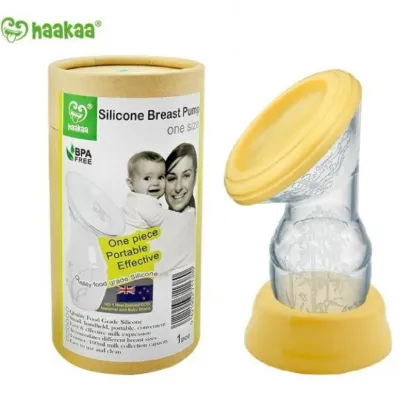
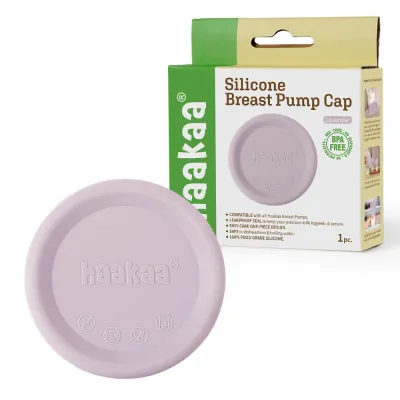
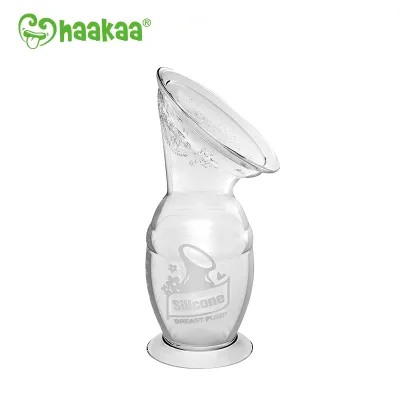
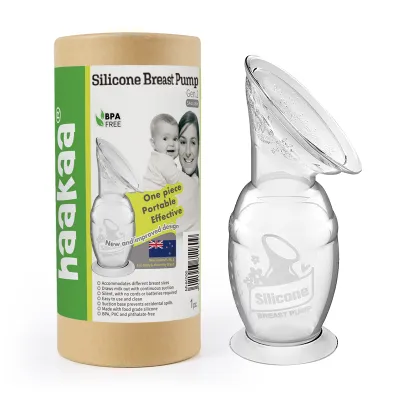
First-generation models feature a classic, streamlined silicone body with a flat base. While highly portable and lightweight, these early designs are more prone to tipping over if placed on an uneven surface after a session. To address this, second-generation models introduce a suction base that adheres firmly to flat surfaces, providing excellent stability and peace of mind against accidental spills of precious breast milk. Additionally, these newer generations are compatible with accessories like silicone flower stoppers and dustproof lids, which secure the milk immediately after expression.
Third-generation designs represent a significant shift in versatility, featuring a detachable flange and bottle body. This modular system allows you to swap the pump flange for a baby bottle nipple, a feeding spoon, or a sealing disk, transforming the pump directly into a feeding or storage vessel. When choosing between these generations, consider whether you prefer a single-piece, easy-to-clean design like the classic models, or a multi-functional system that reduces the need to transfer milk between different containers.
Suction adjustment in manual silicone pumps is entirely user-controlled and depends on how you apply the pump to your breast. By squeezing the center of the silicone bulb before placing it over your nipple, you create a stronger vacuum suction. Squeezing closer to the top flange or applying less pressure results in a gentler suction, allowing you to accommodate varying let-down sensitivities and prevent nipple discomfort. This tactile control makes manual silicone pumps an excellent option for mothers who find mechanical electric suction too intense.
Flange sizing is another critical factor to verify on the manufacturer’s packaging. While many of Haakaa’s manual silicone pumps feature a wide, flexible opening designed to accommodate a broad range of breast shapes and sizes, some models offer specific flange diameters or shapes. Ensuring a proper fit is vital; an incorrectly sized flange can lead to friction, localized pain, and inefficient milk expression. Always refer to the manufacturer’s measurement guidelines to confirm that your nipple can move freely within the tunnel during suction.
Explore Haakaa Electric and Wearable Options for Frequent Pumping
For mothers who require higher volume output, have a busy daily schedule, or are exclusively pumping, transitioning from a manual silicone pump to an electric or wearable model can significantly improve efficiency. These automated systems eliminate the hand fatigue associated with manual pumping and provide consistent, regulated suction patterns designed to mimic a baby’s natural nursing rhythm.
Wearable, hands-free electric pumps are designed to fit entirely inside a standard nursing bra, allowing you to pump discreetly while keeping your hands completely free. This design is highly beneficial for multitasking, whether you are working from home, commuting, or managing daily household tasks. By removing external tubing and bulky motor units, wearable pumps offer a level of mobility that traditional electric pumps cannot match.
When exploring electric and wearable options, it is crucial to verify the technical specifications provided by the manufacturer. Pay close attention to battery life and charging methods; models that support USB charging offer excellent convenience for Singaporean mothers, allowing you to recharge the device using a laptop, car charger, or portable power bank. Ensure the battery capacity is sufficient to cover your typical daily sessions without requiring constant recharging.
Motor noise levels are another essential consideration, particularly if you plan to pump in a quiet office environment, during virtual meetings, or near a sleeping baby. Check the manufacturer’s decibel ratings to ensure the pump operates quietly enough for your comfort. Additionally, look for models that offer multiple expression and massage modes, allowing you to customize the speed and suction strength to optimize your milk flow.
While electric and wearable pumps offer automated consistency and hands-free convenience, they do come with trade-offs compared to manual models. Electric pumps consist of multiple mechanical and silicone parts that require careful assembly, cleaning, and regular replacement. They are also heavier and represent a larger initial financial investment. Manual silicone pumps, by contrast, are virtually indestructible, silent, require no power source, and are exceptionally easy to clean, making them an indispensable backup even if you primarily use an electric model.
Verify Compatibility, Care, and Budget Before Buying
Before finalizing your purchase, establishing a practical pre-purchase checklist will ensure long-term usability, hygiene compliance, and accurate financial planning. Breast pumps are personal care items, and maintaining their performance depends heavily on proper care, regular parts replacement, and compatibility with your existing baby gear.
First, check the interchangeability of replacement parts across different models. Electric and wearable pumps rely on small silicone components, such as duckbill valves and diaphragms, to maintain proper vacuum suction. These parts naturally wear out, stretch, or lose their elasticity over time with frequent use and sterilization. Before buying, verify how easily you can source these replacement parts in Singapore and whether they are compatible with the specific model generation you are purchasing.
Second, carefully review the manufacturer’s sterilization and cleaning instructions. Silicone is a durable material, but it must be cleaned correctly to prevent mold growth and material degradation. Check if the pump components are compatible with your existing sterilization routine, whether you use boiling water, a steam sterilizer, or a UV sterilizer. Note that some manufacturers advise against using UV sterilizers on certain silicone grades, as it can cause the material to yellow or become brittle prematurely. Ensuring compatibility with your current cleaning setup will save you significant time and effort daily.
Finally, calculate the total cost of ownership in S$ rather than focusing solely on the initial purchase price of the pump. A complete pumping setup often requires additional consumables and accessories, such as silicone breast milk storage bags, spare valves, cleaning brushes, carrying pouches, and specialized nursing bras for wearable models. Factor these ongoing costs into your budget to get an accurate picture of your investment.
To ensure product safety, authenticity, and access to reliable customer support, always purchase your pump and accessories from official brand stores or authorized online retailers in Singapore. Purchasing from unauthorized sellers or unverified online marketplaces carries the risk of receiving counterfeit products made from non-food-grade silicone, which can compromise both your safety and your baby’s health.
Frequently Asked Questions (FAQ)
Can I use a Haakaa silicone pump to collect let-down milk while nursing?
Yes, manual silicone pumps are highly effective for passive milk collection. By applying gentle suction to the non-nursing breast while your baby feeds on the other side, you can catch the milk that would otherwise be lost to a disposable breast pad. This is an excellent, low-effort way to build a milk stash. However, you should monitor the suction strength carefully; applying excessive suction can cause nipple discomfort or overstimulate your supply, so adjust the squeeze to a level that feels comfortable and natural.
How do I know which flange size is correct for my Haakaa pump?
To find the correct flange size, measure the diameter of your nipple at the base using a standard ruler or the brand’s official sizing guide before a pumping session. Do not include the areola in your measurement. A properly fitting flange allows your nipple to move freely in and out of the tunnel without rubbing against the sides. If you experience persistent friction, pain, localized swelling, or a sudden decrease in milk output during or after pumping, stop use and consult a qualified lactation professional to verify your fit.
Are Haakaa pump parts interchangeable across different models?
Not all parts are interchangeable across different models and generations. While many silicone accessories and lids may look similar, using non-compatible parts can compromise the vacuum seal, reduce suction efficiency, and affect overall hygiene. Always cross-reference the specific model numbers on the product packaging or instruction manual before purchasing replacement valves, diaphragms, flanges, or storage lids to ensure a secure and functional fit.

Community discussion
Share your experience or ask a question. Comments are reviewed before publication.