
Choosing the right Ezpz product depends on matching your baby’s developmental milestone—whether they are just starting purees, transitioning to baby-led weaning (BLW), or eating full toddler meals—with the physical dimensions of your highchair tray. By aligning the product’s size and suction base with your baby’s current motor skills and your specific highchair model, you can establish a stable, mess-resistant feeding environment that supports independent eating.
Understanding Your Baby's Weaning Stage and Feeding Needs
Around six months of age, babies typically begin their solid food journey. At this early stage, they are introduced to smooth purees, single-grain infant cereals, or mashed fruits and vegetables. Their portion sizes are incredibly small, often starting with just a few teaspoons per meal. The primary goal during this phase is not caloric intake, but rather learning the mechanics of swallowing, tasting new textures, and coordinating tongue movements. Because caregivers usually handle the spoon during these initial feedings, the ideal tableware needs to be compact, easy to hold, and designed to keep tiny amounts of food easily accessible without it getting lost in a massive bowl.
As babies reach seven to nine months, many families transition to Baby-Led Weaning (BLW) or active self-feeding. This milestone is marked by the baby’s desire to grasp food with their hands, explore textures, and bring items to their mouth independently. It is also a notoriously messy phase of development. Babies at this stage lack refined motor control, often sweeping food off the tray or accidentally knocking loose bowls to the floor. To support this developmental leap, tableware must feature a stable, suction-based design that resists tipping, allowing the baby to press food against the side of the bowl or mat to scoop it up successfully.
Products mentioned in this guide
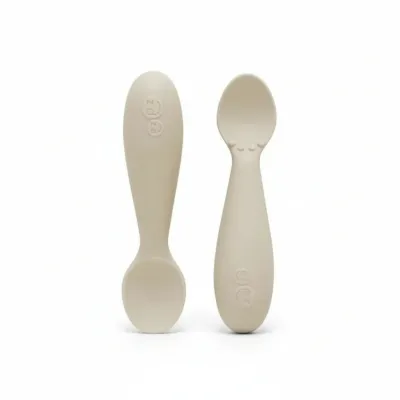
Prices are valid at publication and may change. Please refer to the product page for the latest price.
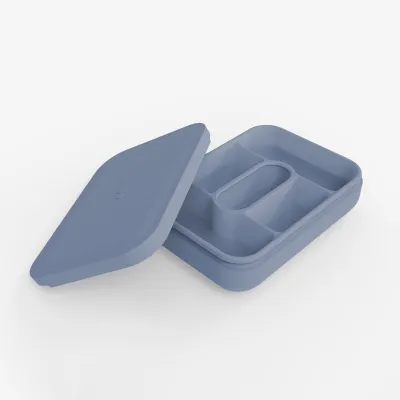
By twelve months and beyond, toddlers develop a more refined pincer grasp and a significantly larger appetite. They transition to eating family meals, which require a variety of food groups served simultaneously. This stage often introduces a preference for keeping different food textures or flavors separate—a common phase where mixed foods might be rejected by a selective eater. Tableware for toddlers needs larger capacities and divided compartments to accommodate proteins, carbohydrates, and vegetables neatly, helping them practice using child-sized utensils without frustration.
Matching Ezpz Product Lines to Feeding Milestones
For the earliest stages of weaning, compact options like the Tiny Bowl or Tiny Mat are designed to fit the limited physical space of early feeding setups. These products typically feature smaller capacities tailored to first purees and tiny finger foods. Their compact footprint makes them highly suitable for smaller highchair trays or portable travel highchairs often used in space-conscious apartments. Because early portions are minimal, these smaller vessels prevent food from spreading out too thin, keeping it warm and accessible for the caregiver’s spoon.

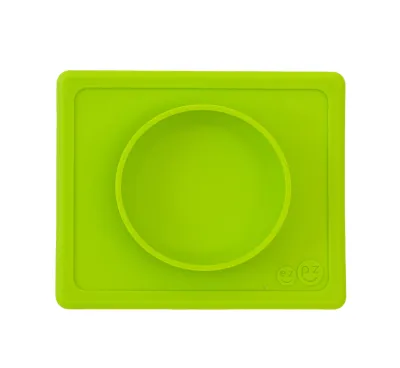
As your baby transitions to active self-feeding and BLW, the Mini Bowl and Mini Mat offer a balanced middle ground. These products are sized to accommodate growing appetites while still fitting standard highchair tray dimensions. The Mini Mat features divided sections that allow parents to offer a balanced variety of finger foods, such as soft-cooked vegetables, fruits, and small pieces of protein. The Mini Bowl is particularly useful for thicker purees, stews, or cereals, providing a sturdy wall that helps babies practice scooping with their first spoon.
For toddlers with larger meal capacities, the Happy Bowl and Happy Mat provide the necessary surface area and volume. The Happy Mat is a full-sized placemat with generous divided sections, designed to sit directly on a standard dining table once the child transitions away from a highchair tray. This setup mimics adult dining, fostering social learning and independence. The Happy Bowl offers a deeper reservoir suitable for larger portions of pasta, soups, or mixed grains, ensuring the food stays contained even during enthusiastic self-feeding sessions.
When selecting among these product lines, it is essential to verify the exact capacity, recommended age ranges, and physical dimensions on the product packaging or authorized retail listings. Manufacturer specifications and product designs may update over time, so checking the latest product labels ensures you select a model that matches your child’s current developmental needs and your home setup.
Checking Highchair Compatibility and Suction Requirements
Before purchasing any suction mat or bowl, measuring your highchair tray is a critical step that prevents common compatibility issues. You should measure the flat, usable surface area of the tray, taking note of the length, width, and any raised lip edges or textured borders. Many suction mats require a completely flat surface that is larger than the mat’s footprint to establish a proper seal. If the mat overlaps a raised edge or a cup holder indentation, air will seep underneath, instantly neutralizing the suction effect.
The physics of silicone suction rely on creating a vacuum between the product’s base and the surface beneath it. This mechanism requires a smooth, non-porous surface, such as polished plastic, glass, or smooth laminate. If your highchair tray is made of textured plastic, unfinished wood, or has a matte finish with microscopic ridges, the suction may fail to hold. In homes with wooden highchairs or textured trays, parents should test the surface compatibility or plan to use the suction tableware directly on a smooth family dining table instead.
It is also important to check manufacturer warnings regarding tray compatibility to avoid damaging delicate surfaces. Some highchair trays with specialized coatings or painted finishes may be sensitive to strong suction or repeated peeling. To prevent damage to both the highchair tray and the silicone product, caregivers should learn proper suction release techniques. Rather than pulling upward from the center of the bowl—which can stress the silicone and potentially lift the tray itself—always lift the suction seal by gently peeling up the outer edge of the mat’s base.
Building Your Ezpz Weaning Starter Kit
When planning your weaning journey, deciding whether to start with a single versatile piece or invest in a complete set depends on your budget and feeding philosophy. A single, mid-sized item like a Mini Mat or Mini Bowl often serves as an excellent starting point, offering versatility across both purees and finger foods. This approach allows you to observe your baby’s feeding style and highchair compatibility before committing to a larger collection of tableware.
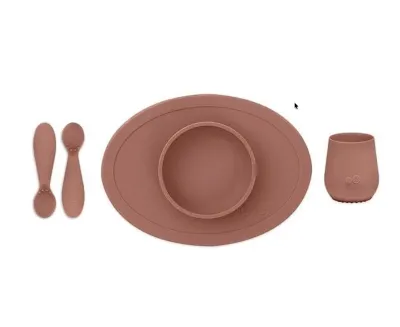
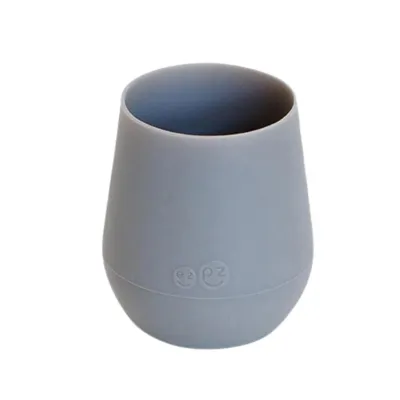
A complete weaning setup often extends beyond bowls and mats to include supplementary items like silicone cups and specialized utensils. As babies develop their motor skills and grasp reflexes, introducing open cups or short, thick-handled spoons can support oral-motor development. Silicone utensils are gentle on sensitive gums, and open cups help babies learn the correct swallowing pattern early on. Selecting items designed to work together can create a cohesive learning experience for your child.
Daily maintenance is another practical factor to consider when building your starter kit. Silicone tableware is highly durable, but it requires proper care to maintain hygiene and longevity. Consider the ease of washing these items by hand or in a dishwasher, as well as the storage space available in your kitchen cabinets. In compact kitchens, stackable designs or mats that can be stored flat or rolled gently are highly beneficial for keeping your feeding area organized and clutter-free.
Frequently Asked Questions (FAQ)
How do I properly release the suction of an Ezpz mat without damaging my highchair?
To release the suction safely, always peel the mat from the outer edge where the silicone meets the tray surface. Most silicone mats feature a small tab or a slightly raised edge designed specifically for this purpose. Avoid pulling directly upward on the bowl or the center of the mat, as this creates a powerful vacuum that can strain the silicone or even dislodge the highchair tray. Additionally, check your specific highchair manufacturer’s guidelines regarding suction cup usage to ensure the tray’s material is compatible with repeated suction pressure.
Are Ezpz products safe for the microwave and dishwasher?
To ensure the longevity and hygiene of your silicone feeding gear, always check the specific product label or packaging for exact temperature limits and microwave safety symbols. Generally, high-quality food-grade silicone is highly heat-resistant, making many of these products suitable for microwave heating and dishwasher cleaning. When using a dishwasher, placing the items on the top rack is typically recommended to keep them away from the direct heat source at the bottom, though you should always defer to the manufacturer’s official care instructions for your specific model.

Community discussion
Share your experience or ask a question. Comments are reviewed before publication.