
Setting up a functional nursery requires balancing quick access to baby essentials with a clean, safe, and clutter-free environment. During late-night diaper changes or feeding sessions, having wipes, diapers, and pacifiers within arm’s reach is highly practical. A baby cot organizer is an effective solution for keeping these necessities structured and accessible without taking up valuable floor space.
The ideal baby cot organizer for your nursery depends on your cot’s physical structure, your room’s layout, and your daily storage volume. Because cots vary from traditional slatted designs to modern solid-panel styles, there is no single universal option. Matching the attachment mechanism of the organizer to your specific cot and nursery configuration is the key to ensuring both utility and safety.
To make an informed decision, you must evaluate how different organizer types—hanging caddies, fabric side pockets, and rigid rail-mounted containers—interact with your furniture and space. By assessing your setup systematically, you can select a storage solution that streamlines your daily routine while maintaining a secure sleep environment.
Products mentioned in this guide
![[SG] Baby Cot Hanging Organizer Storage Bag/ Baby Diaper Storage Bag/ Baby Crib Organizer/ Wall Nursery Organizer](https://img.lazcdn.com/g/p/2bbe000979853ccdc123797161e6b0e6.jpg_400x400q80.jpg_.webp)

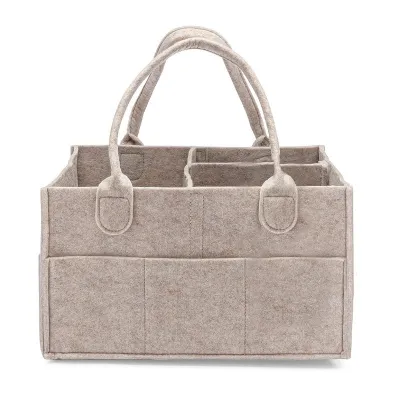
Prices are valid at publication and may change. Please refer to the product page for the latest price.
Assess Your Cot Design and Nursery Space
Before purchasing any storage accessory, examine the physical construction of your baby cot. The design of the cot rails is the primary factor determining which attachment methods are viable. Standard slatted cots feature vertical bars spaced closely together, which easily accommodate fabric ties, wrap-around straps, or flexible hooks. Conversely, solid-panel cots with solid wooden or upholstered headboards and footboards lack these gaps, meaning wrap-around straps cannot be used. For solid panels, you will need organizers that utilize wide, rigid over-the-panel brackets or alternative mounting systems.
Next, evaluate the physical space surrounding the cot. In compact nursery layouts or shared master bedrooms common in Singapore apartments, floor space and walkway clearance are limited. Measure the distance between the cot and adjacent furniture, such as wardrobes, nursing gliders, or bedroom doors. A bulky organizer that protrudes 20 to 30 centimetres from the side of the cot can obstruct narrow walkways, prevent wardrobe doors from opening fully, or force you to position the cot away from the wall, reducing usable floor space.
Finally, define your specific storage requirements by categorizing your daily essentials. Heavy, high-volume items like large diaper stacks, spare swaddles, and heavy lotions require a robust, high-capacity organizer. Lightweight, high-frequency items such as pacifiers, digital thermometers, and small burp cloths are better suited for smaller, low-profile pockets. Overloading an organizer beyond its structural capacity compromises safety and causes fabric to sag, so matching your storage volume to the correct organizer style is essential.
Hanging Organizers: Best for Solid Sides and High Capacity
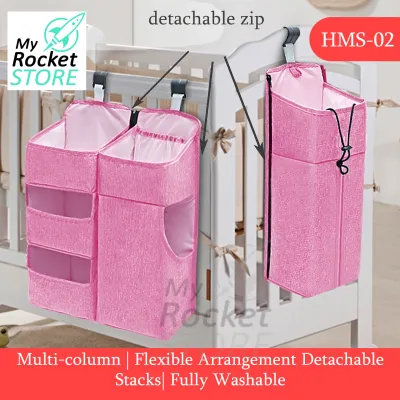
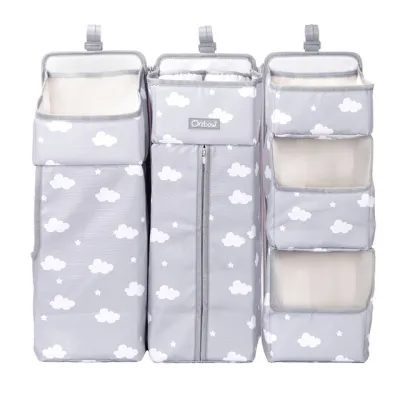
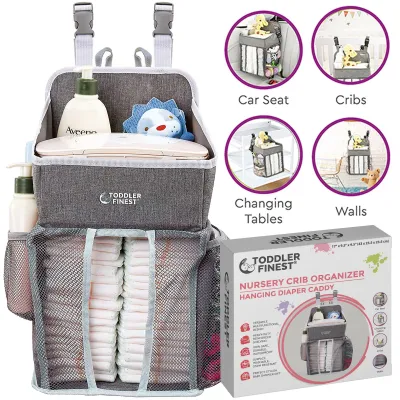
Hanging organizers, often designed as multi-tiered diaper caddies, are heavy-duty storage units that suspend from the top rail of the cot or an adjacent door. These organizers typically feature rigid cardboard or plastic internal supports that help the shelves maintain their shape under load. They are highly suited for cots with solid headboards or footboards, as the flat back of the organizer can rest flush against the solid wood panel without swinging or tilting.

The primary advantage of a hanging organizer is its substantial storage capacity. These units often include dedicated compartments for dozens of diapers, specialized pockets for heavy wipe dispensers, and side mesh sleeves for lotions and creams. By consolidating all changing supplies into one vertical unit, you keep the immediate changing area organized and ensure that heavier items remain completely outside the baby’s sleeping environment.
However, hanging organizers have a large physical footprint. Their bulk can make a small nursery feel visually cluttered and can block narrow walkways if hung on the side of the cot facing the room. Additionally, they can interfere with drop-side cot mechanisms and prevent the cot from being pushed flush against a wall. If your room layout requires the cot to sit tight against the wall on three sides, a hanging organizer may not fit comfortably.
Choose a hanging organizer if you have a solid-panel cot or a dedicated open end at the foot of the bed, and you need to store a large volume of daily diapering supplies in one central location. These units typically range from S$25 to S$50 on local online marketplaces, making them a cost-effective alternative to additional wooden shelving.
Side Pocket Organizers: Ideal for Slatted Rails and Quick Access
Side pocket organizers consist of soft fabric panels featuring multiple small pockets that attach directly to the cot rails using ties or hook-and-loop straps. These organizers are specifically designed for standard slatted cots, where the vertical wooden bars provide multiple secure anchor points. The straps wrap around individual slats, preventing the organizer from sliding horizontally or tilting forward when loaded.
The main benefit of fabric side pockets is their low-profile, space-saving design. They lie relatively flat against the exterior of the cot, making them an excellent choice for tight nursery layouts where every centimetre of walkway space matters. They are lightweight, easy to install without tools, and add a soft, minimalist aesthetic to the nursery. They are ideal for keeping small, frequently used items organized and within reach of the changing table.
On the downside, side pocket organizers have a limited weight capacity. If you attempt to store heavy items like large bottles of lotion or thick blankets, the fabric will sag, pulling the top rail attachments downward and potentially creating gaps. Furthermore, because they rely on fabric ties or straps, you must inspect the attachments regularly to ensure they have not loosened or frayed over time.
Select fabric side pockets if your cot has standard slatted sides, your nursery has narrow walkways that require a flat-profile storage solution, and you only need to store lightweight, quick-access items. Basic fabric pocket organizers are highly affordable, with many options available for under S$20.
Rail-Mounted Caddies: Perfect for Compact Spaces and Rigid Support
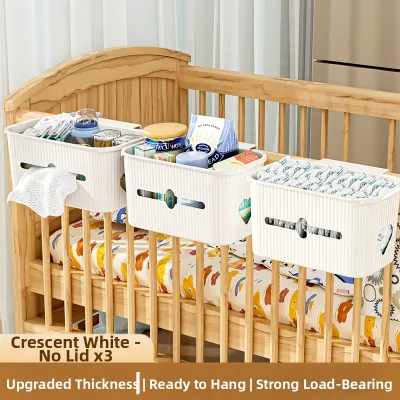
Rail-mounted caddies are rigid, structured containers made of hard plastic or molded polymer that clip directly onto the top rail of the cot. These caddies rely on tension clips or adjustable screw-clamp mechanisms to grip the rail firmly. They are designed for cots with sturdy, flat, or moderately rounded top rails that can bear the concentrated weight of a clip-on accessory without slipping or tilting.
One of the main advantages of a rail-mounted caddy is its rigid structure. Unlike fabric alternatives, hard plastic caddies do not sag, bend, or warp when loaded. This rigidity keeps liquids, creams, and sanitizers upright, significantly reducing the risk of accidental spills. Many designs also allow you to slide the caddy smoothly along the rail, enabling you to reposition your supplies easily as you move around the cot.
However, the rigid mounting clips can scratch or dent wooden cot finishes if they lack protective silicone or rubber padding. You must carefully check the manufacturer’s specifications to ensure the clip width matches your cot’s rail thickness, as they will not fit unusually thick, thin, or highly decorative curved rails. Additionally, hard plastic surfaces must be inspected regularly for sharp edges or small removable parts that could pose a safety risk.
Opt for a rail-mounted caddy if you want a structured, easy-to-clean container for liquids and wipes, and your cot features a standard, sturdy top rail that matches the caddy’s mounting requirements. High-quality structured caddies generally cost between S$30 and S$60.
Safety First: What to Check Before Installing Any Organizer
When installing any aftermarket accessory on a baby cot, safety is the primary consideration. The most critical rule is the “out of reach” principle. No part of the organizer, its attachment straps, or its contents should ever be accessible to the baby from inside the cot. As infants grow and reach developmental milestones, such as rolling over, sitting up, or standing, they can pull on the organizer, potentially pulling heavy items into the cot or creating a risk of entrapment.
Strangulation and entanglement are serious risks associated with loose straps, long ties, and cords. When installing a fabric side pocket, ensure all ties are securely double-knotted and that any excess strap length is trimmed or tucked away safely. Never allow attachment cords to hang loose or form loops. Inspect the tightness of all straps and clips daily, as regular use and baby movement can cause them to loosen over time.
Proper ventilation and visibility are also essential for maintaining a safe sleep environment. Slatted cots are designed to facilitate continuous airflow, which is particularly important in Singapore’s warm, humid climate. Do not cover multiple sides of the cot with large fabric organizers, as this can restrict air circulation. Additionally, ensure the organizer does not block your line of sight, allowing you to monitor your baby easily from across the room.
Always cross-check the organizer’s installation instructions with your cot manufacturer’s user manual and safety warnings. Some cot manufacturers explicitly advise against attaching aftermarket accessories to specific rails to prevent tipping or structural strain. If the instructions conflict, prioritize the cot manufacturer’s guidelines, and consult a professional or the manufacturer directly if you are unsure about compatibility.
Frequently Asked Questions (FAQ)
Can I use a cot organizer if my baby rolls over?
When your baby begins rolling over or pushing up on hands and knees—typically between four and six months of age—you must re-evaluate the position of any cot organizer. At this developmental stage, the organizer must be positioned strictly on the absolute exterior of the cot. Ensure that no loose items can fall inward. If your baby can reach the straps, pull on the pockets, or use the organizer to help themselves stand, you should remove the organizer from the cot entirely. In this scenario, consider mounting the organizer on a nearby wall or changing table out of the baby’s reach.
Are hard plastic rail caddies safer than fabric pockets?
Neither material is inherently safer; both present distinct safety profiles that require careful management. Hard plastic caddies maintain their structure and prevent liquid items from spilling, but you must verify that the mounting clips do not have sharp edges or pose pinching hazards. Fabric pockets eliminate the risk of hard impacts if a baby bumps against them from the outside, but they carry a higher risk of sagging and require diligent strap management to prevent entanglement. Regular inspection of the attachment points is necessary for both types.
How do I clean a fabric baby cot organizer without removing it?
For minor dust or small spills, you can spot-clean fabric organizers while they are attached to the cot. Use a clean, damp cloth with a mild, baby-safe detergent to wipe down the affected areas. Because Singapore’s humid climate can encourage mould and mildew growth, it is crucial to let the fabric air-dry completely before placing items back inside. If a major spill occurs or the baby has been ill, detach the organizer completely and follow the manufacturer’s care instructions—typically a gentle machine wash and thorough air drying—to maintain a hygienic nursery environment.

Community discussion
Share your experience or ask a question. Comments are reviewed before publication.