
Knowing exactly when your child is ready to transition to a child booster seat is one of the most critical road safety decisions you will make as a parent in Singapore. Rushing this transition can compromise your child’s safety, as a booster seat relies entirely on the vehicle’s adult seat belt rather than a built-in five-point harness. To ensure your child is properly protected, you must evaluate a combination of legal requirements, physical limits of their current car seat, and their behavioral maturity.
A booster seat is a transitional tool designed to bridge the gap between a harnessed car seat and the vehicle’s standard seat belt. It elevates your child so that the adult seat belt rides safely across the strongest parts of their skeletal frame rather than their soft abdomen or neck. Transitioning at the right time ensures maximum protection during every journey.
Singapore's Legal Height Rule and What It Means for Your Child
Under Singapore law, all passengers in a motor vehicle must be properly secured. Specifically, children under 1.35 metres in height are legally required to use an appropriate child restraint system (CRS) suitable for their height and weight when traveling in any private passenger vehicle. This law is strictly enforced to ensure that the vehicle’s adult seat belt, which is designed for individuals at least 1.35 metres tall, fits the child’s body correctly in the event of a collision.
Products mentioned in this guide
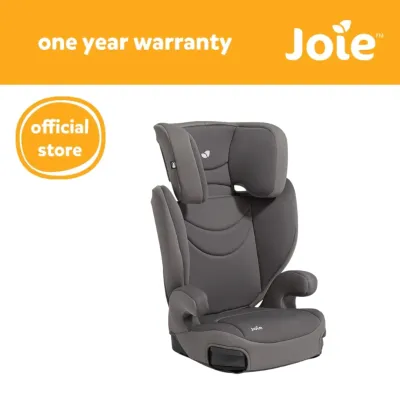
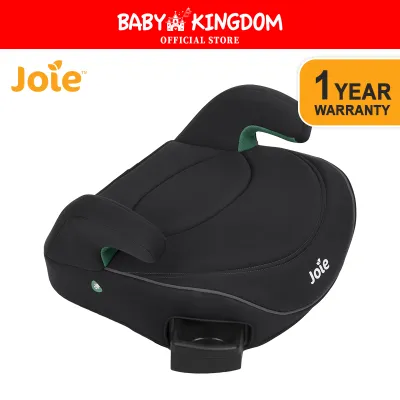
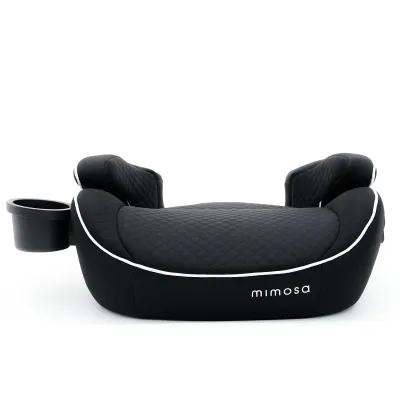
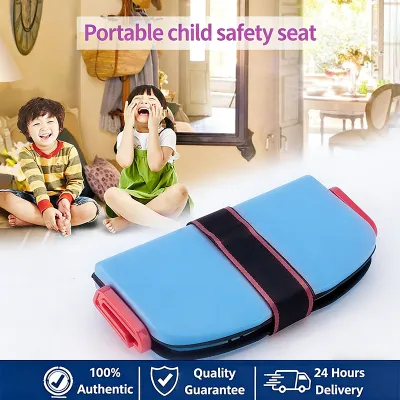
![[SG] Foldable Child Safety Car Booster Seat Compact Travel Portable Baby Seat Blue Pink For 3-13 yrs](https://img.lazcdn.com/g/p/64b57362b4b2ceb65045c329016802cd.jpg_400x400q80.jpg_.webp)
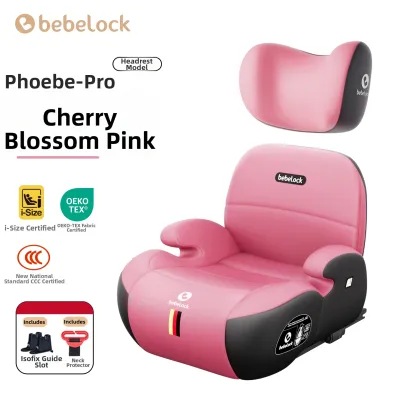
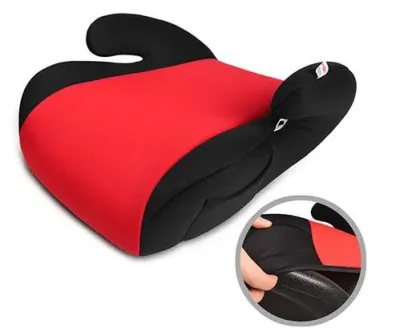
Prices are valid at publication and may change. Please refer to the product page for the latest price.
While the 1.35m threshold is the legal point at which a child can transition out of a child restraint entirely, the decision to move into a booster seat from a forward-facing harnessed seat is governed by different parameters. You should not view the legal minimum height as a target to rush toward, nor should you assume that reaching a certain age automatically qualifies a child for a booster seat. A booster seat is designed to lift your child so that the adult seat belt is positioned safely over their shoulder, chest, and pelvis.
To maintain full compliance with current road safety regulations, parents should regularly verify the latest guidelines and exemptions from the Singapore Traffic Police or the Land Transport Authority (LTA). Remember that a booster seat is a transitional tool. It does not provide the same level of containment as a five-point harness, meaning your child must remain in their harnessed seat until they have fully outgrown its limits, regardless of whether they have reached the legal minimum height for other transitions.
Physical Signs Your Child Has Outgrown Their Current Car Seat
Before purchasing a child booster seat, you must conduct a thorough physical inspection of your child’s current forward-facing harnessed car seat. A five-point harness distributes crash forces across the strongest parts of a child’s body and keeps them securely contained within the protective shell of the car seat. For this reason, safety experts recommend keeping your child in their harnessed seat for as long as possible until they have truly outgrown it.

Checking the Manufacturer's Height and Weight Limits
To determine if your child has outgrown their current seat, locate the physical manufacturer’s label. This label is typically found on the back or underside of the car seat shell and lists the maximum weight and height limits allowed for the forward-facing harness mode. If your child exceeds either the maximum weight or the maximum height specified by the manufacturer, they have outgrown the seat, and you must transition them to a suitable alternative.
Do not rely on general age guidelines, marketing claims on the packaging, or advice from online forums. Every child grows differently, and the specific manufacturer’s label on your physical seat is the only authoritative source for safety limits. If the label has worn away, consult the original user manual or contact the manufacturer directly to verify these specifications.
Evaluating the Harness and Headroom Fit
Even if your child is well under the maximum weight limit, their physical torso length or overall height may mean they have outgrown the seat’s dimensions. You can evaluate this by checking the harness strap height and headroom clearance. For a forward-facing car seat, the shoulder straps must emerge from the harness slots at or slightly above your child’s shoulders. If the straps are emerging from slots that are below their shoulders, even when the headrest and harness are adjusted to their highest positions, the seat is outgrown.
Additionally, check the headroom clearance by observing where the top of your child’s head sits relative to the car seat shell. If the top of their ears is level with or higher than the top of the car seat’s hard plastic shell or the highest point of the adjustable headrest, their head is no longer adequately protected. If your child still fits within all of these physical parameters, it is always safer to keep them in their harnessed seat rather than rushing them into a booster.
Behavioral Readiness: The Seat Belt Fit and Posture Test
Physical size is only one part of the equation; behavioral maturity is equally critical. Unlike a five-point harness that physically restrains a child, a booster seat relies entirely on the vehicle’s three-point lap-and-shoulder belt. This means your child must have the developmental maturity to sit properly, without slouching, leaning, or playing with the belt, for the entire duration of every journey.
To assess your child’s readiness, you can perform a practical posture checklist during a test drive or while parked:
- Back flat against the seat: Your child must be able to sit with their back and bottom resting completely flat against the backrest of the booster seat (or the vehicle seat if using a backless model).
- Knees bent comfortably: Their knees must bend naturally over the front edge of the booster seat cushion without causing them to slouch forward. If their legs stick straight out, they will naturally slide forward, misaligning the seat belt.
- Feet resting flat: Their feet should ideally rest comfortably, reducing the urge to squirm, kick the front seat, or pull their legs up into a cross-legged position.
- Shoulder belt alignment: The vehicle's shoulder belt must cross the center of your child's shoulder and chest. It must never rub against their neck, face, or slide off the edge of their shoulder.
- Lap belt alignment: The lap belt must sit low and snug across their upper thighs and pelvis, contacting the hip bones. It must never ride up onto the soft tissue of their stomach, which can cause severe internal injuries in a crash.
You must also look out for behavioral red flags. If your child frequently slumps over when sleeping, leans forward to reach for toys, tucks the shoulder belt under their arm or behind their back, or plays with the seat belt buckle, they are not yet behaviorally ready for a booster seat. If they cannot maintain the correct posture for the entire trip, they should remain in a forward-facing seat with a five-point harness that secures them automatically.
Choosing the Right Booster: High-Back vs. Backless
Once you have confirmed that your child is physically and behaviorally ready to transition, you must choose the appropriate type of child booster seat. Booster seats generally fall into two categories: high-back and backless. Each type serves a specific purpose depending on your child’s size and your vehicle’s seating configuration.
When to Use a High-Back Booster
A high-back booster is highly recommended for children who are newly transitioning from a harnessed car seat. These models feature a built-in backrest with side-impact wings that provide crucial head, neck, and torso support, especially during lateral collisions. The backrest also helps guide the vehicle’s shoulder belt precisely across the child’s chest, adjusting as they grow taller.
High-back boosters are essential if your vehicle’s rear seats have low seat backs or lack built-in headrests. Without a vehicle headrest, a child using a backless booster is at extreme risk of whiplash in a rear-end collision. A high-back booster provides its own structural head support, mitigating this risk. Many high-back models also offer adjustable headrests and deep side wings, making them much more comfortable for children who still tend to fall asleep during longer car rides.
When a Backless Booster is Appropriate
A backless booster is a lightweight, highly portable option that is suitable for older, taller children who still need a slight lift to achieve a proper seat belt fit but have outgrown the backrest of a high-back booster. Because a backless booster lacks a built-in backrest, your vehicle’s seats must have built-in headrests that support your child’s head up to at least the top of their ears to prevent severe neck injuries in a crash.
Before purchasing or using a backless model, always check the specific booster seat’s instruction manual for its minimum height and weight requirements. Backless models often have higher minimum thresholds than high-back versions, meaning a child who fits safely in a high-back booster may still be too small or light to safely use a backless model.
Safety Mistakes to Avoid When Making the Switch
Transitioning to a booster seat is a major milestone, but making common mistakes can put your child at risk. One of the most frequent errors is “graduating” a child to a booster seat too early simply because they reached a certain age or because they requested it. Safety must dictate the timeline, not convenience or peer pressure. Keep your child in a harnessed seat for as long as they fit within the manufacturer’s limits.
Another critical mistake is using second-hand booster seats. Unless you know the complete history of the seat, avoid using pre-owned gear. A booster seat that has been involved in a collision, is expired (check the expiration date stamped on the plastic shell), or is missing its manufacturer manual and labels poses severe structural risks that are not visible to the naked eye.
Additionally, never use a booster seat with only a lap belt. Booster seats are designed strictly for use with a lap-and-shoulder (three-point) belt combination. Using a booster seat with a lap-only belt can lead to severe abdominal and spinal injuries in a crash.
Always read both the booster seat manual and your vehicle’s owner’s manual before installation. If there is any conflict between the car seat manual, the vehicle owner’s manual, and the child’s fit, stop and consult a certified child passenger safety technician or the respective manufacturers for professional guidance.
Frequently Asked Questions (FAQ)
Can my child use a booster seat in the front seat in Singapore?
Under Singapore’s Traffic Police regulations, it is illegal for any passenger under 1.35 metres to travel in the front seat of a car without an approved child restraint. While a booster seat is an approved restraint, the rear seat is universally recommended as the safest position for children. Front-seat passenger airbags deploy with immense force designed for adults, which can cause severe or fatal injuries to a child in a booster seat. Always check the latest Traffic Police guidelines and your vehicle owner’s manual regarding front-seat airbag safety.
What if my child is under 1.35m but has outgrown their car seat's weight limit?
If your child exceeds the weight limit of their forward-facing car seat but is still under 1.35 metres, they must still use an appropriate child restraint system to comply with Singapore law. Look for a high-capacity harnessed car seat designed for higher weight limits, or transition them to a high-back booster seat that is certified to accommodate their higher weight. Ensure you verify the weight and height specifications on the booster seat’s manufacturer label before purchase.

Community discussion
Share your experience or ask a question. Comments are reviewed before publication.