
Selecting the right baby food scissors requires focusing on three primary pillars: material safety, blade design, and ease of sanitation. As infants transition from liquid diets to solid foods, preparing manageable, bite-sized portions becomes a daily task for parents. Specialized food shears allow caregivers to cut noodles, vegetables, and meats directly in the serving bowl, ensuring the texture matches the child’s developing chewing capabilities. By prioritizing rounded safety tips, hygienic blade materials, and secure locking mechanisms, you can streamline meal preparation while maintaining a sanitary kitchen environment.
When evaluating options on online marketplaces or in local baby specialty stores, look for food-grade materials such as high-carbon stainless steel or zirconia ceramic. The choice between these materials depends on your cleaning habits and whether you require a tool for travel. Additionally, verifying the manufacturer’s sterilization guidelines is essential, as some handle materials cannot withstand high-temperature steam or UV sterilizers. Taking the time to assess these physical attributes ensures you select a durable, practical tool that supports a safe weaning journey.
Why Dedicated Food Scissors for Baby Matter During Weaning
The transition to solid foods, often starting around six months of age, introduces new challenges in food preparation. During this weaning phase, infants gradually learn to chew and swallow textures thicker than purees. Dedicated baby food scissors play a vital role in this transition by allowing caregivers to quickly resize family meals into safe, age-appropriate bites. This precise portion control helps minimize choking hazards, giving parents peace of mind as they introduce more complex food textures.
Products mentioned in this guide
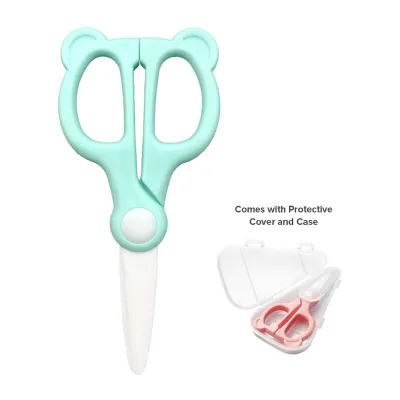
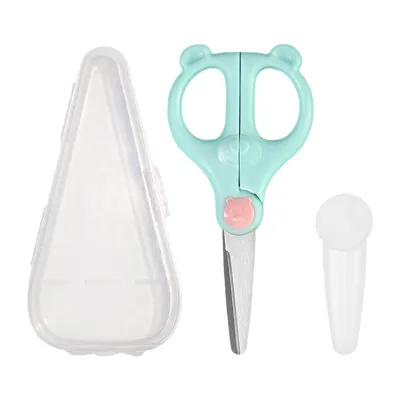
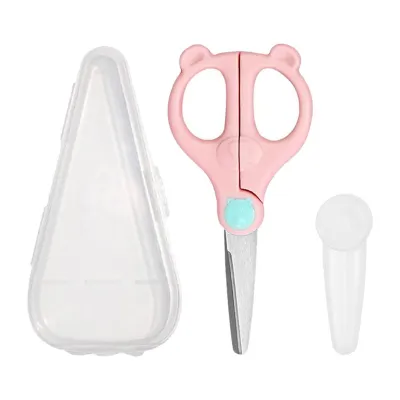
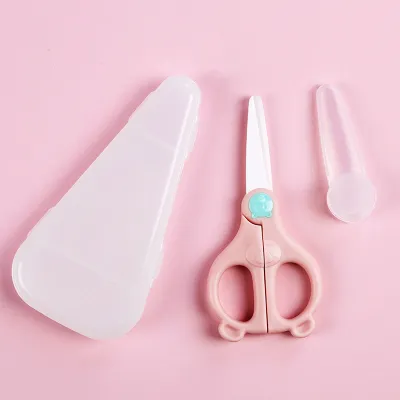
Prices are valid at publication and may change. Please refer to the product page for the latest price.
Using specialized shears offers unmatched convenience, particularly when dining out at local cafes or hawker centres in Singapore. Instead of carrying bulky cutting boards and chef knives, a compact pair of baby scissors allows you to prepare your child’s portion directly in their bowl. This portability simplifies family outings, making it easier to share soft table foods like noodles, steamed vegetables, and tender meats without relying on pre-packaged baby meals.
Standard kitchen knives and adult utility scissors are poorly suited for infant food preparation. Adult kitchen shears are frequently used for raw meats, packaging, or general household tasks, which introduces a high risk of bacterial cross-contamination. Furthermore, standard kitchen knives require a flat cutting surface, which is not always available or hygienic when traveling. Dedicated baby shears are designed to remain separate from general household tools, preserving a strict hygiene boundary for your little one.
Adult scissors also lack the safety features necessary for use around active infants. Standard blades typically feature sharp, pointed tips that pose an immediate puncture risk if a child reaches for the table. They are also generally heavier and larger, making them clumsy to operate when trying to cut small, delicate portions of food. Investing in a dedicated pair ensures the tool is scaled appropriately for precise, rapid cutting.
Essential Safety and Blade Design Features
The physical design of the blades is the first line of defense against accidental injuries during meal preparation. Rounded or blunt blade tips are a critical safety feature for any tool used near children. If an infant unexpectedly reaches toward the food prep area, a rounded tip significantly reduces the risk of accidental puncture wounds. This design also prevents the scissors from scratching or damaging delicate silicone baby bowls and plates during use.

Blade serration is another key design element that improves cutting efficiency. Micro-serrated edges feature tiny, integrated grooves that grip food fibers as the blades close. This grip prevents slippery foods, such as pasta, leafy greens, or soft fruits, from sliding away from the blades during cutting. Unserrated blades often slip on moist surfaces, requiring more force to cut and increasing the likelihood of uneven, jagged food pieces.
Secure locking mechanisms are indispensable for families who frequently travel or dine out. A reliable safety lock keeps the blades firmly closed when the scissors are stored in a diaper bag or kitchen drawer. This feature prevents curious toddlers from opening the shears if they happen to access them, and it protects the blades from chipping or dulling when in contact with other travel items. Look for locks that require a deliberate, multi-step action to disengage, ensuring they cannot be easily bypassed by small hands.
Handle ergonomics and grip materials directly impact how comfortable and safe the scissors are to operate. Look for handles featuring non-slip silicone or textured thermoplastic rubber (TPR) loops. These materials provide a secure hold, even when your hands are wet or covered in food residue. The finger loops should be large enough to accommodate adult fingers comfortably, preventing hand fatigue during extended meal preparation sessions.
Material Considerations and Hygiene Standards
Evaluating blade materials is essential for determining the durability, maintenance needs, and hygiene of the scissors. High-grade stainless steel is a popular choice due to its exceptional impact resistance and structural integrity. Stainless steel blades can withstand accidental drops onto hard kitchen tiles without cracking or chipping. However, they do require diligent drying after washing to prevent localized rust spots from forming over time.
Zirconia ceramic blades offer an excellent, highly hygienic alternative to metal. Ceramic is completely rust-proof, chemically inert, and does not transfer metallic tastes or odors to sensitive baby food. These blades retain their sharpness significantly longer than stainless steel under normal use. The primary trade-off is their vulnerability to physical impact; ceramic blades can chip or shatter if dropped on hard surfaces or used to cut through dense materials like bones.
Handle materials must be verified for chemical safety, as they frequently come into contact with food. Ensure the product packaging explicitly states that the plastic or silicone components are BPA-free, phthalate-free, and made from food-grade materials. Because these tools are used for infant nutrition, avoiding chemical leaching from low-quality plastics is a paramount safety consideration.
Sanitation requirements vary widely based on the materials used in construction. Some baby food scissors are fully dishwasher-safe, while others must be hand-washed to protect the blade alignment or handle adhesives. Before purchasing, check the manufacturer’s instructions regarding sterilization compatibility. If you plan to use a steam sterilizer, UV cabinet, or boiling water, verify that all components of the scissors can withstand those specific temperatures and exposure types without warping or degrading.
Building Your Shortlist: A Pre-Purchase Evaluation Checklist
To choose the right tool for your household, start by aligning the scissors with your baby’s current developmental stage. If your child is in the early stages of weaning and eating soft, highly mashed foods, a lightweight plastic or ceramic pair may be perfectly adequate. For older toddlers who consume denser meats and fibrous vegetables, a robust pair of stainless steel shears with micro-serrations will provide the cutting power necessary to handle tougher textures.
Carefully inspect the physical construction of the scissors for any small, removable parts. Some models feature detachable blades for deep cleaning, while others include small decorative caps, tension screws, or spring-loaded mechanisms. Ensure that any removable components are securely fastened and cannot easily shake loose during use or washing, as these can present a severe choking hazard if they fall unnoticed into the baby’s food bowl.
Verify the exact cleaning and sterilization limits of the product before finalizing your purchase. If your daily routine relies heavily on a UV sterilizer or a high-heat dishwasher cycle, confirm that the scissors are rated for these appliances. Some plastic handles can become brittle or discolored when exposed to repeated UV cycles, while certain metal alloys may tarnish in the high humidity of a dishwasher. Choosing a tool that fits seamlessly into your existing sanitation workflow saves time and preserves the life of the product.
Finally, review the manufacturer’s warranty and customer support policies. Reliable brands typically offer clear channels for customer inquiries and provide guidance on replacement parts, such as protective travel sheaths or storage cases. A manufacturer that stands behind their product with a clear return policy or warranty often indicates a higher standard of quality control and material safety testing.
Safe Usage, Cleaning, and Maintenance Practices
Using proper cutting techniques is essential to preserve the integrity of the blades and ensure caregiver safety. Always cut food on a stable surface or directly inside a durable, shatterproof serving bowl. Avoid using the scissors to cut through extremely hard items, such as animal bones, frozen foods, fruit pits, or thick wooden skewers. Forcing the blades through these materials can cause stainless steel to misalign or ceramic blades to chip instantly.
Maintaining a strict cleaning routine is vital to prevent bacterial growth on the tool. Immediately after each use, rinse the scissors under warm running water to remove food residue before it dries. Use a mild, food-safe dish soap and a soft sponge to clean the blades and handles thoroughly, paying close attention to the pivot screw area where food particles often accumulate. If the blades are detachable, separate them according to the manufacturer’s instructions to clean the interlocking joint.
Dry the scissors completely with a clean towel immediately after washing. Allowing moisture to sit on stainless steel blades, even high-quality ones, can lead to corrosion and pitting over time. Once dry, store the scissors in their protective sheath or travel case to keep the blades clean and protected from dust. Always store the tool in a high cabinet or locked drawer, completely out of reach of infants and young children.
Regularly inspect the scissors for visible signs of wear, damage, or degradation. Check the blades for any micro-chips, rust spots, or dullness that causes food to tear rather than cut cleanly. Examine the plastic handles for hairline cracks or loose joints that could compromise your grip. If you observe any structural damage, blade chipping, or loose components, stop using the tool immediately and replace it to ensure continued safety during meal preparation.
Frequently Asked Questions (FAQ)
Can I use regular kitchen scissors instead of dedicated baby food scissors?
Using regular kitchen scissors for baby food preparation is generally not recommended due to significant hygiene and safety concerns. Standard kitchen shears are frequently used to open packaging, cut raw meats, or perform general household tasks, creating a high risk of bacterial cross-contamination. Even with thorough washing, microscopic food particles and bacteria can remain trapped in the pivot joints of standard shears, which are rarely designed for easy sterilization.
Additionally, regular kitchen scissors typically feature sharp, pointed tips that pose a safety hazard if used at the dining table near an active infant. They also lack the compact size, lightweight construction, and specialized micro-serrations that make baby food scissors highly maneuverable and efficient at cutting small, soft portions directly in a child’s serving dish.
At what age should I stop using food scissors for my child's meals?
The transition away from using food scissors depends on your child’s individual developmental milestones and chewing capabilities. Generally, most children begin to transition to standard toddler-sized bites and finger foods between 18 and 24 months of age. At this stage, their molar teeth are typically emerging, allowing them to grind down denser food textures without assistance.
Observe your child’s chewing patterns and ability to manage larger pieces of food safely. If they consistently chew their food thoroughly and show interest in using child-safe cutlery to cut their own meals, you can gradually phase out the use of food scissors. This transition supports the development of fine motor skills and self-feeding independence.
How do I sharpen baby food scissors if they become dull?
Sharpening baby food scissors requires caution, as improper sharpening can permanently alter the blade geometry and compromise integrated safety features. For ceramic blades, home sharpening is generally not possible, as they require specialized diamond wheels; if ceramic shears become dull or chipped, they must be replaced. For stainless steel blades, check the manufacturer’s guidelines to see if sharpening is supported.
Attempting to sharpen micro-serrated blades with a standard knife sharpener will flatten the serrations, destroying their ability to grip slippery foods. If the manufacturer does not recommend sharpening, or if the blades have become significantly dull or misaligned, the safest course of action is to retire the tool and purchase a replacement to ensure clean, effortless cutting.

Community discussion
Share your experience or ask a question. Comments are reviewed before publication.