
When weaning a baby, transitioning from liquid milk to solid foods requires careful preparation to prevent choking hazards. Dedicated baby food scissors are specialized tools designed to quickly cut noodles, vegetables, meats, and fruits into safe, bite-sized pieces directly in the serving bowl. By investing in a high-quality pair, you can simplify meal preparation, ensure consistent portion sizes, and make dining out with your little one a seamless experience.
Choosing the right pair involves evaluating material safety, blade durability, ease of cleaning, and practical design features. In Singapore’s warm, humid climate, hygiene and rust prevention are particularly critical factors to consider. Understanding these key elements will help you select a safe, durable, and convenient tool that supports your child’s weaning journey.
Why Dedicated Baby Food Scissors Matter for Weaning
During the weaning phase, infants transition from purees to soft solids, requiring food to be cut into precise, manageable pieces. Standard kitchen knives or adult forks often struggle to mince soft noodles or slippery vegetables efficiently inside a small baby bowl. Dedicated baby food scissors are engineered with short, precise blades that allow caregivers to chop food quickly and evenly, reducing the risk of choking and helping babies practice their chewing skills safely.
Products mentioned in this guide
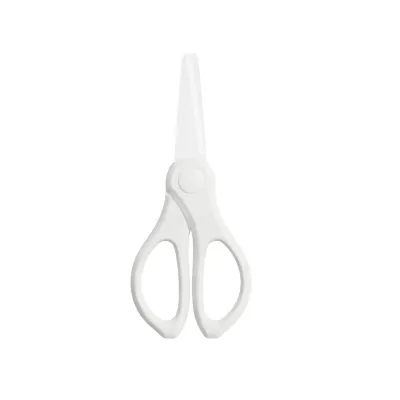
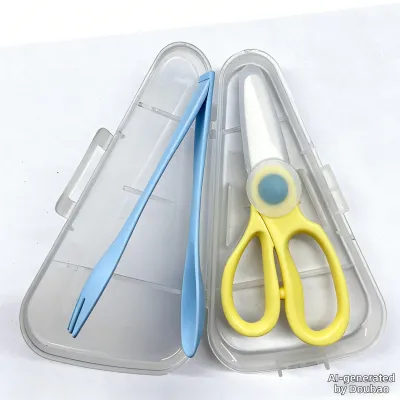
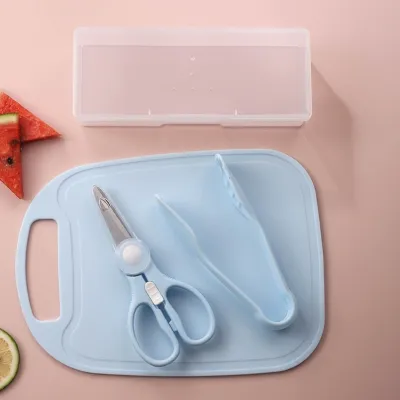
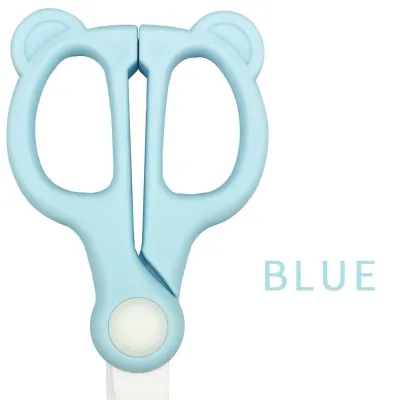
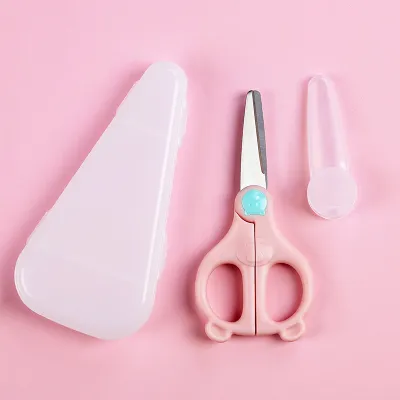
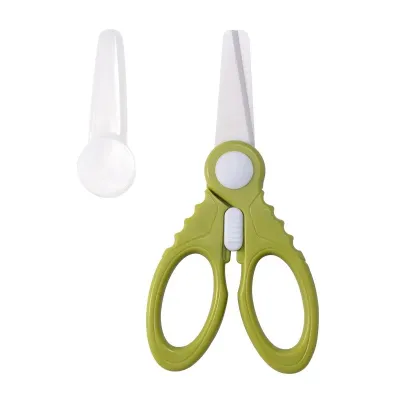
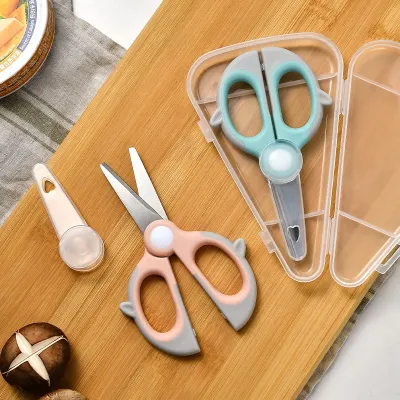
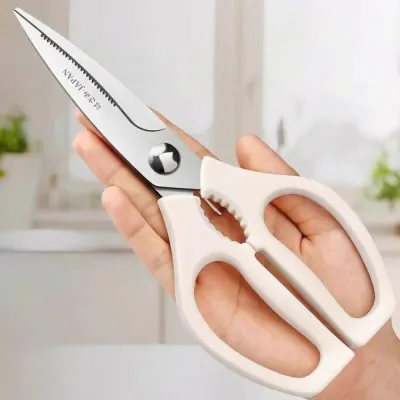
Prices are valid at publication and may change. Please refer to the product page for the latest price.
For families in Singapore, dining out at hawker centres, food courts, and cafes is a common lifestyle. Carrying a compact, lightweight pair of baby food scissors in a diaper bag makes it easy to share family meals on the go. Instead of relying on heavy, unhygienic restaurant cutlery or struggling with a dull table knife, caregivers can instantly prepare local favorites like fish soup, kway teow, or steamed dim sum into baby-friendly portions.
These scissors also support various feeding methodologies, including Baby-Led Weaning (BLW) and traditional spoon-feeding. In BLW, infants feed themselves graspable finger foods, which must be cut into specific lengths and thicknesses to match their developmental stage. For traditional feeding, scissors allow parents to quickly mince ingredients directly into porridge or puree bowls, giving them precise control over the texture and consistency of each spoonful.
Unlike heavy-duty kitchen shears designed for raw meat, bones, or packaging, baby food scissors are lightweight and optimized for cooked, soft foods. They feature compact handles and blades tailored for small portions, ensuring that meal preparation remains effortless. Using a dedicated tool also prevents cross-contamination from raw kitchen ingredients, keeping your baby’s meals safe and hygienic.
Essential Safety and Material Standards to Verify
Evaluating the materials used in baby food scissors is the most critical step in ensuring your child’s safety. The blades must be constructed from food-grade materials that do not leach harmful chemicals or alter the taste of the food. High-quality stainless steel (such as 304 or 420 grade) and zirconia ceramic are the two primary blade materials used by reputable manufacturers, both offering excellent food contact safety and durability.

The handles and protective cases must also meet strict non-toxic standards. Look for products made from high-quality, BPA-free, phthalate-free, and lead-free plastics, such as polypropylene (PP), or food-grade silicone. These materials are lightweight, impact-resistant, and safe to handle during meal preparation, ensuring that no harmful chemical residues transfer to your hands or the baby’s food.
Before purchasing, always verify the product packaging and manufacturer specifications for explicit safety labels. Reliable brands will clearly state if the product is food-safe, chemical-free, and intended for baby food preparation. Avoid purchasing unbranded or generic scissors that lack detailed material disclosures, as they may contain industrial-grade plastics or low-quality metals prone to rapid degradation.
Rather than relying on vague marketing claims like “100% safe” or “eco-friendly,” look for recognized international safety certifications. Compliance with standards set by organizations such as the U.S. Food and Drug Administration (FDA), the German LFGB, or independent testing bodies like SGS indicates that the product has undergone rigorous evaluation for food contact safety. Always verify these certification marks on the packaging or the manufacturer’s official website.
Design Features That Make Meal Prep Easier and Safer
Blade Tip Design
Traditional kitchen scissors feature sharp, pointed tips that pose an immediate puncture hazard during active mealtimes. Baby food scissors should feature rounded or blunt tips to prevent accidental pokes if the baby reaches out suddenly or if the scissors slip during preparation. This rounded design ensures that you can safely cut food directly inside silicone, plastic, or ceramic bowls without scratching or damaging the tableware.
Locking Mechanisms and Covers
Portable baby gear must be designed with safety and hygiene in mind. A secure locking mechanism keeps the blades firmly closed when not in use, preventing accidental cuts when reaching into a diaper bag or kitchen drawer. Additionally, a well-fitted protective cover or travel case is essential to shield the blades from dust and lint while preventing any residual food moisture from leaking onto other items in your bag.
Ergonomics and Action
Preparing multiple meals a day can lead to hand fatigue, especially when mincing tougher meats or fibrous vegetables. Look for scissors with ergonomic, non-slip handles that provide a comfortable grip for different hand sizes. Some models incorporate a spring-loaded action that automatically opens the blades after each cut, significantly reducing the physical effort required to chop food finely.
Detachable Hinges
Standard scissors feature a fixed pivot screw where food particles, grease, and moisture easily accumulate, creating a breeding ground for bacteria. Detachable hinges allow the two blades to separate completely with a simple twist, enabling thorough cleaning of the pivot area. This feature is highly recommended for maintaining optimal hygiene, as it ensures no hidden food residue remains to contaminate subsequent meals.
Ceramic vs. Stainless Steel Blades: A Practical Comparison
Choosing between ceramic and stainless steel blades depends on your maintenance habits, the types of food you prepare, and your lifestyle preferences. Both materials offer distinct advantages and trade-offs that impact their longevity and usability.
| Material | Sharpness Retention | Rust Resistance | Weight & Fragility | Best Use Case |
|---|---|---|---|---|
| Zirconia Ceramic | Excellent; stays sharp for years without maintenance | Outstanding; completely rust-proof and chemically inert | Lightweight but brittle; can chip if dropped on hard surfaces | Cutting soft cooked foods, fruits, and noodles; low-maintenance users |
| Stainless Steel | Good; may require occasional sharpening over time | Moderate; requires thorough drying to prevent rust spots | Highly durable; virtually unbreakable and impact-resistant | Cutting tougher meats, fibrous vegetables, and for families on the go |
Zirconia ceramic blades are highly favored for their chemical inertness. They do not oxidize, meaning they will not brown fresh fruits like apples or avocados, nor will they transfer a metallic taste to delicate foods. Because ceramic is incredibly hard, these blades maintain their razor-sharp edge far longer than steel. However, their primary limitation is brittleness; they can chip or shatter if dropped on hard kitchen tiles or used to cut through bones, frozen foods, or hard seeds.
Stainless steel blades offer unmatched durability and impact resistance, making them highly resilient to accidental drops on concrete or tile floors. They can easily handle tougher textures, including dense meats and fibrous vegetables, without the risk of chipping. The main trade-off is their susceptibility to rust, especially in Singapore’s humid climate, if they are not dried thoroughly after washing. They may also require occasional sharpening to maintain clean cuts.
Hygiene, Cleaning, and Sterilization Best Practices
Singapore’s hot and humid environment accelerates the growth of bacteria and mold, making strict hygiene practices essential for all baby feeding accessories. Before using your baby food scissors for the first time, and after every subsequent use, thorough cleaning is required to protect your infant’s developing immune system.
Always consult the manufacturer’s care instructions before subjecting the scissors to high-heat sterilization. Different plastics, silicone grips, and adhesives have specific temperature thresholds. While some handles can withstand boiling water or steam sterilizers, others may warp, melt, or degrade. If you use a UV sterilizer, verify that the plastic components are UV-resistant to prevent premature discoloration, brittleness, and cracking.
If the manufacturer explicitly states that the scissors are top-rack dishwasher safe, you can place them there for convenience. However, be aware that the intense heat and harsh detergents used in dishwashers can dull stainless steel blades over time and weaken plastic joints. Hand washing with mild, baby-safe dish soap and warm water remains the gentlest and most effective method for preserving the integrity of the materials.
For daily cleaning, separate the blades if your scissors feature a detachable hinge. Use a soft sponge or a small brush to scrub away starches from noodles, grease from meats, and fibrous residues from vegetables, paying close attention to the hinge and handle joints. Never store the scissors while they are damp; wipe them thoroughly with a clean cloth and allow them to air-dry completely in a well-ventilated area before reassembling and applying the protective cover.
Safe Usage, Supervision, and When to Replace
Baby food scissors are sharp preparation tools designed for adult use only. They must never be handed to an infant or toddler to hold, play with, or use as eating utensils, even if the protective cover is securely in place. Always keep the scissors out of your child’s reach during meals, and perform all food cutting tasks away from the immediate edge of the table to prevent curious hands from grabbing the blades.
When preparing food, cut on a stable surface such as a clean cutting board, or directly inside the baby’s serving bowl while holding the bowl securely. Ensure your fingers and your baby’s hands are well clear of the cutting path. Avoid holding food items in your palm while cutting them, as this significantly increases the risk of accidental cuts to your hands.
Regularly inspect your baby food scissors for signs of wear and tear to ensure they remain safe for food preparation. Establish a routine check before each meal, looking for physical defects that could compromise safety or hygiene. Replace the scissors immediately if you observe any of the following issues:
- The blades become dull, crushing or tearing food instead of cutting it cleanly.
- The plastic handles or safety locks develop cracks, chips, or feel loose.
- The locking mechanism fails to stay securely closed, or the protective cover no longer fits tightly.
- Ceramic blades show any micro-chips, cracks, or nicks along the cutting edge, as tiny ceramic fragments could detach and contaminate the baby's food.
To maximize safety, always store the scissors in their locked position with the protective cover on. Keep them in a high kitchen cabinet, a locked drawer, or a secure compartment in your diaper bag that is completely inaccessible to children.
Frequently Asked Questions (FAQ)
Can I use regular kitchen scissors for baby food?
Using standard household or kitchen scissors for baby food is highly discouraged due to cross-contamination risks. Kitchen shears are frequently used to cut raw meats, open packaging, or perform general household tasks, harboring bacteria that are difficult to eliminate without medical-grade sterilization. Furthermore, standard scissors are typically heavier, lack safety locks, have sharp pointed tips that can easily puncture baby bowls, and do not feature detachable blades for hygienic cleaning.
At what age should I stop using baby food scissors?
There is no strict age limit for using baby food scissors; instead, transition away from them based on your child’s oral motor development and chewing capabilities. Most children gradually transition to managing adult-sized bites between 18 months and 3 years of age. Observe your child’s ability to chew and swallow different textures. If they can comfortably bite off and chew pieces of soft meat, vegetables, and pasta without choking, you can gradually reduce your reliance on food scissors.
How do I sharpen ceramic baby food scissors?
Unlike stainless steel blades, ceramic blades cannot be sharpened at home using standard kitchen whetstones or pull-through sharpeners, as the material is extremely hard and brittle. Attempting to do so will likely chip or shatter the blade. If your ceramic baby food scissors become dull or chipped, they must be replaced or sent to a professional sharpening service that specializes in ceramic cutlery. Stainless steel scissors, on the other hand, can be carefully sharpened using a fine-grit sharpener designed for shears, provided the blade design allows access.
Community discussion
Share your experience or ask a question. Comments are reviewed before publication.