
Transitioning your child from diapers to independent bathroom habits is a major developmental milestone. When teaching a young boy to use the toilet, a standing urinal designed specifically for toddlers can be an incredibly helpful tool. The ideal standing urinal should feature a deep, well-angled splash guard to prevent messy spills, an engaging visual target to encourage focus, and a secure mounting or base system that prevents tipping. Additionally, it must offer height adjustability to grow alongside your child and be constructed from smooth, non-toxic, easy-to-clean materials. By focusing on these practical features, you can select a model that fits your bathroom layout, keeps cleanup to a minimum, and builds your child’s confidence.
Deciding If a Stand Urinal Fits Your Child's Potty Stage
Before purchasing a standing urinal, it is essential to assess whether your child is developmentally ready for this specific method of potty training. Standing to urinate requires a higher level of physical coordination, balance, and motor control than sitting on a standard potty chair. Look for signs of readiness, such as your child’s ability to stand steadily on both feet without support, pull his pants down and up independently, and follow simple instructions. An active interest in copying the bathroom habits of older family members is also a strong indicator that he may be ready to try a standing option.
A standing urinal is rarely a complete replacement for a standard potty chair; rather, it serves as a complementary tool during the transition from diapers. In the early stages of toilet training, children often struggle to differentiate the physical urges for bowel movements and urination. A standard potty chair or a toilet adapter seat remains necessary for bowel movements, while the standing urinal can be introduced specifically to build confidence for urination. This dual approach allows your child to choose the option that feels most comfortable at any given moment, reducing the pressure associated with learning a new routine.
Products mentioned in this guide
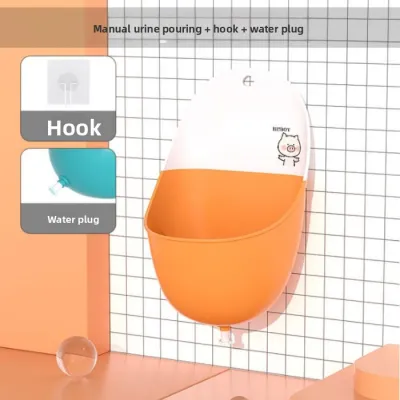

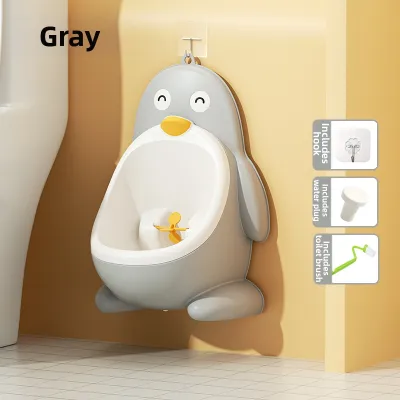
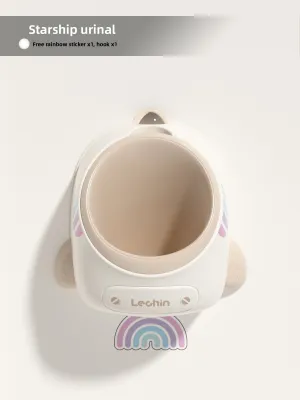
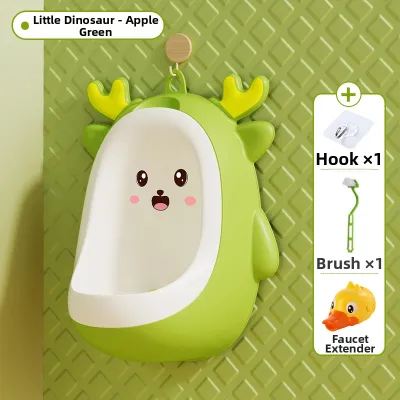
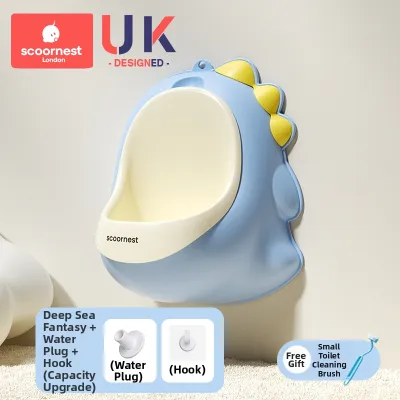

Prices are valid at publication and may change. Please refer to the product page for the latest price.
Introducing a standing urinal too early can sometimes lead to frustration, confusion, or developmental delays in potty training. If a child lacks the balance to stand still while focusing on urinating, he may experience frequent accidents, which can damage his confidence and make him resistant to using the bathroom altogether. Additionally, if the concept of standing is forced before the child understands how to control his bladder muscles in that position, it can lead to incomplete emptying or anxiety. If you notice your child resisting the urinal or showing signs of physical instability, it is best to pause, return to a sitting potty chair, and reintroduce the standing unit a few weeks or months later.
Key Design Features to Evaluate Before Buying
When shopping for a standing urinal, it is easy to get distracted by colorful cartoon designs and novelty shapes. However, the most successful products prioritize functional design over aesthetics. To make a smart investment, you should evaluate three core categories: spill prevention, physical stability, and long-term usability. A well-designed unit will seamlessly integrate into your daily routine without creating extra work for you.

While visual appeal can help capture a toddler’s initial interest, it should never compromise the structural integrity or the ease of cleaning the product. Complex shapes with deep crevices, narrow channels, or excessive decorative elements can quickly become breeding grounds for bacteria and lingering odors. Focus on finding a balance where the design is inviting to your child but remains highly practical, durable, and straightforward for you to maintain.
Splash Guards and Target Mechanisms
One of the primary challenges of standing potty training is helping your child aim correctly to keep the bathroom floor dry. This is where the design of the splash guard and the target mechanism becomes critical. A high-quality urinal features a wide, deep catch basin with a high front splash guard. The guard should curve inward slightly to redirect any upward or outward spray back into the bowl. When evaluating models, look at the angle of the basin; a steeper slope helps guide the liquid downward quickly, minimizing the risk of splashes bouncing back onto your child’s clothes or the surrounding floor tiles.
To keep your child focused and motivated, many standing urinals include visual targets, such as a small spinning wheel, a color-changing spot, or a printed graphic at the bottom of the bowl. A physical spinning wheel can be highly effective, as it provides immediate visual feedback when hit, turning a potentially stressful task into an engaging game. However, you must inspect how these targets are attached. Look for models where the target can be easily removed for thorough cleaning or those with seamless inner edges. Avoid designs with tight gaps around the target mechanism, as urine can pool in these areas, leading to stubborn stains and unpleasant odors that are difficult to scrub away.
Base Stability and Mounting Security
A standing urinal must remain completely secure during use, as a tipping accident can cause a major mess and frighten your child, setting back his progress. There are two main structural designs available: freestanding models and wall-mounted models. Freestanding urinals sit directly on the bathroom floor and often feature a wide, flared base. If you choose a freestanding model, check the manufacturer’s specifications regarding the center of gravity and whether the base can be weighted (for example, by filling a bottom compartment with water or sand) to prevent it from being easily knocked over by an active toddler.
Wall-mounted urinals are typically secured using suction cups, adhesive hooks, or screws. Suction cup models offer excellent flexibility, allowing you to adjust the height easily as your child grows, but their reliability depends heavily on your bathroom wall surface. Smooth, glazed ceramic tiles are ideal for suction cups, whereas textured tiles, matte finishes, or painted walls will prevent a secure seal, leading to sudden detachment. If your bathroom walls are textured, look for models that offer alternative mounting options, such as adhesive strips or hardware for semi-permanent mounting, and always verify the weight limits specified by the manufacturer to ensure the unit can withstand the weight of a leaning child.
Height Adjustability and Ergonomic Comfort
Children grow rapidly, and a urinal that is the perfect height today may be uncomfortably low in just a few months. To ensure long-term usability, look for a standing urinal that offers height adjustability. Some freestanding models feature adjustable support poles or extendable legs with multiple locking positions. Wall-mounted models inherently offer height flexibility, but you should ensure that the mounting mechanism allows for easy repositioning without damaging your wall surfaces or requiring you to drill new holes every few months.
Ergonomic comfort is another key factor in your child’s willingness to use the urinal. The catch basin should be wide enough to accommodate a natural, stable stance, allowing your child to stand with his feet apart for better balance. The rim of the urinal should be contoured to fit comfortably against his body without sharp edges that could pinch or irritate his skin. Additionally, consider the overall footprint of the unit. In compact bathrooms, such as those found in typical Singapore apartments, a bulky freestanding model can obstruct movement or block door clearance. Measure your available floor and wall space carefully before purchasing to ensure a comfortable fit.
Verifying Safety, Hygiene, and Material Quality
Because your child will be handling and standing close to the urinal daily, verifying the safety and quality of the materials is paramount. Always check the manufacturer’s labels, product packaging, or official website to confirm that the plastic is BPA-free, phthalate-free, and non-toxic. Since these products are frequently exposed to moisture and warmth, high-quality, medical-grade or food-grade plastics are preferred, as they do not leach harmful chemicals and are more resistant to degrading over time under regular cleaning.
Hygiene is directly tied to the physical structure of the urinal. Inspect the product closely for smooth, crevice-free surfaces. The removable inner bowl should have a glossy, non-porous finish that resists staining and prevents liquid from clinging to the sides. Avoid models that feature complex joints, hollow handles, or decorative recesses on the inside of the bowl, as these areas are incredibly difficult to sanitize properly and will quickly harbor bacterial buildup. A simple, streamlined design allows for quick, effective wipe-downs and thorough rinsing.
Physical safety checks are equally important to prevent minor injuries during unsupervised or active use. Run your fingers along all the edges of the urinal to check for sharp mold lines or rough plastic leftovers from the manufacturing process. If the urinal has adjustable joints, modular legs, or a folding mechanism, test these parts to ensure there are no pinch points that could catch your child’s fingers or skin. Furthermore, ensure there are no small, easily detachable parts—such as loose target wheels or decorative caps—that could pose a choking hazard if your child decides to play with the unit.
Introducing the Stand Urinal to Your Daily Routine
Successfully integrating a standing urinal into your child’s daily routine requires a patient, low-pressure approach. Start by positioning the urinal in a consistent, easily accessible spot in the bathroom, ideally right next to the main toilet. This placement is highly beneficial for modeling behavior, as your child can watch older family members use the toilet and naturally understand the purpose of his own miniature version. Keep the path to the urinal clear of obstacles so your child can reach it quickly when the urge arises.
When introducing the urinal, use positive reinforcement and clear, simple instructions. Show your child how the spinning wheel or visual target works by pouring a small cup of water into the basin to make it spin. Explain in simple terms that his job is to “aim for the wheel” to keep the water inside the bowl. Celebrate his successful attempts with praise, high-fives, or a simple sticker chart, but remain calm and reassuring if accidents happen. Avoid showing frustration, as pressure can cause him to regress or refuse to use the urinal altogether.
To foster independence and build healthy hygiene habits, establish a predictable, child-involved cleaning routine. Choose a model with a lightweight, easily removable catch basin that your child can help lift. After a successful use, guide your child to carefully remove the inner bowl, empty the contents into the main toilet, and rinse it under the tap. Involving your child in this process not only teaches responsibility but also demystifies the cleanup process, making him feel proud of maintaining his own personal equipment. Always supervise this process closely to ensure proper hand-washing afterward.
Your Pre-Purchase Evaluation Checklist
To help you make an informed decision when browsing options in-store or on an online marketplace, use this practical checklist to evaluate each model:
- Height Range and Adjustability: Measure your child's current standing height (from the floor to his lower abdomen) and compare it against the urinal's minimum height setting. Ensure the adjustment mechanism is easy for you to operate but secure enough that it will not slip or collapse under pressure.
- Cleaning and Maintenance: Confirm how the removable bowl is cleaned. Check the manufacturer's instructions to see if the plastic is compatible with your preferred cleaning agents or if it requires specific hand-washing steps. Avoid models that cannot be easily disassembled.
- Wall Compatibility: If choosing a wall-mounted model, inspect your bathroom walls. Ensure you have a flat, non-porous surface (like smooth ceramic tiles) for suction cups, or verify if the product includes reliable adhesive hooks or mounting screws.
- Return and Exchange Policies: Because children can be highly selective, review the retailer's return policy before purchasing. Whether you are spending S$15 or S$40, ensure you can return or exchange the product if your child strongly dislikes the design, or if the mounting system fails to adhere securely to your specific bathroom tiles.
Frequently Asked Questions (FAQ)
At what age should a boy start using a stand urinal?
There is no single, universally correct age to introduce a standing urinal, as toilet training readiness depends entirely on your child’s individual physical and emotional development. Most children begin showing interest in potty training between the ages of two and three, but some may not be ready until later. Rather than focusing on a specific birthday, look for signs of physical coordination, such as the ability to balance steadily while standing, follow simple instructions, and express a clear desire to copy adult bathroom habits. It is always a good idea to consult pediatric guidelines or your family pediatrician to assess general toilet training readiness before introducing new equipment.
Can a stand urinal be used for nighttime potty training?
Using a standing urinal for nighttime potty training is generally not recommended, especially in the early stages. During the night, children are often groggy, and their physical coordination and balance are significantly reduced, which greatly increases the risk of slips, trips, and messy spills. Additionally, navigating a dark bathroom to aim at a small target can be highly challenging without bright, disruptive lighting. For nighttime training, a standard bedside potty chair or a secure toilet adapter seat with a built-in step stool is usually a safer, more practical option that minimizes the risk of midnight accidents and keeps the routine straightforward.
How do I clean and descale the removable bowl?
To keep the removable bowl hygienic and free from odors, rinse it thoroughly with clean water immediately after every single use. This simple step prevents urine from drying and forming stubborn hard water stains or absorbing into the plastic. For regular cleaning, use a mild, child-safe soap or a gentle dishwashing liquid, and strictly follow the manufacturer’s care instructions. Avoid using harsh chemical bleach, abrasive scrubbing pads, or stiff brushes, as these can create microscopic scratches on the plastic surface. These tiny scratches can trap bacteria and make the urinal much harder to sanitize over time. If hard water scale builds up, check the manual for approved descaling methods, which often involve a gentle soak in a mild vinegar-and-water solution.

Community discussion
Share your experience or ask a question. Comments are reviewed before publication.