
When selecting a stainless steel suction bowl for your weaning baby, the most critical factors to evaluate are the grade of the steel, the design and material of the suction base, and the physical ergonomics of the bowl’s shape. A high-quality bowl should feature food-grade stainless steel (such as 304 or 316), a secure and easily removable silicone suction base that matches your highchair tray’s surface, and curved inner walls that assist your baby’s developing motor skills. By focusing on these core specifications, you can find a durable, hygienic, and practical feeding tool that supports your child’s transition to solid foods.
Weaning is a major milestone in a baby’s first year, marking the transition from a purely liquid diet to a world of diverse textures, flavors, and self-feeding skills. This developmental phase is naturally messy, as infants explore food through touch, grasp, and sensory play. During this time, caregivers often find themselves balancing the need for hygienic tableware with the practical reality of flying bowls and spilled purees.
A stainless steel suction bowl offers a unique solution to these mealtime challenges. Unlike standard plastic dishes, which can scratch easily and retain food odors, or pure silicone bowls, which can sometimes feel too flexible, a stainless steel bowl provides a rigid, highly sanitary surface. When paired with a strong suction base, it anchors the dish to the highchair tray, allowing your baby to focus on coordinating their hand-to-mouth movements rather than chasing a sliding bowl.
Products mentioned in this guide
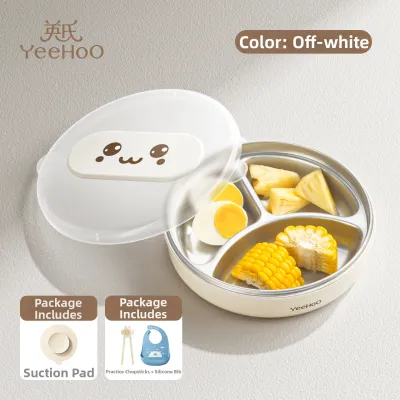
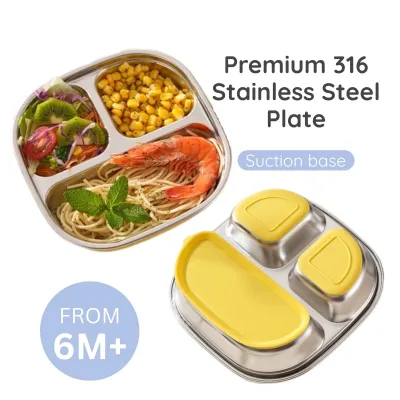
Prices are valid at publication and may change. Please refer to the product page for the latest price.
However, not all suction bowls are created equal. The market is filled with various designs, material combinations, and suction mechanisms, making it challenging to identify which option will perform best in your home. To make an informed decision, you must understand how different materials interact, how suction physics apply to various highchair surfaces, and how a bowl’s physical dimensions can either hinder or help your baby’s self-feeding progress.
Why Stainless Steel and Suction for Weaning
To appreciate why this specific product category has gained popularity among parents, it is helpful to compare its core benefits and limitations against other common materials like plastic, silicone, and ceramic. Stainless steel is widely recognized in professional culinary environments for its exceptional durability and hygiene. It is completely non-porous, meaning it does not absorb food colors, oils, or strong odors, and it resists the deep scratches where bacteria can easily hide.
In terms of temperature management, stainless steel naturally conducts and retains temperature more effectively than plastic. While this means hot food should be cooled before serving, it also means that warm purees or chilled fruit snacks maintain their desired temperature for longer during slow, exploratory feeding sessions. Many high-quality baby bowls feature a double-walled construction or an outer plastic shell to ensure the exterior remains cool to the touch, protecting sensitive hands while keeping the food inside warm.
The addition of a suction base addresses the physical reality of infant development. Around six to nine months of age, babies naturally explore gravity by dropping, throwing, and tipping objects. A reliable suction base secures the bowl to the highchair tray, preventing accidental spills and intentional tosses. This stability is not just about reducing cleanup time; it also provides a stationary target that helps your baby build confidence as they practice scooping food with a spoon or grasping finger foods.
Despite these advantages, caregivers should remain aware of a few practical limitations. Stainless steel is inherently heavier than plastic, and if a determined toddler manages to break the suction seal, a dropped steel bowl can make a loud noise on hard floors and potentially cause damage. Additionally, because stainless steel is completely opaque, you cannot monitor food levels from a side angle, and the material is strictly incompatible with microwave heating. Understanding these trade-offs helps you set realistic expectations for daily use.
Key Features to Evaluate in a Stainless Steel Suction Bowl
Selecting the right bowl requires looking past aesthetic designs and focusing on three core pillars: material safety, base mechanics, and physical ergonomics. Evaluating these specifications on product labels ensures the bowl is both safe for your baby and functional for your specific home setup.

Material Grade and Safety Checks
The first and most critical step is verifying the safety and quality of the metals and plastics used in the bowl’s construction. Always check the product packaging or manufacturer specifications for explicit food-grade stainless steel indicators. The most common high-quality grades used for baby tableware are 304 stainless steel (often referred to as 18/8) and 316 stainless steel (referred to as 18/10). These numbers indicate the percentages of chromium and nickel in the alloy, which provide superior resistance to rust, corrosion, and chemical leaching under frequent washing.
Because many stainless steel bowls are paired with outer insulating shells or suction bases, you must also inspect these secondary materials. Ensure that any plastic or silicone components are certified food-safe and completely free from harmful chemicals such as bisphenol A (BPA), phthalates, lead, and PVC. Look for compliance with recognized international safety standards, which are typically detailed on the manufacturer’s official website or product labels.
Physical safety is equally important. Closely examine the rim and edges of the stainless steel bowl. The edges should be smoothly rolled, rounded, or completely sealed against the outer shell. Avoid bowls with sharp, thin, or poorly finished metal rims that could scratch your baby’s lips or fingers. Furthermore, ensure there are no deep crevices or unsealed gaps between the steel inner bowl and the outer plastic shell, as these areas can trap water and food particles during washing, leading to mold growth.
Suction Base Design and Stability
A suction bowl is only as good as its ability to stay anchored to the table. The suction base is almost always made of flexible silicone, which creates a vacuum seal when pressed down. However, the effectiveness of this seal depends heavily on the compatibility between the silicone base and your specific highchair tray. Smooth, flat, and non-porous surfaces—such as polished plastic, glass, or sealed stone—allow the silicone to form an airtight seal.
If your highchair tray has a textured, matte, or wood-grain finish, air will slowly seep under the edges of the suction pad, causing the bowl to lose its grip within minutes. Before purchasing, inspect your highchair tray’s surface texture. If it is highly textured, you may need to look for bowls with extra-wide suction bases or consider using the bowl on a smooth dining table instead.
Additionally, evaluate how easy it is for an adult to remove the bowl. A well-designed suction base should feature a prominent pull-tab, a release lever, or a hidden lip that allows you to break the vacuum seal effortlessly with one hand. Without this feature, you may find yourself struggling to pry the bowl off the tray, which often results in sudden releases and spilled food. Conversely, ensure the release tab is positioned away from the baby’s direct line of sight or reach, as clever infants will quickly learn how to pull the tab themselves.
Bowl Shape, Capacity, and Weight
The physical dimensions of the bowl play a significant role in supporting your baby’s developing motor skills. Start by assessing the bowl’s capacity relative to your baby’s age and appetite. For early weaning, a capacity of 200ml to 250ml is more than sufficient for small portions of purees. As your baby grows into toddlerhood and begins eating more complex, multi-component meals, a larger capacity of 300ml to 400ml will prevent food from spilling over the edges during active self-feeding.
The interior geometry of the bowl is another crucial factor. Look for a bowl with a slightly curved, inward-sloping interior wall rather than straight, vertical sides. This curved profile acts as a natural guide; when your baby pushes food against the side of the bowl with a spoon, the curved wall helps scoop the food upward and onto the utensil. Flat-bottomed bowls with sharp 90-degree corners make it incredibly difficult for infants to scoop up the last remaining bites, leading to frustration.
Finally, consider the overall weight and center of gravity. A stainless steel bowl with a heavy, thick-walled design is highly durable but can become top-heavy when filled with dense foods. If the suction base fails, a top-heavy bowl is much more likely to tip over. Look for low-profile designs with a wide base-to-height ratio, which naturally distributes weight more evenly and minimizes the risk of tipping even when the suction is not fully engaged.
Matching the Bowl to Your Baby's Weaning Stage
Your baby’s feeding skills, hand-eye coordination, and dietary needs will change rapidly during the first year of weaning. To get the most value out of your purchase, it is helpful to align the bowl’s specific features with your child’s current developmental stage.
During the early weaning stage, which typically spans from six to eight months, the focus is on introducing single-ingredient purees, smooth mashes, and soft spoon-fed foods. At this point, the baby is not yet feeding themselves independently, and mealtimes are heavily guided by the caregiver. For this stage, prioritize smaller, lightweight bowls with steep walls. Since you will be holding the bowl or closely supervising, a massive suction base is less critical than a compact shape that fits easily alongside other feeding accessories on a crowded highchair tray.
As your baby enters the mid-to-late weaning stage, usually between nine and twelve months, they will begin exploring finger foods and practicing with their own utensils. This is the peak “messy phase,” characterized by active grabbing, pulling, and testing of boundaries. Your primary focus during this stage must shift to maximum suction strength and stability. Look for bowls with wide, heavy-duty silicone suction bases that cover a large surface area. The bowl should also feature a prominent curved inner rim to assist their clumsy scooping attempts and prevent food from being pushed over the sides.
By the time your child transitions into toddlerhood (twelve months and beyond), they will have developed better control over their movements and may begin to resist specialized baby gear in favor of adult-like tableware. To extend the lifespan of your investment, look for modular designs that allow you to completely detach the silicone suction base. This transforms the item into a standard, durable stainless steel bowl that can be used for snacks, soups, and family meals for years to come.
How to Build Your Shortlist: A Condition-Based Checklist
Instead of relying on generic product recommendations, you can build a highly customized shortlist by following this structured, step-by-step decision framework tailored to your specific household conditions.
Step 1: Define your primary use case and environment. Assess where the bowl will be used most frequently. If it is strictly for home use, measure your highchair tray to ensure the bowl’s base fits within the flat boundaries. If you travel frequently, visit restaurants, or send your child to daycare, prioritize a compact model that includes a secure, airtight, and leak-proof lid to transport leftovers safely.
Step 2: Filter candidates by mandatory safety and material checks. Eliminate any options that do not explicitly state the grade of stainless steel (insist on 304 or 316) or lack clear BPA-free certifications for their plastic and silicone components. Carefully inspect product photos or physical samples to ensure the rim is rolled and smooth, with no unsealed gaps between different material layers.
Step 3: Compare highchair tray compatibility and ease of cleaning. Evaluate your highchair tray’s surface texture. If it is textured, look for bowls that utilize advanced suction designs or wider silicone rings. Next, check the manufacturer’s cleaning instructions. If you rely heavily on a dishwasher, ensure both the steel bowl and the silicone base are rated as dishwasher-safe, keeping in mind that some silicone parts may require hand-washing to preserve their suction elasticity.
Step 4: Verify the retailer’s return and exchange policy. Because suction performance is highly dependent on the unique combination of your tray’s material, cleanliness, and wear, there is always a small chance a bowl may not adhere perfectly to your specific setup. Purchasing from retailers with flexible return policies ensures you can test the suction at home and exchange the product if it does not perform as expected.
Care, Maintenance, and Safety Boundaries
Proper care and maintenance are essential to preserve the hygienic properties of stainless steel and the physical integrity of the silicone suction base. When washing the bowl, always use a soft sponge or microfiber cloth paired with a mild, non-abrasive dish soap. Avoid using steel wool, metal scouring pads, or abrasive cleansers. These harsh tools can create microscopic scratches on the polished steel surface, which not only dulls the finish but also creates tiny crevices where food residue and bacteria can accumulate.
Always consult the manufacturer’s specific care guidelines regarding heat exposure. While stainless steel is highly heat-resistant, the accompanying silicone suction bases and plastic outer shells can degrade, warp, or lose their elasticity if exposed to extreme temperatures. If the manufacturer states that the silicone base is dishwasher-safe, place it strictly on the top rack away from the heating element. Most importantly, never place a stainless steel bowl in a microwave. Metal reflects microwave energy, which can cause electrical arcing, spark fires, and permanently damage your appliance.
Regularly inspect the bowl before every meal to ensure it remains safe for your baby. Over time, constant washing and accidental drops can cause wear and tear. Stop using the bowl immediately if you observe deep scratches or pitting in the steel, tears or cracks in the silicone suction base, or separation between the steel inner bowl and the outer plastic shell. If any components become loose or damaged, they can pose a choking hazard or trap moisture, making them unsafe for continued use.
Frequently Asked Questions (FAQ)
Can I put a stainless steel suction bowl in the microwave?
No, solid stainless steel bowls must never be placed in a microwave. Metal reflects microwave radiation, which can cause sparks, damage the microwave’s interior components, and pose a fire hazard. If you need to warm your baby’s food, heat it in a separate microwave-safe glass or ceramic container first, stir thoroughly to eliminate hot spots, check the temperature, and then transfer it to the stainless steel bowl.
Why is the suction bowl not sticking to my highchair tray?
Suction relies on creating a vacuum seal, which requires a completely smooth, flat, and non-porous surface. If your highchair tray has a textured, matte, or wood-grain finish, air will slowly leak under the silicone base, breaking the seal. To improve suction, ensure both the tray and the suction base are thoroughly cleaned of invisible grease, dust, and food residue. Wiping both surfaces with a slightly damp cloth immediately before pressing the bowl down can also help create a tighter seal.

Community discussion
Share your experience or ask a question. Comments are reviewed before publication.