
When preparing a nursery in Singapore, ensuring your baby has a secure and compliant sleeping environment is a top priority for any parent. Tutti Bambini is a well-known brand in the nursery furniture market, offering a range of co-sleepers, traditional cribs, and convertible cot beds. While the brand designs its products to align with rigorous international safety benchmarks, verifying the specific safety certifications, physical integrity, and assembly of your chosen model is essential before placing your infant down to sleep.
Evaluating baby furniture safety involves understanding both global manufacturing standards and local consumer safety expectations. By learning how to locate official compliance marks, inspect physical components, and maintain the crib over time, you can make an informed decision that protects your child. This guide outlines how to verify the safety of Tutti Bambini cribs, what physical features to inspect, and how to maintain a secure sleep space in your home.
Understanding Baby Crib Safety Standards in Singapore
In Singapore, consumer goods, including children’s furniture, are subject to safety requirements monitored by local regulatory bodies under the Consumer Protection (Consumer Goods Safety Requirements) Regulations. While there is no single localized manufacturing standard unique only to Singapore for baby cribs, the market heavily relies on established international standards to ensure product safety. Retailers and distributors are expected to supply products that meet these recognized global benchmarks to protect infants from structural failures, entrapment, and chemical hazards.
Products mentioned in this guide
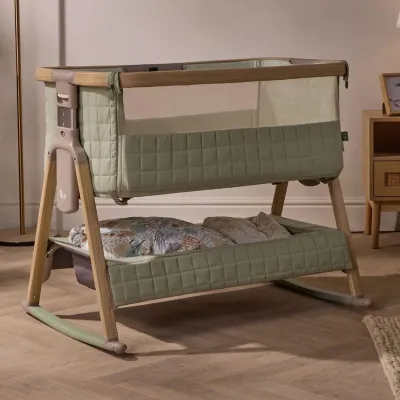
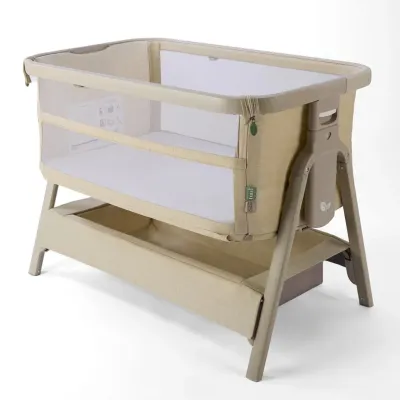
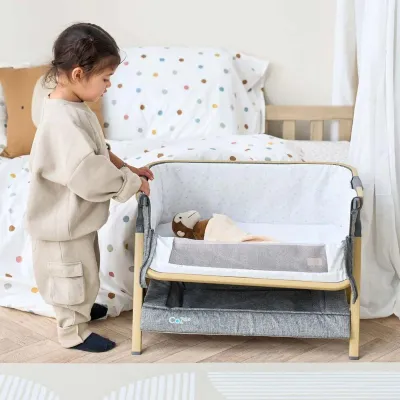
Prices are valid at publication and may change. Please refer to the product page for the latest price.
The most common and rigorous standard applied to baby cribs sold in Singapore is the European safety standard, specifically EN 716. This standard is divided into two parts: EN 716-1, which covers general safety requirements for children’s cots and folding cots for domestic use, and EN 716-2, which outlines the specific test methods used to assess these products. When a crib complies with EN 716, it means the design has undergone testing for structural stability, impact resistance, and the prevention of hazardous gaps.
Another critical standard to look for is EN 71-3, which governs the migration of certain chemical elements in materials used for children’s products. This standard ensures that any paints, lacquers, or finishes applied to the wood or metal components of the crib are non-toxic and safe, even if a teething baby chews on the rails. For brands originating in or distributing heavily within Europe and the United Kingdom, such as Tutti Bambini, compliance with these EN standards is the primary indicator of safety.
When shopping for a crib, parents should expect to find clear references to these standards on the product packaging, the instruction manual, or a permanent label affixed to the crib frame itself. If a product listing on an online marketplace or a retail showroom lacks these references, it is a signal to pause and request explicit confirmation from the seller. A compliant crib will always have its testing standards documented clearly rather than relying on vague marketing claims of being “baby-safe.”
How to Verify Tutti Bambini Safety Certifications
Verifying the safety credentials of a Tutti Bambini crib requires looking beyond promotional descriptions and examining the physical product and its official documentation. The first step is to locate the permanent safety label on the crib itself. Manufacturers of compliant cribs typically print or stamp safety warnings, model numbers, batch codes, and standard compliance details directly onto an inconspicuous part of the frame, such as the inner side of the headboard or the underside of the mattress base.

This label should explicitly state that the product conforms to EN 716 or an equivalent recognized standard. Along with the standard number, the label will usually display the manufacturer’s name, contact details, and a unique batch or serial number. This batch number is crucial, as it allows the manufacturer to trace the product back to its specific production run in the event of a safety query or a product recall.
If you are purchasing from an authorized distributor or a physical retail store in Singapore, you have the right to ask for the product’s Declaration of Conformity or official test reports. Authorized retailers should have access to these documents from Tutti Bambini to prove that the specific model has passed independent laboratory testing. If a retailer is unable or unwilling to provide this documentation, or if they dismiss your request as unnecessary, you should exercise caution before proceeding with the purchase.
Relying solely on third-party e-commerce listings or unverified online resellers is a common pitfall. Listings on general online marketplaces are often created by independent sellers who may copy and paste product descriptions without verifying if the specific stock they are selling is genuine, complete, or compliant with current standards. Always cross-reference the seller’s claims with the official Tutti Bambini website or contact their customer support directly with the model and batch number to confirm the product’s authenticity and certification status.
Key Physical Safety Features to Inspect Before Use
Once your Tutti Bambini crib is delivered, and before your baby sleeps in it, you must perform a thorough physical inspection of its structural components. The first and most critical measurement to check is the spacing between the side slats. According to international safety standards, the gap between slats must be wide enough to prevent a baby’s limbs from getting stuck, but narrow enough to prevent their head or torso from slipping through. The standard safe range is between 45mm and 65mm; a simple household check is to ensure that a standard soda can (which is approximately 66mm in diameter) cannot pass through the slats.
Next, evaluate the fit of the mattress within the crib frame. A mattress that is too small leaves dangerous gaps along the sides or corners, creating a severe entrapment and suffocation risk. To test this, place the mattress flat on the base and push it firmly into one corner. Measure the remaining gap between the mattress edge and the opposite crib side; this gap should not exceed 30mm, which is roughly the width of two adult fingers. If you can easily fit more than two fingers into the gap, the mattress is too small for the crib frame and must be replaced with one that fits precisely.
Inspect the quality and integrity of all hardware, joints, and finishes. Run your hands along the wooden or metal surfaces to check for splintering, rough edges, or peeling paint. Ensure that all screws, bolts, and dowels are made of high-quality materials and fit snugly into their designated pre-drilled holes without stripping the threads. The finishes must be completely dry, odorless, and certified non-toxic under EN 71-3 to ensure they are safe for a teething infant.
If your Tutti Bambini model features moving parts, such as a drop-side mechanism or an adjustable mattress base, test these systems repeatedly. Drop-side mechanisms have been heavily restricted or banned in certain jurisdictions due to historical failure risks, though some modern European-compliant models use highly secure, double-action locking systems that prevent accidental release. Ensure that any drop-side or folding mechanism requires a deliberate, two-step physical action to unlock, and that it locks firmly and automatically back into place without any wobbling or sticking.
For convertible cot beds that transition into toddler beds, pay close attention to the conversion joints. When converting the crib, you must use the specific conversion kits and hardware provided by the manufacturer. Inspecting the stability of the bed after conversion is just as critical as the initial crib setup, ensuring no new gaps or sharp edges are exposed during the transition.
Safe Assembly and Daily Sleep Environment Practices
The safety of a certified crib can be completely compromised by incorrect assembly. When assembling your Tutti Bambini crib, it is vital to follow the manufacturer’s official instruction manual step-by-step. Avoid relying on general assembly knowledge or attempting to shortcut the process. Ensure you use only the exact hardware provided in the packaging; never substitute missing screws or bolts with generic hardware from a local DIY store, as even minor differences in thread pitch, length, or material strength can lead to structural failure under pressure.
As your baby grows and reaches new developmental milestones, you must adjust the mattress base height accordingly. Most Tutti Bambini cribs offer multiple base height positions. The highest position is designed exclusively for newborns who cannot yet sit up, roll over, or push themselves up on their hands and knees. As soon as your baby shows signs of rolling or sitting, you must lower the mattress base to the middle or lowest position to prevent them from accidentally tumbling over the top rail.
Maintaining a minimalist sleep environment is another cornerstone of safe sleep practices. The crib should contain only a firm, flat mattress covered by a tight-fitting sheet. Keep the crib completely clear of soft bedding, pillows, heavy blankets, quilts, bumper pads, and stuffed toys. These items pose significant suffocation, strangulation, and entrapment hazards for infants. If you are concerned about your baby staying warm in an air-conditioned room in Singapore, use a properly fitted infant sleep sack instead of loose blankets.
Room placement also plays a significant role in daily safety. Position the crib away from direct drafts from air conditioning units or ceiling fans, which can cause sudden temperature fluctuations for your baby. Additionally, ensure the crib is placed far away from window blind cords, electrical wires, baby monitor cables, or wall decorations that a baby could reach and pull down once they learn to stand up in the crib.
Finally, establish a routine for regular maintenance checks. Over weeks of daily use, the vibrations from a baby moving, kicking, or rocking in the crib can cause hardware to loosen slightly. Every few weeks, physically shake the crib gently to check for any wobbling or instability. Inspect the bolts and screws, and use the assembly tools to tighten any parts that have worked loose, ensuring the frame remains rigid and secure.
Recognizing Wear and When to Stop Using the Crib
Over time, even high-quality nursery furniture will experience wear and tear. Parents must remain vigilant in identifying signs of physical degradation that could compromise the crib’s structural safety. Regularly inspect the wood for signs of cracking, warping, or splintering, particularly around load-bearing joints and screw holes. Plastic brackets, locking mechanisms, and teething rails should be checked for hairline cracks or brittleness, which can develop over time in Singapore’s warm, humid climate.
If you discover that any hardware is missing, damaged, or worn out, stop using the crib immediately. Do not attempt to patch the issue with tape, glue, or non-original parts. Instead, contact Tutti Bambini or their authorized local distributor to order genuine replacement parts designed specifically for your model. If the structural integrity of the frame is compromised—such as a cracked corner post or a broken slat—the crib is no longer safe for use and must be retired.
Additionally, keep yourself informed about manufacturer product recalls. Occasionally, safety authorities or manufacturers identify design flaws or production errors in specific batches after they have been sold. Check the official Tutti Bambini recall page or local consumer safety portals in Singapore periodically to ensure your model is not subject to an active recall. If your crib is recalled, follow the manufacturer’s instructions immediately, which may involve receiving a repair kit, returning the product, or stopping use entirely.
Frequently Asked Questions (FAQ)
Is it safe to buy a second-hand Tutti Bambini crib?
Buying a second-hand crib carries inherent risks and is generally not recommended unless you can verify its complete history. Used cribs may have suffered invisible structural damage, been stored in humid conditions that weakened the wood, or be missing critical assembly hardware. Furthermore, older models might not comply with the latest safety standards. If you do choose to accept a used Tutti Bambini crib, ensure you obtain the original assembly manual, verify that all original hardware is present and undamaged, check that the model has not been recalled, and thoroughly inspect the frame for any cracks, splinters, or loose joints before assembly.
What should I do if the certification label is missing?
If you purchase or inherit a Tutti Bambini crib and find that the physical safety certification label is missing or illegible, you should not assume the product is safe. Locate the model name, design features, and any remaining batch codes stamped on the wood, then contact Tutti Bambini’s customer service or their authorized distributor in Singapore. Provide them with photos of the crib and any identifying marks to request digital confirmation of its compliance and to obtain the correct instruction manual. Using a crib without verifiable safety documentation poses an unnecessary risk to your baby’s safety, and it is safer to replace the item if its origin and compliance cannot be confirmed.

Community discussion
Share your experience or ask a question. Comments are reviewed before publication.