
Traditional seated baby walkers are widely considered unsafe by pediatricians and child safety experts globally. While these devices were once a staple in many nurseries, evidence-based safety evaluations show they pose significant physical hazards, such as falls down stairs, tip-overs on uneven thresholds, and access to dangerous household items. Instead of helping babies learn to walk, traditional seated walkers can actually delay natural motor development by altering muscle usage and balance mechanics. For parents looking to support their child’s mobility, modern toddler push walkers offer a developmentally appropriate alternative, provided they are used under active supervision and in a thoroughly childproofed environment.
Understanding the Risks of Traditional Seated Baby Walkers
Traditional seated baby walkers consist of a wheeled frame with a suspended fabric seat. While this design is intended to keep a baby upright and mobile, it introduces several severe safety hazards that can lead to rapid, unexpected accidents. Because these devices allow infants to move at surprisingly high speeds, caregivers often do not have enough time to react before an injury occurs.
One of the most critical hazards associated with seated walkers is the risk of falls and tip-overs. In a typical home environment, even minor transitions can cause a wheeled walker to destabilize. A small threshold between rooms, the edge of a rug, or a slight change in flooring material can catch the wheels, causing the entire unit to tip over with the baby inside. The danger is exponentially higher near staircases, where a wheeled walker can quickly roll over the edge, leading to severe head and neck injuries.
Products mentioned in this guide
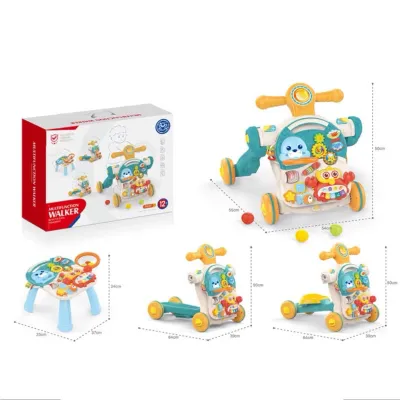
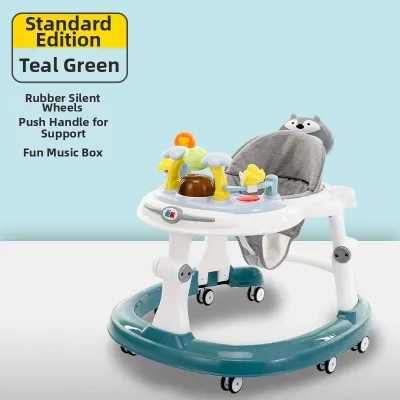
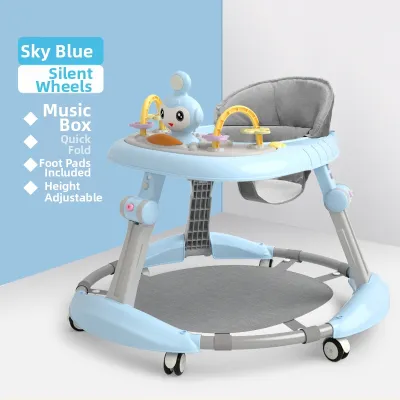
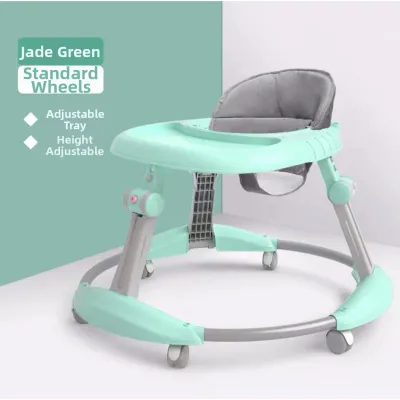
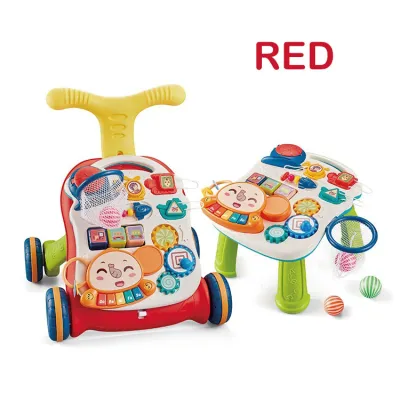
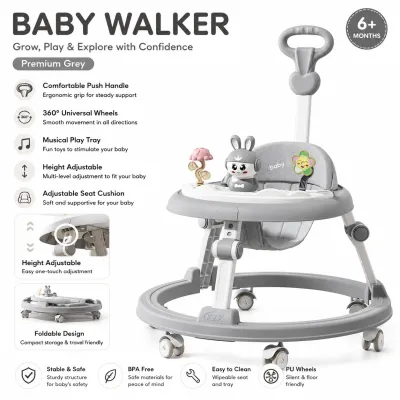
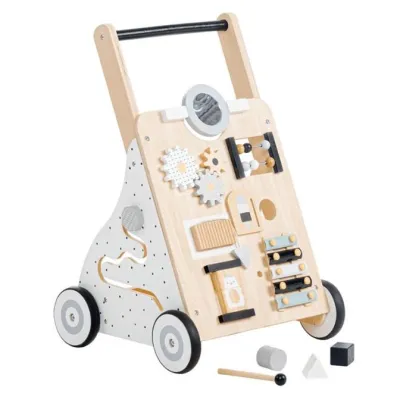
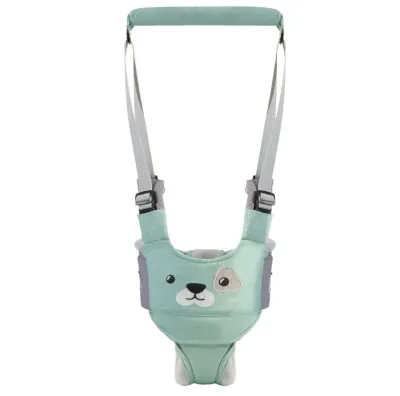
Prices are valid at publication and may change. Please refer to the product page for the latest price.
Additionally, seated walkers artificially elevate a baby and grant them rapid mobility before they have developed the cognitive awareness to recognize danger. This increased reach allows infants to access areas of the home that would normally be far out of their grasp. A baby in a seated walker can easily reach up to grab hot liquids from coffee tables, pull down heavy objects from countertops, or access toxic household cleaners and electrical cords. The combination of height and speed significantly increases the risk of burns, poisoning, and impact injuries.
Beyond falls and elevated reach, the mechanical design of traditional walkers presents physical pinch points. The folding mechanisms, hinges, and wheel attachments can trap tiny fingers and toes. As the baby moves around, these moving parts can cause painful pinches, cuts, or even fractures. Even when stationary, the collapsible frames of some older or poorly maintained models can fail unexpectedly, trapping or injuring the child.
Professional Stances and Safety Standards to Verify
Due to these documented physical hazards, major pediatric associations and child safety organizations worldwide strongly advise against the use of traditional seated baby walkers. Many medical professionals advocate for a complete ban on the sale and manufacture of these devices. When planning your nursery setup, it is essential to understand these professional stances and know how to verify the safety of any mobility aid you consider.

Before purchasing any walking aid, parents should actively check for product recalls and safety compliance marks. Reputable manufacturers list compliance certifications on their product packaging and labels. When shopping, look for recognized safety standards and verify that the product has not been subject to recent safety recalls. You can check official government consumer protection databases or dedicated product safety portals to ensure the specific model is cleared for use.
It is also important to be aware of local regulations regarding these products. In some jurisdictions, the sale, import, and advertisement of traditional seated baby walkers are legally banned. Even in regions where they remain available, retail stores may face strict guidelines regarding safety labeling. If you are considering a walker, research the local consumer product safety guidelines in your area to understand what is legally permitted and what safety features are mandated by local authorities.
Toddler Push Walkers: Evaluating the Safer Alternative
For parents seeking a tool to support their child’s transition to independent walking, a toddler push walker is often recommended as a much safer alternative. Unlike seated walkers, push walkers do not suspend the child in a seat. Instead, they function as a sturdy, wheeled toy that the child pushes from behind, allowing them to maintain a natural standing posture and control their own movement.
The structural differences between these two types of walkers are fundamental to child development. In a push walker, the child must actively engage their core, leg muscles, and balance to stay upright. This design encourages natural weight-bearing and helps build the muscle strength required for independent walking. Because the child is not strapped into a seat, they can easily step away from the toy or sit down when they get tired, reducing the risk of being trapped during a fall.
However, introducing a toddler push walker requires specific developmental prerequisites. Parents must ensure their child is physically ready before introducing this toy. A child should be able to pull themselves up to a standing position and stand independently without support before using a push walker. Introducing a wheeled push toy too early, before the child has developed sufficient trunk control and leg strength, can lead to frequent falls and frustration.
When evaluating a toddler push walker, there are several key features to check on the product label and physical design. Look for a model with adjustable wheel resistance or speed control, which prevents the walker from rolling away too quickly on smooth floors. The base of the walker should be wide and weighted to prevent it from tipping backward when the child pulls themselves up using the handle. Additionally, verify that the handle has non-slip grips and that the wheels are suitable for your home’s flooring, whether you have tiled floors or carpets.
Childproofing Your Home for Early Walkers
Regardless of whether your child is using a push walker or practicing independent walking, childproofing your living space is a non-negotiable step in ensuring their safety. Early walkers are naturally curious and move quickly, making a secure environment essential for preventing accidents.
In Singapore, where many families live in high-rise apartments with tiled or vinyl flooring, managing thresholds and securing heavy furniture is particularly important. The first step in securing your home is installing high-quality safety gates. These should be securely mounted at both the top and bottom of all staircases to prevent devastating fall injuries. Additionally, use safety gates or door locks to block off hazardous rooms, such as kitchens, bathrooms, and home offices, where dangerous items are more common. Ensure that gates are pressure-mounted or hardware-mounted according to the manufacturer’s instructions for maximum stability.
Next, conduct a thorough sweep of your living areas to secure heavy furniture and remove potential hazards. Bookshelves, television stands, and chests of drawers should be anchored to the wall using anti-tip straps, as children often try to climb these items. Remove loose rugs, electrical cords, and low-lying clutter that could cause a tripping hazard. Keep all hot liquids, sharp objects, medicines, and cleaning supplies locked away in high cabinets well out of the child’s reach.
While childproofing devices provide an essential layer of protection, they are never a substitute for active, direct adult supervision. A caregiver must remain within arm’s reach of the child during all walking practice. Wheeled toys can move rapidly, and a child’s balance can fail in an instant. Staying close allows you to intervene immediately if the child loses control or approaches an unforeseen hazard.
Signs It Is Time to Stop Using a Walker
As your child grows and develops, their physical needs and capabilities will change rapidly. Recognizing the signs that it is time to transition away from a walking aid is crucial for preventing injuries and supporting their ongoing physical development.
The most straightforward indicator is when your child reaches the manufacturer’s specified height or weight limits. These limits are clearly listed on the product label or instruction manual and are calibrated to ensure the structural integrity and stability of the walker. Exceeding these limits can cause the walker to buckle, tip over, or fail mechanically, putting your child at risk.
You should also observe your child’s behavior and physical cues. If your child is using a seated walker and constantly attempts to climb out of the seat, or if they can stand and walk independently without relying on the support of a push walker, it is time to retire the device. Continuing to use a walker when a child is already capable of independent movement can restrict their natural stride and limit their opportunities to practice complex balance adjustments.
Transitioning to free, unsupported walking is the ultimate goal for your child’s physical development. Encouraging your child to walk barefoot on safe, flat indoor surfaces helps build the muscles in their feet and ankles while improving sensory feedback from the ground. By phasing out walking aids as soon as your child shows readiness, you support their natural progression toward confident, independent mobility.
Frequently Asked Questions (FAQ)
Do traditional baby walkers delay walking milestones?
Yes, traditional seated baby walkers can delay natural walking milestones. When a baby is suspended in a seated walker, they tend to push with their toes rather than planting their feet flat on the ground, which can tighten the heel cords and alter natural muscle development. Additionally, seated walkers do not require the child to balance their own upper body weight or engage their core muscles. This lack of active balance practice can delay the development of the trunk strength and coordination needed for independent walking. To support natural milestones, pediatricians emphasize the importance of ample floor time, crawling, and pulling up on stable furniture.
What safety features are mandatory for a toddler push walker?
When selecting a toddler push walker, you must verify several essential safety features on the product packaging or label. First, check for a wide, weighted base that keeps the center of gravity low, preventing the walker from tipping backward when your child pulls themselves up. Second, look for adjustable wheel resistance or speed-control mechanisms that allow you to tighten the wheels, ensuring the walker does not roll forward faster than your child can step. Finally, ensure the materials are sturdy, non-toxic, and free of sharp edges or small parts that could present a choking hazard.

Community discussion
Share your experience or ask a question. Comments are reviewed before publication.