
Preparing fresh, nutritious meals for your infant is a rewarding milestone, but it often introduces practical challenges into a busy household routine. In Singapore, where parents frequently balance demanding work schedules with family life, dedicated baby food makers have become popular kitchen additions. These appliances promise to streamline the weaning process by combining cooking and pureeing into a single, compact unit.
Evaluating whether the Toyomi NourishMix or a competing brand is the right fit for your home requires looking beyond marketing claims. Because product specifications, retail prices, and model generations change over time, making an informed decision depends on a structured comparison. By analyzing operational workflows, physical capacities, long-term maintenance costs, and safety features, you can determine which setup aligns with your kitchen space and meal-preparation habits.
Core Functions: Comparing Steaming and Blending Workflows
The primary appeal of an all-in-one baby food maker lies in its ability to steam raw ingredients and blend them into a smooth puree within the same appliance. However, the exact mechanics of this process can vary significantly between different brands and models. Some appliances offer a fully automated, one-step cycle where the machine transitions from steaming to blending without requiring any manual intervention. Other models utilize a two-step process where you must manually flip the steaming basket or transfer the hot ingredients into a separate blending jar.
Products mentioned in this guide
![[NEW] TOYOMI Electric Mini Food Chopper EC 7037](https://img.lazcdn.com/g/p/998eeab4606be31c62c6a25ca6108753.jpg_400x400q80.jpg_.webp)
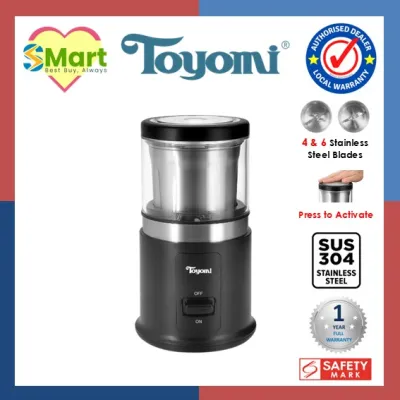
![[NEW] TOYOMI Wet and Dry Electric Grinder EG 995](https://img.lazcdn.com/g/p/a1f63a6cd1c4b1bc0cbe3fcc1d72dbf1.png_400x400q80.png_.webp)
![[NEW] Toyomi Wet & Dry 4-Blade and 6-Blade Cup Grinder for Dry and Wet Ingredients EG 775](https://img.lazcdn.com/g/p/784c815894fd6681839d0631888008be.jpg_400x400q80.jpg_.webp)
Prices are valid at publication and may change. Please refer to the product page for the latest price.
To understand the workflow of the Toyomi NourishMix, you should consult the manufacturer’s product manual to verify if its specific model generation supports automated cycles. A true one-step system minimizes hands-on time, allowing you to attend to other household tasks while the meal prepares. Conversely, a manual-transfer system, while requiring a brief intervention, often gives you greater control over the amount of cooking liquid retained in the final puree, which directly affects the food’s consistency.
Blending performance is another critical factor to compare against standard kitchen tools. Dedicated baby food makers typically feature specialized blade designs and motor speeds optimized for processing small, delicate portions of food. When evaluating different models, check the availability of pulse functions and variable speed settings. A machine with multiple speed options allows you to transition smoothly from ultra-fine purees for early weaning to thicker, textured blends as your baby develops chewing skills.
Secondary operational modes can also add significant value to your purchase. Many premium baby food makers include built-in functions for defrosting frozen portions, reheating pre-made meals, or even sterilizing small items like pacifiers and bottle teats. Compare these features across competing models to see if they are integrated natively with dedicated control buttons. If a model requires manual adjustments to water levels and steam times to perform these secondary tasks, consider whether a separate, dedicated appliance might be more practical for your daily routine.
Capacity and Batch Size: Matching Your Meal-Prep Routine
Before choosing a baby food maker, it is essential to evaluate how its physical limits match your preferred cooking style. Parents generally fall into two categories: those who prefer preparing small, fresh meals daily, and those who practice batch-cooking on weekends to freeze portions for the week. The maximum capacity of the blending jar and the volume of the water tank will dictate which routine the appliance can comfortably support.

If you plan to prepare fresh meals daily, a compact appliance with a smaller jar capacity is highly efficient. Smaller jars are designed to blend tiny portions effectively without food getting trapped under the blades. However, if you intend to cook large batches of sweet potatoes, apples, or meats to freeze in silicone trays, a small jar will force you to run multiple consecutive cycles. This not only extends your meal-preparation time but also places additional wear and tear on the appliance’s motor. Locate the exact milliliter or cup capacity in the product specifications of the Toyomi NourishMix and compare it to competing models to ensure it meets your batch-cooking expectations.
The water tank capacity is equally important, as it determines the maximum steaming time available before the machine requires a refill. A larger water tank allows for longer, uninterrupted steaming cycles, which is particularly useful for dense root vegetables or meats that require thorough cooking. When comparing models, look for water tanks that are easy to access, fill, and clean. In Singapore, where tap water can lead to mineral buildup over time, an easily accessible tank simplifies the regular descaling process necessary to maintain heating efficiency.
Finally, consider the physical footprint of the appliance on your kitchen counter. In many Singaporean homes, counter space is highly valuable. An all-in-one unit consolidates multiple functions, potentially replacing a separate steamer and blender. However, if you already own a high-quality food processor or a multi-cooker with a steaming basket, adding another single-purpose appliance might crowd your kitchen. Weigh the convenience of a dedicated baby food maker against the space-saving benefit of utilizing your existing household tools.
Price and Value: Evaluating the True Cost of Convenience
A thorough comparison of baby food makers must look beyond the initial purchase price to evaluate long-term value. Dedicated baby food makers represent a specific financial investment, and prices can vary widely based on brand reputation, material quality, and automated features. When evaluating the Toyomi NourishMix, compare its upfront retail price in S$ against the combined cost of purchasing a basic standalone food steamer and a standard hand blender.
Beyond the initial retail price, consider the ongoing cost and availability of replacement parts. Over months of daily use, components such as silicone sealing rings, blade assemblies, and water tank caps can wear down, discolor, or lose their seal. Before committing to a specific brand, check the manufacturer’s official documentation or local distributor channels to verify how easily these consumable parts can be purchased in Singapore. An appliance with a lower upfront cost may end up being more expensive over time if replacement parts are difficult to source or carry high shipping fees.
Warranty terms and local customer support are also critical components of the value equation. Because a baby food maker is often used daily during the weaning phase, any downtime can cause significant inconvenience. Review the standard warranty period offered by Toyomi and compare it to competing brands. Verify whether the brand has an established local service center or an authorized distributor in Singapore to handle repairs. Having access to local after-sales support ensures that any technical issues can be resolved quickly without the need to ship the appliance overseas.
Decision Framework: Which Setup Fits Your Kitchen?
To make the final decision, match your household’s specific needs, budget, and kitchen space against the following conditional pathways:
Choose the Toyomi NourishMix or a similar integrated baby food maker if you prioritize a streamlined, hands-off workflow and have limited counter space. This setup is ideal if you want to minimize washing up by steaming and blending in a single jar, and if the verified capacity of the model matches your daily or weekly meal-preparation goals. It offers a convenient, dedicated solution that simplifies the transition to solid foods.
Choose a standard household blender paired with a separate stovetop or electric steamer if you prefer preparing very large batches of food for freezing, cook family-sized meals simultaneously, or already own high-performance kitchen appliances. This path avoids the cost of a redundant appliance and offers greater blending power for larger volumes of food, making it a highly versatile option for growing families.
Choose a simpler, single-function baby food maker or a manual food mill if your budget is strict and you only plan to prepare basic purees from soft, pre-cooked ingredients. This approach minimizes your financial investment while still allowing you to prepare fresh, homemade meals during the initial stages of weaning.
Before making a final purchase on any online marketplace or at a local retail store, verify that the specific model generation currently in stock matches the exact feature set, voltage requirements, and safety certifications you expect. Manufacturers occasionally update model specifications without changing the product name, so reviewing the physical box or official user manual is always recommended to ensure the appliance meets your standards.
Frequently Asked Questions (FAQ)
Can I use the Toyomi NourishMix to prepare food for older toddlers?
Yes, you can adapt the use of your baby food maker as your child transitions from smooth purees to textured, chunkier foods. By shortening the blending time or utilizing the manual pulse function, you can control the consistency of the food to match your toddler’s developing chewing abilities. This allows the appliance to remain useful beyond the initial stages of weaning.
However, it is essential to check the manufacturer’s instructions regarding maximum ingredient hardness and size limits. Toddler meals often incorporate denser, more fibrous ingredients like meats, grains, or raw root vegetables. Attempting to blend hard or dry ingredients without sufficient liquid can strain the motor and dull the blades prematurely. If your child has specific developmental or feeding challenges, consult a qualified pediatrician or pediatric dietitian for personalized guidance.
Is it safe to leave the baby food maker unattended while steaming?
You must consult the specific user manual for your model to verify if it features an automatic shutoff, a digital timer, or boil-dry protection. Many modern baby food makers include these safety features to cut power automatically when the steaming cycle finishes or if the water tank runs dry. However, safety protocols can vary between different model generations, so verifying these functions in your product documentation is crucial.
Even with built-in safety mechanisms, standard precautions should always be followed to ensure a safe kitchen environment. Place the appliance on a flat, stable surface well out of reach of children and pets. Ensure there is adequate clearance around the unit, as steam released during the cooking cycle can damage overhead wooden cabinets or cause accidental scalds. Never leave a hot appliance completely unsupervised if children are nearby, and always allow the unit to cool fully before cleaning or handling the blade assembly.

Community discussion
Share your experience or ask a question. Comments are reviewed before publication.