
Preparing homemade meals for your little one is a rewarding milestone, but choosing between a dedicated Toyomi 4-in-1 baby food maker and a standard kitchen blender depends on your daily caregiving routine, existing kitchen tools, and meal prep strategy. There is no universally superior appliance; instead, each tool supports a distinct workflow designed to fit different lifestyles.
For parents navigating the early stages of weaning, balancing work, caregiving, and household chores requires an efficient kitchen routine. A dedicated baby food maker streamlines cooking by combining steaming and blending into a single cycle, minimizing hands-on monitoring. On the other hand, a standard blender relies on your existing cookware to prepare ingredients before processing, offering greater volume and long-term versatility for the entire household. By evaluating how each appliance handles daily preparation, batch sizes, and cleanup, you can select the workflow that best integrates into your home.
Understanding the Core Workflows
To make an informed decision, it is essential to understand how these two appliances differ in their mechanical operation. The Toyomi 4-in-1 baby food maker is designed specifically to consolidate multiple cooking steps into one compact vessel. In this workflow, you begin by pouring a measured amount of water into the integrated water tank, placing raw, chopped ingredients into the steaming basket, and setting the timer. The machine heats the water to generate steam, cooking the food gently. Once the steaming cycle finishes, you transfer the cooked ingredients into the blending jar—or, depending on the specific model’s design, initiate the blending cycle directly—to process the food into a smooth puree without changing containers.
Products mentioned in this guide
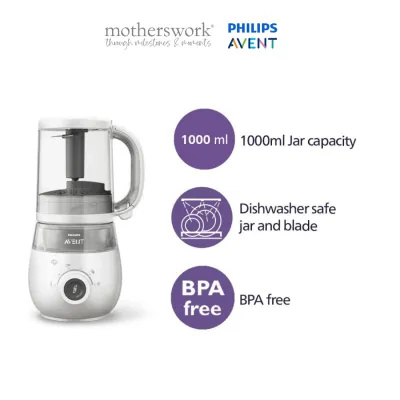
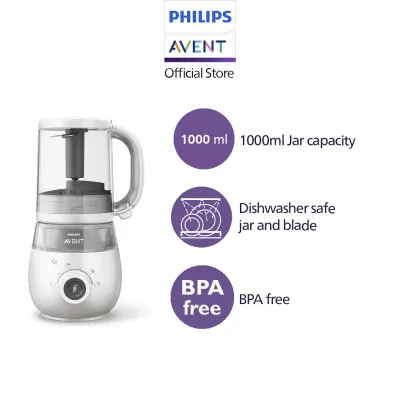
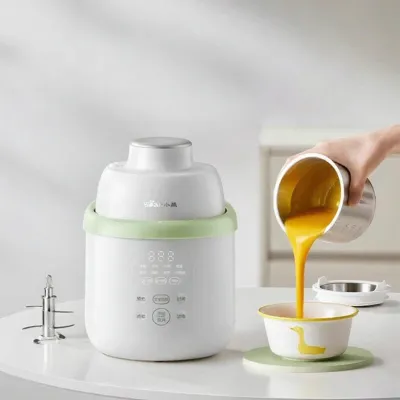
![Toyomi 0.7L Electric Mini Slow Cooker [SC 700] *Suitable as Baby Cooker*](https://img.lazcdn.com/g/p/4af29cff6996d17fc56359de4fc9c2d4.jpg_400x400q80.jpg_.webp)
Prices are valid at publication and may change. Please refer to the product page for the latest price.
In contrast, the standard blender workflow requires a multi-step process using separate kitchen tools. You must first cook the raw ingredients on your stovetop using a traditional pot, a steaming basket, or a microwave-safe dish. Once the food is thoroughly cooked and tender, you must carefully transfer the hot ingredients into the blender jar, adding a portion of the cooking liquid or breast milk to achieve the desired consistency. The blender is then plugged in, secured with its lid, and operated manually using speed dials or pulse buttons until the mixture reaches the correct texture.
Both methods require careful attention to operational guidelines to ensure safety and appliance longevity. When using a 4-in-1 steam blender, you must regularly check the manufacturer’s manual for specific water tank requirements, as using the incorrect volume of water can lead to undercooked food or dry-boiling. Similarly, standard blenders have strict maximum fill lines and temperature thresholds that must be observed to prevent motor strain or accidental spills.
Key Comparison Dimensions for Baby Food Prep
Choosing between these two appliances involves looking beyond raw motor power. The practical utility of your chosen tool in a busy kitchen hinges on three main dimensions: time management, batch sizing, and cleanup effort.

Convenience and Time Management
The primary appeal of an all-in-one baby food maker is its “set-and-forget” convenience, which allows caregivers to multitask during busy days. Because the steaming and blending functions are integrated, you do not need to stand over a hot stove to monitor the cooking progress. You can safely leave the kitchen to attend to your baby, knowing the appliance will complete its steaming cycle independently. This automated workflow reduces the mental load of meal preparation, making it highly suitable for parents who prefer preparing fresh, single-serving meals right before feeding times.
Conversely, a standard blender requires active monitoring during the initial cooking phase on the stove. However, it can offer significantly faster processing times once the ingredients are ready. If you prefer to cook large quantities of vegetables or grains in bulk, a high-powered standard blender can process a massive volume of food in a fraction of the time it takes to run multiple small cycles in a baby food maker. For caregivers who have dedicated meal-prep blocks during the weekend, the active monitoring of stovetop cooking is a minor trade-off for the rapid, high-volume blending capability of a traditional kitchen appliance.
Batch Size and Meal Prep Strategy
Your approach to meal planning plays a critical role in determining which appliance workflow is more sustainable for your household. Dedicated 4-in-1 baby food makers are typically engineered with smaller jug capacities, often optimized for single-meal or single-day portions. This compact design is ideal if you prefer serving freshly made purees daily and want to minimize food waste. However, attempting to prepare a week’s worth of frozen portions in a small-capacity machine can become tedious, requiring you to run several consecutive cycles and clean the unit repeatedly.
Standard kitchen blenders excel in large-scale meal preparation due to their generous jar capacities. If your strategy involves cooking a large batch of sweet potatoes, carrots, or apples, blending them all at once, and freezing the purees in silicone trays, a standard blender is highly efficient. It is important to note, however, that standard blenders often require a minimum volume of ingredients to function correctly; attempting to blend a single portion of food in a large jar can result in the blades spinning uselessly without catching the ingredients. Caregivers must verify the exact maximum capacity and minimum blending thresholds on the product labels to avoid motor strain or unnecessary food waste.
Cleaning Effort and Kitchen Footprint
Post-meal cleanup is a daily reality that can quickly make an appliance feel like a chore rather than a help. A 4-in-1 baby food maker consolidates the cooking vessel, meaning you have fewer dirty pots and pans to wash after preparation. However, these specialized machines often feature multiple intricate parts, including steam baskets, blade assemblies, rubber gaskets, and splash guards, all of which must be disassembled and washed thoroughly to prevent mold or bacterial growth. Additionally, because these units use water to generate steam, you must regularly perform descaling procedures on the water tank using food-safe descaling agents or vinegar solutions, as outlined in the manufacturer’s manual.
A standard blender workflow involves washing the pot or steamer basket used on the stove, alongside the blender jar, lid, and blade assembly. While this may seem like more individual items, standard blender components are often simpler in design, with fewer small crevices where food particles can hide. Many standard blender jars are also designed with self-cleaning functions or are labeled as dishwasher-safe, simplifying the process. In terms of kitchen footprint, a standalone 4-in-1 unit requires dedicated countertop or cabinet space, which can be a significant consideration in compact apartments. If you already own a standard blender, adding another single-purpose appliance may clutter your workspace unnecessarily, whereas storing a standard blender alongside your existing cookware utilizes tools you already own.
Matching the Appliance to Your Baby's Feeding Stage
As your baby grows, their nutritional needs and physical capabilities change rapidly, directly impacting the usefulness of your kitchen appliances. During the initial weaning stage, which typically begins around six months of age, infants require ultra-smooth, completely lump-free purees to safely transition to solid foods. Dedicated 4-in-1 baby food makers are highly specialized for this stage, as their compact jars and blade configurations are designed to emulsify small quantities of steamed fruits, vegetables, or meats into a perfectly uniform consistency.
However, this early weaning phase is relatively short. Within a few months, babies naturally progress to chunkier textures, mashed foods, and eventually finger foods to develop their chewing and swallowing coordination. As your child transitions to textured meals, the need for fine blending and heavy steaming decreases significantly. At this stage, a specialized baby food maker may see less frequent use, as you begin preparing meals that resemble the rest of the family’s diet.
A standard kitchen blender or a multi-purpose food processor offers greater long-term versatility as your child’s feeding habits evolve. While it may require more manual adjustment to achieve a textured pulse rather than a smooth puree, a standard blender remains useful long after the weaning phase is over. You can continue to use it for family smoothies, soups, sauces, and batters, ensuring the appliance remains a valuable asset in your kitchen for years. Before purchasing any appliance, caregivers should verify the age and development stage recommendations in the product documentation to ensure the tool aligns with their child’s immediate and upcoming feeding milestones.
Decision Framework: Choosing Your Toyomi Workflow
To finalize your decision, it is helpful to evaluate your household’s specific habits, kitchen space, and long-term goals against a structured framework.
You should choose the Toyomi 4-in-1 baby food maker if you prioritize hands-free convenience and prefer to prepare small, fresh batches of food from scratch every day. This appliance is particularly beneficial if you have limited existing cookware, do not want to monitor a hot stove while caring for your baby, and appreciate a single-vessel system that handles both cooking and blending. It is an excellent fit for compact routines where fresh, daily preparation is the preferred method.
On the other hand, you should choose a standard kitchen blender if you prefer a batch-cooking and freezing strategy, already own reliable pots and steaming baskets, and want an appliance that serves the entire family. The larger capacity of a standard blender makes it highly efficient for processing bulk ingredients, and its utility extends far beyond the infant weaning stage, making it a more versatile long-term investment for your household.
Before making any purchase, always verify that your kitchen has adequate ventilation to handle the steam discharge from a 4-in-1 unit, as moisture buildup can affect nearby cabinetry. Additionally, check the specific model’s warranty, safety certifications, and electrical requirements on the official Toyomi documentation to ensure safe and reliable operation in your home.
Frequently Asked Questions (FAQ)
Can a standard blender handle hot ingredients safely?
Blending hot, freshly cooked ingredients in a standard kitchen blender carries inherent safety risks if not done correctly. When hot liquids are processed in a tightly sealed blender jar, the steam can rapidly expand, creating intense pressure buildup that may cause the lid to blow off, resulting in severe steam burns or kitchen messes. To prevent this, you must consult your specific blender’s user manual for maximum temperature limits and venting instructions. If the manufacturer permits blending warm foods, it is highly recommended to let the ingredients cool slightly before processing, remove the center cap of the blender lid to allow steam to escape, cover the opening with a clean folded towel, and use the pulse function at a low speed.
Do I need a dedicated baby food maker if I already have a good kitchen blender?
A dedicated baby food maker is an optional convenience rather than a strict necessity if you already own a reliable kitchen blender. The primary advantage of a 4-in-1 appliance is its integration of steaming and blending in a single, automated cycle, which saves hands-on time but does not necessarily offer superior blending power compared to a high-quality standard blender. If you are comfortable steaming ingredients on your stovetop using existing pots and transferring them safely to your current blender, you can achieve the exact same nutritional results and smooth textures without spending extra money on a specialized machine. Assess whether the automated convenience of a dedicated unit justifies the additional cost and countertop space in your home.

Community discussion
Share your experience or ask a question. Comments are reviewed before publication.