
Transitioning your child from a baby crib to their first toddler bed is a major developmental milestone, but it also introduces new physical safety challenges. As toddlers gain independence, they move, roll, and explore their sleep space in ways infants cannot. To protect them from structural failures, entrapment, and toxic materials, you must look for specific juvenile product safety certifications before making a purchase.
When shopping for a toddler bed, the primary safety certifications to verify include compliance with international standards such as ASTM F1821 (the standard consumer safety specification for toddler beds) or European standards like BS EN 1725 and BS 8509. Additionally, material safety certifications such as GREENGUARD Gold or OEKO-TEX Standard 100 help ensure the bed’s finishes and textiles are free from harmful chemical emissions.
While aesthetic designs and trendy styles might catch your eye in retail showrooms or online listings, structural safety must remain your absolute priority. Understanding how to read safety labels, verify third-party test reports, and physically inspect the bed will ensure your child’s new sleep environment is both secure and healthy.
Products mentioned in this guide
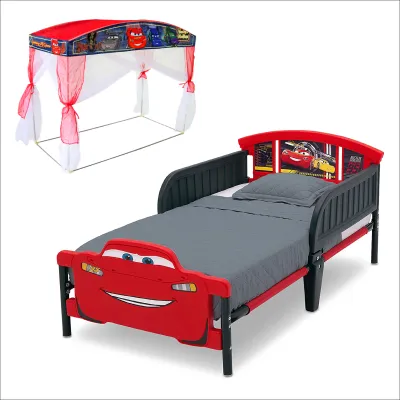
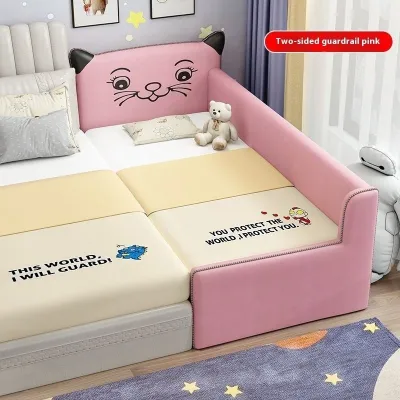
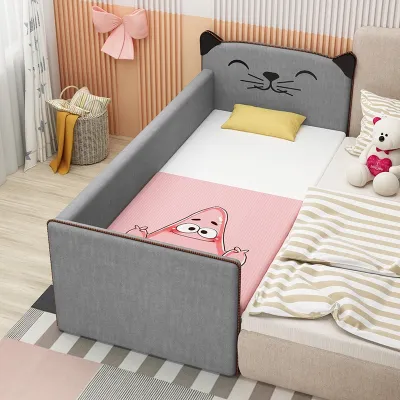
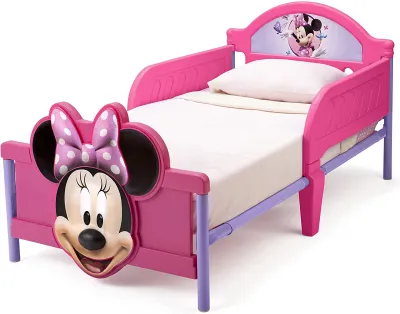
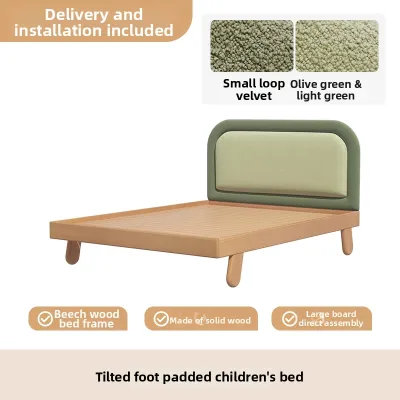
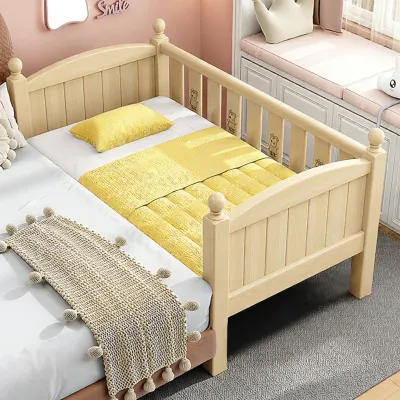
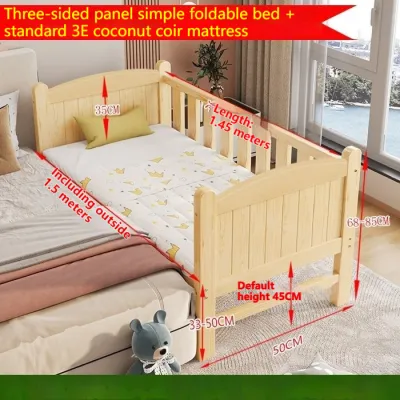
Prices are valid at publication and may change. Please refer to the product page for the latest price.
Why Formal Safety Certifications Are Non-Negotiable
A toddler bed is not simply a smaller version of an adult bed, nor is it a modified baby crib. It is a highly specialized piece of transitional furniture designed for children who are mobile but still lack the coordination and hazard awareness of older kids. Relying solely on visual appeal, brand popularity, or a seller’s unverified safety claims can expose your child to severe, hidden hazards.
The primary physical hazards associated with poorly designed or untested toddler beds include limb or head entrapment, dangerous falls, structural collapse, and choking on small detachable parts. Entrapment typically occurs when the gaps between the mattress and the frame, or the spaces within the guardrails, are wide enough to let a child’s body slide through but narrow enough to trap their head or limbs. Without rigorous testing, these structural dimensions are often miscalculated by manufacturers who prioritize aesthetics over safety.
Falls are another major risk during this transitional phase. Toddlers are highly active sleepers who roll frequently throughout the night. Certified toddler beds are tested to ensure their guardrails can withstand the lateral pressure of a rolling or leaning child without breaking or dislodging. Uncertified frames may feature flimsy guardrails that give way under pressure, leading to painful falls onto hard bedroom floors.
Furthermore, children in this age group are incredibly active and unpredictable. They do not merely lie still; they jump, bounce, climb, and test the physical limits of their furniture. Standard adult furniture is designed for static weight distribution, whereas juvenile sleep furniture must undergo dynamic structural testing to ensure joints, slats, and fasteners do not snap or collapse under sudden, localized impacts.
Formal safety certifications indicate that a product has undergone independent, standardized laboratory testing to verify its structural integrity and design safety. These tests replicate years of wear, tear, and active use in a matter of days. Relying on a manufacturer’s self-declared safety claims is highly risky, as independent testing bodies provide the only unbiased verification that a bed meets strict safety thresholds.
How to Identify Legitimate Safety Standards and Compliance Marks
To ensure you are purchasing a genuinely safe product, you must learn to look past marketing jargon and locate verifiable safety standards. Legitimate manufacturers will prominently display their compliance certifications on the product packaging, within the assembly manual, or on the official product specification sheet.

When reviewing a toddler bed, look for explicit references to established national or international juvenile furniture safety standards. In the United States, the gold standard is ASTM F1821, which is often paired with a Juvenile Products Manufacturers Association (JPMA) certification seal. In Europe and the United Kingdom, look for compliance with BS EN 1725 (for general bed safety) and BS 8509 (specifically for children’s domestic beds). These codes represent specific, highly rigorous testing protocols that cover everything from structural strength to entrapment hazards.
Be highly skeptical of vague, self-declared marketing terms such as “baby-safe,” “eco-friendly,” “non-toxic,” or “safety-tested.” These phrases are often used as promotional buzzwords and carry no legal or technical weight unless they are accompanied by a specific, verifiable standard or the name of an authorized testing laboratory. A truly safe product will back up its claims with a certificate of compliance that you can request or download.
Material safety is just as critical as structural integrity, particularly because toddlers may chew on bed frames or breathe in chemical fumes during long sleep hours. Look for third-party certifications that limit volatile organic compounds (VOCs) and heavy metals in paints, varnishes, and engineered wood. GREENGUARD Gold certification indicates that the product has been tested for low chemical emissions, while CertiPUR-US (for foam components) and OEKO-TEX Standard 100 (for textiles) ensure the absence of harmful flame retardants, phthalates, and heavy metals.
For parents shopping in Singapore, it is vital to verify that the toddler bed complies with local consumer protection laws. Under the Consumer Protection (Safety Requirements) Regulations overseen by Enterprise Singapore, children’s products must meet stringent safety baselines. When buying from local retailers or authorized distributors, always check for official compliance declarations or ask the importer to confirm that the product meets Singapore’s safety requirements for juvenile furniture.
Physical Safety Features You Must Inspect Beyond the Label
While formal certifications provide an excellent baseline, you should always conduct your own physical inspection of the bed’s design and structural features. This hands-on evaluation allows you to catch any manufacturing defects, shipping damage, or design flaws that could compromise your child’s safety.
Guardrail Integrity Guardrails are the most critical safety feature on any toddler bed, as they prevent your child from rolling out of bed during active sleep cycles. Verify that the guardrails are securely attached to the bed frame and do not wobble or flex when pressure is applied. The gap between the bottom of the guardrail and the top of the mattress must be narrow enough to prevent a child’s head or torso from slipping through. Additionally, ensure the guardrail extends high enough above the mattress surface to provide a reliable physical barrier.
Mattress Fit and Dimensions A poorly fitting mattress is a severe entrapment hazard. When placing a mattress into the toddler bed frame, there should be virtually no gap between the mattress edges and the inner walls of the bed frame. If you can fit more than two fingers between the mattress and the frame, the fit is too loose, and your child’s limbs or head could become wedged in the space. Always verify the manufacturer’s recommended mattress dimensions in the product manual before purchasing a mattress separately.
Hardware and Structural Stability Examine all screws, bolts, brackets, and joints closely. High-quality toddler beds use robust metal-on-metal hardware rather than wood screws that can strip and loosen over time. All hardware must be completely recessed or covered with smooth caps to prevent snagging your child’s clothing, hair, or skin. Shake the frame firmly; it should feel solid and grounded, with absolutely no wobbling, creaking, or shifting at the joints.
Surface Finishes and Edges Run your hands over every surface of the bed frame, including the undersides of the slats and the back of the headboard. The wood or plastic must be completely smooth, free of splinters, and devoid of sharp edges or rough corners. If the bed is painted or varnished, inspect the finish to ensure it is not peeling, flaking, or bubbling, as toddlers are prone to chewing on bed rails, which poses a direct ingestion and choking risk.
Absence of Protrusions and Cutouts Avoid toddler beds that feature decorative cutouts in the headboard or footboard, as these can easily trap a child’s head, fingers, or limbs. Similarly, ensure there are no protruding corner posts or decorative finials extending upward from the bed corners. These protrusions can catch on loose clothing, pajamas, or necklaces, presenting a dangerous strangulation hazard.
Step-by-Step Verification When Shopping Online or In-Store
Whether you are browsing a physical showroom in Singapore or navigating online e-commerce platforms, verifying safety claims requires a systematic approach. Do not rush into a purchase based on attractive product photos or discounted prices.
In-Store Inspection If you are shopping in a physical retail store, take full advantage of the display models. Perform a physical “shake test” by grasping the top of the headboard and moving it side-to-side to evaluate its structural stability. Check the mattress fit on the display model, and physically feel the undersides of the rails to check for rough edges or exposed hardware. Ask the sales staff to show you the product’s original user manual and safety certification documents.
Online and E-commerce Platforms When shopping online, physical inspection is impossible before delivery, making digital verification essential. Search the manufacturer’s official website for downloadable user manuals, assembly instructions, and safety specification sheets. Legitimate brands will openly share their compliance certificates and provide exact dimensions for the required mattress. If this information is missing, treat the listing with caution.
Red Flags in Listings Be highly cautious when browsing unverified third-party sellers on online marketplaces. Red flags include listings that lack a clear, recognizable brand name, omit any mention of specific safety standards (like ASTM or EN), or rely entirely on highly edited stock photos that obscure the bed’s structural joints and hardware. If a listing focuses entirely on low prices and aesthetic appeal while ignoring safety specifications, it is best to look elsewhere.
Pre-Purchase Documentation If you are interested in a specific toddler bed but cannot find its safety certifications listed online, contact the manufacturer or local distributor directly. Request a copy of the Children’s Product Certificate (CPC) or the laboratory test report verifying compliance with ASTM F1821 or BS EN 1725. A reputable company will readily provide this documentation to assure parents of their product’s safety.
Recall Checking Before finalizing your purchase, check national consumer safety databases for any past or active product recalls. In Singapore, you can check the product recall listings published by the Consumer Product Safety Office (CPSO) under Enterprise Singapore, as well as global databases like the US Consumer Product Safety Commission (CPSC). Ensure the specific model and batch number of the bed you are buying have never been flagged for safety defects.
Safe Setup, Maintenance, and When to Retire the Bed
Your safety responsibilities do not end once you purchase a certified toddler bed. Correct assembly, strategic room placement, and ongoing maintenance are vital to keeping the sleep environment safe as your child grows.
Assembly and Placement Always follow the manufacturer’s assembly instructions exactly, utilizing only the specific hardware, screws, and brackets provided in the packaging. Never substitute missing parts with generic hardware from a local DIY store; if a screw is missing, contact the manufacturer for an official replacement. Place the bed in a safe location within the bedroom, keeping it far away from windows, electrical outlets, wall heaters, heavy furniture that could tip over, and window blinds with dangling cords, which pose a severe strangulation hazard.
Routine Maintenance Checks Toddlers are highly active, and their daily movement can cause hardware to loosen over time. Establish a monthly routine to inspect the bed frame. Tighten any loose bolts or screws, check that the wooden slats remain securely positioned, and verify that the guardrails have not developed any play or wobbling. Inspect the frame for any signs of stress fractures, structural cracks, or splintering wood, especially if your child has a habit of jumping on the bed.
Conditions for Immediate Discontinuation A toddler bed is a temporary transitional solution, and you must know when it is time to move your child to a standard single or twin bed. Immediately stop using the bed if your child attempts to climb over the guardrails, as this indicates they have outgrown the safety features of the frame. Additionally, monitor your child’s physical growth; once they reach the manufacturer’s specified maximum weight or height limit (typically around 22.7 kg or when their head is within 5 cm of the top of the headboard), the bed is no longer safe. You must also retire the bed immediately if you detect any structural cracking, broken slats, or irreplaceable missing hardware.
Professional Consultation If you ever have doubts about the structural integrity of the bed—such as after a heavy impact, a move, or if you notice unusual flexing in the frame—discontinue use immediately. Do not attempt makeshift repairs with glue or non-standard brackets. Contact the manufacturer’s customer service or consult a professional furniture repair specialist to determine if the bed can be safely salvaged, or transition your child to a standard bed to avoid any unnecessary risks.
Frequently Asked Questions (FAQ)
Are second-hand or hand-me-down toddler beds safe to use?
While using a second-hand or hand-me-down toddler bed can be a cost-effective option, it introduces several hidden safety risks. Used beds may have undetected structural fatigue, micro-cracks in the wood, or slightly stripped screw threads from previous assemblies. Furthermore, they may be missing critical hardware, lack the original assembly manual, or conform to outdated safety standards that do not reflect modern safety regulations. If you choose to use a hand-me-down, you must obtain the original manual, verify that every single piece of original hardware is present and undamaged, check the model against current recall databases, and ensure it meets current safety standards. Never use a bed with makeshift repairs, missing parts, or peeling paint.
Do toddler beds require the exact same safety certifications as baby cribs?
No, toddler beds and baby cribs are governed by distinct safety standards due to the different developmental stages and physical capabilities of the children using them. Baby crib standards focus heavily on preventing infants from falling out or getting trapped, featuring strict regulations on slat spacing, mattress height adjustments, and the complete ban of drop-side mechanisms. Toddler bed standards, such as ASTM F1821, focus specifically on hazards unique to an open-sided, low-profile design. These include guardrail strength and placement to prevent rolling out, mattress fit to prevent entrapment in a lower-profile frame, and structural stability to handle the active weight of a mobile toddler. A bed must be certified specifically for toddler use, not just modified from a crib without meeting transitional standards.

Community discussion
Share your experience or ask a question. Comments are reviewed before publication.