
Selecting a safe sleep environment for your infant is one of the most critical decisions you will make as a parent. In Singapore, where a wide range of imported nursery furniture is available both in physical showrooms and across online marketplaces, understanding safety certifications is essential. While the Singapore government enforces general consumer safety regulations, navigating the specific standards that apply to a baby bed requires a clear understanding of global safety benchmarks. By prioritizing verified international certifications, you can ensure your child’s bed is structurally sound, chemically safe, and designed to prevent sleep-related accidents.
Navigating Baby Bed Safety Regulations in Singapore
When purchasing baby furniture in Singapore, parents often assume that any product available for sale has undergone rigorous, localized safety testing. However, Singapore’s regulatory landscape relies primarily on general product safety and consumer protection frameworks rather than a single, localized mandatory safety standard written exclusively for baby cribs. The Consumer Product Safety Office (CPSO), which safeguards consumers from unsafe general goods, monitors products under the Consumer Protection (Consumer Goods Safety Requirements) Regulations (CGSR). Under these regulations, general consumer goods must conform to established international standards if no specific national standard exists.
Because there is no dedicated Singapore Standard (SS) specifically for baby beds, reputable local retailers, major physical stores, and established international brands operating in Singapore rely on recognized global certifications to verify product safety. These brands take on the responsibility of ensuring their products comply with rigorous foreign standards to mitigate liability and protect infant health. This regulatory structure means that the burden of verification often falls on the consumer, making it vital to actively look for specific safety labels.
Products mentioned in this guide
![[SG Stock]Brotish Multifunctional 2 Layer Portable Infant Baby Cot Playpen Travel Cot Bed Double-deck Playpen Sleep Bed](https://img.lazcdn.com/g/p/9306630fe674b3e82e74c940f19a16cd.jpg_400x400q80.jpg_.webp)
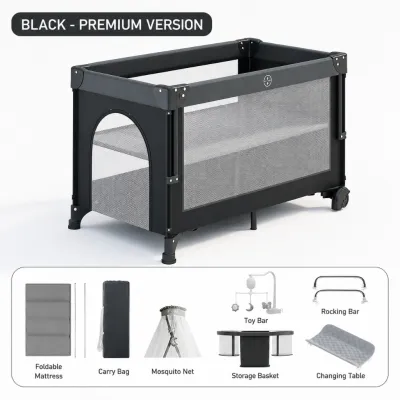
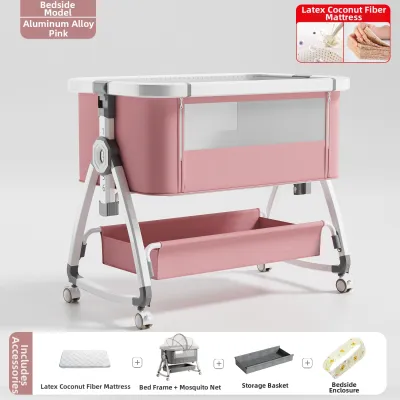
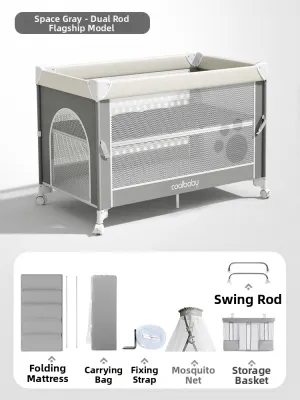
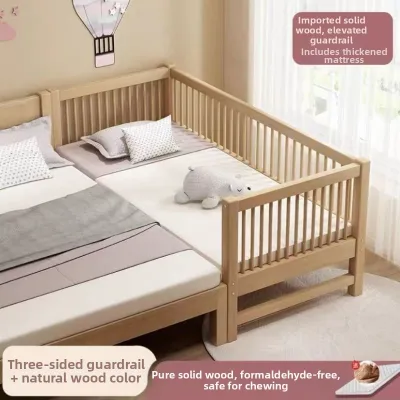
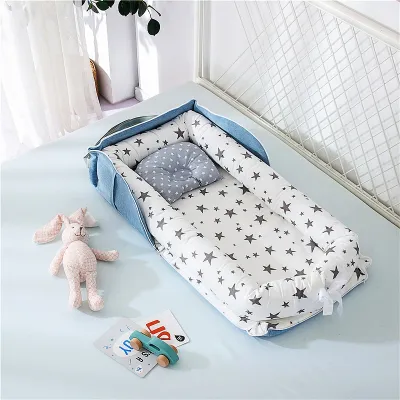
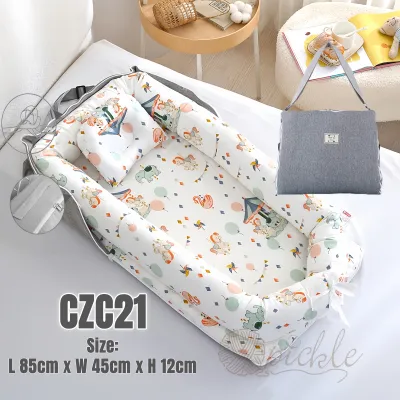
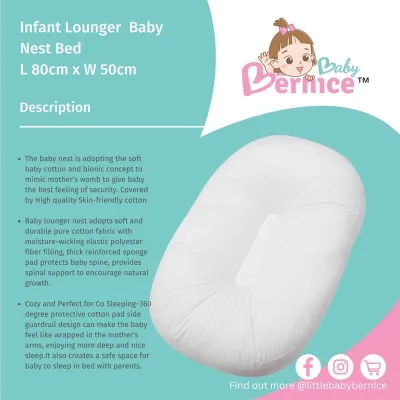
Prices are valid at publication and may change. Please refer to the product page for the latest price.
When shopping, parents should never assume that every baby bed on the market automatically meets high safety requirements. Unbranded or cheap imports sold by third-party sellers on online marketplaces often bypass formal safety reviews, presenting significant structural and chemical risks. To ensure your baby’s safety, you should prioritize products that explicitly display recognized global certifications from the United States, Europe, or Australia and New Zealand.
Key International Safety Standards to Look For
When evaluating a baby bed, look for compliance with at least one of the major international safety standards. These standards are developed by expert panels and undergo regular updates to address emerging safety risks and mechanical failures.

ASTM Standards (United States)
The American Society for Testing and Materials (ASTM) sets highly respected safety specifications for infant furniture. For full-size baby cribs, the relevant standard is ASTM F1169, while ASTM F406 governs non-full-size cribs and playards. These standards are designed to test the limits of a crib’s structural integrity through rigorous physical testing.
ASTM F1169 requires manufacturers to perform dynamic shake tests, mattress support system impact tests, and side-rail latch durability tests to ensure the bed can withstand the movements of an active child. The standard also enforces strict slat spacing limits, dictating that the gap between slats must not exceed 2.375 inches (approximately 60 mm) to prevent a baby’s head or limbs from becoming trapped. Crucially, ASTM standards include a comprehensive ban on traditional drop-side crib mechanisms, which were found to pose fatal entrapment risks when hardware failed or warped.
EN Standards (Europe)
European safety standards are widely adopted by premium baby brands sold in Singapore. The primary standard for children’s cots and folding cots for domestic use is EN 716 (typically divided into EN 716-1 for safety requirements and EN 716-2 for test methods). This standard focuses intensely on preventing entrapment, suffocation, and fall hazards.
Under EN 716, the distance between the slats must be between 45 mm and 65 mm to ensure a child’s head cannot slip through or become wedged. The standard also mandates precise mattress fit requirements, stating that the internal gap between the mattress and the sides or ends of the cot must not exceed 30 mm. For folding or travel cots, EN 716-2 requires that locking mechanisms require at least two separate, consecutive manual actions to disengage, preventing the bed from accidentally collapsing while the infant is inside.
AS/NZS Standards (Australia and New Zealand)
Due to Singapore’s close trade ties and geographical proximity to the Asia-Pacific region, many high-quality baby beds sold locally comply with the joint Australian and New Zealand standard, AS/NZS 2172. This standard is widely regarded as one of the strictest in the world, incorporating demanding safety protocols.
AS/NZS 2172 requires extensive testing for stability, strength, and entrapment hazards. It specifies that the height of the cot sides must be at least 600 mm from the top of the mattress support to the top of the rail when the mattress base is in its lowest position, reducing the risk of a child climbing or falling out. Furthermore, this standard places strict limits on the chemical composition of materials, requiring rigorous testing to ensure that paints, varnishes, and plastic teething guards are completely non-toxic and free from harmful heavy metals like lead.
Critical Physical Safety Features to Inspect Before Use
While looking for certification labels is an essential first step, parents must also perform a thorough physical inspection of the assembled baby bed. Shipping damage, missing parts, or improper assembly can compromise even the most highly certified crib. Use this practical checklist to verify the physical safety of your baby’s bed before placing them inside.
- Slat Spacing: Measure the gaps between the slats using a standard measuring tape. The distance must be between 45 mm and 60 mm. A helpful household test is using a standard soda can; if the can can easily pass between the slats, the spacing is too wide and poses a dangerous head entrapment risk.
- Mattress Fit: Test the mattress fit using the 'two-finger rule.' Place the mattress inside the crib and push it firmly against one side. If you can fit more than two fingers (approximately 3 cm) into the gap between the mattress edge and the inner frame of the crib, the mattress is too small. A gap larger than this creates a dangerous space where a rolling infant can become trapped and suffocate.
- Hardware and Assembly: Inspect every screw, bolt, and bracket to ensure they are tight and flush with the wood. Never use substitute hardware from a local hardware store if original parts are missing or damaged. Only use original manufacturer-provided components, and contact the authorized distributor in Singapore for official replacements if needed.
- Finish and Materials: Run your hand along the wooden rails, corners, and edges to check for splinters, rough patches, or peeling paint. In Singapore's humid climate, low-quality finishes can bubble or crack over time. Ensure the crib uses non-toxic, lead-free paints, and look for food-grade plastic teething guards along the top rails to protect your baby's gums when they begin teething.
- Prohibited Features: Avoid any crib that features a drop-side mechanism, decorative cut-outs in the headboard or footboard, or sharp corner posts that extend upward. Decorative cut-outs can catch a baby's limbs or clothing, leading to injury or strangulation, while corner posts can snag sleeping garments.
Hidden Risks of Second-Hand and Non-Compliant Baby Beds
Many parents in Singapore consider purchasing second-hand baby beds or accepting hand-me-downs from family members to save money. While this is an economical choice, older or uncertified baby beds carry hidden structural and chemical hazards that can compromise your baby’s safety.
Older cribs were often manufactured under outdated safety standards that allowed features now known to be dangerous, such as wider slat spacing or drop-side mechanisms. Over time, wood can degrade, warp, or develop hairline cracks, especially when stored in Singapore’s high-humidity environment. This physical degradation can cause the mattress support system to fail or slats to break under pressure. Furthermore, second-hand beds often lack the original assembly instructions, leading to improper setup and structural instability.
Modifying a baby bed to fit a specific space or aesthetic is highly dangerous. Drilling new holes to adjust mattress heights, removing slats, or attaching unauthorized casters to move the bed easily around a small HDB flat voids all safety certifications. These DIY modifications alter the bed’s center of gravity, increasing the risk of tip-overs, and can create unexpected entrapment hazards.
Additionally, buying cheap, unbranded baby beds from overseas sellers on online marketplaces is a major risk. These products often lack verifiable safety documentation, chemical test reports, or tracking labels. Without these, there is no guarantee that the materials used are lead-free or that the structure can support your baby’s weight safely.
How to Verify Certifications and Maintain a Safe Sleep Space
To ensure your baby bed remains a safe environment throughout your child’s infancy, you must know how to verify safety claims and maintain the bed as your child grows.
To verify a safety certification, look for a permanent, physical label printed on or securely attached to the crib frame, usually on the inside of the headboard or on the mattress support platform. This tracking label should list the manufacturer’s name, model number, date of manufacture, and the specific safety standard met (such as ASTM F1169 or EN 716). Avoid relying solely on online product descriptions, which can easily feature copied safety claims without actual compliance.
As your baby develops, you must adjust the bed to match their physical milestones. Most certified cribs offer adjustable mattress heights. The highest setting is intended only for newborns who cannot yet sit up or roll over. As soon as your baby shows signs of rolling, pushing up on their hands and knees, or sitting, you must immediately lower the mattress base to its lowest setting to prevent them from climbing or falling out of the crib.
Finally, establish clear criteria for when to stop using the baby bed. Inspect the bed weekly for any loose hardware, cracked wood, or structural movement. If any part of the bed is broken or cannot be securely tightened, stop using it immediately and consult the manufacturer. Additionally, once your child reaches a height of 89 cm (35 inches), or when the top of the crib rail is below their nipple line when standing, they have outgrown the crib and should transition to a toddler bed or a floor mattress to prevent dangerous falls.
Frequently Asked Questions (FAQ)
Are drop-side baby cribs safe or allowed in Singapore?
Drop-side cribs are highly discouraged and have been phased out by reputable retailers in Singapore due to severe safety risks. When the plastic or metal hardware of a drop-side rail wears down, warps, or breaks, the drop-side can partially detach from the crib. This creates a dangerous V-shaped gap between the mattress and the loose rail where an infant can slip, become trapped, and suffocate. Parents should avoid purchasing or accepting drop-side cribs, even if they are offered second-hand.
Do bedside sleepers require different safety certifications than standard cribs?
Yes, bedside sleepers and co-sleepers are designed to attach directly to an adult bed and must meet distinct safety standards, such as ASTM F2906 in the United States or EN 1130 in Europe. These standards test for specific hazards unique to co-sleeping, including the strength of the attachment straps, the elimination of gaps between the adult mattress and the sleeper, and structural stability. A bedside sleeper should never be used as a standalone standard crib unless the manufacturer explicitly certifies it for both configurations.
How can I check if a specific baby bed model has been recalled?
To check for recalls, locate the manufacturer’s name, model number, and date of manufacture on the permanent tracking label attached to the crib frame. You can cross-reference this information on the manufacturer’s official website or search international consumer safety databases, such as the United States Consumer Product Safety Commission (CPSC) database or the European Union’s Safety Gate portal. Because many baby beds sold in Singapore are imported, international safety databases are often the most comprehensive source for recall history.
Community discussion
Share your experience or ask a question. Comments are reviewed before publication.