
Quick Answer: Which Sippy Cup Design Fits Your Baby?
Choosing how to transition your baby from a bottle or breast to a cup is a major milestone in their weaning journey. The ideal sippy cup design depends on your baby’s current oral motor skills, swallow patterns, and grasp strength rather than a strict calendar age. While spout cups are often an early transitional step that mimics familiar feeding patterns, straw cups encourage a mature swallow pattern, and 360-degree cups help build lip-sealing skills. Because every child develops at their own pace, caregivers should match the cup design to their baby’s observable developmental signs. Always verify exact age, weight, and safety recommendations against the specific manufacturer’s packaging and consult your pediatrician for personalized guidance.
Comparing Straw, Spout, and 360-Degree Cup Designs
To choose the right cup, it helps to understand how different designs deliver liquid to your baby’s mouth. The core mechanical difference lies between suction-based valves and pressure-based valves. Suction-based designs, such as straw and spout cups, require the baby to actively suck or bite down to release the liquid. In contrast, pressure-based designs, like 360-degree cups, require the baby to apply lip pressure to the rim while tipping the cup to break the silicone seal. Evaluating these designs involves looking at their impact on oral motor development, their spill resistance during daily use, and the complexity of cleaning their individual parts.

Straw Cups
Straw cups are highly recommended by many pediatric specialists because they encourage a mature swallow pattern. When drinking from a straw, a baby must round their lips, tense their cheeks, and retract their tongue. This action prevents the tongue from thrusting forward, which is a key step in developing mature speech and swallowing habits.
Products mentioned in this guide
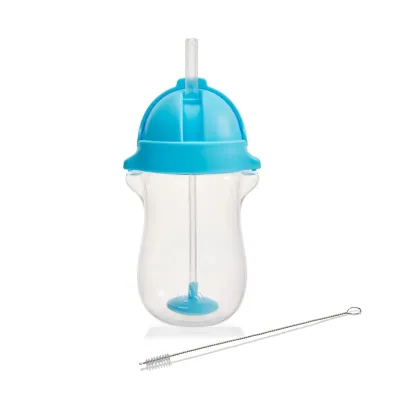
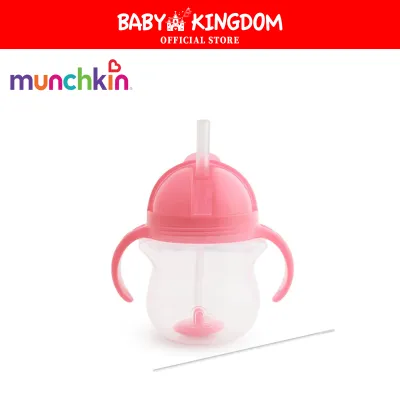
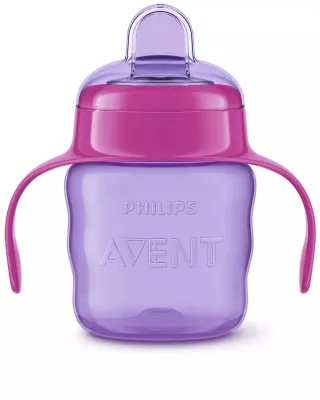
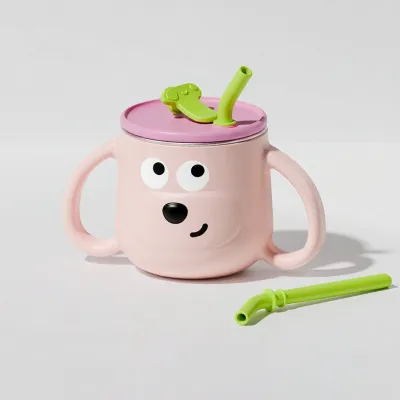
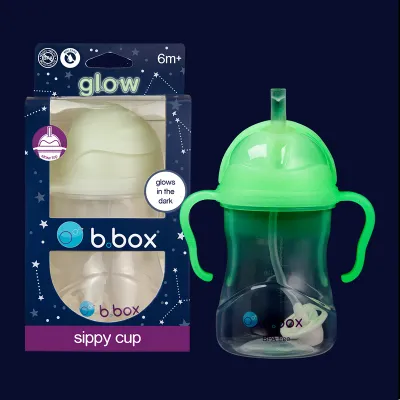
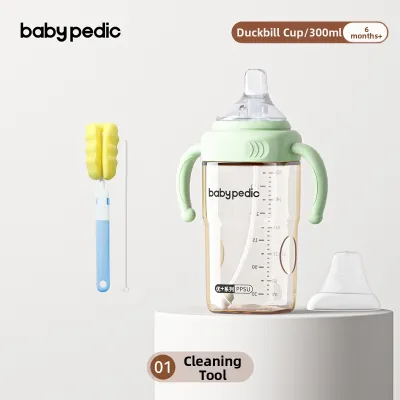
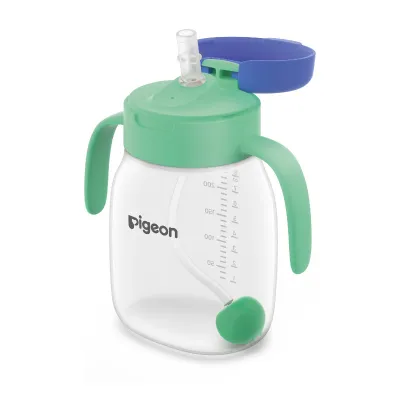
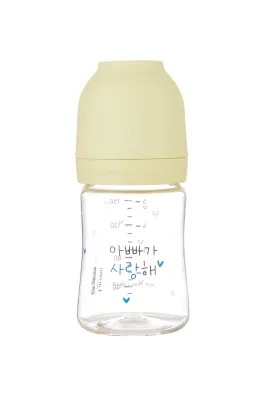
Prices are valid at publication and may change. Please refer to the product page for the latest price.
However, straw cups often come with an initial learning curve. Some babies may struggle to understand how to draw liquid upward, or they might chew on the flexible silicone bite-valve instead of sucking. If the bite-valve mechanism is chewed or damaged, the cup may lose its leak-proof seal and begin to drip.
Cleaning straw cups also requires more effort than other designs. The narrow tubes, internal valves, and sliding lids can easily trap liquid and residue. Caregivers must use specialized, ultra-thin straw brushes and fully disassemble the parts to ensure thorough hygiene.
Traditional Spout Cups
Traditional spout cups have long been used as an early transitional tool because they feel familiar to babies moving away from a bottle or breast. These cups typically feature a protruding spout made of either soft silicone or hard plastic. Soft silicone spouts are gentle on sensitive, teething gums, while hard plastic spouts offer greater durability against biting.
The sucking mechanism required for a spout cup often mimics the infant suckle, where the tongue thrusts forward under the spout to draw liquid. While this makes the transition easy for beginners, prolonged use of this forward-thrusting motion is a point of concern for some dental professionals.
Many pediatric dentists and speech-language pathologists advise limiting the use of spout cups. Extended reliance on a spout can potentially impact dental alignment and natural speech development. For this reason, many caregivers use spout cups as a brief, temporary stepping stone rather than a long-term drinking solution.
360-Degree (Rim) Cups
The 360-degree cup features a unique valve-activated rim that allows your baby to drink from any edge, closely mimicking the experience of a standard open cup. When the baby places their lips on the rim and tips the cup, their lip pressure releases the silicone seal, allowing liquid to flow.
This design is highly beneficial for oral muscle development. It teaches babies how to seal their lips around a rim and coordinate the tipping motion without the risk of a massive spill. If the cup is dropped or knocked over, the silicone valve instantly seals, making it highly spill-resistant.
Despite these benefits, some early learners may find the physical suction and lip pressure required to open the valve frustrating. It takes coordination to tip and suck simultaneously, which can cause fatigue or temporary resistance in younger babies who are used to an easier flow.
How to Match the Cup to Your Baby's Developmental Stage
Selecting the right cup requires observing your baby’s physical and cognitive readiness rather than relying solely on age guidelines. Look for key developmental signs such as the ability to sit upright independently, strong hand-to-mouth coordination, and the ability to grasp objects with both hands. Your baby’s existing swallow pattern and interest in your own drinking habits are also excellent indicators of readiness.
To help guide your choice, consider this conditional decision framework based on your baby’s current skills:
- Choose a spout cup if: Your baby is in the very early stages of weaning, has highly sensitive gums, and needs a soft, familiar shape to ease the transition from a bottle, provided you plan to transition to another design soon.
- Choose a straw cup if: Your baby has strong sucking coordination, can sit upright unsupported, and you want to actively promote mature tongue retraction and lip-rounding habits from the start.
- Choose a 360-degree cup if: Your baby shows a keen interest in drinking from your open cup, has mastered the hand-to-mouth tipping motion, and you want to build open-cup skills without constant spills.
Remember that developmental milestones vary widely from child to child. It is always best to follow your baby’s individual cues and comfort levels rather than strict calendar timelines. If your baby shows persistent aversion, frequent coughing, or choking with any cup design, stop using it and consult a pediatrician or a pediatric speech-language pathologist for professional guidance.
Practical Features and Safety Checks Before Buying
When shopping for a sippy cup, verifying the physical and material attributes on the packaging is essential for safety and convenience. Always check that the cup is labeled as BPA-free, PVC-free, and phthalate-free to ensure the materials are safe for daily contact with warm liquids.
Handle designs play a significant role in how easily your baby can use the cup. Dual, ergonomic handles are ideal for younger babies with developing grip strength, as they allow for a secure, two-handed hold. Removable handles offer great flexibility, allowing you to take them off as your baby’s hand-eye coordination improves or when you need the cup to fit into a stroller cup holder.
The valve design is another critical factor to evaluate. Removable valves generally offer excellent leak prevention and allow you to adjust the flow rate, but they require complete disassembly for cleaning. Built-in valves have fewer parts to lose but can feature tight crevices that are difficult to inspect for cleanliness.
Finally, consider the practicalities of daily maintenance. Check the manufacturer’s instructions to confirm if the cup is dishwasher-safe (usually on the top rack). It is also wise to verify if the brand offers easily accessible replacement parts, such as spare straws or silicone valves, so you do not have to replace the entire cup if a single component becomes worn or damaged.
Transitioning to an Open Cup and Maintenance Tips
The ultimate goal of weaning is to transition your baby to a standard open cup. This transition can begin as soon as your baby can sit independently and control a cup with supervision, often around the time they are comfortable with solid foods. Introducing an open cup early helps them master the necessary lip and jaw movements for mature drinking.
To ease this transition, try offering small amounts of water in a small, open cup during supervised mealtimes. Using a cup with a weighted base can help prevent accidental tips. Keep your leak-proof straw or 360-degree cups for on-the-go use, travel, or times when close supervision is not possible.
Maintaining strict hygiene is vital for your baby’s health. After every use, fully disassemble all valves, straws, collars, and silicone seals. Wash them thoroughly with warm, soapy water, using specialized brushes to clean inside narrow openings. Allow all components to air-dry completely in a well-ventilated area before reassembling them, as trapped moisture—especially in warm, humid environments—is a primary cause of hidden mold growth.
Regularly inspect the cup’s components for wear and tear. Establish clear stop-use conditions: discard or replace parts immediately if you notice cracked silicone, chewed-through straws, persistent odors, or any signs of mold that cannot be completely removed.
Frequently Asked Questions (FAQ)
Can I put formula or breast milk in a sippy cup?
Yes, you can put formula or breast milk in a sippy cup, but you must take strict hygiene precautions. Milk contains sugars and proteins that can lead to rapid bacterial growth if left at room temperature, especially when trapped inside complex valve mechanisms or straws.
To minimize risks, do not allow your baby to carry a milk-filled sippy cup around for extended, unsupervised sipping throughout the day. Limit the time the milk sits in the cup, and prioritize water for casual sipping.
Immediately after your baby finishes their milk, disassemble the cup and wash all parts thoroughly. Regular sterilization or deep cleaning is highly recommended for any cup used for milk to prevent stubborn residue and bacterial buildup.
Why is my baby refusing the straw or 360-degree cup?
It is very common for babies to refuse a new cup design. This refusal is often caused by valve stiffness, which requires more suction effort than they are used to, leading to frustration. The unfamiliar mouth positioning and flow rate can also feel overwhelming.
To troubleshoot, try demonstrating how to use the cup yourself, or temporarily remove the leak-proof valve (if the design allows) so the liquid flows easily. This helps your baby understand that the cup contains liquid. You can also try a cup with a softer silicone texture if they dislike hard plastic.
If your baby continues to resist, do not force the issue. Temporary refusal is completely normal. Revert to a familiar bottle or cup for a few days to keep mealtimes stress-free, then try introducing the new cup again when they are calm and relaxed.

Community discussion
Share your experience or ask a question. Comments are reviewed before publication.