
Quick Answer: Which Sippy Cup Matches Your Baby's Stage?
Transitioning your baby from breast or bottle feeding to independent drinking is a major milestone. When searching for the right sippy cup, parents quickly discover there is no single “perfect” design. The ideal choice depends on your child’s age, oral motor skills, and dental development.
To help you make an immediate decision, here is a high-level summary of how the three main styles align with your baby’s developmental stages:
- Soft Spout Cups (typically around 6 months): These are ideal for early beginners who are just starting solids. The familiar, soft texture mimics a bottle nipple, making it an easy first transition.
- Straw Cups (typically around 9 months): These are highly recommended by pediatric feeding specialists. Drinking through a straw builds advanced oral muscles, encourages lip closure, and promotes a mature swallowing pattern.
- 360-Degree Cups (typically 12+ months): These are excellent for older toddlers. They allow your child to drink from any edge of the rim, closely mimicking an open cup while keeping spills to a minimum.
It is important to remember that all transitional cups are temporary stepping stones. They are designed to help your child master the coordination required to drink, rather than serving as permanent replacements for a standard open cup.
Products mentioned in this guide
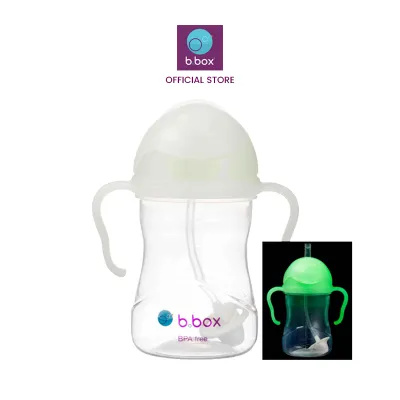
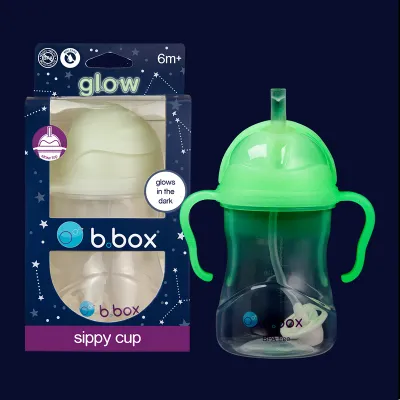
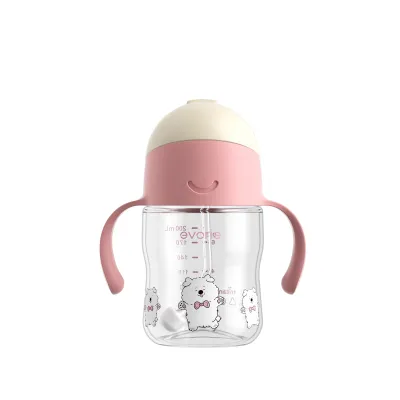
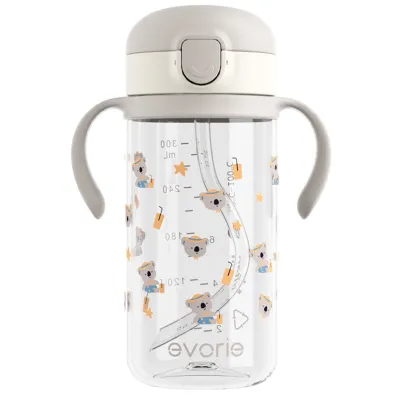
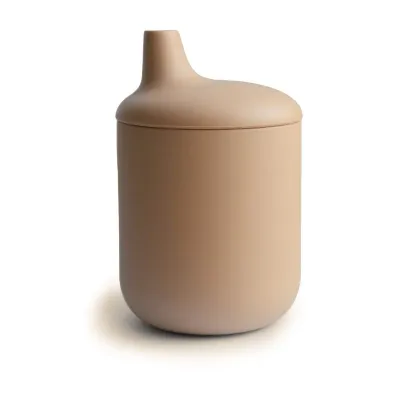
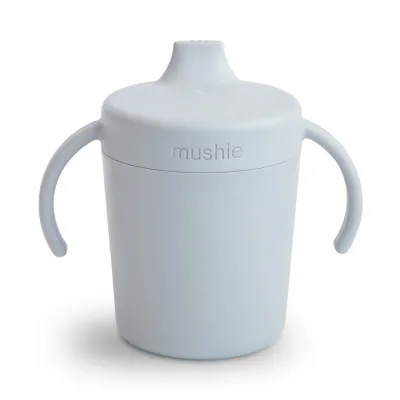
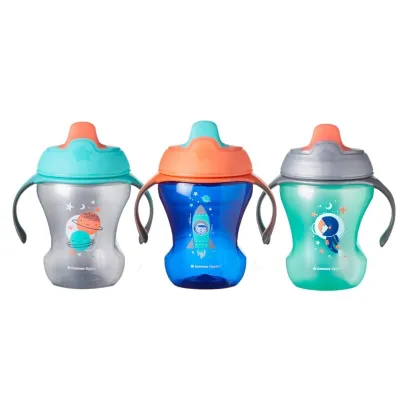
Prices are valid at publication and may change. Please refer to the product page for the latest price.
Breaking Down the Options: Spout, Straw, and 360 Cups
Spout Cups (Soft and Hard)
Spout cups are the traditional choice for introducing babies to cup drinking. They feature a protruding spout that the baby tilts upward to drink. These cups generally fall into two categories: soft silicone spouts and hard plastic spouts. Soft silicone spouts are highly pliable and feel familiar to a baby accustomed to the nipple of a bottle or breast. Hard plastic spouts are much more rigid and are built to withstand the chewing of teething toddlers.

Because the tilting and sucking motion is highly similar to bottle feeding, many infants find spout cups intuitive. They require very little learning curve, making them a popular first step around the six-month mark.
However, prolonged reliance on hard spouts can have drawbacks. Because a spout sits far back in the mouth, it can encourage an immature “suckle” reflex, where the tongue thrusts forward under the spout. This motion does not help the baby transition to the mature swallowing pattern needed for open cups. When choosing a spout cup, always check the manufacturer’s packaging for specific age recommendations and material safety details.
Straw Cups
Straw cups feature a flexible silicone or plastic straw that extends to the bottom of the vessel. Some models include a weighted ball at the base of the straw, allowing the child to drink from any angle, even when the cup is tilted. Unlike spout cups, straw cups do not require the child to tilt their head back to drink.
Drinking from a straw requires a completely different physical mechanism than sucking on a bottle. Your baby must seal their lips tightly around the straw, contract their cheeks, and retract their tongue to create the suction necessary to draw liquid upward. Pediatric feeding specialists frequently recommend straw cups because this active engagement of the lips, cheeks, and tongue builds critical oral motor strength.
While highly beneficial, straw cups do come with a learning curve. Some babies take time to understand that they do not need to tilt the cup to get liquid. Additionally, straw cups require more maintenance. The narrow interior of the straw is a prime area for mold and bacterial buildup, requiring dedicated cleaning brushes and thorough air-drying.
360-Degree (Rim) Cups
A 360-degree cup features a flat lid with a circular silicone valve. When your child places their lips anywhere along the rim and applies gentle pressure (a combination of biting and sucking) while tilting the cup, the seal opens to release the liquid. As soon as they stop drinking, the valve seals shut automatically, making the cup highly spill-resistant.
This design is specifically engineered to mimic the mechanics of drinking from a regular open cup. It encourages your child to use their upper lip to stabilize the cup and promotes a mature swallowing pattern where the tongue retracts naturally. It provides an excellent way for toddlers to practice the tilting motion of cup drinking without the mess of a standard cup.
Despite these benefits, the bite-and-tilt coordination can be frustrating for younger infants. Babies under 12 months may lack the jaw stability, lip strength, or cognitive understanding required to break the silicone seal. It is generally best suited for toddlers who have already mastered basic drinking coordination.
How Spout, Straw, and 360 Cups Compare on Key Factors
Oral Motor and Speech Development
When comparing these cups, oral motor development is one of the most critical factors to consider. Traditional hard spout cups tend to prolong the baby’s natural suckling reflex. This forward-and-backward tongue movement is normal for infants but should gradually transition to a mature swallow as they grow.
In contrast, both straw cups and 360-degree cups actively encourage tongue retraction and lip sealing. When drinking from a straw, the tongue must move backward into the mouth to allow liquid to pass, while the lips work hard to maintain a tight seal. This muscle engagement is directly relevant to other developmental milestones, such as chewing solid foods and articulating speech sounds.
While cup selection plays a supportive role in oral development, it is not a cure for underlying issues. If your child exhibits persistent feeding difficulties, oral aversions, or signs of speech delays, consult a pediatric speech-language pathologist or feeding therapist for professional assessment rather than relying solely on a specific cup design.
Dental Health and Teeth Alignment
Pediatric dentists often caution against the prolonged use of rigid, hard-spout cups. When a child constantly sucks on a hard plastic spout, the repetitive pressure against the palate and emerging front teeth can potentially lead to alignment issues, such as an open bite or protruding teeth.
However, the primary dental risk associated with any transitional cup is not just its physical shape, but how it is used. Allowing a baby to carry a cup around and sip constantly on milk, formula, or juice can lead to rapid tooth decay. This occurs because the natural sugars in these liquids pool around the emerging teeth, creating an environment where bacteria thrive.
To protect your child’s dental health, limit the use of transitional cups containing sweet liquids or milk to designated mealtimes. For hydration throughout the day, stick to plain water. Additionally, schedule regular visits with a pediatric dentist to receive personalized advice on weaning and oral hygiene.
Leak Resistance, Durability, and Cleanup
For daily practical use, parents must balance developmental benefits with convenience. In active households, cups are frequently dropped from high chairs onto hard floors, such as the tiled floors common in Singapore homes. If leak resistance is your top priority, 360-degree cups and valve-equipped straw cups are highly reliable options that rarely spill when dropped or inverted.
When it comes to cleanup, spout cups are generally the easiest to wash because they have fewer intricate parts. Straw cups and 360-degree cups require a higher level of maintenance. In warm, humid tropical climates, mold can develop very quickly in damp, enclosed spaces. The silicone valves of 360 cups and the narrow channels of straws must be completely disassembled and scrubbed with specialized micro-brushes.
To maintain proper hygiene, always follow the manufacturer’s disassembly and cleaning instructions. Ensure all components are completely dry before reassembling the cup to prevent bacterial growth.
Which Cup Should You Choose? A Developmental Decision Guide
To make the final choice easier, you can use this condition-based framework to match a cup to your child’s current developmental stage:
- Choose a Soft Spout Cup if: Your baby is around 6 months old, is just starting solid foods, and needs a familiar transition from the bottle. This option is excellent if they are still developing the grip and hand-eye coordination required to hold a cup independently.
- Choose a Straw Cup if: Your baby is between 9 and 12 months old, and you want to actively support their oral motor and speech development. This style is also highly convenient for on-the-go hydration, such as during stroller outings, because it does not require the child to tilt their head back to drink.
- Choose a 360 Cup if: Your toddler is 12 months or older, has developed good jaw strength, and is preparing to transition to an open cup. It is the ideal choice if you need a highly leak-resistant cup for travel or bedside use.
Verify First if: Your child has specific developmental challenges, oral aversions, cleft palate, or dental concerns. In these situations, pause the transition and consult your pediatrician, a speech-language pathologist, or a pediatric dentist to get a tailored recommendation.
Before making any purchase, always check the product labels. Verify that the cup is made from BPA-free materials, review the manufacturer’s age grading, and check for any potential choking hazard warnings related to removable valves or straw parts.
Moving Beyond Sippy Cups: Transitioning to an Open Cup
It is easy to view transitional cups as long-term fixtures, but their primary purpose is to serve as temporary bridges. The ultimate goal is for your child to drink confidently from a standard open cup. Introducing open-cup practice early helps build hand-eye coordination, spatial awareness, and jaw stability.
Your child may be ready to practice with an open cup when they show interest in your own drinks, demonstrate strong hand control, understand cause and effect, and can sit steadily at a table without support. Many toddlers show these signs of readiness around 12 to 18 months of age.
To practice safely, use a small, lightweight, shatterproof open cup. Pour only a very small amount of water—about one or two tablespoons—to start. This minimizes the mess and allows your child to focus on the physical mechanics of tilting and swallowing. Accept that spills are a normal, healthy part of the learning process, and keep a damp cloth nearby to clean up during supervised mealtimes.
Frequently Asked Questions (FAQ)
Can I put milk or juice in a sippy cup?
Yes, you can put milk or breastmilk in a transitional cup, but it is highly recommended to limit these drinks to scheduled mealtimes rather than letting your child carry the cup around to sip throughout the day. Constant sipping on milk or juice exposes emerging teeth to sugars, which can lead to tooth decay. For hydration between meals, plain water is the safest option. Consult your pediatric dentist regarding the appropriate age and limits for introducing juice to your child’s diet.
At what age should my baby stop using a sippy cup entirely?
Most pediatric guidelines suggest transitioning fully to open cups and standard straws between 18 months and 2 years of age, or by age 3 at the latest. Prolonged reliance on transitional cups can affect oral muscle development and dental alignment. Because every child develops at their own pace, consult your pediatrician or pediatric dentist if your child struggles to transition away from transitional cups or exhibits persistent feeding difficulties.

Community discussion
Share your experience or ask a question. Comments are reviewed before publication.