
When preparing a nursery, verifying the structural integrity and chemical safety of your baby’s sleep environment is paramount. The Stokke V3—the third generation of the iconic oval-shaped Stokke Sleepi crib—is highly regarded globally, but parents must know how to verify safety compliance for their specific unit. Ensuring that your crib meets recognized safety benchmarks involves examining physical design characteristics, verifying official certifications on the manufacturing label, and cross-referencing local safety databases. Rather than relying solely on brand reputation, taking a systematic approach to verifying compliance gives you absolute peace of mind that your infant is sleeping in a secure environment.
Understanding Infant Crib Safety Standards
Infant sleep safety standards are legally regulated benchmarks designed to prevent accidents, entrapment, falls, and chemical exposure. These standards cover several critical areas of a crib’s design and construction:
- Structural Integrity: The frame must withstand dynamic loads, impact, and continuous movement without collapsing, warping, or loosening.
- Material Toxicity: Paints, varnishes, and core materials must be free from harmful levels of heavy metals, phthalates, and volatile organic compounds (VOCs).
- Slat Spacing: Gaps must be small enough that a baby's head, limbs, or torso cannot slide through.
- Mattress Fit: The gap between the mattress and the crib sides must be virtually non-existent to eliminate suffocation and entrapment hazards.
Specific standard codes vary significantly by region, manufacturing date, and target market. In Europe, the EN 716-1 and EN 716-2 standards govern children’s cots and folding cots. In the United States, the ASTM F1169 standard dictates safety specifications for full-size baby cribs. In Australia and New Zealand, the AS/NZS 2172 standard applies. Because the Stokke V3 is distributed globally, the exact standards it complies with will depend heavily on the market for which it was manufactured and the date of production.
Products mentioned in this guide
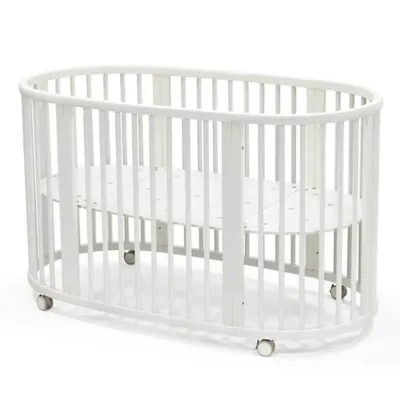
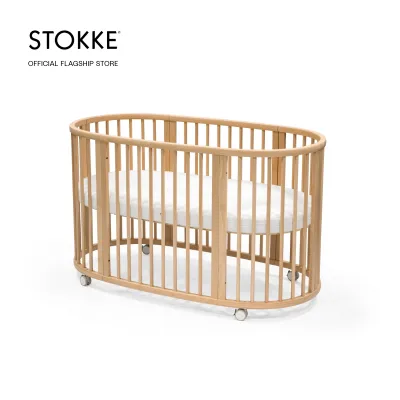
![[8.8 Exclusive] STOKKE Sleepi Mini Bundle - Mini Bed + Mini Mattress + Free Drape Rod + Free Canopy + Free Mini Fitted Sheet + Mini Mesh Liner](https://img.lazcdn.com/g/p/d1ed5b88c802a160aeaed6fd39066fff.jpg_400x400q80.jpg_.webp)
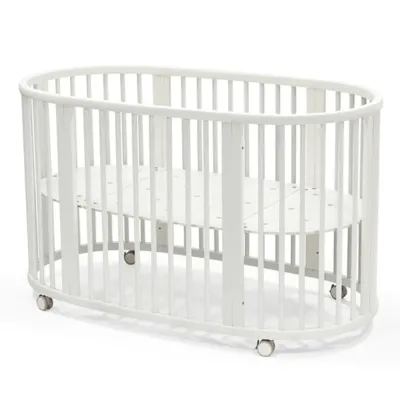
![[8.8 Exclusive] STOKKE Sleepi Bundle - Bed + Mattress + Free Drape Rod + Free Canopy + Free Fitted Sheet + Mesh Liner](https://img.lazcdn.com/g/p/f87f8dc54f2f652e7ab1fbcf88456b6c.jpg_400x400q80.jpg_.webp)
Prices are valid at publication and may change. Please refer to the product page for the latest price.
True compliance is not a self-declared marketing badge; it requires rigorous, third-party testing conducted by accredited independent laboratories. These facilities subject the crib to simulated wear-and-tear, load tests, and chemical analysis to ensure it meets safety thresholds.
While the brand has a long-standing history, safety regulations evolve over time. A model manufactured several years ago might not meet current, more stringent criteria. Parents must inspect the documentation and physical labels of their specific unit, especially if purchasing imported models or second-hand items.
Physical Safety Checks for the Stokke V3
Before assembling, adjusting, or performing maintenance on your crib, always read the official manufacturer user manual and check the safety labels affixed to your specific model configuration. Even with official certifications, a physical inspection is necessary to ensure the crib has been assembled correctly and has not suffered wear or damage.

Slat Spacing
Standard safety guidelines dictate that the distance between crib slats must not exceed 6 centimetres. To verify this on your Stokke V3, use a standard measuring tape to measure the widest gap between the vertical wooden slats. If a standard soda can (which is roughly 6 cm wide) can pass through the slats, the spacing is too wide, indicating a potential manufacturing defect or a non-standard modification.
Mattress Fit
The Stokke V3 features a unique oval shape, which means standard rectangular mattresses will not fit. You must verify that the mattress fits snugly against the curved wooden frame. Test this by attempting to insert two fingers between the edge of the mattress and the crib sides. If you can easily fit more than two fingers (approximately 3 centimetres) in any gap, the mattress is too small, posing a severe entrapment or suffocation risk. The mattress must also be highly firm; it should not conform easily to the shape of your baby’s head or body.
Locking Mechanisms
The Stokke V3 is equipped with swivel wheels to allow easy movement between rooms. You must test that the locking mechanisms on these wheels engage fully and prevent the crib from shifting when a light force is applied. Additionally, inspect the adjustable mattress base heights. The hardware securing the base at its various levels must lock tightly, ensuring the platform cannot slip or tilt under your baby’s weight.
Finish and Materials
Run your hands along all wooden components, including the top rails, slats, and base. Check for any rough patches, splinters, or peeling paint that could injure delicate skin or be ingested if the baby chews on the rail. Verify that the wood is finished with non-toxic, water-based paint or varnish. This is typically detailed in the product specifications, but any strong chemical odor upon unboxing is a warning sign that requires further verification.
Hardware Integrity
Inspect all screws, dowels, and metal brackets. Ensure there are no missing components, as even a single missing screw can compromise the structural stability of the entire oval frame. Regularly tighten the hardware, as the motion of the crib and the baby’s movement can cause joints to loosen slightly over time.
Step-by-Step Guide to Verifying Compliance
To confirm that your specific Stokke V3 unit is fully compliant with local and international safety standards, follow these systematic verification steps.
Step 1: Inspect the Product Label
Locate the permanent tracking and safety label affixed to the crib. On the Stokke V3, this is typically found on the underside of the mattress support base or on the inner surface of one of the lower frame rails. This label contains critical information, including the model name, manufacturing date, batch number, and the specific safety standards the factory claims the unit meets. Do not remove this label, as it is essential for tracking potential recalls or verifying authenticity if you decide to resell the crib later.
Step 2: Review the User Manual
Locate the official instruction manual that accompanied your crib. The manual should contain a dedicated section detailing the safety standards met by that specific production run. If you bought the crib second-hand or lost the manual, you can download the digital version from the official manufacturer website, ensuring you select the manual corresponding to the V3 model.
Step 3: Identify Certification Marks
Look for recognized safety marks printed on the packaging, the manual, or the product label itself. Depending on where you purchased the unit, look for marks such as the JPMA (Juvenile Products Manufacturers Association) certified seal for North American units, or the CE/EN compliance markings for European models.
Step 4: Contact Stokke Directly
If the labels on your crib are worn, missing, or written in a language you cannot verify, reach out to the manufacturer. Visit the official Stokke website and navigate to their customer service portal. Provide them with the serial number and manufacturing date found on your unit’s remaining stickers. For parents in Singapore, contacting the local authorized distributor or customer support channel ensures you receive information relevant to the specific models imported and sold in the local market.
Step 5: Check Local Consumer Databases
In Singapore, consumer product safety is overseen by the Consumer Product Safety Office (CPSO), which falls under Enterprise Singapore. Visit the CPSO website to search for any safety alerts, consumer advisories, or active product recalls associated with the Stokke Sleepi or the specific V3 model. Cross-referencing international recall databases, such as the US Consumer Product Safety Commission (CPSC) or the European Commission’s Safety Gate, provides additional layers of safety verification.
Safe Usage Limits and When to Discontinue Use
A safety-certified crib is only safe when used within its designed operational parameters. You must actively monitor your child’s physical development and the physical state of the crib.
Weight and Height Limits
The Stokke V3 is designed to adapt as your child grows, but you must strictly adhere to the manufacturer’s specified limits. Always consult the official user manual for the precise weight limits of your specific model configuration. Typically, the smaller bassinet configuration (often referred to as the Sleepi Mini) has a lower weight threshold than the full-sized crib configuration.
Developmental Milestones
Do not rely solely on weight or age; your baby’s physical abilities are the primary indicator of when to adjust the crib. If using the bassinet/Mini configuration, you must transition to the larger crib setup or lower the mattress base to its lowest position the moment your baby shows signs of rolling over, pushing up on their hands and knees, or sitting up unassisted. Once your child is able to stand or climb, or when the top of the crib rail is less than three-quarters of their height, you must discontinue using the crib in its standard enclosed format to prevent dangerous falls.
Wear and Tear
Regularly inspect the crib for structural degradation. If you notice any hairline cracks in the curved wooden panels, loose joints that cannot be tightened, or a mattress that has lost its firmness and sags in the middle, discontinue use immediately. Never attempt DIY repairs using non-original screws, brackets, or adhesives, as these can fail under pressure and compromise your baby’s safety.
Second-Hand Cribs
If you are purchasing or accepting a pre-owned Stokke V3, exercise extreme caution. Verify the exact manufacturing date to ensure the unit is not outdated. Ensure the seller provides the original manual and all assembly hardware. Inspect the frame meticulously for any signs of mold, water damage, or structural warping, and verify that the crib has never been subject to a safety recall.
Frequently Asked Questions (FAQ)
Is the Stokke V3 safe for newborns?
Yes, the Stokke V3 is designed to be safe for newborns when configured correctly. If using the smaller bassinet setup, ensure you use the firm, original mattress designed specifically for that configuration. Always place your newborn on their back to sleep, keep the sleep surface completely clear of loose bedding, pillows, or toys, and maintain active caregiver supervision.
How do I know if my Stokke V3 has been recalled?
To check for recalls, locate the serial number on the base of your crib and visit the product recall section on the official Stokke website. Additionally, you should search the database of Singapore’s Consumer Product Safety Office (CPSO) and register your product directly with the manufacturer to receive automatic safety alerts.
Can I use a third-party mattress with the Stokke V3?
It is highly recommended to avoid third-party mattresses. The Stokke V3 features a unique, curved oval shape that requires a highly specific mattress dimension and curvature. An ill-fitting third-party mattress can create dangerous gaps along the curved edges, creating a severe risk of infant entrapment or suffocation. Always use manufacturer-approved mattresses designed specifically for the V3.

Community discussion
Share your experience or ask a question. Comments are reviewed before publication.