
Choosing the right water bottle brush for your baby’s feeding equipment is more than a matter of convenience; it directly impacts the hygiene and longevity of your bottles. The debate between sponge and silicone brushes centers on balancing scrubbing efficiency with surface protection. While sponges excel at absorbing soapy water and lifting stubborn, oily milk residues, they can harbor moisture and degrade quickly. Silicone brushes offer a highly hygienic, quick-drying alternative that is exceptionally gentle on delicate surfaces, though they may require more physical effort to dislodge dried-on formula. To make the best choice, caregivers must evaluate their specific bottle materials and daily washing routines against the unique properties of each brush type.
Matching the Brush to Your Baby Bottle Material
Before selecting a water bottle brush, it is essential to identify the exact material of your baby bottles. Baby bottles are typically manufactured from glass, polypropylene (PP), polyphenylsulfone (PPSU), or food-grade silicone. Each of these materials interacts differently with cleaning tools, and using the wrong brush can lead to premature wear or hygiene issues. Always begin by checking the packaging or the manufacturer’s website for specific care warnings and cleaning instructions.
Glass bottles are highly durable and scratch-resistant. Because their surfaces are hard, they can withstand vigorous scrubbing with almost any brush type, including stiffer bristles and dense sponges, without sustaining damage. This makes glass an excellent option for parents who prefer the deep-cleaning reassurance of a traditional sponge brush.
Products mentioned in this guide
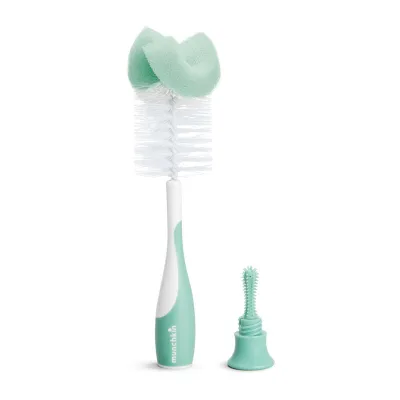
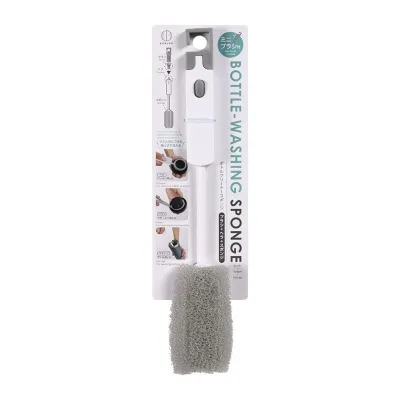
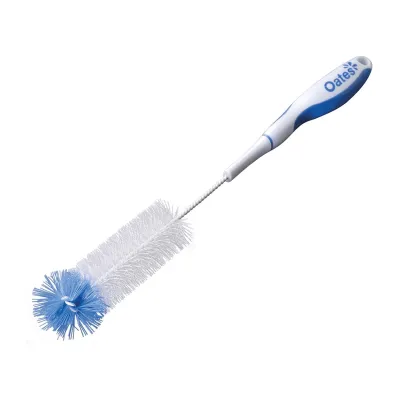
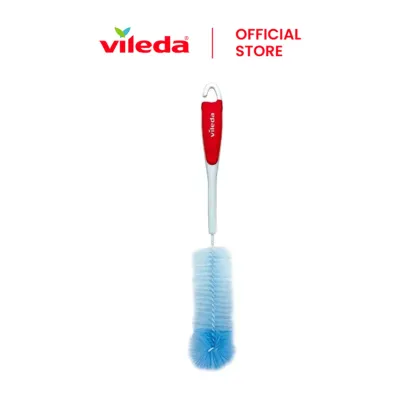
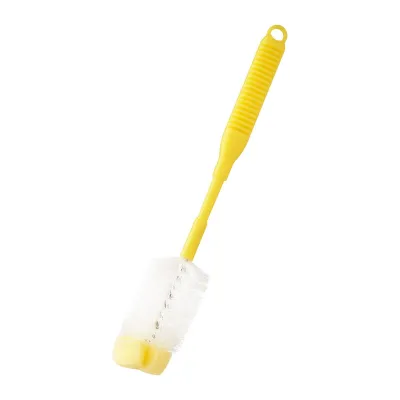
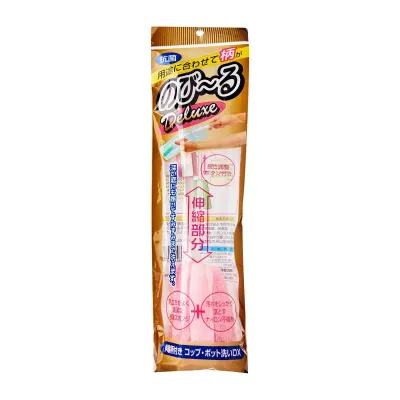
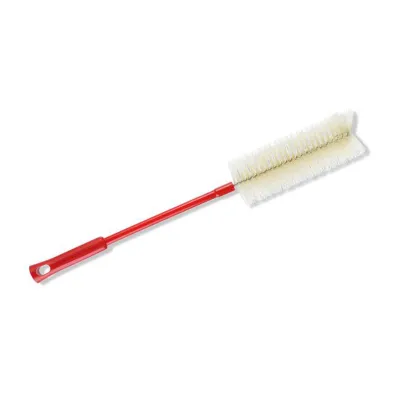
Prices are valid at publication and may change. Please refer to the product page for the latest price.
In contrast, plastic bottles made from PP or PPSU, as well as pure silicone bottles, have much softer surfaces. These materials are highly susceptible to micro-scratches. Abrasive sponges, stiff nylon bristles, or brushes with exposed metal wires can easily create microscopic grooves on the interior walls of plastic and silicone bottles.
Micro-scratches are more than an aesthetic concern; they pose a genuine hygiene risk. These tiny grooves can trap microscopic milk proteins, formula fats, and moisture, creating a breeding ground for bacteria that standard washing may fail to reach. Furthermore, scratched plastic can become cloudy and difficult to read, obscuring important measurement markings. If you use plastic or silicone bottles, verifying whether the bottle manufacturer recommends or restricts specific brush types is a crucial first step in preserving your feeding equipment.
Evaluating Sponge Water Bottle Brushes
Sponge water bottle brushes have long been a household staple due to their excellent cleaning mechanics. The primary advantage of a sponge brush is its ability to absorb a large volume of water and dish soap, creating a rich, dense lather. This lather is highly effective at emulsifying and lifting the stubborn, oily film left behind by breast milk fats and formula residues, which tend to cling to bottle walls.

Because foam is highly compliant, a sponge head easily compresses to fit through narrow bottle necks and then expands to contact the entire interior surface. This ensures that the bottom corners and curved shoulders of the bottle receive thorough physical contact, allowing you to wipe away residue with minimal passes.
However, the very structure that makes sponges effective also presents maintenance challenges. Sponges are highly porous, open-cell materials that retain moisture for extended periods. In warm, humid climates, such as Singapore, a wet sponge can take a long time to dry completely. This prolonged dampness creates an ideal environment for mold, mildew, and bacterial growth. Caregivers must store sponge brushes in well-ventilated, dry areas, ideally upright in a holder that allows excess water to drain away from the head.
Additionally, sponges degrade relatively quickly under daily use. The friction of scrubbing, combined with exposure to warm water and soap, causes the foam to break down. Caregivers must regularly inspect sponge heads for visual signs of degradation, such as tearing, crumbling, permanent discoloration, or a lingering sour odor. A degrading sponge can leave small foam particles inside the bottle and ceases to be a sanitary cleaning tool.
Evaluating Silicone Water Bottle Brushes
Silicone water bottle brushes have gained widespread popularity as a modern, hygienic alternative to traditional sponges. Made from food-grade silicone, these brushes feature flexible, non-porous bristles that do not absorb water. This fundamental material difference offers several distinct advantages for daily bottle maintenance.
The primary benefit of silicone bristles is their exceptional gentleness. Because silicone is soft and flexible, it glides smoothly over delicate plastic and silicone bottle interiors without the risk of causing micro-scratches. This preserves the smooth surface of PP and PPSU bottles, ensuring there are no microscopic crevices where bacteria can hide, and protects printed measurement markings from rubbing off over time.
Hygiene is another major strength of silicone brushes. Because silicone is hydrophobic, it sheds water rapidly. After washing a bottle, a quick shake of the brush removes almost all surface moisture, allowing it to dry incredibly fast. This rapid drying speed prevents the colonization of bacteria and mold, making silicone brushes highly resistant to the sour odors that commonly plague sponge brushes.
However, caregivers should observe the physical limitations of silicone bristles. Because silicone does not absorb water, these brushes do not generate the same rich lather as a sponge. The bristles are also more flexible, meaning they may slide over dried-on milk or formula residue rather than scraping it away. To ensure effective cleaning, caregivers must check that the bristle stiffness is sufficient for their needs, or adopt a routine of rinsing bottles immediately after feeding to prevent residue from drying and hardening.
Comparing Sponge and Silicone for Your Washing Routine
When deciding between a sponge and a silicone water bottle brush, it helps to compare how each material fits into your daily household habits and the specific climate of your home.
| Feature | Sponge Water Bottle Brush | Silicone Water Bottle Brush |
|---|---|---|
| Scrubbing Power | High; easily emulsifies dried milk fats and formula | Moderate; may require pre-soaking for dried residue |
| Surface Gentleness | Moderate; can be abrasive if degraded or combined with harsh pads | High; virtually zero risk of scratching plastic or silicone |
| Drying Speed | Slow; retains moisture in the porous foam head | Very fast; hydrophobic bristles shed water quickly |
| Bacterial Resistance | Low; requires careful storage and frequent replacement | High; non-porous material resists mold and odors |
| Durability | Low; foam tears and crumbles within weeks | High; durable bristles resist tearing and warping |
In humid environments, drying speed and storage convenience are critical factors. A sponge brush stored in a poorly ventilated kitchen can remain damp for hours, increasing the risk of bacterial buildup. If you choose a sponge, you must commit to a rigorous drying routine, ensuring the brush is placed in a dry, airy spot. A silicone brush, on the other hand, is highly forgiving in humid conditions, drying quickly even when stored in standard sink caddies.
To simplify your decision, you can use a straightforward framework based on your bottle collection and washing habits:
- Choose a sponge brush if you primarily use glass bottles, frequently deal with dried-on formula or breast milk residue that requires vigorous scrubbing, and have a reliable, dry storage setup to prevent moisture retention.
- Choose a silicone brush if you use soft plastic (PP/PPSU) or silicone bottles, wash your bottles immediately after feeding before residue can dry, and prioritize a highly hygienic, low-maintenance tool that dries rapidly.
Before making a final purchase, always verify if your specific baby bottle has unique interior coatings or a highly contoured shape that might require a proprietary cleaning tool designed by the bottle manufacturer.
Observable Signs It Is Time to Replace Your Brush
No water bottle brush lasts indefinitely, and using a worn-out brush compromises both cleaning effectiveness and hygiene. Caregivers should establish a routine of inspecting their cleaning tools weekly to identify clear, visual indicators of wear.
For sponge brushes, look closely at the foam head. It is time for an immediate replacement if you notice the foam crumbling, tearing at the attachment point, or showing permanent stains that do not wash out. A persistent sour or musty odor is a definitive sign that bacteria or mold has colonized the interior of the sponge, meaning it should be discarded immediately.
For silicone brushes, inspect the integrity of the bristles. While silicone is highly durable, the bristles can eventually bend, warp, or break off under continuous use. If the brush has lost its original stiffness or has significant gaps where bristles have torn away, it will no longer provide adequate mechanical scrubbing action and should be replaced.
Finally, always review the manufacturer’s recommended replacement timeline printed on the brush packaging. As a general rule of thumb, sponge brushes should be replaced every four to six weeks due to material degradation and hygiene concerns. High-quality silicone brushes can often last several months, but they should still be replaced promptly if they show any physical signs of damage or wear.
Frequently Asked Questions (FAQ)
Can I use a standard kitchen sponge brush for baby bottles?
No, you should not use a standard kitchen sponge brush to clean baby bottles. Kitchen brushes and sponges used for family dishes are primary vectors for cross-contamination, often harboring food particles, grease, and household bacteria. Baby feeding equipment should always be cleaned with a dedicated water bottle brush used solely for that purpose. Furthermore, standard kitchen brushes are often too wide or have handles that are too short to safely reach the bottom of narrow baby bottles, and they may not be made from certified baby-safe, BPA-free materials.
Do I need a separate brush for bottle nipples and caps?
Yes, a separate, smaller brush is highly recommended for cleaning bottle nipples, collar threads, and valves. Standard water bottle brushes are designed for large volumes and cannot effectively reach into the tight crevices and narrow tips of bottle nipples. Attempting to force a large brush into a delicate silicone nipple can stretch, distort, or tear the material, which can alter the milk flow rate or cause leaks. Using a dedicated, miniature nipple brush ensures precise, gentle cleaning of these intricate parts without causing damage.

Community discussion
Share your experience or ask a question. Comments are reviewed before publication.