
Organising a nursery involves balancing accessibility, safety, and visual order, especially when managing a growing collection of plush toys. Practical soft toy storage solutions adapt to your room’s layout and your child’s developmental stage, keeping everyday favourites within reach while safely tucking away overflow items. Rather than relying on a single container, a successful nursery storage strategy typically combines low-level open bins for independent play with vertical options like shelves or corner hammocks for display and rotation. By assessing your floor space, safety priorities, and cleaning routines, you can select a combination of bins, shelves, nets, and hampers that keeps the nursery tidy and safe.
Key Factors When Choosing Nursery Toy Storage
When planning your nursery layout, floor space is often the first constraint to evaluate. Large floor-standing chests or wide baskets can quickly crowd a compact room, leaving less space for tummy time or safe movement. If floor space is limited, utilizing vertical wall space or unused corners allows you to store a substantial collection of plush toys without cluttering walkways.
Accessibility must align with your child’s current developmental stage and mobility. For newborns and young infants, storage is primarily for the caregiver’s convenience, meaning high shelves or wall-mounted baskets work well. However, as your baby transitions into a toddler who can crawl, pull up, and reach, low-level storage becomes essential for encouraging independent play and teaching early tidying habits.
Products mentioned in this guide
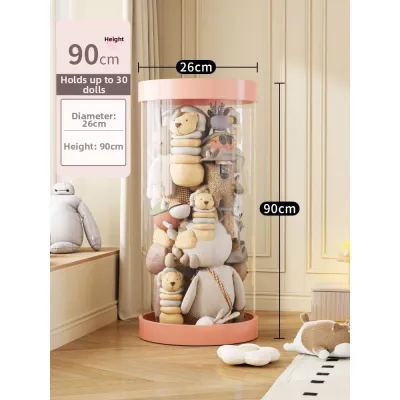
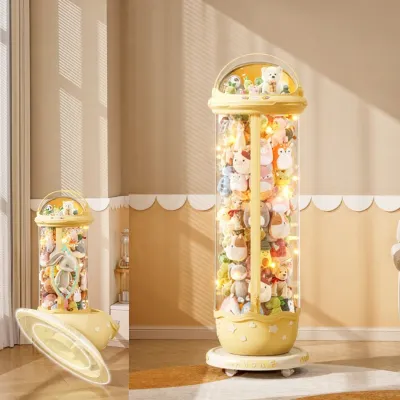
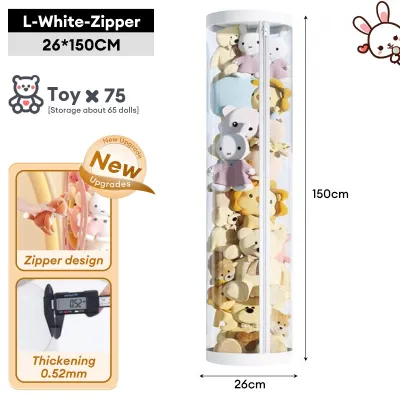
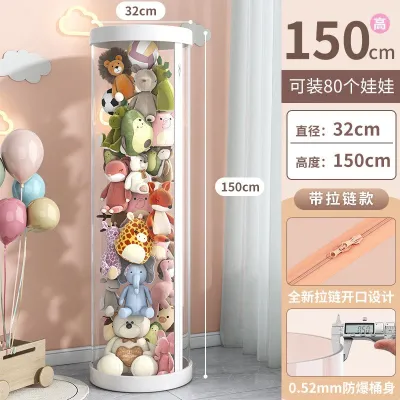
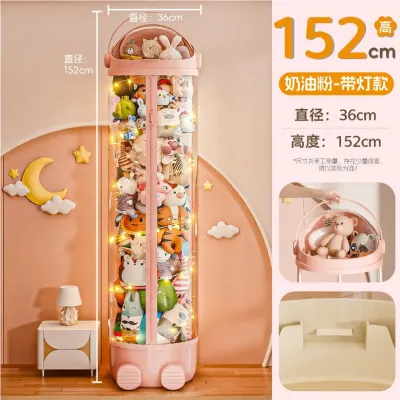
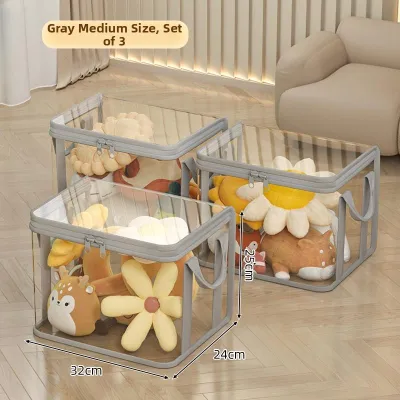
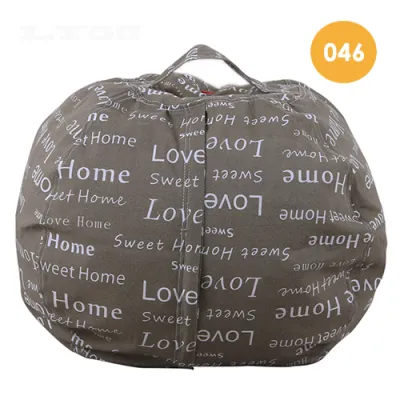
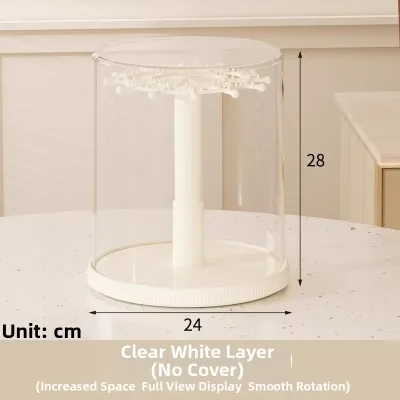
Prices are valid at publication and may change. Please refer to the product page for the latest price.
Safety is a critical factor when selecting any furniture or storage accessory for a baby’s room. Any vertical unit, such as a bookcase or a heavy shelving unit, presents a tipping hazard if a child attempts to climb it. Additionally, materials must be evaluated for breathability to prevent suffocation risks, and any storage option utilizing cords, drawstrings, or hanging nets must be positioned carefully to eliminate entanglement hazards.
Maintaining a hygienic, dust-free environment is another key consideration for a nursery. Plush toys naturally collect dust, pet dander, and allergens over time, which can irritate sensitive respiratory systems. The storage units themselves must be easy to clean, whether that means choosing machine-washable fabric bins, wipeable wooden shelves, or vacuum-friendly woven baskets.
Top Soft Toy Storage Types for a Nursery
Nursery storage solutions generally fall into four primary categories: storage bins, open shelves, hanging nets, and tall hampers. Each type serves a distinct purpose, ranging from quick, low-effort clean-ups to decorative displays. Understanding how these formats function individually helps you identify where they fit best within your nursery layout.

Relying on just one storage type often leads to either an overflowing bin or an inaccessible display. A practical approach is to combine two different formats to create a balanced system. For example, using a low cotton basket for daily play alongside a high corner hammock for seasonal rotation ensures that your child can access their favorite toys while the rest remain neatly stored out of reach.
Storage Bins, Baskets, and Cubbies
Low-level containers like fabric bins, woven baskets, and open cubbies are highly practical for daily toy management. Because these containers sit directly on the floor or on the lowest shelves of a play unit, they allow infants and toddlers to see, reach, and select their toys independently. This setup supports cognitive development by allowing children to make choices during playtime and simplifies the clean-up process, as toys can simply be dropped back into the bin.
When selecting materials for floor bins, prioritize soft, breathable fabrics and sturdy woven materials over rigid plastics or metals. Cotton rope baskets, canvas bins, and soft felt containers are excellent choices because they lack sharp corners or heavy lids that could pinch small fingers. Woven baskets made from natural fibers should be inspected closely to ensure there are no loose, sharp splinters or rough edges that could scratch a baby’s delicate skin.
Despite their convenience, floor bins have distinct limitations that you must consider. They occupy valuable floor space, which can make a small nursery feel cramped and create tripping hazards if placed in primary walking paths. Additionally, deep bins can become difficult to organize for smaller plush toys, forcing you or your child to dump the entire contents onto the floor just to find a specific item at the bottom.
Open Shelves and Display Ledges
Open shelves and shallow display ledges offer a visually appealing way to organize and showcase a curated selection of plush toys. By lifting toys off the floor, shelving units help maintain an open, airy feel in the nursery while turning colorful stuffed animals into part of the room’s decor. This method is particularly useful for displaying special keepsake toys, heirloom dolls, or larger plush items that do not fit easily into standard baskets.
For older babies and toddlers who are beginning to stand and explore, low-mounted shelves can be accessed safely, provided they are sturdy and secure. However, any shelving unit in a nursery requires strict adherence to safety protocols. You must verify your wall type—whether drywall, plaster, or concrete—and use the appropriate wall anchors, brackets, and screws specified by the manufacturer to secure the shelves firmly.
The primary drawback of open shelving is its susceptibility to dust accumulation. Because the toys are fully exposed to the air, they require regular dusting and vacuuming to keep them clean. Furthermore, shelves have a limited capacity and are not suited for storing large volumes of miscellaneous toys; overloading a shelf can make the nursery look cluttered and increases the risk of items falling onto the floor.
Hanging Nets and Corner Hammocks
Hanging toy nets and corner hammocks are highly efficient vertical storage solutions designed to maximize space in compact nurseries. By utilizing the upper corners of a room—areas that otherwise go unused—these nets allow you to store a large volume of plush toys without sacrificing any floor or shelf space. This makes them an excellent choice for parents looking to keep a clean, minimalist nursery layout.
Installing a corner hammock requires careful preparation and the right hardware to ensure it remains securely attached to the wall. You should locate the wall studs whenever possible or use heavy-duty drywall anchors if studs are unavailable. It is essential to follow the manufacturer’s weight limits and installation instructions precisely, as an overloaded net can pull loose from the wall, creating a falling hazard.
While highly space-efficient, hanging nets are not designed for independent child access. Because they are mounted high on the wall, young children cannot reach them, meaning these nets are best reserved for storing out-of-rotation toys, seasonal items, or decorative plush collections. They should never be hung directly over a cot, changing table, or play area where a falling toy or a loose net could land on a sleeping or playing baby.
Toy Hampers and Drawstring Sacks
Tall toy hampers and flexible drawstring sacks provide high-capacity storage that is highly suitable for rapid tidying at the end of the day. If your child has a large collection of oversized stuffed animals or bulky plush toys, a deep hamper offers a quick way to gather them all and keep them out of sight. Many fabric hampers feature handles, making them easy to move from the nursery to the living room as needed.
Safety is a paramount concern when using deep storage sacks or hampers in a child’s environment. If a sack utilizes a drawstring or cord closure, you must ensure that these cords are kept completely out of reach of infants and toddlers to prevent any risk of entanglement or strangulation. Additionally, choose hampers made from breathable mesh or lightweight fabric to ensure proper airflow if a curious toddler decides to climb inside during play.
The main limitation of tall hampers is their depth, which makes organization difficult. Toys stored at the bottom of a deep hamper are hard to see and retrieve, often requiring you to empty the entire container to find a specific item. Over time, large sacks can also become heavy and unwieldy, making them difficult to move and increasing the likelihood of tipping over if a child pulls on the rim.
Safety and Maintenance Checklist for Nursery Storage
To ensure your nursery storage remains safe and functional as your child grows, it is important to establish regular safety checks and maintenance routines. As babies transition from crawling to pulling up and climbing, their interaction with furniture changes dramatically. A storage solution that was safe for a non-mobile infant can quickly become a hazard for an active toddler.
- Secure Vertical Units: Always anchor bookcases, heavy shelving units, and tall dressers to the wall using furniture straps or brackets. If you notice your child attempting to climb a shelving unit or a toy organizer, immediately relocate the items to lower, floor-level bins and consider removing the vertical unit from the room.
- Inspect Materials Regularly: Periodically check all baskets, bins, and nets for signs of wear and tear. Look for loose threads on fabric bins, protruding splinters on wicker baskets, cracked plastic on cubbies, and loose mounting hardware on wall shelves or corner hammocks. Repair or replace damaged items immediately to prevent scratches, pinches, or choking hazards.
- Establish a Cleaning Routine: Dust and allergens accumulate quickly on plush toys and open storage surfaces. Establish a routine to vacuum shelves and wash fabric bins according to their care labels. For plush toys, check the manufacturer's washing instructions; many can be placed in a pillowcase and washed on a gentle cycle, while others may require spot cleaning or gentle vacuuming with an upholstery attachment.
- Assess Usability Over Time: Regularly evaluate whether your current storage setup still meets your child's developmental needs. If a toy hamper has become a tipping hazard because your toddler leans over the edge to reach the bottom, it is time to transition to shallow, wide floor baskets. Adapting your storage to your child's physical capabilities ensures a safer play environment.
Frequently Asked Questions (FAQ)
How do I keep dust off plush toys in open storage?
To minimize dust accumulation on open shelves and display ledges, implement a regular toy rotation system. By keeping only a few plush toys out on display and storing the rest in closed containers or closets, you reduce the number of items exposed to airborne dust. Additionally, you can use lightweight, washable fabric covers over open bins when they are not in use, and vacuum the display shelves and toys weekly using a soft brush attachment. Always check the manufacturer’s care labels on both the toys and the storage units to ensure you are using safe cleaning methods.
Are toy boxes with heavy lids safe for a nursery?
Traditional toy boxes with heavy, unassisted lids pose significant safety risks in a nursery, including finger entrapment and head injuries if the lid slams shut unexpectedly. If you choose to use a lidded toy box, verify that it is equipped with certified safety hinges or lid supports that hold the lid open at any angle and prevent it from falling. Additionally, ensure the box has ventilation holes or a gap beneath the lid to provide airflow in the event that a child climbs inside. For enhanced safety, many parents prefer lidless storage bins, open baskets, or soft fabric containers.
How many plush toys should I keep in the nursery at once?
Limiting the number of plush toys active in the nursery to between five and ten items helps prevent the space from becoming cluttered and reduces sensory overstimulation for your baby. Implementing a toy rotation strategy allows you to keep a small, manageable selection of toys on accessible lower shelves or in floor bins while storing the remainder out of sight in a closet or climate-controlled storage area. Rotating the toys every few weeks keeps playtime engaging for your child without requiring you to purchase new items or expand your nursery storage capacity.

Community discussion
Share your experience or ask a question. Comments are reviewed before publication.