
Choosing the right socket protector for your home is a vital step in baby-proofing, but the sheer variety of options can make the decision surprisingly complex. In Singapore, where homes are equipped with three-pin Type G electrical outlets, your choice must account for specific physical dimensions, switch configurations, and your child’s developmental stage. There is no single universal solution that works for every outlet in your household.
To make an effective decision, you must evaluate how each outlet is used. Sliding plates offer an elegant, permanent solution for frequently accessed but temporarily unused outlets. Box covers are indispensable for protecting active plugs that must remain connected to the wall, such as those powering air purifiers or baby monitors. Simple plug-in caps serve as a highly portable, budget-friendly option for travel or rarely used sockets hidden behind heavy furniture.
While these physical barriers significantly reduce the risk of electrical accidents, they are secondary lines of defense. Toddlers are remarkably observant and rapidly develop fine motor skills and problem-solving abilities that allow them to bypass simple safety devices. Consequently, no socket protector can replace active adult supervision and ongoing age-appropriate safety education.
Products mentioned in this guide
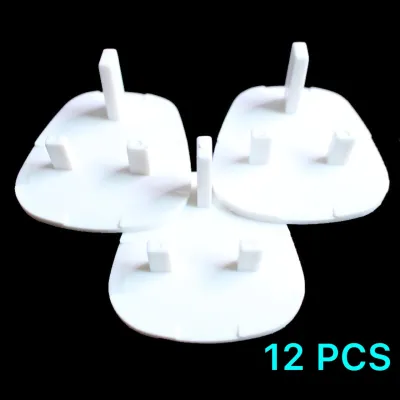
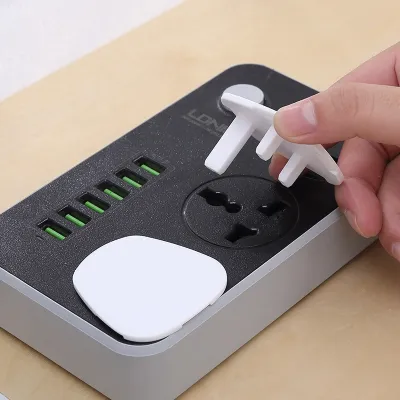
![[SG SELLER] [FREE SHIPPING] Child Baby Safety Socket Cover Plug Cover Protector 🇸🇬SINGAPORE USE🇸🇬](https://img.lazcdn.com/g/p/a1bb8027e643fb1f1a8c9a8404167892.jpg_400x400q80.jpg_.webp)
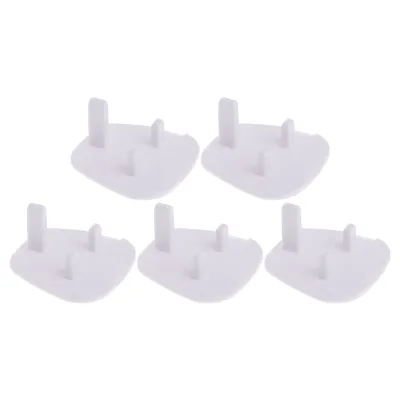
Prices are valid at publication and may change. Please refer to the product page for the latest price.
The 3 Main Types of Socket Protectors Explained
Understanding the physical design, operational mechanisms, and inherent limitations of each protector type is essential before purchasing safety hardware for your home. Each style targets a different household scenario and offers distinct advantages and drawbacks.
Plug-In Socket Protectors (Caps)
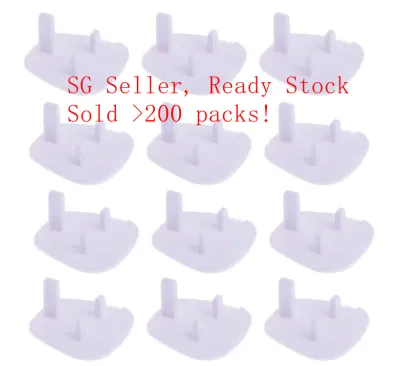
Plug-in socket protectors, commonly referred to as outlet caps, are individual plastic covers with prongs that insert directly into the socket openings. For Singapore’s Type G sockets, these caps feature three rectangular plastic prongs that mimic a standard electrical plug, completely blocking access to the live, neutral, and earth apertures.
- How They Work: The cap sits flush against the faceplate, leaving no exposed edges for a child to grip. To remove them, adults must use their fingernails, a specialized extraction tool, or a built-in folding ring to pull the cap straight out of the socket.
- Primary Benefits: These caps are highly affordable, widely available, and require absolutely no tools or technical expertise to install. Their compact size makes them exceptionally portable, allowing you to easily pack them in a diaper bag for use during hotel stays or visits to relatives' homes.
- Key Drawbacks: Because they must be completely removed to use the outlet, they are easily misplaced during daily tasks. A loose cap left on the floor or a low table poses a severe choking hazard for infants. Furthermore, older toddlers often learn to remove these caps by watching adults or by using flat toys as makeshift levers.
Box Cover Socket Protectors
Box cover protectors are protective plastic enclosures designed to shield outlets that have appliances actively plugged into them. These devices solve a critical vulnerability: preventing a child from pulling out an active plug and exposing live metal prongs.
- How They Work: The protector consists of a clear or opaque plastic box that mounts directly over the entire wall outlet. The appliance cords feed through small, restricted openings at the bottom of the box, while a secure latching lid keeps the plugs and the wall switches completely inaccessible to children.
- Primary Benefits: This design prevents toddlers from pulling out heavy appliance cords, playing with the socket's individual power switches, or inserting foreign objects into the narrow gaps of a partially inserted plug. It is the only reliable way to secure outlets that must remain powered continuously.
- Key Drawbacks: These enclosures are physically bulky and protrude significantly from the wall, which can interfere with furniture placement. They typically rely on strong adhesive backings or require you to unscrew the wall plate to secure the mount, potentially leaving residue or damaging paint and wallpaper upon removal.
Sliding Plate Socket Protectors
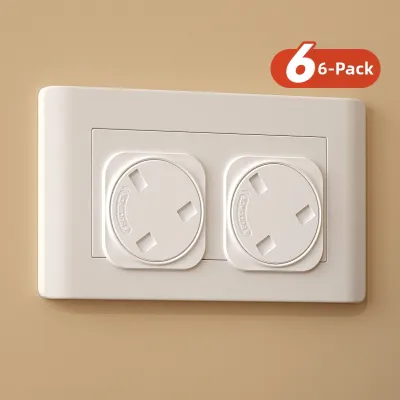
Sliding plate protectors feature an integrated sliding mechanism that automatically covers the socket openings when a plug is removed. They represent a highly modern, semi-permanent approach to electrical safety.
- How They Work: When you want to plug in an appliance, you place the plug prongs against the cover, slide the spring-loaded panel to the side to align with the internal slots, and push the plug all the way in. When the plug is withdrawn, the internal spring immediately slides the protective barrier back into place.
- Primary Benefits: Because the mechanism is self-contained, there are no loose parts to lose, eliminating the choking hazards associated with traditional plug-in caps. They maintain a clean, flush aesthetic that blends seamlessly with your home's interior design and offer excellent long-term protection against curious fingers.
- Key Drawbacks: Installing a complete replacement faceplate requires turning off the mains power and handling electrical wiring, which may require hiring a licensed electrical worker (LEW) to ensure safety and compliance. Adhesive overlay versions exist but require meticulous alignment to prevent the sliding mechanism from jamming against the socket switches.
Key Comparison Dimensions for Child Safety
To choose the right protector, you must evaluate how each option performs across the practical realities of daily parenting, installation constraints, and child development.

Installation and Socket Compatibility
Singapore’s Type G sockets feature a distinct square-pin layout and almost always include individual rocker switches next to each outlet. This specific geometry heavily influences how different safety covers fit and perform.
- Plug-In Caps: Most standard Type G plug-in caps fit universally, but manufacturing tolerances vary. A cap that is slightly too loose can be easily pulled out by a baby, while one that fits too tightly may require a screwdriver to pry loose, risking damage to the plastic faceplate.
- Box Covers: These require a flat, clean wall surface around the perimeter of the socket faceplate to establish a secure adhesive bond. If your home has outlets installed close to skirting boards, tight corners, or built-in kitchen carpentry, there may not be enough clearance to mount a bulky box cover.
- Sliding Plates: Replacement sliding faceplates must match the exact dimensions and screw hole configurations of standard Singapore electrical boxes. If you opt for adhesive sliding overlays, you must verify that the cover does not obstruct or accidentally toggle the manual on/off switch of the socket.
Toddler-Proofing Effectiveness
As children grow, their physical strength, manual dexterity, and cognitive abilities evolve rapidly, meaning a safety device that works for a ten-month-old may fail entirely for a two-year-old.
- Plug-In Caps: These offer moderate security for infants but low long-term effectiveness. Toddlers are keen imitators; once they observe an adult removing a cap, they will actively attempt to mimic the action, often succeeding through persistence or by using toys for leverage.
- Box Covers: These provide excellent security for active outlets. The latch mechanisms usually require dual-hand coordination or a specific pinching force that small hands cannot generate. However, a determined toddler may still pull on the exposed cords exiting the bottom of the box, putting stress on the adhesive mount.
- Sliding Plates: These deliver the highest level of toddler-proofing. The mechanism is completely flush with the wall, leaving no edges, tabs, or gaps for a child to grip or pry. Opening the sliding mechanism requires a coordinated, dual-direction force that is physically and cognitively beyond the reach of toddlers.
Daily Convenience for Adults
Safety measures that introduce excessive friction into your daily routine are often bypassed or abandoned, leaving outlets unprotected.
- Plug-In Caps: These introduce the highest daily friction. If you frequently use an outlet for a vacuum cleaner or a phone charger, you must constantly remove, store, and reinsert the cap. This repetitive task often leads to caps being left on the floor, creating both an electrical hazard and a choking risk.
- Box Covers: These offer moderate convenience. Once installed over a permanent appliance plug, you rarely need to open them. However, if you need to plug in a temporary device, opening the stiff safety latches can be frustrating, especially if the outlet is located behind a sofa or low to the ground.
- Sliding Plates: These provide the lowest friction and maximum convenience. You do not have to remove or store any parts; you simply insert the plug using a slide-and-push motion. The moment you unplug the device, the socket is instantly secured without any additional steps.
Decision Framework: Matching Protectors to Your Home
To help you finalize your baby-proofing strategy, use this condition-based framework to select the most appropriate protectors for your specific living situation and household needs.
Choose Plug-In Caps if:
- You Are Traveling: They are lightweight, pack flat, and can be installed instantly in hotel rooms or holiday rentals to secure temporary living spaces.
- Outlets Are Hidden: They are ideal for sockets located behind heavy furniture like wardrobes, television consoles, or bookshelves, where children cannot easily access them and the risk of a toddler prying them loose is minimal.
- You Need an Immediate, Low-Cost Solution: They allow you to quickly secure an entire home on a limited budget while you plan a more permanent safety setup.
Choose Box Covers if:
- Appliances Are Permanently Connected: They are essential for sockets powering critical household appliances like refrigerators, standing fans, air purifiers, and baby monitors in the nursery.
- Your Child Toggles Switches: They are the perfect solution if your toddler has developed a habit of flipping the manual wall switches on and off, which can disrupt appliances or damage electronics.
- You Want to Prevent Cord-Tugging: They physically shield the plug interface, ensuring that a child crawling near the outlet cannot pull on the wire and partially dislodge the plug.
Choose Sliding Plates if:
- You Own Your Home: They represent a premium, permanent investment in your property's safety infrastructure that will last through multiple childhood stages without deteriorating.
- Outlets Are in High-Traffic Areas: They are perfect for highly visible hallway and living room outlets that are frequently used for vacuuming or temporary device charging.
- You Prioritize Home Aesthetics: They maintain a clean, uncluttered wall profile that matches modern interior decor far better than bulky plastic boxes or brightly colored plastic caps.
Verify Tenant and Technical Constraints First:
- Check Your Tenancy Agreement: If you are renting an HDB flat or a private condominium in Singapore, you are generally prohibited from altering the electrical wiring or replacing wall faceplates. In this scenario, hardwired sliding plates are not an option, and you should opt for adhesive-based box covers or high-quality plug-in caps instead.
- Assess Wall Surface and Humidity: Singapore's high relative humidity can cause standard adhesive backings to degrade over time. If you use adhesive-mounted box covers or sliding overlays, ensure the wall surface is thoroughly cleaned and dried before application, and monitor the adhesive bond regularly.
- Identify Custom Socket Features: If your home features integrated USB charging ports, smart home touch panels, or non-standard decorative faceplates, standard off-the-shelf protectors may not fit. Always measure your faceplates and check for clearance before purchasing.
Safety Checks and Maintenance for Socket Protectors
No safety device is entirely maintenance-free. To ensure your socket protectors continue to provide reliable protection, establish a routine inspection and maintenance schedule.
Regular Inspections
Perform a monthly walkthrough of your home to inspect every installed socket protector. Check plug-in caps for signs of plastic degradation, such as hairline cracks or bent prongs, which can cause them to sit loosely in the socket. For adhesive-mounted box covers, gently wiggle the enclosure to verify that the adhesive bond remains strong and has not been compromised by humidity or dust.
Managing Choking Hazards
Because plug-in caps are small and typically made of hard plastic, they present a severe choking hazard if left loose. Establish a strict household rule: the moment a cap is removed from a wall socket, it must be placed immediately into a high cabinet, a drawer, or a designated safety container. Never leave a removed cap sitting on top of a table, counter, or the floor.
Heat and Wattage Considerations
Electrical plugs can generate mild heat during operation, particularly when powering high-wattage appliances like portable air conditioners, oil-filled radiators, or iron stations. Enclosing these plugs inside a plastic box cover can trap heat, potentially leading to thermal buildup, melting plastic, or a fire hazard.
Before installing a box cover over a high-draw appliance, consult both the appliance manufacturer’s instructions and the safety cover guidelines. Never use a box cover on an outlet powering any appliance that shows signs of scorched plastic, loose wall connections, or excessive heat generation. If you notice any warmth radiating from a wall outlet, immediately discontinue use and consult a licensed electrical worker (LEW).
The Role of Supervision and Education
Socket protectors are designed to buy you valuable seconds of reaction time, not to leave children unattended around electrical hazards. As your child grows, pair physical barriers with consistent safety education. Teach toddlers that wall outlets are dangerous and should never be touched, and demonstrate safe behavior by handling electrical plugs with care and only with completely dry hands.
Frequently Asked Questions (FAQ)
Are socket protectors safe for high-wattage appliances like heaters?
No, standard plastic box covers are generally not recommended for high-wattage, continuous-draw appliances like portable heaters or large microwave ovens. These appliances draw significant current, which can naturally warm the plug and socket interface. Enclosing this area traps heat, which can degrade the plastic cover or damage the wall socket. For high-wattage appliances, it is safer to leave the outlet uncovered but completely blocked from your child’s reach by placing heavy furniture in front of it. Always prioritize the appliance manufacturer’s installation guidelines.
Can I use socket protectors on smart switches or USB wall sockets?
Standard plug-in caps will not protect or fit into integrated USB-A or USB-C ports, and they may physically block adjacent smart touch panels. For modern smart sockets or faceplates with built-in USB ports, standard box covers may also block physical buttons or touch sensors. If you have these specialized outlets, you should look for oversized box covers designed specifically for smart home hardware, or contact the smart switch manufacturer directly to see if they offer proprietary, child-safe locking covers.

Community discussion
Share your experience or ask a question. Comments are reviewed before publication.