
The Quick Verdict: Which Is Safer for Crawling Babies?
As your baby transitions from rolling over to crawling, their world expands dramatically. At this developmental stage, which typically begins between six and ten months of age, infants explore their environment primarily through touch, sight, and oral exploration. Floor-level hazards that were once out of reach suddenly become immediate points of interest. Among these, electrical wall outlets are particularly attractive to curious infants due to their low height and intriguing dark slots. When securing your home, choosing the right protective barrier is one of the most critical decisions you will make for your child’s physical safety.
When comparing sliding outlet covers and traditional plug-in caps, sliding outlet covers (often referred to as tamper-resistant receptacles) are generally the safer and more reliable choice for crawling babies. Because the protective shutter mechanism is integrated directly into the faceplate of the outlet, there are no loose parts that can be removed, misplaced, or forgotten. Once installed, they provide continuous protection without requiring constant manual intervention from parents.
In contrast, while plug-in caps offer an inexpensive and immediate physical barrier, they present significant safety trade-offs. The primary risk of plug-in caps is that they rely entirely on friction to stay in place. As babies develop their fine motor skills and cognitive problem-solving abilities, they can learn to pull these caps out of the wall. Once detached, a small plastic plug-in cap instantly transforms into a severe choking hazard. Therefore, while plug-in caps can serve as a temporary stopgap, sliding covers offer a far more robust, permanent, and fail-safe solution for long-term baby electrical safety.
Products mentioned in this guide
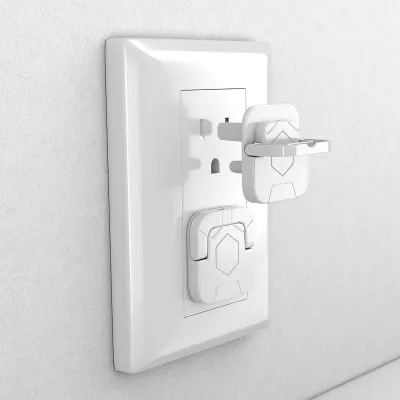

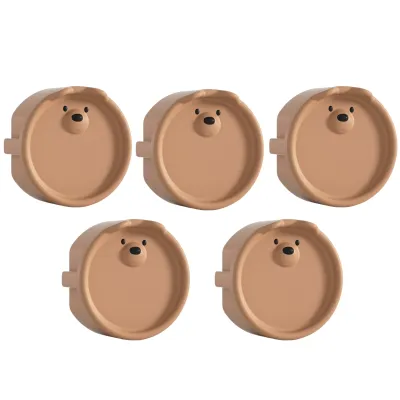
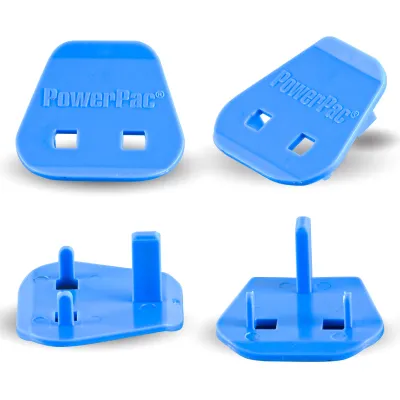
![[Local Seller!] Baby Safety Electrical UK 3pin Power Outlets Socket Cover Plug Caps Japan Brand KM1037 - 5pcs](https://img.lazcdn.com/g/p/ea9601dbec0eaea46fd1122e080ef0b2.jpg_400x400q80.jpg_.webp)

Prices are valid at publication and may change. Please refer to the product page for the latest price.
How Sliding Outlet Covers and Plug-In Caps Work
To make an informed choice for your household, it is essential to understand the mechanical designs of these two safety options. Both products aim to prevent a child from inserting conductive foreign objects into an active electrical socket, but they achieve this goal through completely different engineering principles.

Sliding Outlet Covers (Tamper-Resistant Receptacles)
Sliding outlet covers utilize an internal spring-loaded shutter system located behind the faceplate. Under normal conditions, these shutters completely block the entry points to the live and neutral electrical contacts. The mechanism is specifically engineered to open only when equal, simultaneous pressure is applied to both slots (or, in the case of Singapore’s standard three-pin Type G sockets, when the grounding pin and the power pins are engaged correctly).
If a crawling baby attempts to insert a single object—such as a metal key, a hairpin, a paperclip, or a toy—into just one of the slots, the internal shutters remain locked in place. This smart mechanical design ensures that the electrical path is never exposed to unilateral probing. These covers are available either as slide-on faceplate attachments that screw directly over your existing outlets or as complete, integrated tamper-resistant receptacle units that replace your standard wall sockets entirely.
Plug-In Caps (Outlet Plugs)
Plug-in caps are simple, solid plastic inserts designed to be pushed directly into the open slots of an electrical outlet. By physically filling the receptacle holes, they block access to the underlying electrical contacts. These caps are widely available and extremely simple in design, relying on the tight fit of their plastic prongs within the socket to stay secure.
There are several design variations of plug-in caps available on the market. The most basic are flat-faced caps that sit relatively flush against the wall, making it difficult for small fingers to get a grip on the edges. Other designs feature small, fold-down handles or molded tabs that make it easier for adults to pull the caps out when they need to use the outlet. Some advanced versions are designed to be removed only with a matching plastic key or tool, which adds an extra layer of security but also increases the complexity of daily use for caregivers.
Head-to-Head Comparison: Safety, Usability, and Fit
Evaluating these two options requires looking at how they perform in real-world household environments. While laboratory safety tests provide a baseline, the daily realities of parenting a highly active, crawling baby introduce variables like wear and tear, human error, and rapid child development.
Choking Hazards and Removal Risks
The single greatest risk associated with plug-in caps is the potential for them to become a choking hazard. Between the ages of nine and twelve months, infants rapidly develop their pincer grasp—the ability to hold small objects between the thumb and index finger. This fine motor milestone, combined with their natural persistence, means that babies can become surprisingly adept at prying loose objects out of walls.
If a plug-in cap is slightly loose, worn down from frequent use, or of inferior manufacturing quality, a determined baby can wiggle it free. Because babies naturally explore new objects by putting them in their mouths, a loose plastic cap poses an immediate, life-threatening choking hazard. This risk is entirely eliminated with sliding outlet covers. Because the protective shutters are housed securely inside the faceplate or the receptacle itself, there are no small, detachable parts that a baby can pull off, lose, or swallow. When assessing plug-in caps, parents must carefully inspect the physical dimensions and structural integrity of the plastic to ensure they cannot be easily manipulated by small hands.
Adult Convenience and Daily Use
A safety device is only effective if it is used consistently. This is where the human element of baby electrical safety becomes a critical factor. In a busy household, parents frequently need to plug and unplug appliances such as vacuum cleaners, phone chargers, baby monitors, and bottle warmers.
When using plug-in caps, an adult must manually remove the cap every time they want to use an outlet. They must then find a safe place to store the loose cap while the appliance is plugged in, and most importantly, they must remember to insert the cap back into the socket the moment the appliance is unplugged. In moments of fatigue or distraction, it is incredibly easy to forget to replace a cap, leaving the live socket completely exposed to a crawling baby.
Sliding outlet covers eliminate this risk of human forgetfulness. The spring-loaded shutters automatically snap shut the instant a plug is pulled out of the socket. This passive safety feature requires zero ongoing effort from parents, ensuring that the outlet is protected 100% of the time, even during hectic daily routines.
Installation and Socket Compatibility
The ease of setup and how well the safety device fits your home’s existing fixtures are practical considerations that cannot be overlooked. In Singapore, homes are standardly equipped with Type G three-pin electrical sockets, which frequently feature individual on/off rocker switches.
Plug-in caps are incredibly easy to install, requiring no tools or technical knowledge. However, finding caps that fit perfectly flush on Singapore’s switched sockets can be challenging. If a plug-in cap does not sit completely flat because of the adjacent switch mechanism, it leaves a small gap. This gap makes it significantly easier for a crawling baby to slip their fingernails or a small toy underneath and pry the cap out.
Sliding outlet covers require a more involved installation process. If you choose slide-on faceplate covers, you must verify that they are compatible with the exact brand and physical dimensions of your existing wall plates. If you opt to install integrated tamper-resistant receptacles, the process involves shutting off the main electrical power at your home’s distribution board (DB box) and physically replacing the outlet wiring.
Because working with mains electricity poses severe risks of shock, fire, or wiring damage, any permanent socket replacement or electrical alteration must strictly comply with local safety regulations. It is highly recommended to hire a licensed electrical worker (LEW) in Singapore to perform these installations. Before purchasing any replacement faceplates or receptacles, always verify that the products meet local safety standards and carry the appropriate safety marks recognized by local regulators.
| Feature | Sliding Outlet Covers | Plug-In Caps |
|---|---|---|
| Choking Risk | None; the safety mechanism is permanently integrated. | High; loose or pried-out caps can be swallowed. |
| Installation Effort | Moderate to high; requires basic DIY or a licensed electrician. | Very low; simply pushes directly into the socket. |
| Daily Convenience | High; automatically slides shut when plugs are removed. | Low; must be manually removed and replaced every use. |
| Continuous Protection | Automatic and permanent; zero risk of parental forgetfulness. | Intermittent; relies entirely on manual replacement. |
| Best Use Case | Homeowners seeking a permanent, fail-safe safety solution. | Renters or travelers needing a temporary, low-cost barrier. |
Beyond the Socket: Essential Baby Electrical Safety
Securing wall outlets is a vital first step, but comprehensive baby electrical safety requires looking at the entire room from a crawling baby’s perspective. When an infant is on all fours, their eye level is less than two feet off the ground, bringing a variety of low-lying electrical hazards into their direct line of sight.
Managing Cords and Cables
Loose, dangling, or trailing cords are highly attractive to crawling babies, who may pull on them to try and stand up or explore them out of curiosity. Exposed cables pose severe risks of strangulation, tripping, or electrical burns if a baby decides to bite down on a live wire.
To mitigate these risks, parents should implement systematic cable management throughout the home. Use heavy-duty plastic cord shorteners to wind up excess length, or bundle multiple wires together using secure cable ties. Whenever possible, route electrical cords behind heavy, stable furniture such as bookshelves, sideboards, or television consoles. Ensure that any heavy furniture used to block access to cords is securely anchored to the wall with anti-tip straps to prevent accidental tipping if the baby attempts to climb.
Appliance Placement and Heavy Items
A common household hazard involves heavy electrical appliances placed on kitchen countertops, low tables, or desks with their power cords dangling over the edge. A crawling baby who is beginning to pull themselves up to a standing position can easily grab a hanging cord and pull a heavy, hot, or sharp appliance down onto themselves.
Appliances such as steam irons, electric kettles, hair dryers, and rice cookers should always be pushed far back from the edges of counters and tables. When these devices are not in active use, they should be unplugged immediately, and their cords should be wound up and stored out of reach in closed cabinets. Never leave a charger plugged into a wall outlet with the device end resting on the floor, as babies can easily put the live charging connector into their mouths, leading to severe electrical burns.
Water and Electricity Boundaries
As babies grow more mobile, they quickly expand their exploration zone to include bathrooms, kitchens, and service yards. These areas present heightened electrical risks due to the constant presence of water, which is a highly conductive medium.
Parents must establish strict boundaries between water sources and electrical devices. Keep all portable appliances, such as hair straighteners, electric toothbrushes, and kitchen blenders, completely unplugged and stored away when not in use. Ensure that wall outlets in kitchens and bathrooms are located a safe distance from sinks and water taps. For optimal safety, verify that your home’s main electrical distribution board is equipped with a functioning residual current circuit breaker (RCCB). This safety device is designed to instantly cut off power when it detects an electrical leak to ground, providing critical protection against severe electrical shocks in wet environments.
Decision Framework: Which Option Fits Your Home?
To choose the best safety solution for your family, consider your living situation, budget, and willingness to perform minor home modifications. Use the following guidelines to make a practical decision:
- Choose Sliding Covers if: You own your home and want a highly durable, permanent safety solution that eliminates the risk of human error. This option is ideal for parents who prefer a set-and-forget approach and are comfortable either performing basic faceplate installations or hiring a professional to handle the wiring.
- Choose Plug-In Caps if: You are currently renting your home and your tenancy agreement strictly prohibits making permanent alterations to electrical fixtures. They are also suitable if you need an immediate, low-cost safety barrier for temporary situations, such as traveling or visiting relatives. If you must use plug-in caps, prioritize high-quality, tightly fitting models that require a specialized removal tool, and commit to strict parental supervision.
- Verify First if: You are uncertain about the compatibility of aftermarket covers with the specific brand of sockets installed in your home. Before making any changes to your electrical outlets, always verify local safety guidelines. If you live in an older property with outdated electrical systems, consult a licensed electrical worker (LEW) in Singapore to inspect your wiring and ensure any upgrades are executed safely and legally.
Frequently Asked Questions (FAQ)
Are tamper-resistant receptacles completely shock-proof?
While tamper-resistant receptacles (sliding outlet covers) offer an exceptionally high level of safety, they are not 100% shock-proof in every conceivable scenario. The internal shutter mechanism is designed to block the insertion of single foreign objects, but if a child manages to insert two conductive objects into both active slots simultaneously with equal pressure, the shutters will open. Because of this mechanical limit, no physical device can completely replace active parental supervision. Caregivers must continue to monitor crawling babies closely and teach them to stay away from electrical fixtures.
Can I use plug-in caps on switched sockets?
Using standard plug-in caps on switched sockets can be highly problematic. Many standard caps are designed for unswitched outlets and do not account for the physical space occupied by the on/off rocker switch common on Singapore’s Type G sockets. If the plastic cap press-fits against or near the switch, it may not sit completely flush against the faceplate, leaving a small gap. This gap provides leverage for a crawling baby to grip and pull the cap out, rendering it ineffective. If your home has switched sockets, you must verify the physical compatibility of the caps before purchasing, or opt for specialized covers designed specifically to accommodate switched outlets.

Community discussion
Share your experience or ask a question. Comments are reviewed before publication.