
Finding the right diaper bag is less about choosing the most popular style and more about matching the bag’s storage volume to your daily routine. Skip Hop offers a diverse range of diaper bags, but selecting the correct model requires evaluating how much gear you actually need to carry on a typical outing. The ideal model should accommodate your child’s developmental stage, your feeding method, and the duration of your trips without becoming an unnecessary physical burden. Always verify the manufacturer’s listed physical dimensions and liter capacity on the official product tag or brand website before finalizing your purchase.
In Singapore, where the tropical climate and varied indoor-outdoor environments dictate what you pack, choosing the correct size is especially critical. A bag that is too small will leave you struggling to fit essential weather protection or extra clothes, while an oversized bag can quickly become hot and heavy during long walks. By understanding how Skip Hop structures its capacity tiers, you can select a model that supports your parenting lifestyle seamlessly.
Quick Answer: Matching Skip Hop Capacities to Your Routine
Choosing the right Skip Hop diaper bag capacity comes down to a clear understanding of your typical daily schedule, your child’s feeding requirements, and their age.
Products mentioned in this guide
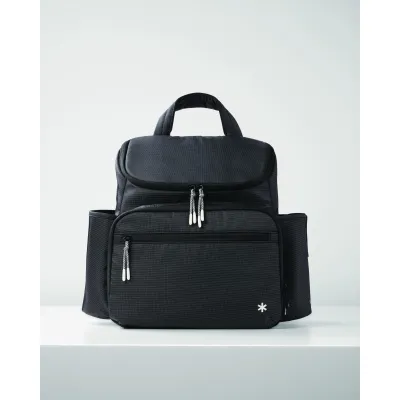
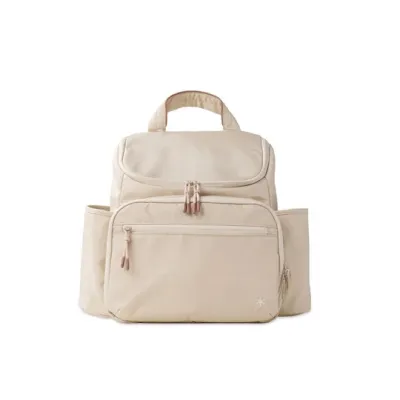
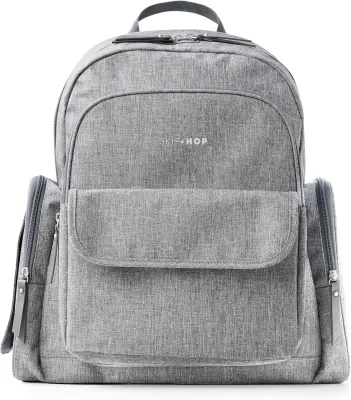
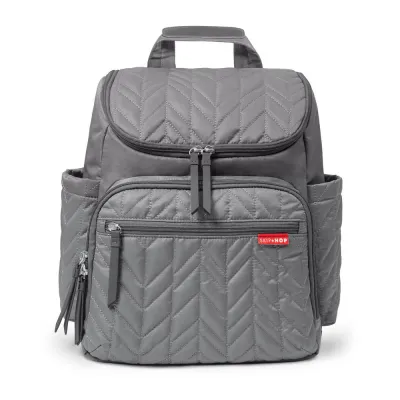
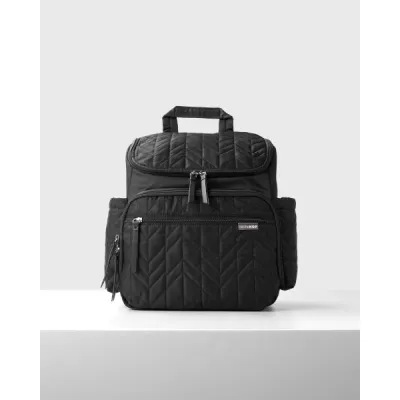
Prices are valid at publication and may change. Please refer to the product page for the latest price.
- Compact Capacity (Clutches & Crossbodys): Best for quick errands, clinic visits, or short trips lasting one to two hours. These models hold a few diapers, a travel wipe pack, and one bottle.
- Standard Capacity (Mid-Sized Backpacks & Totes): Ideal for typical day trips lasting three to six hours. These bags comfortably accommodate a full day’s diapering supplies, spare clothes, snacks, and parent essentials.
- High Capacity (Large Backpacks & Expandable Models): Designed for full-day travel, outings with twins or multiple young children, or carrying bulky gear like breast pumps.
Because product specifications and interior layouts can change across different model years, always check the manufacturer’s official specifications for precise dimensions and volume ratings before purchasing.
Assessing Your Daily Outing Needs and Gear Load
Before comparing specific Skip Hop models, you must calculate the physical volume of the gear you carry on a regular basis. Your required capacity is heavily influenced by the duration and environment of your typical outings. For instance, a short trip to a climate-controlled shopping mall along Orchard Road requires minimal preparation compared to a full-day outdoor excursion to the Singapore Botanic Gardens or the Singapore Zoo. In Singapore’s humid, tropical climate, outdoor trips demand extra packing space for portable hand fans, compact umbrellas, sun protection, insect repellent, and multiple changes of lightweight clothing to cope with sudden downpours or heavy perspiration.

A child’s developmental stage also dictates your storage needs. Newborns require a high volume of diapering supplies, burp cloths, pacifiers, and multiple changes of clothing due to frequent spills or diaper leaks. As your baby grows into a toddler, the diaper count decreases, but the physical size of their gear increases. Toddlers require space for bulky solid-food snack containers, spill-proof water bottles, toys, and spare shoes, which can quickly crowd a small bag’s main compartment.
Your feeding method is another critical factor. Parents who breastfeed and pump on the go require dedicated, insulated space for a portable pump, cords, and milk storage bags. Formula feeding requires carrying multiple pre-measured bottles, a formula dispenser, and a flask of warm water, which take up significant volume. Once your child transitions to solid foods, you will need extra room for silicone bibs, toddler utensils, and snack boxes.
Finally, do not overlook your own essentials. A practical diaper bag must accommodate caregiver items like your wallet, keys, mobile phone, transit cards, and a reusable water bottle. If the bag is too small, you will end up carrying a separate handbag, defeating the convenience of a hands-free design.
Skip Hop Diaper Bag Categories by Capacity and Use Case
While exact interior volume and physical dimensions can vary by specific model version and release year, Skip Hop generally designs its diaper bags across three distinct capacity tiers. To ensure the model you choose matches your expectations, always verify the exact dimensions and liter capacity on the official product tags or the brand’s website rather than relying on general category assumptions.
Compact and Crossbody Styles for Quick Errands
Compact Skip Hop models, including diaper clutches and small crossbody bags, are engineered for parents who prefer a minimalist approach. These lightweight options are perfect for short trips, quick medical checkups, or as a secondary grab-and-go bag stored in the car or attached to a lightweight stroller.
When packing a compact model, you must limit your gear to the absolute essentials. Typically, these bags can accommodate two or three diapers, a travel-sized pack of baby wipes, a single bottle, and small personal items like your phone and keys. The primary limitation of this tier is its lack of space for bulky items; they are generally insufficient for full-day outings, multiple changes of clothes, or carrying pumping equipment.
Standard Totes and Backpacks for Day Trips
Standard-sized backpacks and totes represent the most popular and versatile tier in the Skip Hop lineup. Designed to balance storage volume with daily carrying comfort, these models are ideal for typical day trips, playdates, and standard daily routines.
These mid-sized options comfortably hold five to six diapers, a full pack of wipes, two baby bottles, a change of clothes, small toys, and snack containers. When evaluating these models, check whether the specific bag features built-in insulated bottle pockets and a dedicated compartment for a changing pad. These integrated features are highly convenient, but they do consume internal volume, which affects the remaining usable space for other gear.
High-Capacity and Expandable Options for Full-Day Outings
For travel, full-day excursions, or families with multiple young children, high-capacity and expandable Skip Hop diaper bags provide the maximum storage volume. These models are designed to handle heavy gear loads, including breast pumps, multiple changes of clothing, and extensive feeding supplies.
While these bags offer maximum organization and space, they come with a distinct trade-off. A fully loaded, high-capacity bag is physically larger and heavier, which can lead to fatigue during long periods of carrying. To ensure safety and protect the longevity of your bag, always check the manufacturer’s guidelines regarding maximum weight limits for the shoulder straps, grab handles, and stroller attachments to prevent structural damage or tearing.
Evaluating Internal Layout and Pocket Configuration
Raw storage volume, typically measured in liters, only tells part of the story. How a diaper bag organizes that volume determines how much gear you can actually pack and how easily you can retrieve it in an emergency. Two bags with identical physical dimensions can feel completely different in daily use depending on their internal layout and pocket configuration.
A well-designed diaper bag should separate parent essentials from baby gear. Look for models with dedicated exterior parent pockets that keep keys, phones, and transit cards secure and accessible without opening the main compartment. This separation prevents you from rummaging through baby supplies just to find your keys.
The configuration of bottle pockets is another crucial detail. Ensure that the insulated bottle pockets are wide enough to accommodate the specific brands of baby bottles or sippy cups you use. If the pockets are too narrow, you may be forced to store bottles inside the main compartment, which reduces the space available for clothing and diapers.
The diaper changing pad is another factor that influences usable space. Verify whether the changing pad has its own dedicated external sleeve. If the pad must be stored inside the main compartment, it will occupy valuable space that could otherwise be used for clothing or blankets. As your child grows and diaper changes become less frequent, removing the changing pad entirely can free up significant internal volume.
Finally, consider how the main compartment opens. Top-loading bags with drawstring or narrow zipper closures can make it difficult to see what is inside, often requiring you to unpack the entire bag to reach an item at the bottom. In contrast, wide-frame or clamshell openings allow the bag to open fully and lay flat, giving you immediate visibility and easy access to all your packed gear.
Common Mistakes When Choosing Diaper Bag Capacity
Many parents select a diaper bag that does not match their actual needs because of a few common packing and purchasing pitfalls. Recognizing these mistakes early can help you choose a model that remains comfortable and practical over the long term.
One of the most common errors is overpacking “just in case” scenarios. Packing excessive spare outfits, toys, and unnecessary accessories leads to selecting an oversized bag. This extra weight can cause physical strain on your shoulders and back during daily use.
Another oversight is ignoring the empty weight of the diaper bag. High-capacity models constructed from heavy, highly structured fabrics can be surprisingly heavy before you even begin packing baby gear. Choosing a bag made from lightweight yet durable materials ensures that the bulk of the carrying weight comes from your essentials.
Parents also frequently forget to account for their own personal items. If a diaper bag lacks dedicated compartments for caregiver essentials, you may find yourself carrying both a diaper bag and a personal purse, which complicates hands-free parenting.
Lastly, many parents misjudge their future needs, purchasing a massive diaper bag for a newborn without realizing that gear volume typically decreases as the baby grows. Once a child transitions to toddlerhood, they require fewer diaper changes and less specialized gear, meaning a standard or compact bag may eventually become more practical.
Frequently Asked Questions (FAQ)
Can I use a standard Skip Hop diaper bag for twins?
While a standard-sized Skip Hop bag may hold enough gear for twins on very short trips, a high-capacity or expandable model is highly recommended for daily outings. Caring for twins requires doubling the number of diapers, wipes, spare outfits, and bottles, which quickly exceeds the capacity of a mid-sized bag. Always check the manufacturer’s recommended weight limits for the straps, and consider a dual-bag system—such as combining a stroller-attached backpack with a compact crossbody bag for personal essentials—to prevent overloading the bag’s seams and straps.
Do Skip Hop diaper bags fit standard breast pumps?
Whether a breast pump fits depends entirely on the specific pump model’s physical dimensions and the diaper bag’s internal layout. Compact, wearable breast pumps generally fit easily into standard-sized Skip Hop backpacks or totes. However, larger, hospital-grade electric pumps and their associated tubing, power adapters, and collection kits require a high-capacity bag with a wide main compartment or a dedicated lower section. Before purchasing, measure your pump unit and compare its dimensions against the bag’s internal compartment specifications to ensure a proper fit.

Community discussion
Share your experience or ask a question. Comments are reviewed before publication.