
In Singapore, child passenger safety is strictly regulated to minimize the risk of injury during transit. Under the Road Traffic Act, anyone below the height of 1.35 metres must be secured with an approved child restraint system appropriate for their height and weight when travelling in a motor vehicle. For children who have outgrown their forward-facing harnessed seats but are not yet tall enough for standard seat belts, a certified booster car seat is the legally required and safest solution.
Failing to use an approved restraint not only compromises your child’s safety but also carries strict legal penalties. Understanding the specific legal thresholds, transition milestones, and safety standards will help you keep your child secure and ensure full compliance with Singapore’s traffic laws.
Understanding Singapore's Child Car Seat Laws
Singapore’s Road Traffic Act mandates that all drivers ensure passengers under the height of 1.35 metres are properly secured using an approved child restraint. This law applies to all private passenger vehicles operating on Singapore roads. The Land Transport Authority (LTA) and the Traffic Police enforce this regulation strictly to protect young passengers from the forces of sudden braking or collisions.
Products mentioned in this guide
![[SG] Foldable Child Safety Car Booster Seat Compact Travel Portable Baby Seat Blue Pink For 3-13 yrs](https://img.lazcdn.com/g/p/e4b0a56c751e7aef08c3a5f6c2dbb9e1.jpg_400x400q80.jpg_.webp)
![Easyhome.sg [Child SAFETY] Baby Booster Car Seat Chair – Toddler Safety Travel Carrier for Children](https://img.lazcdn.com/g/p/9a1e79f7193f323d784f040bd84fc2a9.png_400x400q80.png_.webp)
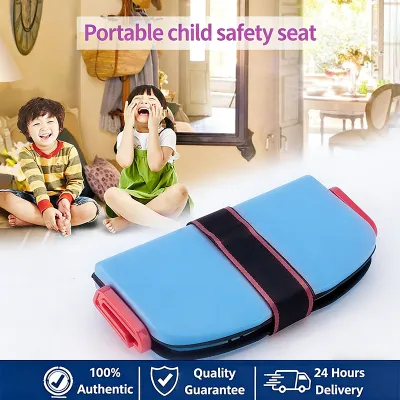
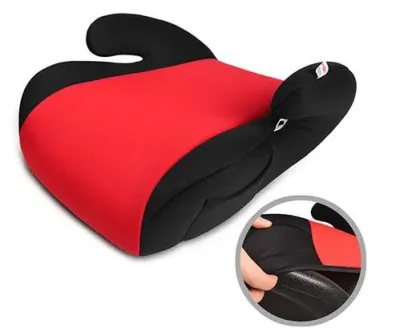
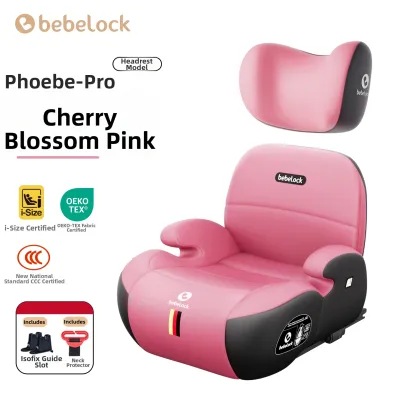
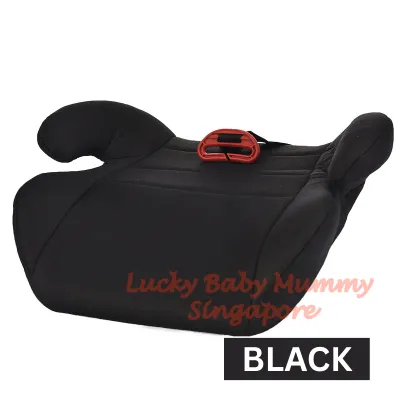
Prices are valid at publication and may change. Please refer to the product page for the latest price.
While age is often used as a rough guideline by parents, the law is explicitly based on height. A child who is ten years old but measures under 1.35 metres must still use an appropriate child restraint. Conversely, a exceptionally tall younger child who exceeds 1.35 metres may legally use the vehicle’s standard adult seat belt, though additional safety checks are highly recommended.
It is important to distinguish between legally recognized child restraint systems and unapproved aftermarket accessories. Forward-facing car seats with built-in harnesses and booster car seats (both high-back and backless models) that use the vehicle’s three-point seat belt are legally recognized when they carry approved certification marks. In contrast, aftermarket seat belt adjusters—such as fabric straps, plastic clips, or padded cushions designed to pull the shoulder belt down—are not recognized as approved child restraints under Singapore law.
Neglecting these legal requirements carries immediate consequences for drivers. If caught transporting a child under 1.35 metres without an approved restraint, you can face a composition fine of S$120 and receive three demerit points. If the case is prosecuted in court, first-time offenders can face a fine of up to S$1,000, imprisonment for up to three months, or both, with penalties doubling for subsequent offences.
When to Transition to a Booster Car Seat
Transitioning your child to a booster car seat too early is a common mistake that can compromise their safety. A five-point harnessed car seat provides superior protection for younger children by distributing crash forces across the strongest parts of their skeletal structure. You should keep your child in their forward-facing harnessed seat until they reach the maximum weight or height limit specified by the manufacturer.

Physical milestones are the most reliable indicators for making the switch. Look for the position of your child’s shoulders in relation to the harness slots; if their shoulders sit above the highest harness slot, they have outgrown the seat. Additionally, check if your child’s weight has reached the upper limit stated on the harnessed seat’s safety label.
Skeletal and behavioral maturity are just as critical as physical size. Unlike a harnessed seat, a booster car seat relies entirely on the vehicle’s adult seat belt to secure both the child and the seat. This means your child must possess the maturity to sit relatively still, upright, and in the proper position for the entire duration of every journey. If your child frequently slouches, leans over, or pulls the shoulder belt under their arm, they are not yet ready for a booster seat.
Always consult the physical labels on your current car seat and the manufacturer’s instruction manual to verify the exact limits. Rushing the transition to a booster seat exposes a child’s developing body to forces their skeletal system is not yet ready to withstand.
Safety Standards and Certifications to Verify
When purchasing a booster car seat in Singapore, you must verify that the product complies with recognized international safety standards. The LTA recognizes several major international certifications, which guarantee that the seat has undergone rigorous crash testing. Look for standards such as the United Nations standard UN ECE R44/04 or the newer, more stringent UN R129 (commonly known as i-Size).
To verify compliance, inspect the booster seat for an official certification sticker, which is typically orange or white and affixed to the base or back of the seat shell. This label displays the standard name, the approved height or weight range, and a unique approval number. Avoid purchasing any seat that lacks a clear, legible certification label, as it may not be legally compliant or structurally safe.
While international standards are accepted locally, you must ensure the booster seat is still within its safe operational lifespan. Over time, exposure to high temperatures and humidity inside parked vehicles in Singapore can degrade the plastic shell and webbing of a car seat. Check the manufacturer’s stamp on the plastic body to find the production date, and cross-reference this with the manual to ensure the seat has not expired.
Avoid using second-hand booster seats unless you can absolutely verify their complete history. A booster seat that has been involved in a moderate to severe collision must be replaced immediately, even if there is no visible damage. Micro-fractures in the plastic shell can severely compromise the seat’s structural integrity, rendering it useless in a subsequent accident.
Proper Installation and Usage to Minimize Risks
Correct installation and belt routing are essential for a booster car seat to function as intended during a collision. The primary purpose of a booster seat is to elevate the child so that the vehicle’s adult seat belt fits safely across their body. The lap belt must be positioned low and snug across the child’s upper thighs or pelvis, never across their soft abdomen where it could cause severe internal injuries.
The shoulder belt must cross the middle of the child’s chest and the center of their collarbone. It should never rub against the child’s neck or face, nor should it slip off the edge of their shoulder. To achieve this, always use the booster seat’s built-in red plastic belt guides or the provided shoulder belt positioning clips to keep the belt locked in the correct path.
When choosing a model, consider the structural differences between high-back and backless booster seats. High-back booster seats are highly recommended because they provide built-in side-impact protection, head support, and integrated belt guides that adjust as your child grows. Backless booster seats are highly portable but offer no side-impact protection and should only be used in vehicle seats that feature adequate headrests to prevent whiplash.
Finally, remember to secure the booster seat even when your child is not riding in the vehicle. An unsecured, empty booster seat can become a heavy projectile inside the cabin during sudden braking or a collision, potentially injuring the driver or other passengers. Fasten the vehicle’s seat belt over the empty booster or secure it using the vehicle’s ISOFIX connectors if equipped.
Recognizing Risks and Knowing When to Stop Using a Booster
Using a booster seat incorrectly can introduce severe safety risks. If the seat belt is poorly routed, a sudden stop can cause “seat belt syndrome,” where the lap belt forces its way into the soft tissue of the abdomen, risking damage to internal organs. If you notice the shoulder belt riding up against your child’s neck, do not allow them to tuck the belt behind their back or under their arm, as this leaves the upper body completely unrestrained.
To determine if your child is physically ready to transition from a booster seat to using the vehicle’s seat belt alone, perform the widely recognized five-step fit test:
- Back against the seat: Does your child sit all the way back against the vehicle seat back without slouching?
- Knees bend at the edge: Do your child's knees bend comfortably over the front edge of the vehicle seat cushion?
- Belt across the shoulder: Does the shoulder belt rest naturally across the middle of their collarbone and chest?
- Belt low on the hips: Does the lap belt sit low and snug across their upper thighs and pelvis?
- Consistent posture: Can your child comfortably maintain this exact seating position for the entire duration of the ride?
Even if your child passes all five steps of this physical test, you must still cross-reference their height with Singapore’s legal minimum. If they are under 1.35 metres, they must legally continue using a compliant booster seat in private passenger vehicles, regardless of how well the adult seat belt appears to fit.
Immediately stop using any booster car seat if you identify visible structural damage, deep cracks in the plastic shell, frayed harness webbing, or missing components. If the booster seat has been involved in any moderate to severe vehicle collision, it must be decommissioned and replaced immediately, as invisible structural degradation may prevent it from protecting your child in the future.
Frequently Asked Questions (FAQ)
Can my child use a seat belt adjuster instead of a booster seat in Singapore?
No, aftermarket seat belt adjusters are not legally recognized as approved child restraint systems under Singapore law. These fabric straps or plastic clips do not raise the child to the correct height and can easily fail or slide out of position during a collision, allowing the lap belt to ride up into the abdomen and increasing the risk of severe internal injuries.
Are backless booster seats legal and safe for long trips?
Yes, certified backless booster seats are legal in Singapore provided they comply with approved international standards and match your child’s height and weight. However, for longer journeys, high-back booster seats are highly recommended. High-back models offer crucial side-impact protection and head support, which keeps your child’s head and torso properly aligned even if they fall asleep during the drive.
What are the rules for using a booster seat in a taxi or private hire car?
In Singapore, public taxis are legally exempt from the child restraint requirement, allowing children under 1.35 metres to travel in the rear seat using standard seat belts. However, private hire cars (such as Grab, Ryde, or Tada) are not exempt from this law. When travelling in a private hire car, you must provide your own compliant booster seat, book a dedicated vehicle tier equipped with a child seat, or use a certified portable travel booster.

Community discussion
Share your experience or ask a question. Comments are reviewed before publication.