
Navigating Singapore’s roads with young children requires a clear understanding of local traffic laws, especially when transitioning between private cars, taxis, and ride-hailing services. Under Singapore law, anyone below the height of 1.35 metres must be secured with an approved child restraint or booster seat appropriate for their height and weight when travelling in a private vehicle. While standard taxis are legally exempt from this requirement due to their classification as public service vehicles, private hire cars are not exempt. This distinction makes a portable travel car seat an essential investment for families who rely on ride-hailing apps to travel safely and legally across the island.
Choosing a compliant travel car seat involves verifying recognized international safety certifications, assessing physical installation compatibility, and performing regular safety checks. Because travel-specific seats are designed to be lightweight and highly portable, parents must balance convenience with structural integrity. By understanding the legal framework and knowing exactly what safety indicators to look for, you can ensure your child remains fully protected on every journey.
Understanding Singapore's Child Car Seat Regulations
Singapore’s Road Traffic Act mandates strict safety obligations for transporting children to minimize the risk of injury during transit. The primary legal threshold is height rather than age: any passenger under 1.35 metres, regardless of how old they are, must be secured using an approved child restraint system. If a child has surpassed the 1.35-metre mark, they are legally permitted to use the vehicle’s standard adult seat belt, provided it fits them correctly across the shoulder and pelvis.
Products mentioned in this guide
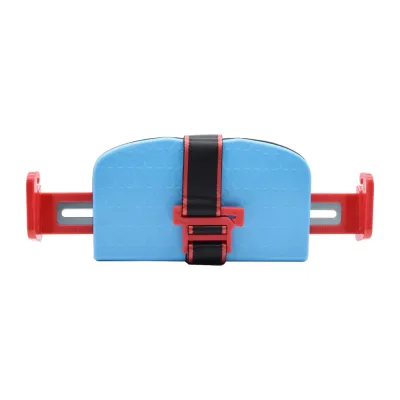
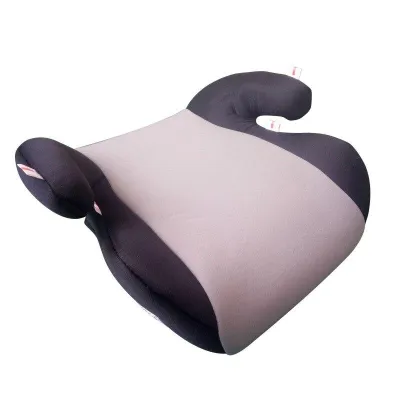
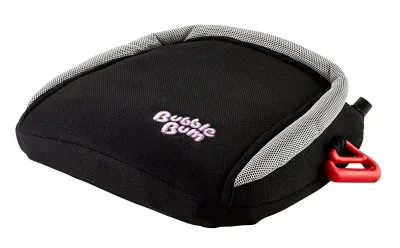
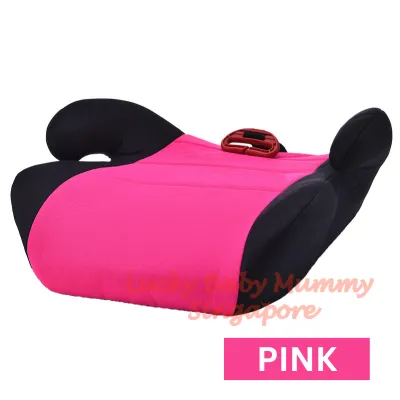
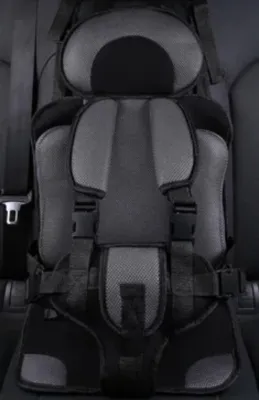
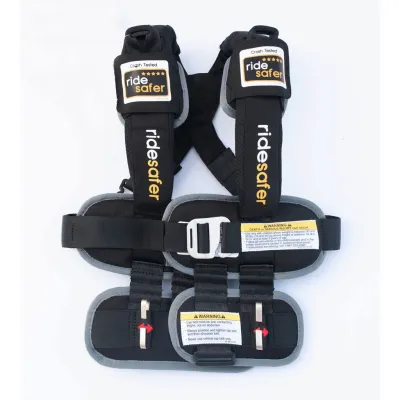
Prices are valid at publication and may change. Please refer to the product page for the latest price.
The legal requirements vary significantly depending on the type of vehicle you choose for your journey. Private cars and private hire vehicles (PHVs) booked through mobile applications are subject to the same strict restraint laws. If you place a child under 1.35 metres in a private hire car without an appropriate booster seat or child harness, both you and the driver can face legal penalties, including fines and demerit points.
In contrast, standard street-hail taxis are legally exempt from the child restraint requirement. This exemption exists because taxis are classified as public transport vehicles that passengers must be able to board spontaneously without carrying heavy safety equipment. While it is legally permissible for a child to travel in a taxi using only an adult seat belt or held in an adult’s lap, safety experts strongly advise against this practice, as standard seat belts do not position correctly on a small child’s body.
Because traffic laws and enforcement policies can be updated, it is essential to verify the latest official guidelines from the Singapore Traffic Police before planning your travel. Staying informed about current legal definitions ensures that your chosen travel car seat remains fully compliant and that you avoid unexpected disruptions or safety risks during your daily commute.
Identifying Valid Safety Certifications on Travel Car Seats
To ensure a travel car seat is legally compliant in Singapore, you must verify that it carries a recognized international safety certification. The Singapore Traffic Police recognize specific global standards, which are typically indicated by physical labels permanently attached to the seat shell. These recognized standards include the European Union standards (such as ECE R44/04 or the newer R129/i-Size), the United States Federal Motor Vehicle Safety Standard (FMVSS 213), British Standards (BS), Japanese Standards (JIS), and Australian/New Zealand Standards (AS/NZS 1754).

When evaluating a travel car seat, locate the physical certification label, which is often an orange sticker or a molded plastic badge on the back or underside of the seat. This label contains critical data, including the specific standard met, the approved weight or height range, and a unique approval number. You must match these specified limits directly to your child’s current physical measurements, as a seat is only safe and legally compliant if your child falls within the manufacturer’s designated ranges.
Be highly cautious of marketing terms such as “travel-ready,” “lightweight,” “portable,” or “taxi-approved.” These descriptors are created by manufacturers for promotional purposes and do not carry any legal weight or guarantee structural safety. A travel seat that folds down to fit inside a backpack is only legally acceptable on Singapore’s roads if it bears one of the official, physical certification marks recognized by local authorities.
Additionally, purchasing child restraints from reputable retailers helps ensure that the product is genuine and meets the required safety benchmarks. Counterfeit or uncertified seats sold on unregulated online marketplaces often lack the structural reinforcement necessary to withstand collision forces, putting your child at severe risk despite any claims made in the product listing.
Evaluating Physical Safety Features and Installation
Beyond verifying certification labels, you must assess how the travel car seat physically installs into a vehicle. Travel car seats generally rely on one of two primary installation methods: the vehicle’s three-point seat belt system or ISOFIX lower anchorages. Because you may be switching between different rental cars, taxis, or private hire vehicles, choosing a seat with a versatile and straightforward installation mechanism is crucial for reducing setup errors.
ISOFIX systems provide a rigid, highly secure connection directly to the vehicle’s chassis, which significantly minimizes the risk of incorrect installation. However, not all vehicles—especially older taxi models or specific budget car rentals—are equipped with accessible ISOFIX anchors. A seat belt-routed travel seat offers universal compatibility with almost any passenger vehicle, but it requires careful routing through designated paths and must be pulled completely tight to eliminate any slack.
When examining the physical construction of a travel car seat, look for observable safety features that protect against impact forces. High-quality travel seats incorporate robust side-impact protection structures, energy-absorbing materials such as expanded polystyrene (EPS) or expanded polypropylene (EPP) foam, and a secure five-point harness system. These components work together to distribute collision forces away from the child’s most vulnerable areas.
It is important to understand the structural trade-offs associated with ultra-lightweight or highly compacted travel designs. To achieve a folding mechanism or a lighter weight, some travel seats may feature thinner plastic shells, reduced side-impact wings, or less cushioning than standard, everyday car seats. While these seats still meet the minimum safety standards required for certification, they may offer less lateral protection and lower overall comfort during longer journeys.
Pre-Use Verification and Stopping Conditions
Maintaining the safety of a travel car seat requires a strict operational checklist before every single trip. Begin by performing a thorough physical inspection of the seat shell, looking for hairline cracks, stress marks, or warping in the plastic. Examine the harness straps for any signs of fraying, twisting, or worn stitching, and test the buckle multiple times to ensure it clicks securely into place and releases without sticking.
Always verify the seat’s history, expiration date, and recall status before use. Car seats degrade over time due to exposure to heat, humidity, and UV light—environmental factors that are particularly intense in Singapore’s tropical climate. The manufacturer’s expiration date is typically stamped directly onto the plastic shell; do not use a seat that has passed this date, as the structural integrity of the plastic may be compromised.
Avoid using second-hand travel car seats unless you can verify their complete history from a trusted source. A car seat that has been involved in a collision may have sustained internal, invisible micro-fractures that severely weaken its structural strength. If a seat’s history is unknown, or if the physical certification labels are faded and illegible, the seat should be discarded immediately.
Establish strict stopping conditions to determine when a travel car seat must be permanently retired from service. You must immediately discontinue use and replace the seat if it is involved in any vehicle collision, regardless of how minor the impact was. Additionally, stop using the seat if any components are cracked, missing, or broken, or if the manufacturer’s installation instructions conflict with the specific vehicle’s owner’s manual.
Frequently Asked Questions (FAQ)
Can I use a backless booster cushion for my child in Singapore?
Under Singapore’s traffic regulations, backless booster cushions are legally permissible for children who meet the minimum height and weight requirements specified by the booster’s manufacturer. This typically applies to older children who have outgrown their forward-facing harness seats but still fall below the 1.35-metre height threshold. However, backless booster cushions offer no side-impact protection and do not provide head or neck support, relying entirely on the vehicle’s interior structure to shield the child.
A high-back travel car seat or a high-back booster is strongly recommended over a simple backless cushion for optimal safety. The high back provides crucial lateral protection and features integrated belt guides that ensure the vehicle’s shoulder belt is routed correctly across the child’s collarbone rather than their neck. If you must use a backless booster cushion, ensure it is certified to recognized standards and that the vehicle’s seat belt fits snugly across your child’s hips and shoulder.
Are inflatable or fabric-only travel car seats legally approved?
Inflatable or fabric-only travel restraints are only legally approved for use in Singapore if they carry the exact same recognized physical safety certification labels as rigid car seats. Many fabric-only harnesses and vest-style restraints sold on online marketplaces do not possess valid international certifications and are illegal to use as primary child restraints in private vehicles. You must verify the presence of an official certification mark, such as the ECE R44/04 or R129 stamp, directly on the product.
Even if an inflatable booster seat carries a valid certification, you must consider the physical risks associated with non-rigid materials. Inflatable designs are susceptible to puncture, slow deflation, or structural failure under the extreme forces of a collision if they are not maintained perfectly. Always consult the manufacturer’s official documentation, follow inflation instructions precisely, and verify with local transport authorities if you have any doubts about the legal status of an unconventional travel restraint.

Community discussion
Share your experience or ask a question. Comments are reviewed before publication.