
The ideal table corner guard depends entirely on your specific furniture, your child’s developmental stage, and your aesthetic preferences. While foam offers thick cushioning for sharp edges, silicone provides a discreet look for modern interiors, and rubber delivers heavy-duty friction for active toddlers. This guide breaks down the physical properties, safety trade-offs, and installation realities of each material, helping you select the most effective protection without compromising your home’s design or damaging your furniture.
When babies transition from crawling to pulling themselves up, every sharp corner in the living room becomes a potential hazard. Coffee tables, TV consoles, and dining tables are often at the exact height of a toddler’s forehead or eyes. Choosing the right material for your corner guards is not just about aesthetics; it directly impacts how well the guard absorbs a fall, how long it stays attached, and whether it poses any secondary risks to your child. However, remember that corner guards are supportive safety aids and do not replace active adult supervision.
Understanding Silicone, Foam, and Rubber Guard Profiles
To choose the right protection, it is essential to understand the physical characteristics and typical structural designs of each material. These three options differ significantly in density, flexibility, and visual appearance, which directly affects how they fit onto your tables.
Products mentioned in this guide
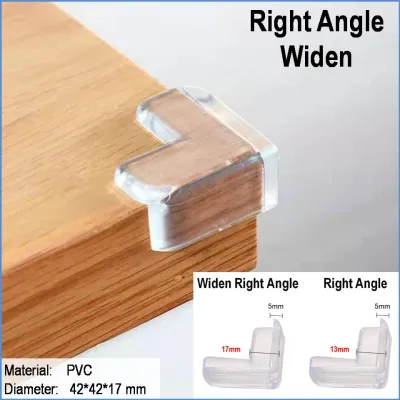
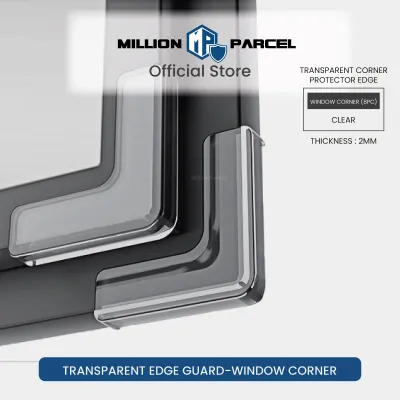

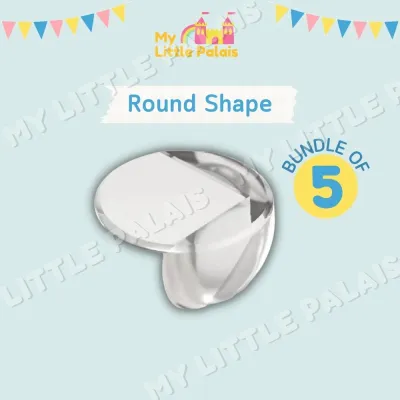
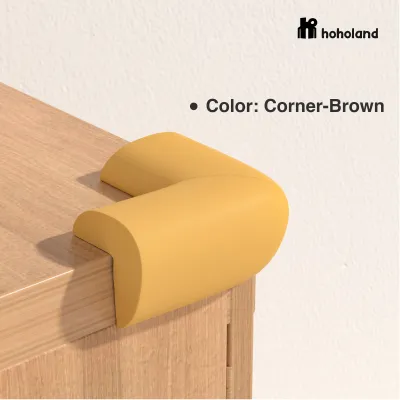
Prices are valid at publication and may change. Please refer to the product page for the latest price.
Silicone corner guards are known for their high density, flexibility, and semi-elastic nature. They are typically molded into compact, pre-shaped designs like L-shapes or rounded spheres. Because silicone can be manufactured with high clarity, these guards are often transparent or lightly tinted, allowing the underlying furniture color or wood grain to remain visible. They feel firm to the touch but offer enough give to cushion a direct impact. This material is highly resilient, retaining its shape even after repeated bumps, and does not easily tear or crumble.
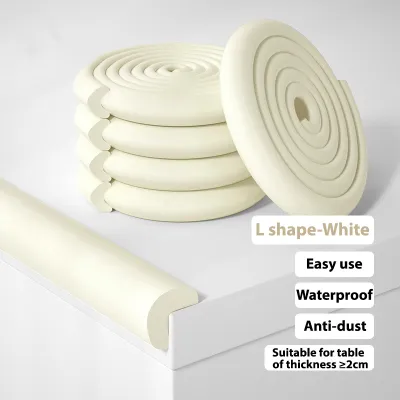
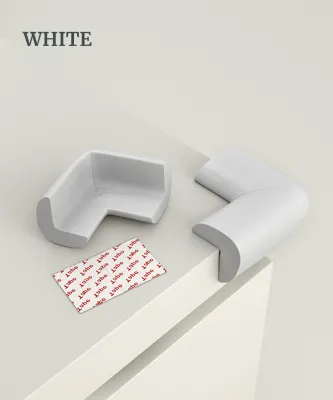
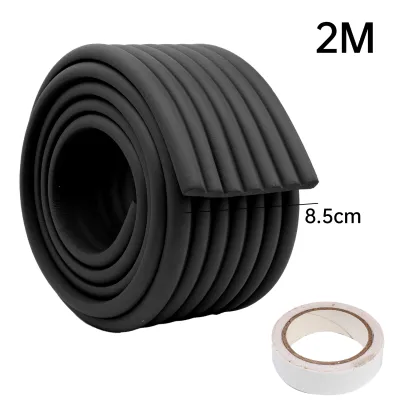
Foam corner guards, usually made from expanded materials like Ethylene-Vinyl Acetate (EVA) or Polyvinyl Chloride (PVC), are highly compressible and lightweight. They feature a spongy, cellular structure that easily deforms under pressure to absorb force. Foam guards are completely opaque and are available in a wide variety of colors, from neutral browns and greys to bright primary colors. They are commonly sold as pre-molded corner pieces or in long, customizable rolls that you can cut to size with household scissors. This makes them highly versatile for covering long edges as well as individual corners.
Rubber corner guards are dense, heavy-duty protectors made from natural or synthetic rubber compounds. They have a high-friction, non-slip surface and are significantly firmer than foam. Rubber guards are typically opaque, often available in dark or neutral tones like black, brown, or grey. Their structural rigidity makes them highly durable, and they are often designed for high-traffic areas or heavy furniture pieces where lighter materials might easily tear or shift. They offer a robust barrier that can withstand significant wear and tear over several years of use.
Evaluating Impact Protection and Toddler-Proof Durability
When comparing these materials, you must balance immediate impact protection with long-term durability against active toddlers. Children often interact with corner guards not just by bumping into them, but also by pulling, picking, or even chewing on them.

Shock absorption mechanics differ fundamentally between soft foam and dense silicone or rubber. Foam guards protect by compressing under impact, spreading the force of a bump across a wider surface area and slowing down the deceleration of a child’s head. This makes foam highly effective for sharp, narrow edges where a hard impact could cause bruising or cuts. Silicone and rubber, being much denser, protect by deflecting the force. They do not compress as deeply as foam, but their tough, rubbery structure prevents a child from bottoming out against the hard wooden or glass corner underneath. For a high-velocity impact, a thicker foam guard generally provides a softer landing, while silicone and rubber excel at preventing deep tissue injuries on very sharp edges.
Toddler resistance is another critical factor. Young children, especially those who are teething, may attempt to chew on corner guards. Foam is highly susceptible to biting; a determined toddler can easily bite off small chunks of EVA or PVC foam, creating a serious choking hazard. If your child shows a tendency to chew on household objects, foam guards require constant supervision and immediate replacement if damaged. Silicone and rubber are much tougher and highly resistant to tearing or biting, making them safer options for children who tend to explore with their mouths. Additionally, the smooth texture of silicone offers less grip for tiny fingers trying to peel the guard off the table.
Longevity and material degradation also vary. Foam guards tend to degrade faster under daily wear, exposure to sunlight, or frequent cleaning. Over time, foam can become brittle, crumble, or lose its springiness, especially if subjected to regular vacuum bumps or pet scratches. Silicone is highly stable and does not degrade easily, though clear silicone can gradually yellow over months of exposure to ambient light and household dust. Rubber is exceptionally durable but can dry out or develop a chalky surface if exposed to harsh cleaning chemicals or direct sunlight.
Matching Aesthetics and Guard Shapes to Your Furniture
Protecting your child does not have to mean completely sacrificing your home’s interior design. Choosing a guard that matches your furniture’s visual profile and physical shape ensures a clean look while maintaining safety.
The visual impact of your corner guards depends heavily on material opacity. Clear silicone guards are the most discreet option, making them ideal for minimalist spaces, glass coffee tables, or high-end wooden furniture where you want to keep the natural grain visible. Foam and rubber guards, being opaque, create a distinct visual contrast. While some parents prefer to match the foam color to their dark wood or white painted tables, these guards will always be highly visible, which can sometimes draw a toddler’s attention directly to the corner, turning a safety device into an appealing toy to pull on.
Edge compatibility is crucial for a secure fit. Standard L-shaped guards work well on traditional 90-degree table edges, but rounded or beveled edges require more flexible solutions. Silicone guards are often molded into spherical ‘ball’ shapes that wrap neatly around three-way corners. Foam is highly adaptable and can be wrapped around curved edges or irregular profiles, while rubber is best suited for flat, straight edges due to its stiffness. For thin glass tabletops, specialized U-shaped guards—which wrap around the top, edge, and bottom of the glass—are necessary, and these are most commonly available in foam or flexible silicone.
Surface textures also influence how well a guard integrates with your furniture. Smooth, polished surfaces like glass, marble, or lacquered wood pair excellently with clear silicone, which adheres smoothly without creating large gaps. Textured wood grains or rustic furniture may not bond as easily with rigid guards, making flexible, compressible foam a more forgiving choice for uneven surfaces.
Navigating Installation, Adhesive Strength, and Safe Removal
A corner guard is only as effective as the adhesive holding it in place. Proper installation ensures the guard stays secure against curious hands, while correct removal techniques protect your furniture from permanent damage.
Most corner guards come with pre-applied double-sided acrylic tape, which offers a balance of strong adhesion and clean removal. Some heavy-duty rubber guards may require separate liquid adhesives or specialized mounting tapes for maximum hold. While stronger adhesives prevent toddlers from peeling the guards off, they also carry a higher risk of damaging delicate wood veneers, paint, or lacquer when it comes time to remove them. It is important to choose an adhesive that matches both your child’s persistence and your furniture’s tolerance for tape.
Surface preparation is the most critical step for a long-lasting bond. Before applying any adhesive, clean the furniture corner thoroughly with a mild soap solution or rubbing alcohol to remove dust, oils, and polish residue. Ensure the surface is completely dry before pressing the guard firmly into place. Once applied, it is recommended to let the adhesive cure for at least 24 hours before allowing your child near the table, as this allows the bond to reach its maximum strength. Skipping this waiting period often results in the guard being easily pulled off within the first few hours.
Safe removal requires patience to avoid stripping your furniture’s finish. To remove a guard, use a household hair dryer on a low, warm setting to gently heat the adhesive underneath. This softens the tape, allowing you to slowly peel the guard away from the corner. Any remaining sticky residue can usually be rubbed away with your fingers, a microfiber cloth, or a mild adhesive remover suitable for your specific furniture material. Always test adhesive removers on an inconspicuous area first to ensure they do not discolor the finish.
Final Decision Framework: Choosing the Right Guard for Your Home
To select the most suitable corner guard for your household, consider this practical decision framework based on your specific needs:
- Choose Silicone if: You have modern, minimalist, or glass furniture and want a highly discreet, low-profile protector. Silicone is also the preferred choice if your child is teething and you want a durable, bite-resistant material that will not easily tear.
- Choose Foam if: You have very sharp, prominent corners on wooden tables and want maximum, soft cushioning. Foam is also ideal if you are on a budget, need to cover long edges, or have irregular furniture shapes that require highly flexible, customizable protection.
- Choose Rubber if: You need heavy-duty, high-friction protection for active toddlers who frequently pull on guards, or if you are protecting heavy furniture in high-traffic areas of your home.
- Verify first: Before applying any adhesive guard, check your furniture manufacturer's care instructions or warranty. Delicate finishes, antique wood, and certain painted surfaces can be easily damaged by strong adhesives, so you may need to opt for temporary, non-adhesive clamping guards or alternative room layouts. Always verify any safety certifications or material standards on the product packaging before use.
Frequently Asked Questions (FAQ)
Are clear silicone guards completely invisible on glass tables?
While clear silicone guards are highly discreet, they are not completely invisible. The double-sided adhesive tape used to secure them is often visible through the transparent material, and light refraction will still show the outline of the guard. Over time, fine dust particles and pet hair can also accumulate along the edges of the adhesive, making the guard more noticeable. Regular cleaning around the edges can help maintain a clean appearance.
What should I do if my toddler keeps chewing on the foam guards?
If your toddler is actively chewing on foam guards, you should inspect them daily for any signs of damage, such as bite marks, tears, or missing pieces. Because foam can be easily bitten off and presents a serious choking hazard, you should immediately replace damaged foam guards. Consider switching to a firmer, bite-resistant material like food-grade silicone or dense rubber, which cannot be easily torn by baby teeth.
Can I use these standard guards on outdoor or patio furniture?
Standard indoor corner guards and their included adhesives are generally not designed to withstand outdoor conditions. Exposure to direct sunlight, rain, humidity, and temperature fluctuations will rapidly degrade foam and cause standard adhesives to lose their grip and peel off. For outdoor patio tables, look for specialized weather-resistant guards and heavy-duty outdoor mounting tapes designed to withstand moisture and UV exposure.

Community discussion
Share your experience or ask a question. Comments are reviewed before publication.