
Transitioning your baby to solid foods is an exciting milestone, but preparing fresh, nutrient-dense meals daily can quickly become a time-consuming chore. An auto-steam and blend baby food maker simplifies this transition by combining cooking and pureeing into a single, automated cycle. By eliminating the need to transfer hot ingredients between pots and blenders, these appliances minimize prep time, reduce cleanup, and help preserve essential nutrients. Choosing the right model depends on matching its capacity, safety features, and maintenance requirements to your household’s daily routine and kitchen space.
Understanding Auto-Steam and Blend Functions for Weaning
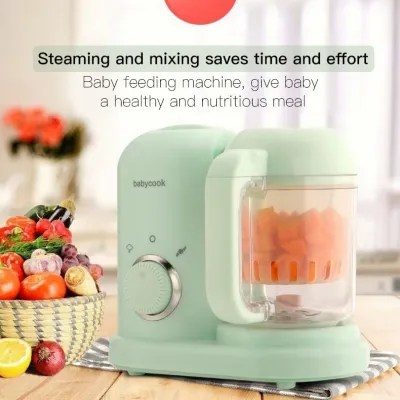
The primary appeal of an all-in-one baby food maker lies in its streamlined, single-jar workflow. Traditional weaning preparation involves steaming ingredients in a pot, waiting for them to cool slightly, and then transferring them to a separate blender or food processor. This multi-step process not only creates more dishes to wash but also increases the risk of accidental spills and burns. An auto-steam and blend machine automates this sequence, allowing you to place raw, chopped ingredients into the jar, set a timer, and let the appliance handle both cooking and pureeing without further intervention.
This automated transition is particularly beneficial for busy parents managing tight schedules. Because the food remains in a sealed environment throughout the process, the nutrient-rich condensation generated during steaming is retained and blended back into the puree. This ensures that water-soluble vitamins are not lost in discarded cooking water, resulting in more nutritious meals for your growing infant.
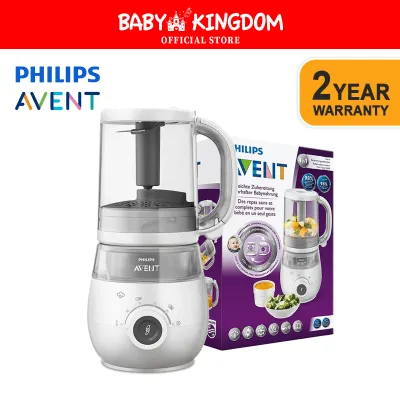
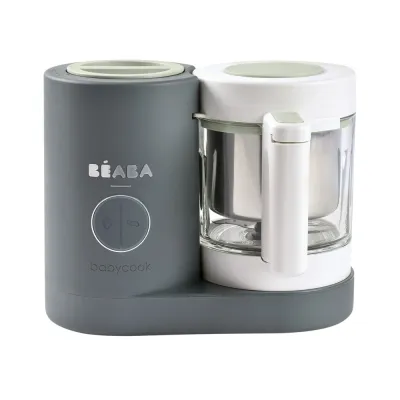
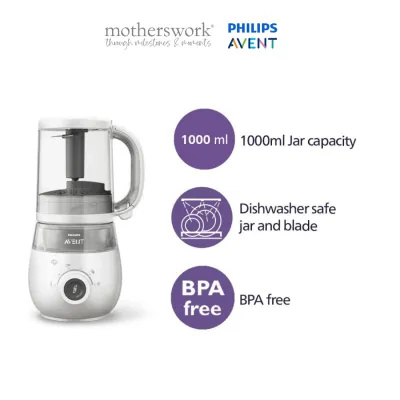
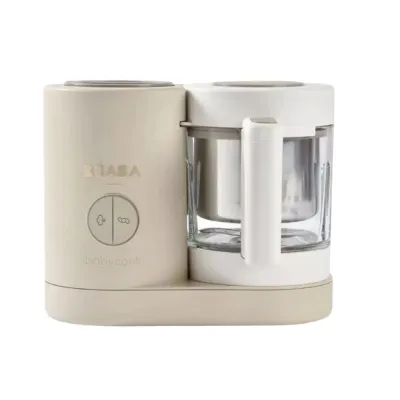
Products mentioned in this guide
![[SAFETY MARK] Einmilk Baby Food Maker 4-in-1 Multifunctional Baby Food Maker Blends Steam Warm Defrost Food](https://img.lazcdn.com/g/p/6394940590e82cbbbf2670f44b4f221c.jpg_400x400q80.jpg_.webp)

![[SG Plug] Einmilk Mini Baby Food Blender Cute Small Electric Food Blender Puree Blender Grinder Chopper with 300ml Cup Glass Bowl & 6 Blade](https://img.lazcdn.com/g/p/e9ee7d42b14b3b5fdc5d475c80202df5.jpg_400x400q80.jpg_.webp)
Prices are valid at publication and may change. Please refer to the product page for the latest price.
Texture control is another critical factor during the weaning journey, which typically spans from smooth first purees to chunkier, textured meals. High-quality auto-steam and blend machines offer adjustable settings that let you customize the duration and intensity of the blending cycle. In the early stages of weaning, a longer blend cycle produces an ultra-smooth consistency that is easy for a beginner to swallow. As your baby develops better oral motor skills, you can transition to shorter pulses to create thicker, textured mash or soft chunks.
Before integrating one of these appliances into your routine, it is essential to consider your kitchen’s physical layout and power capacity. These machines require dedicated counter space near an electrical outlet and must be positioned away from overhead cabinets to prevent steam damage. In compact kitchen environments, selecting a model with a small footprint and efficient cord storage helps maintain an organized, clutter-free workspace.
Core Specifications to Compare Before Buying
When evaluating different baby food makers, jar capacity is one of the most important specifications to consider. If you prefer preparing fresh, single-portion meals every day, a compact jar with a capacity of 300 to 400 milliliters is often sufficient and prevents food waste. Conversely, if you plan to batch-cook and freeze meals for the week, look for larger models with capacities ranging from 800 to over 1,000 milliliters. Keep in mind that the usable steaming capacity is often slightly lower than the total blending capacity, so always verify both metrics in the product specifications.

The design and accessibility of the water tank directly impact the machine’s longevity and hygiene. Steam is generated by heating water in an internal reservoir, which can quickly accumulate mineral scale, especially in areas with hard water. Look for models featuring a wide-opening, fully accessible water tank that allows you to visually inspect the interior and wipe it down easily. Tanks that are sealed or have narrow openings are notoriously difficult to clean, increasing the risk of mold growth and mineral buildup that can impair heating efficiency.
Blade configuration and motor power determine how effectively the machine can process different types of ingredients. A robust motor, typically rated between 150 and 400 watts for blending, is necessary to process tougher ingredients like root vegetables, meats, and legumes into a perfectly smooth consistency. Multi-tiered blade designs are highly effective at circulating food within the jar, ensuring that no large, unblended chunks remain at the bottom or sides of the container.
Noise level is a frequently overlooked specification that can significantly affect your daily routine. Because meal preparation often occurs while your baby is napping, a loud blending cycle can cause unwanted disruptions. While manufacturers rarely publish exact decibel ratings, checking user manuals or product reviews for mentions of quiet-running motors can help you identify models designed to minimize operational noise. Additionally, units with rubberized, non-slip feet help dampen vibrations on hard countertops, further reducing noise during high-speed blending.
Safety Standards and Material Verification
Ensuring the safety of the materials used in your baby food maker is paramount, as the components will be subjected to high temperatures during the steaming process. Always verify that all plastic parts that come into direct contact with food—such as the jar, lid, steaming basket, and spatula—are explicitly certified as BPA-free and BPS-free. Look for food-grade materials like high-quality tritan plastic, borosilicate glass, or stainless steel, which do not leach chemicals or retain stubborn food odors and stains over time.
Operational safety features are equally critical to prevent accidents in a busy kitchen. A reliable baby food maker should include an automatic shutoff function that triggers as soon as the water tank runs dry, preventing the heating element from overheating and causing a fire hazard. Boil-dry protection is a standard safety benchmark that you should verify in the product manual before making a purchase.
Additionally, look for robust safety locking mechanisms that prevent the machine from operating if the jar, lid, or blade assembly is not securely locked into place. This prevents accidental spills of hot food and protects curious little hands from coming into contact with sharp, spinning blades. The locking system should be intuitive yet secure enough that it cannot be easily bypassed or dislodged during operation.
Finally, check the manufacturer’s temperature limits and heat-resistance ratings for all plastic components. During a standard steam cycle, internal temperatures can exceed 100 degrees Celsius. Ensuring that the materials are rated to withstand these temperatures without warping or degrading is essential for long-term safety and durability. If a manufacturer does not clearly state these material certifications and safety ratings, it is best to look for an alternative model that prioritizes transparency.
Building a Condition-Based Shortlist for Your Kitchen
To find the right baby food maker for your household, start by analyzing your weekly meal preparation habits and routine. If you prefer serving freshly made meals and have the flexibility to cook daily, a compact, single-basket model is highly efficient. These smaller units heat up quickly, use less water, and take up minimal space on your countertop, making them ideal for quick, single-serving preparations.
For busy working parents, a larger model or a multi-basket unit designed for batch cooking is often a more practical choice. These machines allow you to steam and blend large quantities of fruits, vegetables, or meats at once, which can then be portioned into silicone trays and stored in the freezer. Batch cooking saves significant time throughout the week, as you only need to reheat pre-portioned meals when it is time for your baby to eat.
Another key decision is choosing between a dedicated baby food maker and a multi-functional combo unit. Dedicated machines are highly optimized for pureeing small portions and offer precise steam-to-blend automation. However, their utility is generally limited to the weaning phase, which typically lasts about a year. Multi-functional units, which may include functions for sterilizing bottles, warming milk, or defrosting frozen purees, offer extended utility that can justify a higher initial investment. Some models can even be used as standard food processors or steamers for family meals long after your child has transitioned to solid family foods.
When evaluating the price-to-feature ratio, establish a clear budget in S$ that reflects your expected usage frequency. Entry-level models, typically priced under S$100, often require manual intervention to start the blending cycle after steaming is complete. Mid-range and premium models, ranging from S$150 to over S$300, offer fully automated “one-touch” programs, digital timers, and superior build materials like glass jars. Weigh the convenience of hands-free automation against your budget to determine which features are essential for your daily routine.
Daily Cleaning and Maintenance Routines
Maintaining strict hygiene is essential when preparing food for an infant with a developing immune system. To make cleaning as effortless as possible, rinse the jar, lid, and blades immediately after each use to prevent food residues from drying and sticking to the surfaces. Many modern baby food makers feature a quick-blend or self-clean function; simply fill the jar with warm water and a drop of mild dish soap, then run a short blending cycle to dislodge stubborn food particles from around the blades.
Descaling the water tank is a critical maintenance step that must be performed regularly to ensure efficient steam generation. Over time, mineral deposits from tap water will coat the heating element, leading to longer steam times and potential system failures. Refer to your user manual for specific descaling instructions; most manufacturers recommend filling the tank with a mixture of equal parts white vinegar and water, letting it sit for a few hours, and then running a steam cycle with plain water to rinse the system thoroughly. Avoid using harsh chemical descalers unless they are explicitly approved by the manufacturer.
Regularly inspect the physical condition of the machine’s components to ensure safe operation. Check the silicone seals on the lid and blade assembly for signs of wear, cracking, or mold growth, as compromised seals can lead to steam leaks or food contamination. Blades will naturally dull over time with heavy use, especially when processing hard ingredients like raw carrots or sweet potatoes. If you notice a decline in blending performance or see visible damage to the seals or blades, consult the manufacturer’s guide to purchase authorized replacement parts.
Frequently Asked Questions (FAQ)
Can I use a regular blender and steamer instead of a dedicated baby food maker?
Yes, you can prepare baby food using standard kitchen appliances like a stovetop steamer basket and a traditional countertop blender or immersion blender. However, a dedicated baby food maker offers significant advantages in terms of convenience, portion control, and cleanup. Standard blenders are often designed for larger volumes and may struggle to process the small portions typical of early weaning meals, often requiring you to add excess liquid to get the blades to catch. Additionally, using separate appliances means washing multiple pots, baskets, and blender jars, whereas an all-in-one machine confines the entire process to a single container, saving valuable time and effort.
How do I adjust the texture for different weaning stages?
Adjusting the texture of your baby’s food is crucial for supporting their oral motor development as they transition from smooth purees to solid family meals. In the initial stage of weaning (around six months), use the maximum blending time or the dedicated puree setting to achieve a completely smooth, liquid-like consistency. As your baby becomes more comfortable with swallowing, gradually reduce the blending time or use the manual pulse function to leave small, soft lumps in the food. Always consult your pediatrician to ensure the food texture aligns with your baby’s specific developmental stage, and carefully inspect the consistency of the meal yourself before serving it to your child.

Community discussion
Share your experience or ask a question. Comments are reviewed before publication.