
When selecting a portable baby bed for your infant in Singapore, safety is the single most critical factor to consider. A portable baby bed, whether used as a travel cot, folding playard, or portable bassinet, must provide a secure environment that protects your child from structural failures, entrapment, and suffocation hazards. To guarantee this level of safety, parents should look for recognized international safety certifications such as European standards (EN 716) or American standards (ASTM F406) on the product packaging or labels.
While Singapore has robust consumer protection laws, there is no single, localized mandatory safety label specifically dedicated to portable baby beds. Instead, the local regulatory framework relies heavily on these established international benchmarks. Understanding how to navigate these standards, verify compliance, and inspect the physical properties of a portable baby bed will help you make an informed and safe purchase for your family.
Navigating Baby Product Safety Regulations in Singapore
In Singapore, the safety of general consumer goods, including nursery furniture and infant sleep products, is overseen by the Consumer Product Safety Office (CPSO), which is safeguarded by Enterprise Singapore. The CPSO ensures that consumer products sold in the local market are safe for use and do not pose hazards to consumers. Unlike household electrical appliances that require a mandatory “Safety Mark,” portable baby beds fall under the Consumer Protection (Consumer Goods Safety Requirements) Regulations (CGSR).
Products mentioned in this guide
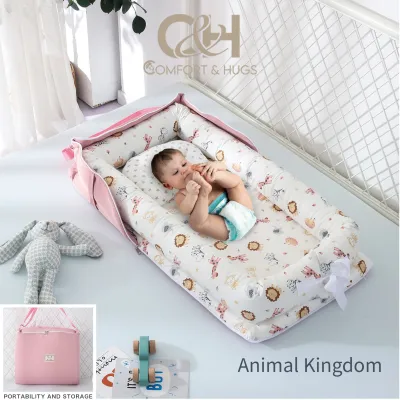
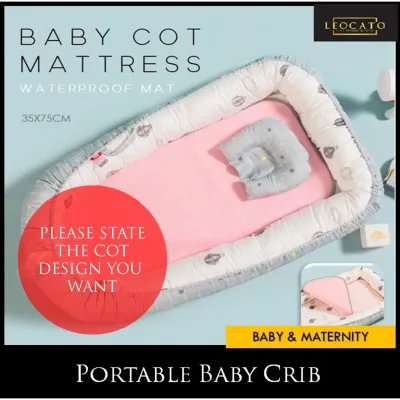
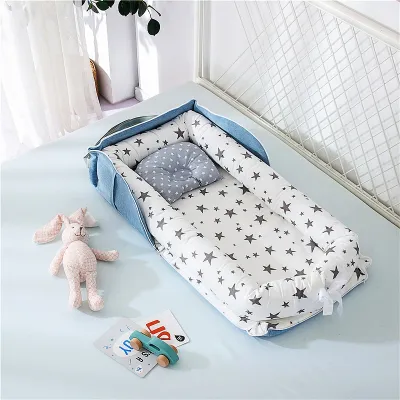
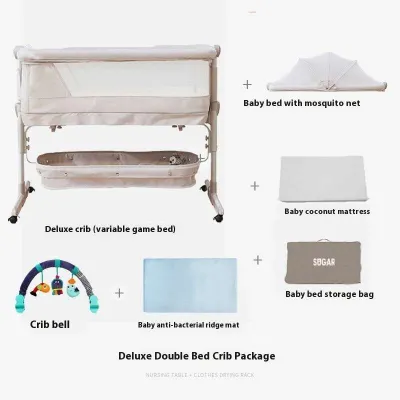
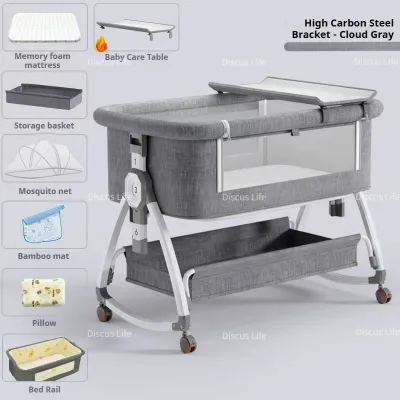
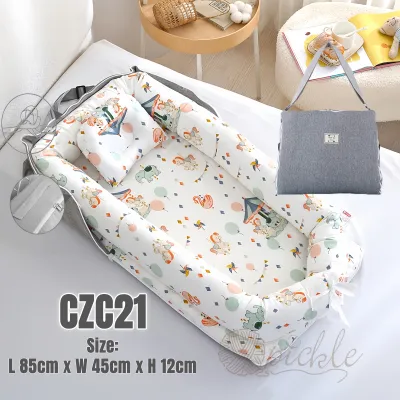
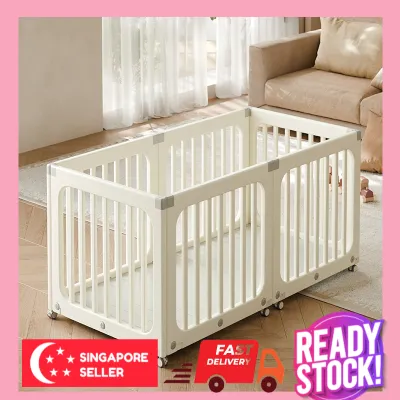
Prices are valid at publication and may change. Please refer to the product page for the latest price.
Under the CGSR, any consumer product sold in Singapore must meet applicable international safety standards, such as those set by the International Organization for Standardization (ISO), the European Committee for Standardization (CEN), or ASTM International. This means that while there is no unique Singapore-branded safety stamp for travel cots, retailers are legally obligated to ensure their products comply with recognized global safety benchmarks before offering them to the public.
To ensure you are buying a safe product, parents can take active steps to verify compliance rather than relying solely on retail displays. You can regularly check the CPSO website for safety alerts, product bans, and active recalls affecting nursery furniture in Singapore. It is also highly recommended to purchase portable baby beds from official brand stores or reputable local distributors who can readily provide verification of safety testing.
When shopping, do not hesitate to ask the retailer for a Declaration of Conformity (DoC) or an official test report summary. Reputable manufacturers who have invested in rigorous third-party testing will easily provide documentation proving their portable baby bed meets EN or ASTM standards. If a seller cannot or will not provide this proof, or if they offer vague assurances of safety without documentation, it is safest to look for an alternative product.
Recognized International Safety Standards for Infant Sleep
Because Singapore’s regulatory framework references global safety specifications, understanding international certifications is key to evaluating a portable baby bed. These standards are not mere bureaucratic checkboxes; they represent exhaustive laboratory testing where products are subjected to stress, impact, bite, and chemical tests. When reading product tags, manuals, or boxes, look for specific alphanumeric codes that indicate the product has passed these rigorous evaluations.

European Standards (EN)
European standards are widely respected globally and are frequently found on high-quality baby products imported into Singapore. For travel cots and folding beds, the key certification to look for is EN 716-1 & 2 (specifically EN 716-1 for safety requirements and EN 716-2 for test methods). For portable bassinets and carry cots designed for younger infants, the relevant standard is EN 1130 or EN 1466.
These European standards evaluate several critical safety aspects of the sleep environment:
- Structural Integrity: Testing the frame to ensure it can withstand repeated folding, unfolding, and the weight of an active child without warping or breaking.
- Side Height: Ensuring the internal sides are tall enough to prevent a child from climbing or falling out as they grow.
- Entrapment Prevention: Verifying that there are no gaps between the mattress and the frame, nor any holes in the mesh or fabric that could trap a child's head, limbs, or fingers.
- Suffocation and Strangulation Hazards: Ensuring there are no loose cords, ribbons, or small parts that could detach and pose a choking hazard.
American Standards (ASTM)
American safety certifications are developed by ASTM International and are highly common among global brands sold in Singapore. The primary standard for portable baby beds, play yards, and non-full-size baby cribs is ASTM F406. This standard is updated regularly to address emerging safety risks and is considered one of the toughest benchmarks in the world.
When a portable baby bed complies with ASTM F406, it has undergone extensive testing focusing on:
- Mattress Firmness: Ensuring the mattress is sufficiently hard to prevent the infant's face from sinking into the material, which is a major risk factor for Sudden Infant Death Syndrome (SIDS).
- Locking Mechanism Stability: Testing folding mechanisms to ensure they require a deliberate, multi-step action to fold, preventing the bed from accidentally collapsing while the baby is inside.
- Side-Wall Strength: Verifying that the fabric or mesh sides can withstand outward pressure without tearing or detaching from the main frame.
Other Regional Marks and Material Certifications
In addition to European and American standards, you may encounter certifications from other regions. The Australian and New Zealand standard AS/NZS 2195 is an exceptionally rigorous benchmark for folding cots, taking into account extreme durability and stability tests. Products carrying the UKCA mark indicate compliance with United Kingdom safety regulations, which mirror the strict European EN standards.
It is vital, however, to differentiate between structural safety certifications and material testing labels. For example, you may see certifications like Oeko-Tex Standard 100, CertiPUR-US, or GREENGUARD Gold on a portable baby bed. These labels are excellent because they certify that the fabrics, foams, and dyes used are free from harmful levels of toxic chemicals, heavy metals, and volatile organic compounds (VOCs). However, a material certification does not evaluate structural safety; a chemically non-toxic bed can still pose a suffocation or collapse risk if its physical design is flawed. Always ensure the product has both structural (EN/ASTM) and material certifications.
Essential Physical Safety Features to Inspect
While paper certifications provide a baseline of trust, you should always physically inspect the portable baby bed before placing your child inside. Knowing what physical traits to look for allows you to spot potential hazards that might arise from shipping damage, manufacturing defects, or wear and tear.
- Mattress Fit and Firmness: The mattress must be remarkably firm and flat. When you press your hand down on the mattress, it should not conform to your hand or leave an indentation when you lift it. Furthermore, there must be no gaps wider than two fingers (approximately 3 cm) between the edge of the mattress and the fabric walls of the bed. Gaps wider than this pose a severe entrapment and suffocation risk if a baby rolls over into the crevice.
- Breathability and Mesh Sides: In Singapore's warm and humid tropical climate, excellent ventilation is essential for both comfort and safety. Ensure that the portable baby bed features breathable mesh on all four sides, allowing continuous airflow. The mesh holes must be microscopic to prevent tiny fingers, toes, or clothing buttons from getting caught, yet open enough to allow you to clearly see your baby through the fabric.
- Secure Folding Mechanisms: A high-quality portable baby bed must feature a double-action locking system. This means that folding the bed requires at least two distinct, deliberate physical actions (such as pushing a button while lifting a rail). Test the locking mechanisms yourself by setting up the bed and applying firm downward pressure on the top rails and the center floor. The bed must remain completely rigid and show no signs of buckling.
- Choking and Entrapment Hazards: Carefully inspect the interior and exterior of the bed for any small detachable parts, exposed metal hinges, or rough plastic edges. Check all seams and zippers to ensure there are no loose threads that could wrap around a baby's fingers or neck. Ensure that any zippers used to attach bassinet inserts are fully closed and locked in place with their designated safety tabs.
Verifying Safety Claims and Avoiding Red Flags
With the rise of online marketplaces and e-commerce platforms in Singapore, parents are faced with an overwhelming number of unbranded or budget-friendly portable baby beds. Unfortunately, many of these listings make unsubstantiated safety claims. To protect your child, you must learn how to cross-reference these claims and identify red flags.
Always verify that the safety standards claimed in an online product description match the physical labels permanently stitched onto the product or printed in the instruction manual. If an online listing claims a product is “ASTM certified,” but the physical product arrives with no standard numbers printed on its tracking label, the claim is highly suspect. Legitimate certifications will always cite the exact standard number (such as EN 716) rather than using vague marketing phrases like “pediatrician approved,” “safety tested,” or “export quality.”
Another major red flag is the presence of poorly translated warning labels or instruction manuals that lack clear, step-by-step assembly diagrams. Accurate, clear instructions are a regulatory requirement under international safety standards; their absence suggests that the manufacturer bypassed formal testing and quality control processes.
Additionally, it is strongly advised to avoid purchasing second-hand portable baby beds. While buying used furniture is environmentally friendly and budget-conscious, the history of a second-hand travel cot is impossible to verify. Over time, plastic joints can suffer from structural fatigue, especially when stored in Singapore’s humid conditions, which can degrade adhesives and plastics. Furthermore, second-hand beds may be missing critical original parts—such as the exact mattress designed for that specific frame—or they may have been subject to manufacturer recalls that the previous owner ignored.
Safe Usage Boundaries and When to Stop
Even the most highly certified portable baby bed can become hazardous if used incorrectly. Safety is an ongoing practice that requires parents to strictly adhere to the manufacturer’s operational boundaries, weight limits, and developmental milestones.
Always read the instruction manual to identify the maximum weight and height limits for the bed. Portable bassinets and newborn inserts typically have much lower weight limits (often around 9 kg) and are designed only for very young infants. You must stop using a portable bassinet or the upper bassinet insert of a travel cot the moment your baby shows signs of rolling over, pushing up on their hands and knees, or reaching the manufacturer’s weight limit—whichever comes first.
For the main, lower level of a travel cot, you must discontinue use once your child reaches the height limit (usually around 89 cm) or when they demonstrate the physical ability to climb out of the cot. Continuing to use the bed beyond these milestones introduces a severe risk of falls or structural collapse.
Finally, pay close attention to where you set up the portable baby bed within your home or hotel room. Always place the bed on a firm, flat, and level floor surface. Never place a portable baby bed on elevated surfaces like tables, beds, or sofas, as the child’s movements can cause the cot to tip over. Keep the bed well away from windows, curtain cords, electrical wires, baby monitor cables, and air conditioning units to prevent strangulation hazards and protect your baby from direct drafts or extreme temperatures.
Frequently Asked Questions (FAQ)
Are travel cots and portable bassinets held to the same safety standards?
No, travel cots and portable bassinets are evaluated under different safety standards because they are designed for different developmental stages and structural uses. Portable bassinets and carry cots are intended for newborns and non-mobile infants; they are tested under standards like EN 1130 or EN 1466, which focus on shallow depth safety and base stability. Travel cots (or playards) are designed for older, heavier, and more active babies, and are tested under standards like EN 716 or ASTM F406, which require deeper walls and higher structural weight capacities. Always ensure the safety certification on your product matches its specific design and your child’s developmental stage.
Is it safe to use a portable baby bed with an aftermarket mattress?
No, it is highly unsafe to add a second or aftermarket mattress to a portable baby bed. Portable beds are safety-tested and certified only with the specific mattress provided by the manufacturer. Introducing a thicker, softer, or differently sized mattress can create dangerous gaps between the mattress edge and the fabric walls, leading to a high risk of entrapment and suffocation. Additionally, a thicker mattress reduces the effective height of the side walls, making it much easier for an active baby to climb or fall out of the bed, which voids both the manufacturer’s warranty and its safety certification.

Community discussion
Share your experience or ask a question. Comments are reviewed before publication.