
Selecting a co-sleeping bed, commonly known as a bedside sleeper, requires careful attention to safety certifications and structural integrity. Because your newborn will spend hours unsupervised in this environment, verifying official safety standards is the single most important step in your purchasing journey. Rather than relying on vague marketing claims, you must systematically evaluate the product’s labels, physical design, material composition, and installation requirements to ensure a secure sleep space.
This guide provides a comprehensive framework to help you identify legitimate safety certifications, perform essential physical checks, and establish safe usage boundaries in your home. By understanding what to look for on the packaging and how to test the bed’s physical mechanisms, you can make an informed decision that prioritizes your baby’s well-being.
Key Safety Standards to Look For on Product Labels
When evaluating a bedside sleeper, the product packaging, user manual, or permanent labels must explicitly state compliance with recognized regional or international safety standards. For parents in Singapore, many imported nursery products align with either European or American regulatory frameworks. You should look for specific references to ASTM F2906 (the standard specification for bedside sleepers in the United States) or EN 1130 (the European safety standard for cribs and cradles). These standards are not generic quality marks; they represent rigorous, independent testing specifically designed for infant sleep environments.
Products mentioned in this guide

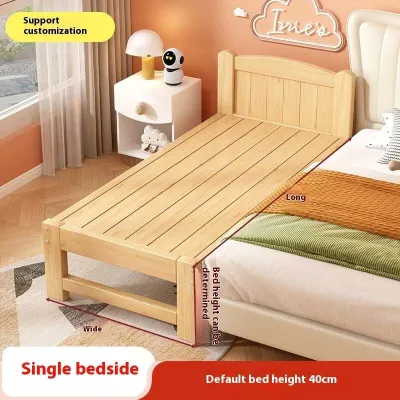


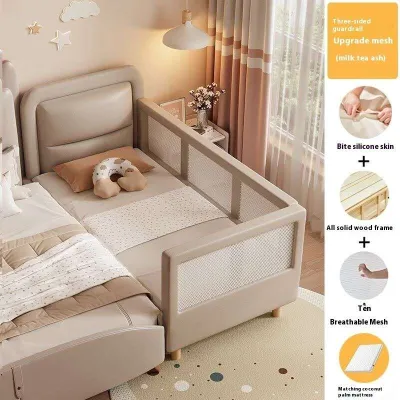
Prices are valid at publication and may change. Please refer to the product page for the latest price.
Avoid products that only feature vague phrases such as “safety tested,” “approved,” or “certified” without naming the specific regulatory standard. Legitimate manufacturers will clearly print the exact standard code on the product’s tracking label, which is typically located on the underside of the bed frame or mattress support board. These standards ensure the product has undergone testing for structural stability, load-bearing capacity, and the prevention of entrapment hazards.
In addition to standard codes, look for certification seals from recognized third-party testing organizations. Marks from organizations such as the Juvenile Products Manufacturers Association (JPMA) or European testing bodies like TÜV Rheinland or SGS indicate that the product has been independently verified to meet or exceed current safety regulations. Because safety standards are updated periodically to address newly identified hazards, always verify that the product complies with the most recent version of the standard active at its time of manufacture.
Essential Structural and Design Safety Checks
A certified co-sleeping bed must feature robust structural elements designed to prevent accidental collapse, entrapment, or suffocation. The drop-side or zip-down mesh wall, which allows easy access to your baby from your own bed, must have a secure, fail-safe locking system. This mechanism should require a deliberate, multi-step action to unlock, ensuring that an infant cannot accidentally trigger a release and that the wall cannot slip down on its own.

Another critical safety dimension is the gap tolerance between the bedside sleeper and your adult mattress. Safety standards dictate strict limits on these gaps to prevent a baby’s head or limbs from becoming trapped. When the sleeper is attached to your bed, there must be no space wider than 13 millimeters between the two surfaces. You must physically measure this and check the manufacturer’s specified tolerances to ensure the attachment mechanism can maintain this tight fit throughout the night.
Mattress firmness and fit are equally vital to prevent suffocation. The mattress included with the bedside sleeper must be exceptionally firm; it should not conform to your baby’s face or body when they are placed on it. Additionally, the mattress must fit snugly within the frame of the sleeper. If you can fit more than two fingers between the edge of the mattress and the side walls of the bed, the mattress is too small and poses a severe entrapment risk. Never add aftermarket mattresses, soft toppers, or extra padding to a bedside sleeper.
Material Safety and Chemical Compliance
The materials used in your baby’s co-sleeping bed must support healthy breathing and be free from harmful chemical substances. Because infants sleep with their faces close to the fabric walls, you should review the product documentation for certifications regarding low volatile organic compound (VOC) emissions. Look for labels indicating compliance with OEKO-TEX Standard 100 or Greenguard Gold, which verify that the textiles and structural materials have been tested for harmful levels of chemicals, heavy metals, and formaldehyde.
In Singapore’s warm and humid climate, fabric breathability is a critical safety and comfort factor. The side panels of the bedside sleeper—especially the wall facing the adult bed—must be constructed from highly breathable mesh. This mesh design ensures continuous airflow, reducing the risk of suffocation if your baby rolls over against the side of the sleeper. Adequate ventilation also helps prevent heat retention, keeping your baby comfortable and reducing the risk of heat rash.
Finally, examine the structural frame and any painted or varnished components. The manufacturer must formally declare that all finishes are non-toxic, lead-free, and baby-safe. Since teething infants often chew on the rails of their beds, verifying the safety of these coatings is essential. Avoid any products that do not explicitly state their chemical compliance or those that emit a strong, chemical odor upon unboxing.
Safe Setup and Usage Boundaries
Even the most highly certified co-sleeping bed can become unsafe if it is installed or used incorrectly. You must strictly adhere to the manufacturer’s specified weight, age, and developmental milestone limits. Most bedside sleepers are designed exclusively for the early months of life. You must stop using the bedside sleeper mode immediately once your baby reaches the maximum weight limit, begins to roll over independently, or starts to push up on their hands and knees.
Proper attachment to the adult bed is non-negotiable. You must use the anchor straps or attachment hardware provided by the manufacturer to secure the sleeper tightly against your bed frame or mattress. Never rely on the weight of the adult bed alone to hold the sleeper in place. Every time you change your bedsheets or move the bed for cleaning, you must re-verify that the attachment straps are taut and that there are absolutely no gaps between the two mattresses.
Regularly inspect the bedside sleeper for signs of wear and tear. Check that all screws remain tight, the fabric seams are intact, and the locking mechanisms operate smoothly. If any component becomes loose, damaged, or fails to lock securely, discontinue use immediately and contact the manufacturer for authorized replacement parts. Do not attempt to repair the bed with makeshift hardware or adhesives.
Red Flags and When to Walk Away
When shopping for a co-sleeping bed, certain warning signs indicate that a product may not meet acceptable safety standards. You should immediately walk away from any product that lacks a comprehensive, printed instruction manual. A physical manual is essential for correct assembly and safe installation; its absence often points to substandard manufacturing or a lack of regulatory oversight.
Be extremely cautious when considering second-hand or hand-me-down bedside sleepers. While buying pre-owned furniture is common, you must be able to fully verify the product’s history, including its original brand, model number, and recall status. If the original attachment straps, hardware, or instruction manuals are missing, do not use the bed. Over time, plastic components can degrade and metal fasteners can wear down, compromising the structural integrity of the unit.
Lastly, perform a physical stability test before placing your baby in the bed. If the frame wobbles under light pressure, if the mesh panels feel loose or saggy, or if the drop-side mechanism can be easily manipulated or unlocked from the inside of the sleeper, the product is unsafe. A reliable bedside sleeper must feel rigid and secure, providing a stable, independent sleep environment directly adjacent to your bed.
Frequently Asked Questions (FAQ)
Is a bedside sleeper safer than bed-sharing in an adult bed?
Yes, a certified bedside sleeper is widely considered a safer alternative to unstructured bed-sharing. A bedside sleeper provides your baby with their own dedicated, firm, and flat sleep surface, which is free from the soft bedding, heavy blankets, and pillows typically found on an adult bed. This arrangement keeps your baby within arm’s reach for feeding and comforting while significantly reducing the risks of suffocation, entrapment, or accidental overlaying associated with sharing an adult mattress.
Can I use a regular crib as a co-sleeping bed by removing one side?
No, you should never attempt to modify a standard crib by removing one of its side panels to create a co-sleeping bed. Standard cribs are engineered as complete, four-sided structural units; removing a side panel severely compromises the structural integrity of the frame, making it prone to collapse. Furthermore, standard cribs lack the specialized attachment mechanisms and safety straps required to secure them to an adult bed, creating dangerous gaps where a baby can fall and become trapped. Always use a purpose-built bedside sleeper that has been specifically engineered and certified for this method of use.

Community discussion
Share your experience or ask a question. Comments are reviewed before publication.