
Quick Answer: Choosing the Safest 3-Pin Plug Cover Mechanism
Securing electrical outlets is a foundational step in childproofing any home, especially in households with curious toddlers. While many parents search for a single, definitive “safest” 3-pin plug cover, the reality is that safety depends heavily on your child’s specific developmental stage, physical dexterity, and where the socket is located. No single mechanism is universally superior across all household scenarios.
The core decision involves balancing child resistance with adult convenience. Lock-type covers offer the highest level of child resistance because they cannot be removed without a dedicated tool, but they offer the lowest adult convenience. Rotating covers provide a strong, balanced safety profile for younger toddlers by requiring a coordinated twist-and-push motion to access the outlet. Sliding covers are highly convenient for frequently used outlets but are the easiest for older, highly observant toddlers to bypass once they learn to mimic adult movements.
Ultimately, the best approach is to match the cover mechanism to how often the socket is used and to observe your child’s specific problem-solving skills. Remember that plug covers serve as a secondary layer of protection. They are designed to delay access and reduce risks, but they do not replace active adult supervision and safety education.
Products mentioned in this guide
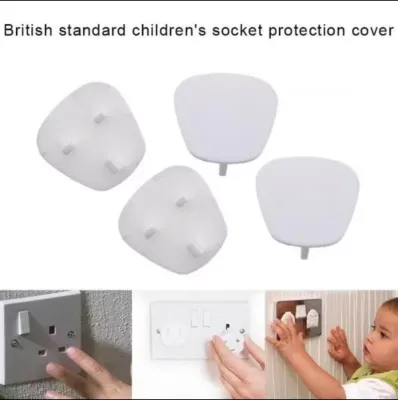
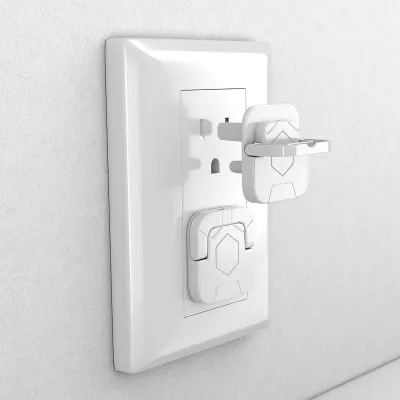
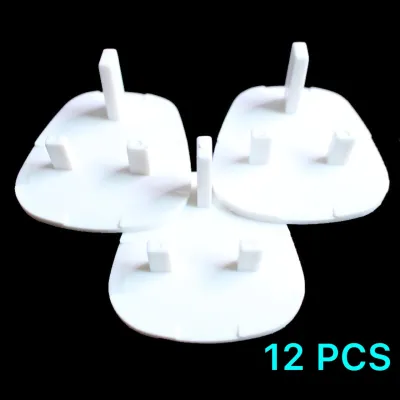
Prices are valid at publication and may change. Please refer to the product page for the latest price.
Understanding the Three Main 3-Pin Plug Cover Mechanisms
To choose the right protection, it is essential to understand how standard 3-pin electrical outlets operate. In Singapore, homes utilize Type G sockets, which feature three rectangular slots: a top earth slot and two lower slots for live and neutral connections. The earth slot contains a mechanical shutter release; when a longer earth pin enters the top slot, it slides open the internal shutters protecting the live and neutral contacts. Because of this design, 3-pin plug covers must interact precisely with these slots to ensure safety. The three primary cover mechanisms handle this interaction in distinct ways.

Rotating (Twist-to-Open) Covers
Rotating plug covers, often called twist-to-open covers, are designed to remain semi-permanently attached to the socket faceplate, usually via a strong adhesive backing. The face of the cover features three holes that align with the socket’s slots. However, in its default state, the internal spring-loaded barrier blocks the live and neutral pathways.
To use the outlet, you must insert the pins of your appliance plug into the cover’s entry points, apply firm inward pressure, and rotate the plug clockwise (usually 90 degrees) to align the cover’s holes with the socket’s internal contacts. Once aligned, the plug can be pushed fully into the wall. When you unplug the appliance, the internal spring automatically rotates the barrier back into the closed position, instantly blocking the slots. This mechanism relies on simultaneous rotational force and inward pressure, a multi-step physical task that is highly challenging for young toddlers.
Sliding (Push-and-Slide) Covers
Sliding covers utilize a spring-loaded shutter plate that sits flush over the socket face. Unlike rotating covers, which require you to twist the actual plug of your appliance, sliding covers are opened by physically sliding a protective faceplate to one side (or upward) to expose the underlying socket slots.
To insert a plug, you place the pins against the sliding plate, push in the direction of the slide, and then push the plug straight into the socket once the slots are exposed. When the plug is withdrawn, the integrated spring tension pulls the sliding plate back over the slots automatically. This offers an exceptionally smooth, one-handed operation for adults. However, because the sliding movement is linear and visible, it can sometimes be mimicked by older toddlers who observe the motion or attempt to slide the plate using toys, fingers, or sheer physical force.
Lock-Type (Key or Tool-Release) Covers
Lock-type covers, also known as key-release or tool-operated socket inserts, are solid plastic blocks that plug directly into the three socket slots, completely sealing the outlet. They do not have entry holes for appliance pins; instead, they act as a physical barrier that renders the socket entirely unusable while in place.
These covers sit extremely flush against the socket faceplate, leaving no exposed edges or lips for small fingers to grip. To remove the cover, you must insert a specialized plastic key or tool into a small slot on the cover’s face, turn or press it to disengage the internal locking catches, and pull the cover out of the wall. Because toddlers lack access to the key and do not possess the cognitive or physical ability to manipulate the locking mechanism, these covers provide an exceptionally high level of security. However, they require manual removal and reinsertion every time you wish to use the outlet.
Key Comparison Dimensions: Child Resistance vs. Adult Convenience
Selecting the right cover mechanism requires a careful evaluation of how each type performs under daily household conditions. Balancing physical safety with practical usability ensures that your childproofing measures remain effective over the long term.
Toddler Dexterity and Bypass Risk
Toddlers develop fine motor skills and cognitive problem-solving abilities at an astonishing rate between the ages of 12 and 36 months. This development directly impacts how easily they can bypass different plug covers. Rotating covers require a combination of grip strength, downward pressure, and rotational coordination. Most toddlers under two years old lack the wrist strength and bilateral coordination required to execute this twist-and-push motion, making rotating covers highly effective for this age group.
Sliding covers present a higher bypass risk for older or highly observant toddlers. Because the sliding action is a simple, single-direction linear movement, children often learn to defeat it simply by watching their parents. If the internal spring tension of a sliding cover weakens over time, a toddler may easily slide the mechanism open using a toy or their fingers.
Lock-type covers offer the absolute lowest bypass risk. Because they leave no gaps, cannot be pried off with fingernails, and require a physical key to release the internal tension, a toddler cannot defeat them through physical strength or mimicry alone. The safety of a lock-type cover is absolute, provided that adults store the removal keys completely out of the child’s reach and sight.
Adult Ease of Use and Daily Frustration
While child safety is the primary goal, adult convenience is a critical factor in maintaining a safe home. If a childproofing device is too difficult or frustrating to use, adults are highly likely to disable it, leave it off, or bypass it entirely, creating a much larger safety hazard.
Sliding covers offer the highest level of adult convenience. They allow for seamless, one-handed operation, which is incredibly valuable when you are carrying a child, a laundry basket, or household items. You simply push the plug against the cover, slide, and insert.
Rotating covers require slightly more effort. Because you must align the plug pins with the rotating slots and twist the entire plug, it often requires a two-handed operation—one hand stabilizing the socket faceplate (especially if the wall mount is slightly loose) and the other twisting and pushing the plug.
Lock-type covers represent the highest level of daily friction. Every time you want to plug in an appliance, you must locate the plastic key, unlock the cover, remove it, store the cover and key safely while using the outlet, and then remember to plug the cover back in when you are finished. If the key is misplaced, you cannot use the outlet at all. This high level of friction makes lock-type covers highly impractical for outlets that are used frequently.
Durability, Wear, and Socket Compatibility
When evaluating durability, you must consider how these plastic mechanisms withstand the humid climate of Singapore and the physical wear of daily use. Over time, plastic can degrade, become brittle, or lose its structural integrity.
Sliding and rotating covers rely on internal metal or plastic springs to return the protective barriers to their closed positions. Over months of heavy use, these springs can suffer from fatigue, leading to sluggish closure or complete failure to cover the live slots. Dust, pet hair, and household grime can also accumulate inside the sliding tracks or rotating channels, causing them to stick. Lock-type covers, having no internal springs or moving parts, are incredibly durable and rarely wear out, though the small plastic keys can be lost or broken if turned too forcefully.
Socket compatibility is another vital consideration. Singaporean homes feature Type G sockets that frequently include individual on/off rocker switches next to the plug slots. Some thick or wide rotating and sliding covers can overlap these switches, preventing you from turning the socket on or off, or preventing the cover from sitting completely flush against the wall. Any gap between the cover and the faceplate creates a leverage point that a toddler can use to pry the cover off.
| Mechanism Type | Toddler Bypass Risk | Adult Convenience | Durability & Wear | Ideal Use Case |
|---|---|---|---|---|
| Rotating (Twist-to-Open) | Moderate (challenging for younger toddlers; older toddlers may learn the twist motion) | High (remains on socket; plug-and-twist action is relatively smooth) | Moderate (internal springs can weaken over time) | Daily-use sockets, kitchen counters, and bedroom outlets |
| Sliding (Push-and-Slide) | High (highly observant toddlers can mimic the sliding motion easily) | Very High (seamless, one-handed operation when plugging in devices) | Moderate to Low (springs can lose tension or collect dust/grime) | High-traffic areas where adults need rapid, frequent access |
| Lock-Type (Key-Release) | Very Low (virtually impossible to remove without the designated tool) | Low (requires locating and using a physical key every time) | High (solid construction with no delicate moving parts or springs) | Low-traffic sockets, outlets behind heavy furniture, or guest rooms |
Household Scenarios: Matching the Mechanism to Your Needs
To design an effective childproofing strategy, you should assess your home room by room, rather than applying a single cover type to every outlet. This targeted approach maximizes safety where it is needed most while minimizing daily inconvenience.
High-Traffic Sockets (Living Rooms and Kitchens)
High-traffic sockets are those you access multiple times a day for appliances like vacuum cleaners, phone chargers, hair dryers, or kitchen tools. In these areas, minimizing adult frustration is key to ensuring the outlets actually remain protected.
For these frequently accessed outlets, rotating or sliding covers are highly recommended. Sliding covers are ideal for kitchen counters where you might need to quickly plug in a hand blender or kettle with one hand. Rotating covers work exceptionally well in living room common areas, providing robust protection against younger toddlers without requiring you to hunt for a key every time you need to charge a device. Avoid using lock-type covers in high-traffic zones; the constant need to unlock and relock the outlet will quickly lead to safety fatigue, and you may find yourself leaving the cover off permanently, exposing your child to danger.
Low-Traffic or Hidden Sockets (Behind Furniture)
Low-traffic sockets are those that are rarely accessed or are partially concealed by household items. These include outlets behind television consoles, heavy bookshelves, sofas, or bed frames. While these outlets are out of direct sight, toddlers are highly adept at crawling into tight spaces and exploring hidden gaps.
In these low-traffic areas, adult convenience is a secondary concern, making maximum child resistance the top priority. Lock-type covers are the ideal choice here. Once installed, they completely seal the outlet, ensuring that even if a toddler crawls behind a sofa, they cannot pull the cover out. Additionally, because these outlets are rarely used, you will not experience the frustration of constantly searching for the release key. If you have sockets in guest rooms or utility spaces that are completely unused, solid block covers (without any pin holes or mechanisms) are also an excellent, highly secure option.
Homes with Older Toddlers or Mixed Age Groups
As children grow older, their manual dexterity and cognitive skills improve, allowing them to defeat simpler childproofing measures. If you have an older toddler (around 2 to 3 years old) or multiple children of different ages, your childproofing strategy must adapt.
If you observe your older child successfully operating or bypassing a sliding cover, it is time to upgrade that outlet to a rotating cover or a lock-type mechanism. In homes with older siblings, there is an added risk of modeling behavior; a 4-year-old may easily open a sliding cover and inadvertently demonstrate the action to a younger, highly imitative 18-month-old sibling. In these mixed-age environments, use lock-type covers on all low-to-medium height outlets, and reserve sliding or rotating covers only for higher countertops that are physically out of reach of the younger children.
Installation, Maintenance, and When to Replace
Even the highest-quality plug cover will fail to protect your child if it is installed incorrectly or allowed to degrade over time. Proper installation and routine maintenance are essential to keeping your home’s electrical outlets secure.
Proper Installation to Prevent Dislodging
To ensure a plug cover sits flush and cannot be pried off by small fingers, you must follow a careful installation process. For adhesive-backed rotating or sliding covers, start by thoroughly cleaning the socket faceplate to remove dust, grease, and finger oils. Use a dry microfiber cloth or a slightly damp cloth with a mild detergent, ensuring the power is turned off at the main circuit breaker before cleaning to prevent any moisture from entering the live slots. Allow the faceplate to dry completely before proceeding.
When applying adhesive covers, press the cover firmly against the faceplate for at least 30 seconds to establish a strong bond. Most adhesives require up to 24 hours to cure fully; avoid plugging anything into the outlet during this curing period to prevent shifting. Once installed, check that the cover sits perfectly flush against the wall. If there is any noticeable gap, lip, or edge, a toddler can use their fingernails or a small toy as leverage to pry the cover off. Finally, verify that the cover does not interfere with the physical operation of the socket’s built-in on/off rocker switches.
Routine Inspection and When to Replace
Childproofing is not a set-and-forget task. You should conduct a routine inspection of all plug covers in your home at least once every few months. During these checks, physically test each cover to ensure it is functioning as intended.
Verify that the springs in your sliding and rotating covers are still strong and that the protective barriers snap back into place immediately when a plug is withdrawn. Inspect the plastic closely for any signs of wear, such as hairline cracks, chips, or discoloration. Over time, exposure to ambient heat and UV light can cause plastic to become brittle, increasing the risk of it breaking. A cracked cover poses a double hazard: it can break into small pieces that present a choking hazard, or it can expose the live electrical contacts underneath.
Always check the product packaging or manufacturer documentation for specific material safety standards, ensuring the covers are made from flame-retardant materials. If any socket cover feels warm to the touch, shows signs of scorching, or has become discolored, immediately turn off the power at the main breaker, remove the cover, and consult a licensed electrical worker (LEW) to inspect the underlying wiring and socket integrity.
Frequently Asked Questions (FAQ)
Are 3-pin plug covers a fire hazard?
Properly manufactured, undamaged 3-pin plug covers made from high-quality, flame-retardant materials (such as polycarbonate) do not typically pose a fire hazard. However, risks arise when covers are used incorrectly or are made from cheap, non-rated plastics. You should never install a plug cover over an outlet that feels warm to the touch, is overloaded, or shows any signs of scorching, as trapping heat inside a failing socket can exacerbate electrical faults. Always check the product packaging or manufacturer specifications to verify that the covers meet recognized safety and flame-retardancy standards rather than relying on unverified generic claims.
Can I use 2-pin plug covers on a 3-pin socket?
You should strongly avoid using 2-pin covers on standard 3-pin Type G sockets. Type G sockets are designed with an internal safety shutter mechanism that is only released when the longer earth pin enters the top slot. Using a 2-pin cover leaves the top earth slot completely exposed. A curious toddler could easily insert a conductive object, such as a hairpin, key, or paperclip, into the exposed earth slot, potentially damaging the internal shutter mechanism or defeating the socket’s built-in safety features. To provide effective, reliable protection, always use covers that match your socket configuration precisely.

Community discussion
Share your experience or ask a question. Comments are reviewed before publication.