
The RideSafer travel vest is a highly popular alternative to traditional booster seats for parents in Singapore, especially those who rely heavily on ride-hailing services. However, whether it is safe and legal for your specific child depends on several critical factors: the exact model’s safety certifications, the child’s physical development, proper installation, and compliance with local traffic laws.
Legality in Singapore is determined by the Land Transport Authority (LTA). Under current regulations, any child passenger under 1.35 meters in height must use an approved child restraint system. Because the RideSafer vest is certified under United States Federal Motor Vehicle Safety Standards (FMVSS 213), it is generally recognized as a legal child restraint system in Singapore, provided you are using an authentic, labeled product.
Before purchasing or using this vest, you must physically verify the compliance labels sewn into the product and ensure they match Singapore’s accepted international standards. Additionally, the vest must fit your child’s current height and weight perfectly, and you must follow the manufacturer’s exact instructions for routing the vehicle’s seatbelt.
Products mentioned in this guide
Prices are valid at publication and may change. Please refer to the product page for the latest price.
Understanding Singapore's Child Restraint Laws
Navigating Singapore’s strict road safety regulations requires a clear understanding of the Road Traffic Act. The Land Transport Authority (LTA) mandates that all passengers in a motor vehicle who are below 1.35 meters in height must be secured with an approved child restraint system (CRS) or a booster seat appropriate for their height and weight. This law applies to private cars, ride-hailing vehicles, and commercial transport, with very specific exceptions.
To be considered “approved” under Singapore law, a child restraint system must comply with recognized international safety standards. The LTA officially accepts several standards, which include the United Nations Economic Commission for Europe (UNECE) Regulations (such as ECE R44/03, R44/04, or the newer R129/i-Size), the United States Federal Motor Vehicle Safety Standard (FMVSS 213), the British Standard (BS 3254), the Australian Standard (AS 1754), and the Japanese Industrial Standard (JIS D0401).
As a driver or parent, failing to secure a child under 1.35 meters in an approved restraint is a serious traffic offense in Singapore. Violations can result in composition fines, demerit points for the driver, and potential court prosecution for repeated or severe offenses. Because of these strict legal frameworks, relying on uncertified or counterfeit safety gear purchased from unauthorized online marketplaces exposes you to both legal penalties and severe safety risks.
How the RideSafer Vest Works and Safety Considerations
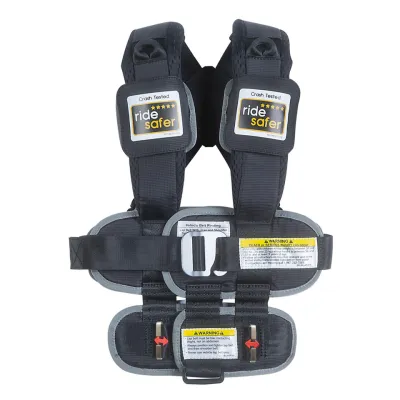
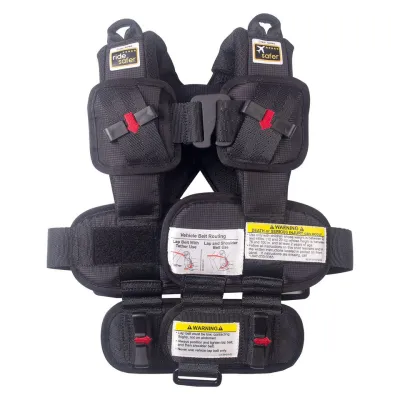
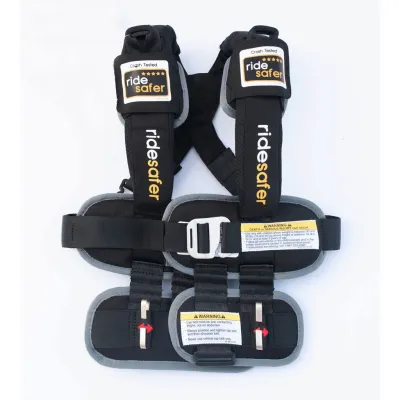
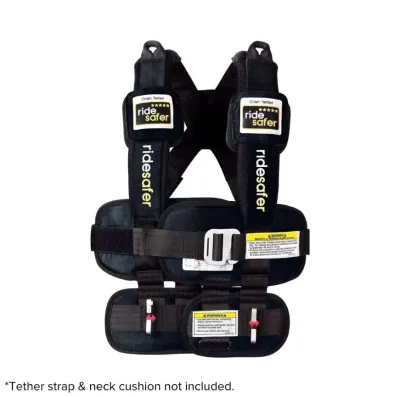
Unlike traditional booster seats that lift a child up to meet the adult seatbelt, the RideSafer travel vest works by pulling the vehicle’s lap-and-shoulder seatbelt down to fit the child’s smaller body. The vest features heavy-duty metal guides on the shoulders and thighs that position the vehicle’s seatbelt correctly across the child’s collarbone and pelvis. This design prevents the seatbelt from riding up onto the child’s vulnerable neck or soft abdomen, where it could cause severe internal injuries during a collision.

When evaluating the safety of a wearable restraint, parents must look for the official FMVSS 213 certification label. This certification indicates that the vest has undergone rigorous dynamic crash testing in the United States, proving its ability to withstand high-impact forces. Some models also include a top tether strap, which provides additional upper-body restraint and limits forward head excursion during a crash, making it a highly recommended addition when using the vest.
While the vest offers excellent portability, it is crucial to recognize its safety limitations. Traditional high-back booster seats and convertible car seats provide rigid side-impact protection, shielding the child’s head, neck, and torso from lateral forces. The RideSafer vest, being a soft-sided wearable device, does not offer this lateral shell protection, meaning your child relies entirely on the vehicle’s side airbags and structural safety features during a side-impact collision.
To maintain safety, you must adhere to strict stop-use conditions. Immediately discontinue using the vest if your child exceeds the manufacturer’s specified height or weight limits, which vary depending on whether you have a Small, Large, or Extra-Large size. You must also stop using the vest if you observe any frayed stitching, cracked metal guides, or compromised fabric, or if the vehicle’s seatbelt mechanism fails to lock securely. Furthermore, like traditional car seats, any travel vest involved in a moderate-to-severe vehicle collision must be replaced immediately and never reused.
Step-by-Step: Verifying Legal Compliance in Singapore
To ensure your exact RideSafer model is legally compliant on Singapore roads, start by performing a physical inspection of the vest. Locate the manufacturer’s compliance label, which is typically sewn onto the inside lining or fabric flap of the vest. This label must clearly state that the product complies with US FMVSS 213 or another recognized international standard, and it should display the manufacturer’s name, model number, and date of manufacture.
Next, cross-reference the certified standard on your vest’s label with the list of approved standards recognized by the Singapore Land Transport Authority. Because counterfeit child products are common on various global ecommerce platforms, you should verify that you purchased the vest from an authorized distributor or a reputable retailer. Authentic RideSafer vests will always feature high-quality, durable labeling, heavy-duty metal guides, and serialized registration cards.
If you find that the labels on your vest are ambiguous, faded, or written in a language that makes verification difficult, do not guess its safety status. You should contact the LTA directly for clarification, consult with an authorized local distributor in Singapore, or request official compliance documentation directly from the manufacturer. If you cannot conclusively verify that the vest carries an approved international certification, you must refrain from using it on public roads.
When to Use a Travel Vest vs. a Traditional Car Seat
The RideSafer travel vest is an exceptionally practical tool for specific transit scenarios in Singapore, particularly for families who rely on ride-hailing services like Grab or Gojek. Because these private hire vehicles are legally required to secure children under 1.35 meters—unlike traditional public taxis—carrying a lightweight, foldable vest is far more convenient than lugging a bulky, heavy plastic booster seat through shopping malls or transit hubs. It is also an ideal solution for tight three-across seating configurations in smaller vehicles or when traveling abroad.
Conversely, there are many scenarios where a traditional, rigid car seat or high-back booster remains the superior and safer choice. For daily commutes in a family-owned vehicle, long highway drives, or trips where the child is likely to fall asleep, a traditional seat provides crucial lateral head support and prevents the child’s torso from slumping out of the correct seatbelt alignment. Children who lack the developmental maturity to sit upright and relatively still throughout the entire journey are also poor candidates for a travel vest, as they can easily lean out of the safe seatbelt path.
Ultimately, parents should view the travel vest as a specialized, highly portable addition to their child safety toolkit rather than a complete replacement for a dedicated car seat. While it offers a legal and crash-tested method of securing your child on the go, balancing its convenience against the superior side-impact protection and structural support of a traditional car seat will help you make the safest choice for every unique journey.
Frequently Asked Questions (FAQ)
Can I use a travel vest in ride-hailing cars or taxis in Singapore?
Yes, you can use an approved travel vest in both ride-hailing cars and taxis, and doing so is highly recommended. Under Singapore law, public taxis are technically exempt from the child restraint requirement due to their public transport status, though riding without a restraint still poses significant safety risks. Private hire vehicles (such as Grab, Gojek, and other ride-hailing apps) are not exempt from this law; therefore, any child under 1.35 meters must be secured in an approved restraint like the RideSafer vest to travel legally and safely.
Does my child need a child restraint if they are tall for their age but under 1.35m?
Yes, Singapore’s legal requirement is strictly based on the child’s physical height of 1.35 meters, regardless of their age, weight, or relative tallness. Even if your child is tall for their age, if they measure under 1.35 meters, they must use an approved child restraint or booster. When using the RideSafer vest, you must regularly check that the vest fits correctly according to the manufacturer’s guidelines, ensuring the shoulder guides rest comfortably on the collarbone and the lap guides sit low across the thighs.

Community discussion
Share your experience or ask a question. Comments are reviewed before publication.