
Using the RideSafer Travel Vest in Singapore requires careful verification of local traffic laws and the specific product’s certification labels. While the vest is designed as a highly portable alternative to traditional booster seats, its legality on Singapore roads is not automatic. It depends entirely on whether the specific model you own carries a safety certification recognized by Singapore’s Traffic Police and Land Transport Authority (LTA). To ensure your child’s safety and remain compliant with the law, you must inspect the physical vest for approved safety marks, verify that your child meets the manufacturer’s strict height and weight requirements, and ensure the vest is fitted correctly during every journey.
Understanding Child Restraint Laws in Singapore
Singapore’s Road Traffic Act mandates strict safety measures for young passengers to minimize the risk of injury during travel. Under current regulations, any passenger under 1.35 metres in height must be secured using an approved child restraint appropriate for their height and weight. If a passenger has reached or exceeded 1.35 metres, they are legally permitted to use the vehicle’s standard adult seat belt, though additional safety measures are always worth considering.
The enforcement of these rules falls under the purview of the Traffic Police and the Land Transport Authority (LTA). These authorities do not certify individual brands; instead, they recognize specific international safety standards. Any child restraint system used on Singapore roads must comply with these recognized standards to be considered legally valid.
Products mentioned in this guide
Prices are valid at publication and may change. Please refer to the product page for the latest price.
While traditional car seats and booster seats are the most common methods of compliance, alternative restraint systems like travel vests can also be legally acceptable. However, because a travel vest functions differently from a rigid car seat, it must undergo the same rigorous certification processes. Parents must understand that simply wearing a vest does not satisfy the legal requirement unless the specific product carries the necessary official certification marks.
How to Verify Legal Compliance for Your Travel Vest
To confirm that your travel vest is legally compliant in Singapore, you must conduct a physical inspection of the product itself. Look for recognized international safety standard labels permanently affixed to the vest. In Singapore, the Traffic Police generally recognize standards such as the European Union’s ECE R44/04 or ECE R129, the United States’ Federal Motor Vehicle Safety Standard (FMVSS) 213, or equivalent standards from Australia, Japan, or the United Kingdom.

The presence of these labels is the primary proof of compliance during any roadside inspection or safety check. If the vest was purchased from an overseas retailer or an online marketplace, you must be particularly vigilant. Products sold on international ecommerce platforms may not always feature the specific certification labels required for use in Singapore, even if they look identical to compliant models.
In addition to checking the physical labels, you should review the manufacturer’s official documentation and user manual. The documentation should explicitly state which safety standards the specific model and size have been tested against. If you find that the vest lacks visible certification labels, or if you are unsure about the authenticity of the safety marks, you should refrain from using the product and contact the manufacturer or local transport authorities for clarification.
Evaluating Safety Standards and Manufacturer Specifications
Evaluating the safety of a travel vest requires looking beyond marketing claims and focusing strictly on the manufacturer’s engineering specifications. Every travel vest is designed to operate within precise physical limits, which are typically printed on a tracking label sewn into the vest. These specifications outline the minimum and maximum weight, height, and age limits for the user.
Unlike traditional car seats that feature a rigid plastic shell to absorb impact forces, a travel vest relies on the vehicle’s existing seat belt system. The vest works by repositioning the vehicle’s lap and shoulder belts to fit a child’s smaller skeletal frame safely. Because of this design, proper seat belt routing and tethering are absolutely critical to the vest’s performance in a collision.
Before every journey, caregivers must perform a thorough structural integrity check of the vest. Inspect the fabric, webbing, metal guides, and plastic buckles for any signs of fraying, cracking, or deformation. You must immediately discontinue use of the vest if it has been involved in a vehicle crash, if the materials show significant wear, or if the product has passed its manufacturer-specified expiration date.
Sizing the XS Vest: Weight, Height, and Fit Requirements
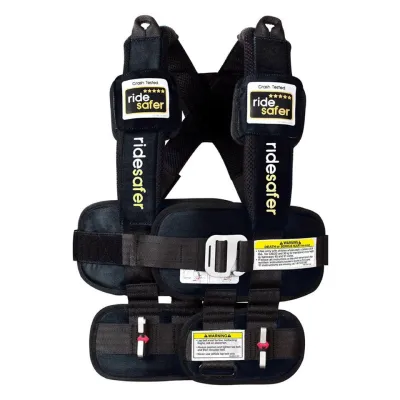
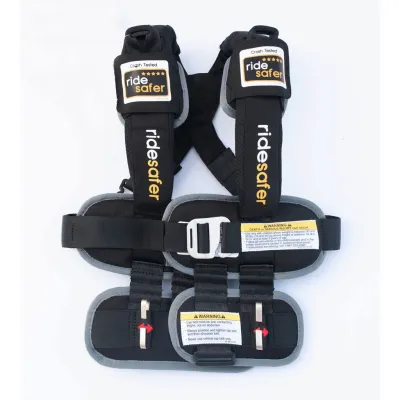
The extra-small (XS) size of the travel vest, often searched as the ridesafer vest xs, is specifically engineered for younger, smaller children who are transitioning out of rear-facing or traditional forward-facing car seats. To determine if this specific size is appropriate for your child, you must locate the exact weight and height ranges specified by the manufacturer for the XS model. Typically, these limits are clearly marked on the product packaging and the internal safety labels.
Accurately measuring your child is a vital step before attempting to use the XS vest. You should measure your child’s standing height and obtain an accurate weight using a reliable scale. Do not rely on estimates or clothing sizes, as child restraint safety is highly sensitive to physical dimensions. The child must meet both the minimum weight and minimum height requirements specified by the manufacturer to use the XS vest safely.
When fitting the XS vest, you must observe how the vehicle’s seat belt rests on the child’s body. The shoulder belt guide must position the vehicle’s belt across the center of the child’s shoulder, well away from their neck and face. The lap belt guides must keep the lap portion of the belt low across the child’s thighs and pelvis, rather than riding up onto the soft abdomen. If the vest rides up, if the straps cannot be adjusted snugly, or if the seat belt touches the child’s neck, the fit is incorrect, and you must stop using the vest until the child grows or you transition to a different restraint type.
Safe Usage Practices and Compliant Travel Alternatives
Using a travel vest safely requires strict adherence to installation guidelines across different vehicle types. When traveling in Singapore, you may find yourself using private cars, rental vehicles, or various public transport options. In any passenger vehicle, the vest must only be used in seating positions equipped with a three-point lap-and-shoulder seat belt; it cannot be used with a lap-only belt.
Additionally, you should always install the vest in the rear seats of the vehicle. Placing a child in the front passenger seat is highly discouraged, especially if the vehicle is equipped with an active passenger airbag, which can cause severe injury upon deployment. If the vehicle’s seat belt geometry prevents the belt from sliding smoothly through the vest’s guides, or if the seat belt does not lock properly, you must choose a different seating position or a different vehicle.
If you cannot legally verify your travel vest’s compliance, or if it does not fit your child or the vehicle correctly, you must use a compliant alternative. Traditional forward-facing car seats, high-back booster seats, or portable backless booster seats that carry recognized safety labels are all excellent alternatives. Keeping a compliant, portable booster seat on hand ensures you always have a legal and safe backup option for unexpected trips.
Frequently Asked Questions (FAQ)
Can I use the travel vest in a taxi or private hire car in Singapore?
In Singapore, there is a distinct legal difference between public taxis and private hire cars regarding child restraint requirements. Under current LTA regulations, public taxis are exempt from the mandatory child restraint laws, meaning children under 1.35 metres can legally travel in the rear seat of a taxi using only the adult seat belt, though this is not the safest practice. However, private hire cars (such as those booked via ride-hailing apps) are not exempt from this law. If you are traveling in a private hire car, your child must be secured in an approved child restraint, making a legally compliant travel vest a highly convenient option for these journeys.
How does a travel vest compare to a traditional forward-facing car seat?
A travel vest and a traditional forward-facing car seat protect children using fundamentally different engineering designs. A traditional car seat features a rigid shell that surrounds the child, absorbing impact forces and utilizing an internal five-point harness to secure them. In contrast, a travel vest has no rigid shell; it acts as a wearable guide that brings the vehicle’s adult seat belt down to the child’s level, distributing crash forces across their stronger skeletal points. While the vest offers exceptional portability for travel and ride-sharing, it relies entirely on the correct routing of the vehicle’s seat belt and must be used strictly according to the manufacturer’s guidelines.

Community discussion
Share your experience or ask a question. Comments are reviewed before publication.