
Finding the right swim diaper for your baby in Singapore involves balancing containment reliability, skin comfort, and overall value. While many parents consider Rascal swim diapers for their reputation in standard diapering, comparing them to other disposable and reusable brands requires looking closely at physical design, sizing structures, and your family’s swimming habits. There is no single option that suits every infant; the ideal choice depends on your baby’s unique body shape, how often they splash in the pool, and your specific budget. By establishing a clear evaluation framework, you can confidently assess Rascal alongside alternative options to find a secure, leak-resistant fit.
What to Look for When Comparing Swim Diapers
To evaluate any swim diaper brand effectively, you must first understand its primary function: containing solid waste without absorbing pool water. Unlike standard diapers, which are designed to absorb liquids and expand, swim diapers must remain lightweight and streamlined when submerged. When comparing brands, the first feature to inspect is the leak containment design. Look for double elastic leg cuffs, also known as inner barrier layers or leg gathers, which should sit snugly in the groin crease. A secure, elasticated waistband is equally critical to prevent gaps at the back when your baby bends or sits.
The material composition determines how the diaper behaves in the water. Standard disposable diapers contain superabsorbent polymers that swell rapidly when wet, making them heavy, saggy, and prone to bursting in a pool. Swim diapers, conversely, utilize non-swelling materials such as slim, bonded cellulose or specialized non-woven fabrics that allow water to pass through while trapping solids. For reusable options, look for quick-drying fabrics like laminated polyurethane outers and soft polyester mesh liners that do not retain excess water or cause skin chafing.
Products mentioned in this guide
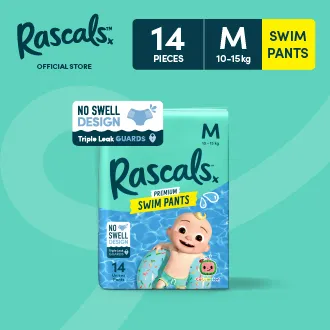
Prices are valid at publication and may change. Please refer to the product page for the latest price.
Sizing accuracy is another vital metric. Because water can easily wash through a loose diaper, a swim diaper must fit more snugly than a regular diaper. Do not rely solely on your baby’s age or standard diaper size when purchasing. Instead, match the manufacturer’s weight ranges to your baby’s current weight, paying close attention to their thigh circumference. If your baby has particularly chunky thighs or a slender waist, you may need to adjust your size choice or look for brands that offer highly adjustable closures.
How to Evaluate Rascal Swim Diapers
When considering Rascal swim diapers, start by physically inspecting the packaging and official product descriptions to verify their specific design features. Look for details regarding their leak-barrier technology and material safety. Because product specifications can change, checking the label directly is the most reliable way to confirm that the materials are free from fragrance, elemental chlorine, or other potential skin irritants.

Next, assess the physical construction of the diaper. Gently stretch the waistband and leg elastics to gauge their elasticity and softness. The elastics should feel resilient yet gentle enough not to leave deep red marks on your baby’s skin. Pay attention to the thickness and cut of the diaper; a lower-profile design often fits more comfortably under swimwear, while a higher waist can offer better coverage against blowouts. Examine the tear-away side seams, which should be sturdy enough to stay intact during active play but easy for a caregiver to rip open during a quick change.
Finally, cross-reference the recommended weight and size ranges on the Rascal packaging with your baby’s actual proportions. If your baby is near the upper limit of a size range, or if they have a unique build, it is often wise to purchase a single pack first to test the fit before buying in bulk. Remember that a proper fit should leave no visible gaps around the legs or waist when your baby is crawling, sitting, or kicking in the water.
Weighing Rascal Against Alternative Brands
When comparing Rascal to other options in Singapore, you will encounter both disposable competitors and reusable swim pants. Disposable swim diapers offer unmatched convenience, especially for occasional swimmers or vacations, as they can be torn off and discarded immediately after use. However, if your family swims weekly, reusable swim diapers present a compelling alternative. Reusables are typically made of washable fabric with adjustable snaps or hook-and-loop fasteners, allowing them to grow with your baby and significantly reduce environmental waste.
To determine the true value of each option, calculate the cost per use in S$. For disposables like Rascal and its competitors, divide the retail price of a pack by the number of diapers inside. Keep in mind that prices can vary across local supermarkets and online marketplaces. For reusable diapers, divide the initial purchase price by the estimated number of times your baby will wear them before outgrowing the size. Even with the added cost of laundering, reusable options often prove more economical over several months of regular pool sessions.
Fit profiles also differ significantly between brands. Some brands feature a high-waist cut that provides excellent coverage for babies with longer torsos, while others offer a low-rise, snug-fitting bikini cut. Rascal’s design should be compared directly with these alternatives to see which shape matches your baby’s build. For instance, if your baby has a round belly but slender legs, a brand with highly adjustable side tabs or a very stretchy waistband may offer a more customized seal than a standard pull-up style.
Which Swim Diaper Should You Choose?
Your final decision should be guided by a clear set of priorities. Choose Rascal swim diapers if your physical inspection confirms that their elastic design and cut align well with your baby’s proportions, and if the cost per diaper in S$ fits comfortably within your household budget. They are an excellent choice for parents who prefer the convenience of disposables and find that the brand’s specific sizing provides a gap-free seal around their baby’s legs and waist.
On the other hand, you may want to choose alternative disposable brands if you require wider retail availability in your immediate neighborhood, or if your baby’s body shape is better suited to a different cut profile. Some parents find that certain brands are easier to purchase during last-minute trips to local pharmacies or grocery stores. Additionally, if your baby is between sizes in one brand, another manufacturer’s sizing structure might offer a more precise fit.
If you swim frequently—such as enrolling your baby in weekly swim classes—reusable swim diapers are highly recommended. They minimize recurring costs and prevent dozens of disposable diapers from ending up in landfills. Regardless of the brand or type you choose, always verify material labels and manufacturer warnings first, especially if your baby has sensitive skin or known allergies. If you notice any persistent redness, irritation, or signs of a skin reaction after swimming, stop using the diaper immediately and consult a qualified healthcare professional.
How to Use Swim Diapers Safely and Effectively
To ensure maximum containment and maintain pool hygiene, proper usage is just as important as choosing the right brand. Before your baby enters the water, perform a thorough fit check. Run your finger along the inside of the leg cuffs and waistband to ensure they are snug against the skin without gaps, yet loose enough to avoid pinching. The diaper should sit flat against your baby’s bottom without sagging.
Timing is crucial when using swim diapers. Because they are designed to let water pass through, they do not absorb urine effectively. If you put a swim diaper on your baby before a long car ride or stroller walk to the pool, you risk leaks in your vehicle or carrier. To prevent premature soiling, always dress your baby in their regular diaper for travel, and change them into their swim diaper right before they enter the water.
Immediately after swimming, remove the diaper promptly. For disposables, tear the side seams carefully, roll the diaper up, and dispose of it in a designated waste bin. For reusables, shake any solids into a toilet, rinse the diaper, and store it in a wet bag until you can wash it according to the manufacturer’s instructions. Never leave a wet swim diaper on your baby for extended periods, as the trapped moisture can quickly lead to diaper rash or skin irritation.
Frequently Asked Questions (FAQ)
Do public pools in Singapore require a specific type of swim diaper?
Yes, many public swimming pools, condominiums, and private swim schools in Singapore enforce strict hygiene policies to prevent water contamination. While some facilities allow any standard swim diaper, others may require a double diapering system, which involves wearing a disposable swim diaper underneath a snug-fitting reusable swim pant. Always check the specific regulations of your chosen pool or swim school before your first visit to ensure compliance and avoid being turned away.
Can I use a regular diaper under a swim diaper?
No, you must never place a regular diaper under a swim diaper. Regular diapers are engineered to absorb as much liquid as possible. When submerged in a pool, they will instantly fill with water, becoming extremely heavy and sagging away from your baby’s body. This not only compromises the fit and causes severe leaks, but the waterlogged diaper can also rupture, releasing absorbent gel particles into the pool, which poses a safety hazard for your baby and clogs pool filtration systems. Swim diapers must always be worn directly against the skin.

Community discussion
Share your experience or ask a question. Comments are reviewed before publication.