
Finding the best swim diaper for pool use in Singapore comes down to achieving a precise, gap-free fit rather than relying on a single brand name. Because Singapore’s tropical climate allows for year-round swimming in condominium pools, public ActiveSG facilities, and private swim schools, parents need a reliable containment strategy. The primary job of any swim diaper is to prevent solid waste from contaminating the water, which requires understanding how different designs seal against your baby’s skin. Since no single brand fits every baby’s unique body shape perfectly, the key to leak protection lies in evaluating specific structural features like elastic tension, material flexibility, and closure systems. By focusing on these physical attributes, you can select a diaper that offers maximum security and peace of mind during water play.
Understanding Swim Diaper Containment: What Brands Can and Cannot Do
To choose the right swim diaper, it is essential to understand what these products are actually designed to do. Unlike regular diapers, which are engineered to absorb and lock away liquids, swim diapers are completely non-absorbent. If a swim diaper were to absorb liquid, it would instantly soak up pool water, swelling into a heavy, waterlogged mass that sags away from the baby’s body. This swelling not only ruins the fit but also creates a serious safety hazard by weighing the baby down in the water.
Consequently, swim diapers do not hold urine. When your baby pees in the pool, the liquid passes directly through the diaper fabric and into the water, where pool filtration and sanitization systems manage it. The sole function of a swim diaper is to contain solid waste, preventing harmful bacteria and pathogens from contaminating the public swimming area. Because containment relies entirely on a physical barrier, the effectiveness of any brand is determined by how well the edges of the diaper seal against your baby’s thighs and waist.
Products mentioned in this guide
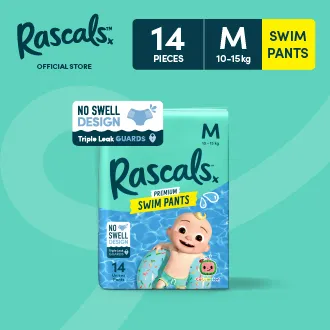
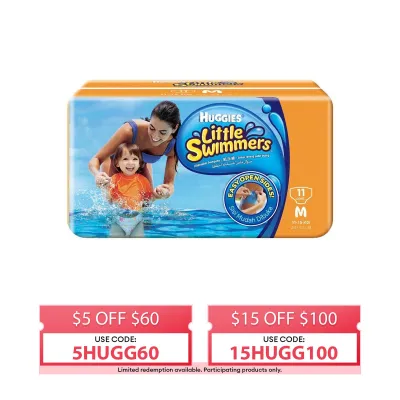
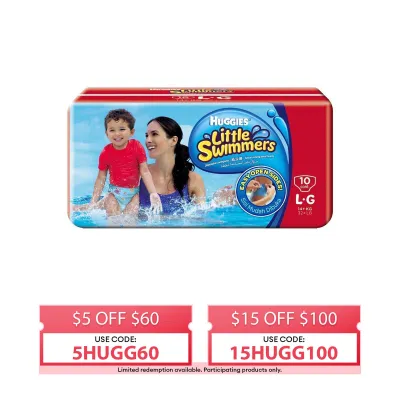
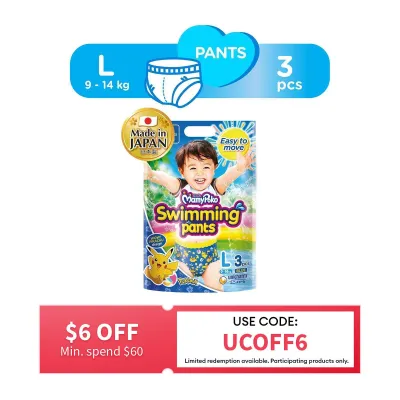
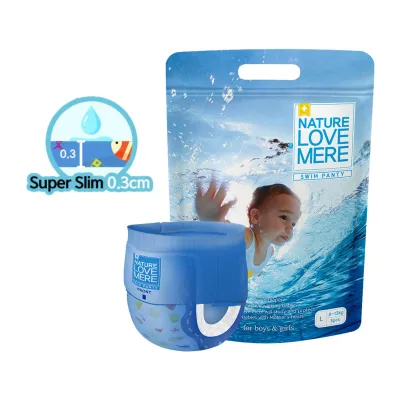
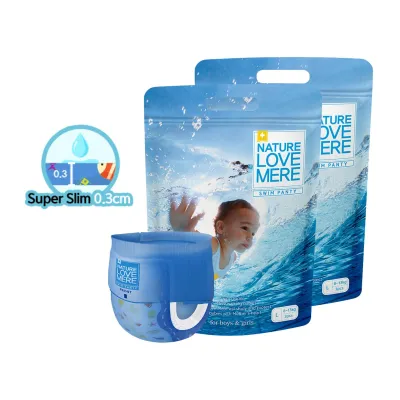
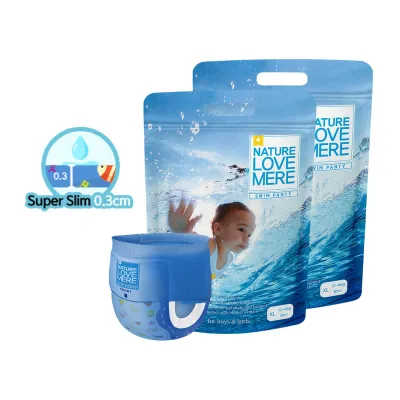
Prices are valid at publication and may change. Please refer to the product page for the latest price.
No manufacturer can guarantee absolute leak-proof performance because a baby’s body shape changes constantly as they grow and move. A brand that fits a chubby-thighed infant perfectly may gap on a leaner, more active toddler. Additionally, local pool facilities and swim schools in Singapore often enforce strict hygiene regulations. Many public and private pools require specific diapering configurations, such as a double-layer system, to minimize the risk of accidental contamination and subsequent pool closures.
Core Dimensions for Comparing Swim Diaper Leak Protection
When comparing different swim diaper brands, parents should look past marketing claims and evaluate four core structural dimensions. The first and most critical dimension is the leg cuff design. High-quality swim diapers feature robust, multi-layered elastic gussets that sit flat against the inner thigh crease. These cuffs must have enough elasticity to stretch with your baby’s kicks while maintaining a continuous, gentle seal that prevents solids from escaping through the leg openings.

The second dimension is waistband stretch and recovery. When a diaper becomes wet, the weight of the water and any contained waste can cause the fabric to sag. A reliable waistband must feature high-quality elastic threads or a wide, flat band that retains its shape and tension when fully submerged. If the waistband stretches out and fails to recover its original shape, a gap will form at the lower back, which is a common failure point during active water play.
Material flexibility is the third dimension to consider. The fabric must be soft and pliable enough to conform to your baby’s contours as they bend, sit, and splash. Stiff materials tend to bunch up or pull away from the skin when the baby moves, creating temporary channels where leaks can occur. Look for lightweight, high-density fabrics that offer a balance of structural integrity and dynamic stretch.
Finally, sizing and weight ranges vary significantly between manufacturers. Relying solely on your baby’s age or standard clothing size often leads to a poor fit. Instead, always consult the manufacturer’s specific weight and measurement charts. Because a snug fit is paramount, you may need to measure your baby’s waist and upper thigh circumference to find the brand whose sizing matches your baby’s current growth stage.
Disposable vs. Reusable Swim Diapers: Which Design Offers Better Containment?
Choosing between disposable and reusable swim diapers is a primary decision that impacts both convenience and containment reliability. Disposable swim diapers are designed for single-use convenience. They typically feature tear-away side seams for easy removal when wet and are made from lightweight, non-swelling materials. While they are highly convenient for occasional pool visits or vacations, their elastic bands are generally thinner and less customizable than those found on reusable alternatives. This can sometimes result in a less secure seal if your baby falls between standard sizes.
Reusable swim diapers, on the other hand, are constructed from durable fabrics like polyester, polyurethane laminate (TPU), or thick neoprene. Many models feature adjustable snap buttons or hook-and-loop fasteners along the waist and hips, allowing parents to customize the fit precisely to their baby’s body. Neoprene swim nappies, in particular, are highly regarded for containment because the thick, form-fitting material acts as a physical seal against the skin, trapping solids effectively. However, reusables require immediate rinsing, wet-bag storage, and laundering after use, which requires more preparation from caregivers.
When comparing containment during active water play, reusable designs often provide a more reliable physical barrier. The robust construction and adjustable closures of reusable diapers minimize the risk of sagging and gaping under the weight of moving water. Disposables remain an excellent, hygienic option, but they require careful monitoring to ensure the elastic does not stretch out over prolonged swim sessions. For parents seeking the highest level of containment, combining the two designs often yields the best results.
Practical Steps to Maximize Leak Protection at the Pool
Even the highest-rated swim diaper can fail if it is not used correctly. To maximize leak protection, many swim schools and public pools in Singapore recommend the double diapering method. This technique involves putting a disposable swim diaper on your baby first as an inner containment layer, and then layering a snug-fitting reusable swim diaper or neoprene cover over it. The inner disposable diaper catches the bulk of any solid waste, while the outer reusable cover provides a secondary, highly secure seal that prevents any bypass leaks.
Before your baby enters the water, always perform a thorough pre-pool fit check. Run your index finger along the inside of the leg cuffs and the waistband to ensure the elastic is sitting flat against the skin without twisting or folding. There should be no visible gaps when your baby bends their knees or sits down. The diaper should feel snug, similar to a well-fitting swimsuit, but not so tight that it restricts circulation or leaves deep, painful red marks on the skin.
Regular monitoring is essential for maintaining a safe and hygienic swimming environment. Parents should check the swim diaper every 30 to 60 minutes by gently pulling back the waistband to inspect the interior. If your baby has a bowel movement, you must exit the pool immediately and head to the changing facilities. Water movement quickly breaks down solid waste, and delaying a change will inevitably lead to particles escaping into the pool, regardless of the diaper brand you use.
Decision Framework: Matching Swim Diaper Brands to Your Baby's Needs
To make the final purchasing decision, parents should evaluate their swimming frequency, budget, and the specific rules of their chosen swim facility. If you only plan to visit the pool occasionally, such as during weekend staycations or holiday trips, disposable swim diapers are highly practical. They eliminate the need to carry wet, soiled diapers home and are easy to pack in a diaper bag.
For families enrolled in weekly swim classes or those who swim regularly in their condominium or neighborhood public pools, reusable swim diapers are a more sustainable and secure investment. Over time, the cost of purchasing multiple packs of disposables exceeds the one-time purchase of a high-quality reusable diaper. Furthermore, the adjustable snaps of reusable models allow the diaper to grow with your baby, ensuring a consistent, snug fit across several months of development.
Before buying any swim diaper, always verify the specific rules of your local pool or swim school. Some facilities in Singapore mandate the use of specific double-diapering systems or require approved neoprene covers to participate in lessons. Checking these guidelines beforehand ensures you purchase a compliant option, saving you from last-minute replacements at the pool entrance.
Frequently Asked Questions (FAQ)
Do swim diapers hold pee in the pool?
No, swim diapers are designed to let liquid pass through. If they absorbed urine, they would also absorb pool water, quickly becoming heavy, sagging, and pulling your baby downward. This design is a safety feature to ensure your baby can move freely and safely in the water.
How tight should a swim diaper be around the legs?
The leg cuffs should fit snugly against your baby’s skin with no visible gaps, similar to the fit of a pair of snug socks. You should be able to slide one finger comfortably under the elastic. If the elastic leaves deep, dark red indentations that persist long after the diaper is removed, the size is too small.
Can I use a regular diaper under a swim diaper?
No, you should never use a regular diaper in the pool. Regular diapers are designed to absorb as much liquid as possible. When submerged, they will instantly fill with pool water, swell to a massive size, and lose all structural integrity. This makes them extremely heavy, which is a serious safety hazard for your baby in the water.
Community discussion
Share your experience or ask a question. Comments are reviewed before publication.