
Finding the right diaper for your baby in Singapore’s humid climate is a highly individual journey. There is no single diaper that works perfectly for every infant, as the ideal choice depends on your baby’s unique body shape, skin sensitivity, and your household budget. Rascal has gained attention in Singapore as a modern alternative to legacy brands, but whether it is the right fit for your family depends on how its specific design features align with your daily routine.
If you are looking for a diaper with a high-rise cut, a wide elastic waistband, and a focus on minimalist design, Rascal may be a strong candidate. Its material profile is designed to offer a secure fit that many parents find helps contain leaks, particularly for babies with rounder bellies or chunkier thighs. However, this modern cut may not suit every baby. If your child has highly specific dermatological needs that require specialized medical-grade materials, or if you prefer the convenience of buying diapers from physical convenience stores or neighborhood mini-marts at a moment’s notice, established legacy brands might still be your preferred option.
Ultimately, switching diaper brands is a practical experiment. No matter how highly a brand is rated by other parents, you will need to observe its real-world performance on your baby over a trial period of several days to ensure it provides adequate leak protection and does not cause skin irritation.
Products mentioned in this guide
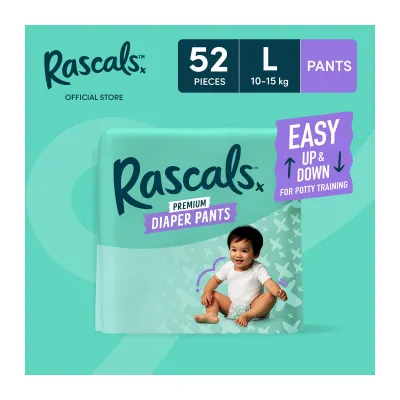
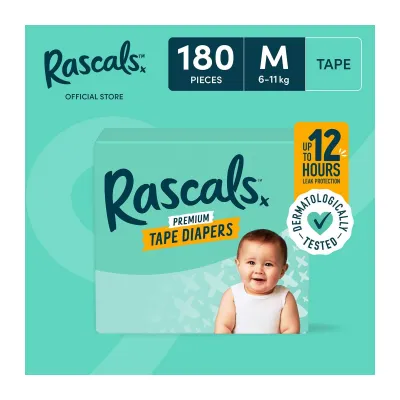
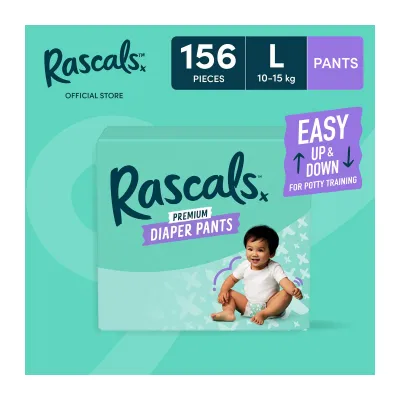
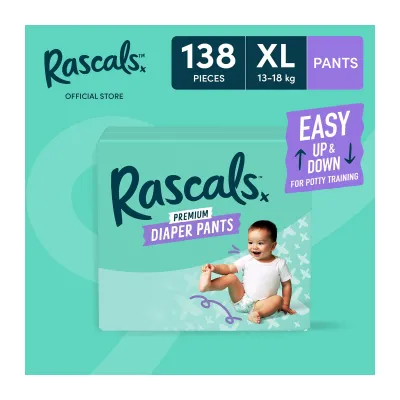
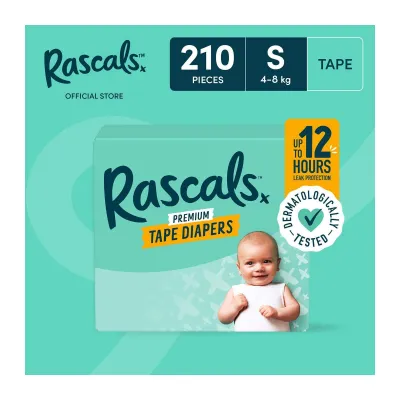
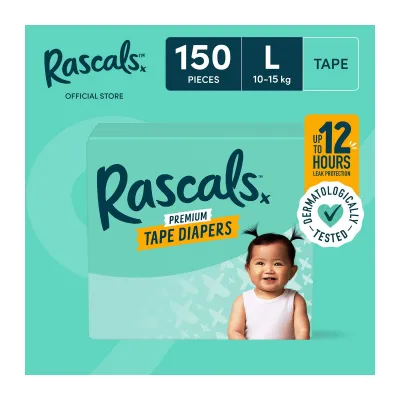
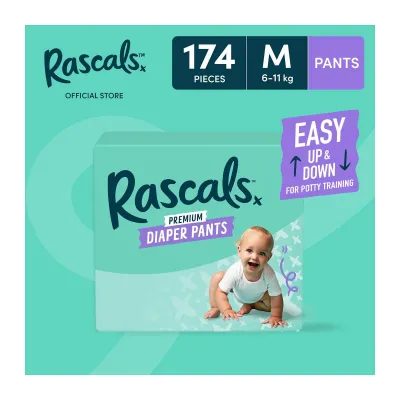
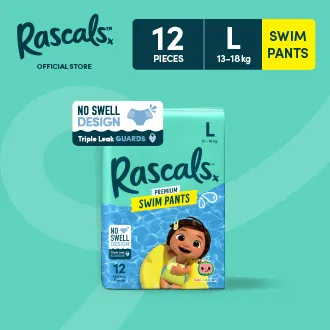
Prices are valid at publication and may change. Please refer to the product page for the latest price.
How to Compare Rascal Against Major Diaper Brands
When evaluating Rascal against the wide array of legacy and premium diaper brands available in Singapore, it is easy to get lost in marketing terminology. To make an objective decision, parents should focus on three main pillars: absorbency, softness, and fit. Packaging claims like “12-hour dryness” or “ultra-breathable” serve as starting points, but the true test lies in understanding the materials used and observing how the diaper performs in daily life. By looking past the branding and focusing on structural features and label details, you can make a clear comparison that suits your baby’s needs.
Evaluating Absorbency and Leak Protection
Absorbency is the core function of any diaper, especially during long overnight stretches or active daytime play. To evaluate how Rascal compares to other brands in this area, you must look at the internal construction of the diaper. Most modern disposable diapers, including Rascal and its competitors, rely on Superabsorbent Polymers (SAP) to lock away moisture. SAP consists of tiny beads that turn into a gel when they come into contact with liquid, keeping wetness away from your baby’s skin. When comparing brands, check the packaging or manufacturer documentation to see if they utilize specialized channel designs or distribution layers that spread wetness evenly rather than letting it pool in one spot.
Beyond the absorbent core, leak protection relies heavily on physical barriers. Look for double leg gussets—the elasticized inner and outer cuffs that wrap around the thighs. These cuffs should stand upright and wrap snugly without digging into the skin. A wetness indicator, which changes color when the diaper is wet, is another helpful feature to look for, though some parents of older toddlers may find it less essential than those of newborns.
To conduct a safe, practical at-home evaluation when testing Rascal against another brand, observe the diaper after three to four hours of normal wear. Check for excessive sagging, which indicates that the absorbent core is struggling to distribute weight. Gently touch the outer layer of the diaper; if it feels damp or clammy, the outer breathable membrane may be letting too much moisture pass through, which can be particularly problematic in Singapore’s high humidity. Finally, inspect the leg gathers and waistband immediately after a bowel movement to see if the barriers successfully contained the liquid.
Remember that even the most advanced absorbent technology will fail if the diaper is the wrong size. Always prioritize the manufacturer’s weight guidelines over age recommendations when choosing a size. If your baby is approaching the upper limit of a weight range, or if you notice frequent leaks despite a snug fit around the waist, it is usually a sign that you need to size up to ensure adequate absorbency volume.
Assessing Softness and Skin Sensitivity
A baby’s skin is significantly thinner and more delicate than adult skin, making it highly susceptible to irritation, friction, and chemical sensitivities. When comparing Rascal to other popular brands in Singapore, parents must look closely at the materials that come into direct contact with the baby’s skin. Start by reading the ingredient and material labels on the packaging or the manufacturer’s official website. Look for explicit statements confirming that the diapers are free from elemental chlorine, added fragrances, lotions, and common allergens.
It is important to approach marketing terms like “hypoallergenic,” “organic,” or “natural” with a degree of healthy skepticism. These terms are not strictly regulated in the diaper industry and do not guarantee that a product will be completely free from causing skin reactions. Instead, look for independent dermatological certifications or clear statements regarding the absence of specific chemicals, such as phthalates, parabens, and latex.
Because every baby’s skin microbiome is unique, a diaper that works perfectly for one child might cause a reaction in another. When introducing Rascal or any other new brand, always perform a careful, real-world monitoring process. During the first few days of use, check your baby’s skin at every diaper change. Look closely at the waistband and thigh areas where friction is highest, as well as the diaper area itself.
If you observe persistent redness, a raised rash, or signs of discomfort, stop using the new diaper immediately and revert to your previous trusted brand. If the irritation does not subside within 24 to 48 hours, or if it appears to worsen, consult a qualified pediatrician. Never attempt to treat a severe or persistent diaper rash with over-the-counter creams without professional medical advice, as the rash could be a sign of a yeast infection or a specific contact allergy that requires targeted treatment.
Checking Fit, Sizing, and Mobility
The physical cut of a diaper plays a massive role in both leak prevention and your baby’s comfort. Different brands use distinct sizing philosophies; some are cut narrow and long, while others are wider and high-waisted. Rascal is widely recognized for its generous, high-rise fit and wide elastic waistband, which contrasts with the slimmer, more traditional cuts of many legacy brands popular in Singapore.
When comparing the fit of Rascal against other options, pay close attention to the waistband and side panels. A good waistband should offer significant elasticity, allowing it to stretch comfortably as your baby’s stomach expands after feeding, while still returning to a secure fit to prevent “up-the-back” blowouts. The side tabs or tape should be sturdy, repositionable, and smooth, with no sharp edges that could scratch the baby’s skin. For older babies who are transitioning to diaper pants, the 360-degree stretch of the waistband is critical for easy changes on an active child.
Mobility is another essential factor to evaluate, particularly as your baby begins to roll, crawl, cruise, and walk. A diaper should move naturally with your baby’s body. If a diaper is too bulky between the thighs, it can restrict movement or cause the baby to waddle unnaturally. Conversely, if the leg gathers are too loose, gaps will form as the baby moves, leading to inevitable leaks.
After your baby has been active for a few hours, inspect their skin during a diaper change. Look for deep red marks or indentations around the waist and inner thighs. Mild, temporary marks similar to the impression left by socks are normal, but deep, dark red grooves indicate that the diaper is too tight, the elastic is too stiff, or the cut is incompatible with your baby’s body shape. If you notice these marks, try adjusting the tabs to a looser setting, or consider switching to a brand with a softer, more pliable elastic structure.
Calculating Price and Value in Singapore
In Singapore, diapering is a significant ongoing household expense that can span several years. When comparing Rascal to other brands, looking solely at the price tag on a single pack can be highly misleading. Pack counts vary dramatically between brands, sizes, and diaper formats (such as tape versus pants). To establish the true financial impact, you must calculate the cost-per-diaper.

To do this, divide the total price of the pack by the number of diapers inside. For example, if a pack of size M tape diapers costs S$22.00 and contains 64 diapers, the cost-per-diaper is approximately S$0.34. If a competing premium brand costs S$26.00 for a pack of 50, the cost-per-diaper rises to S$0.52. Over the course of a year, where a baby might go through 2,000 to 2,500 diaper changes, this difference of S$0.18 per diaper adds up to a substantial saving of S$360.00 to S$450.00.
To find the best value, parents in Singapore should compare prices across multiple retail channels. While physical supermarket chains and local pharmacy stores offer the convenience of immediate purchase, online marketplaces and specialized baby retailers frequently offer competitive pricing, especially when buying in bulk. Keep in mind that prices are transacted in SGD and can fluctuate regularly due to promotional events, import costs, and changing stock levels.
When evaluating overall value, factor in secondary costs and savings. Many online retailers offer subscription models that provide a percentage discount for recurring deliveries, which also saves you the physical effort of transporting bulky diaper boxes home. Look out for bulk-buy discounts (such as “buy three get one free” promotions), store membership rewards, and credit card rebates. Additionally, remember to calculate shipping fees; a low pack price can quickly lose its appeal if high delivery charges are added at checkout. Always verify the final total, including delivery and taxes, before completing your purchase.
Decision Framework: Which Diaper Should You Choose?
To make your final decision between Rascal and other popular diaper brands in Singapore, it is helpful to use a structured, conditional framework based on your baby’s specific needs and your household priorities.
Choose Rascal if:
- Your baby has a rounder belly or chunkier thighs that benefit from a high-rise cut and a wide, highly elastic waistband.
- You prefer a minimalist, clean design without heavy cartoon prints or strong added fragrances.
- Your calculated cost-per-diaper for Rascal fits comfortably within your monthly parenting budget, and you are satisfied with purchasing your diapers primarily through online baby retailers or major delivery platforms.
Choose established legacy brands if:
- Your baby has highly sensitive skin that has responded well to specialized, clinically tested dermatological formulations offered by medical-grade or heritage brands.
- You value the convenience of being able to purchase a replacement pack of diapers in your exact required size at almost any physical supermarket, neighborhood minimart, or 24-hour convenience store across Singapore.
- Your baby's body shape is long and lean, meaning that wider, high-rise cuts tend to bunch up or leave gaps around the legs.
Neither brand may fit if:
- Your baby consistently experiences leaks, blowouts, or severe sagging despite you strictly following the manufacturer's weight guidelines and ensuring a snug fit.
- You notice persistent red friction marks around the waist or thighs that do not resolve even after sizing up or adjusting the tabs. In these cases, you may need to explore different structural designs—such as transitioning from tape diapers to diaper pants—or look into alternative niche brands with different elastic configurations.
Verify first if:
- Your baby has a diagnosed skin condition, such as severe eczema, psoriasis, or known contact allergies to specific synthetic materials. In these scenarios, do not rely on standard retail packaging claims. Always consult your pediatrician or a pediatric dermatologist to obtain a list of safe material specifications before introducing any new diaper brand to your baby's routine.
Frequently Asked Questions (FAQ)
How do I safely transition my baby to a new diaper brand?
To safely transition your baby to Rascal or any other diaper brand, start by purchasing a single small pack or obtaining trial samples rather than buying in bulk. This minimizes financial waste if the diaper proves incompatible with your baby’s skin or body shape. Begin the transition by using the new diaper exclusively during the day. Daytime use allows you to change the diaper more frequently and closely supervise your baby, making it easier to spot early signs of redness, chafing, or leaks. Avoid using the new brand for long overnight stretches until you have successfully used it during the day for at least three to four consecutive days without any adverse skin reactions or structural failures. If you observe any irritation, immediately halt the transition and return to your previous brand.
Does a higher price always mean better absorbency?
No, a higher retail price does not automatically guarantee superior absorbency. The core absorbent component in almost all modern disposable diapers is Superabsorbent Polymer (SAP), which is highly effective and widely used across both budget-friendly and premium price tiers. When a diaper carries a premium price tag, you are often paying for specialized features such as ultra-soft outer cover materials, proprietary channel designs that distribute wetness more evenly, independent dermatological certifications, or advanced wetness indicators. While these features can enhance overall comfort and convenience, basic leak protection depends far more on how well the diaper’s physical cut fits your baby’s specific anatomy and weight. A well-fitting, mid-priced diaper will almost always outperform an expensive premium diaper that is poorly sized or incompatible with your baby’s body shape.

Community discussion
Share your experience or ask a question. Comments are reviewed before publication.