
As your baby begins to crawl and explore, securing your home’s electrical outlets becomes an immediate priority. Electrical sockets sit right at eye level for a curious toddler, presenting an obvious hazard that requires reliable protection. However, choosing the right childproofing solution is not always straightforward, as different outlets in your home serve different purposes.
There is no single best plug protector for every situation; the right choice depends on how often you use the outlet, the size of the connected plugs, and your child’s developmental stage. By matching the right protective device to each specific socket, you can create a secure environment without making your daily household routines unnecessarily difficult.
Quick Answer: Which Plug Protector Should You Choose?
To secure your home efficiently, you must evaluate how each outlet is used on a daily basis. Sockets that are permanently empty require a different approach than those powering your television, kitchen appliances, or phone chargers.
Products mentioned in this guide
![[Local Seller!] Baby Safety Electrical UK 3pin Power Outlets Socket Cover Plug Caps Japan Brand KM1037 - 5pcs](https://img.lazcdn.com/g/p/ea9601dbec0eaea46fd1122e080ef0b2.jpg_400x400q80.jpg_.webp)
Prices are valid at publication and may change. Please refer to the product page for the latest price.
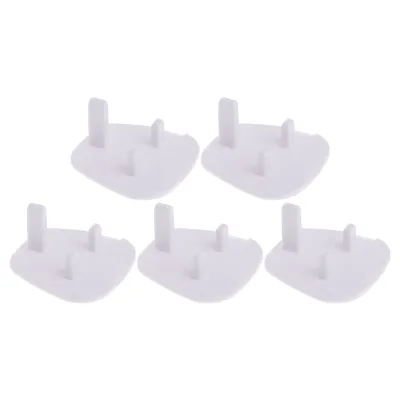
For outlets that are rarely or never used, simple plug protector caps provide a cost-effective barrier. If you have outlets that you access daily for vacuuming or charging devices, sliding socket covers offer the best balance of safety and convenience. For heavy-duty plugs or stationary appliances with cords that remain plugged in, full outlet box enclosures are the most secure option to prevent children from pulling on cables.
Before purchasing any childproofing accessories, it is essential to verify their physical compatibility with the local Type G outlets commonly found in Singapore homes. These three-pin sockets have distinct dimensions and often feature individual power switches that standard international protectors may not accommodate.
Understanding the Three Main Types of Plug Protectors
To build an effective childproofing strategy, you first need to understand how the three primary types of protectors function. Each style uses a different physical mechanism to block access to live electrical contacts.

Plug Protector Caps (Inserts)
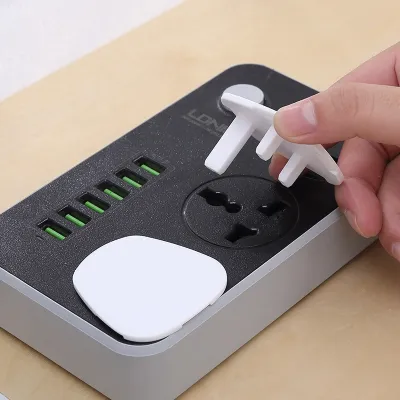
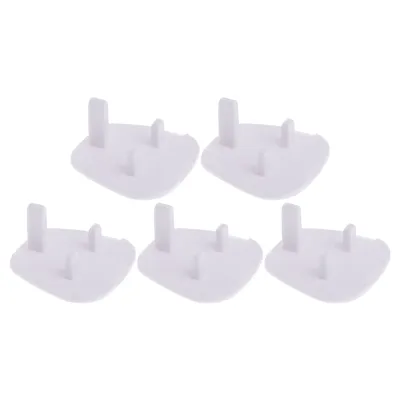
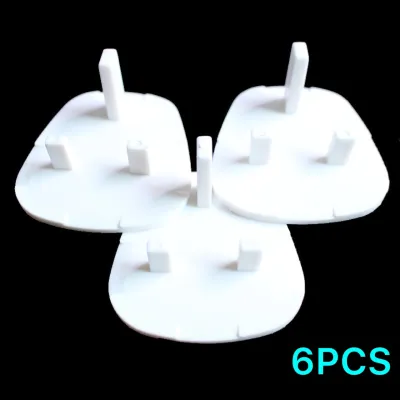
Plug protector caps, often referred to as socket inserts, are individual plastic pieces designed to push directly into the open holes of an electrical outlet. They function as a physical barrier, blocking small fingers or foreign objects from making contact with the internal wiring.
These inserts must be completely pried out of the socket whenever you need to plug in an appliance. Because removing them requires a fair amount of grip strength or a specialized removal tool, they are highly effective at keeping toddlers out, but they can be tedious to manage on a daily basis.
When choosing these inserts, it is critical to check the manufacturer’s specifications for physical size and choke-test compliance. Because these caps are completely detached when the outlet is in use, they can easily be misplaced and become a potential hazard if left within a child’s reach.
Sliding Socket Covers (Plate Replacements)
Sliding socket covers are faceplates or overlays that fit over your existing wall outlet. They feature a spring-loaded mechanism that keeps the socket holes covered when no plug is inserted.
To use the outlet, you place the prongs of your plug against the cover, slide it horizontally or vertically to align with the internal holes, and push the plug all the way in. When you unplug the appliance, the cover automatically slides back into its closed position, instantly securing the live contacts.
These covers are ideal for high-traffic areas where you frequently need to plug and unplug devices. Before buying, you must measure your existing wall plates and check the screw placements to ensure the replacement plate aligns perfectly with your home’s electrical fittings.
Full Outlet Box Enclosures
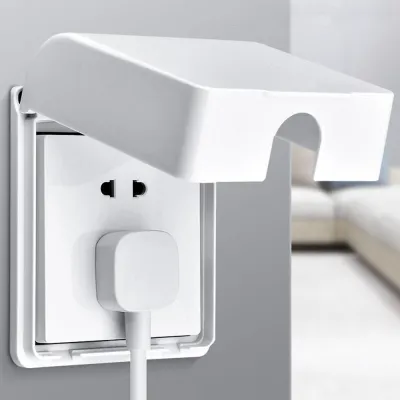
Full outlet box enclosures are protective plastic shields that cover both the entire wall socket and any plugs currently inserted into it. They create a locked or latched chamber around the electrical connection.
Inside the box, there is sufficient space to accommodate the plug head and a portion of the cable, which exits through a small, secure opening at the bottom. This design prevents toddlers from pulling plugs out of the wall or attempting to play with the exposed prongs of a partially unplugged cord.
Because of their bulky profile, these boxes are highly visible and extend several centimeters from the wall. They are best suited for fixed appliances, such as refrigerators, washing machines, or home entertainment systems, especially when these outlets are located behind furniture.
Key Comparison Dimensions for Childproofing
Selecting the right protector requires weighing several practical factors. You must balance physical security against the daily realities of managing a busy household.
Safety and Tamper Resistance
Evaluating safety requires looking at how easily a child can bypass or remove the protective barrier. Persistent toddlers often develop the fine motor skills to pry out loose plug caps, especially if the caps have worn down over time or do not fit snugly into the socket.
To mitigate this risk, always verify the physical dimensions of the caps on the product packaging to ensure they cannot be easily swallowed. If a child successfully removes a cap, it immediately becomes a serious choking hazard.
Sliding covers offer a higher level of tamper resistance because they require a coordinated, two-step motion to open. Outlet boxes provide the highest level of physical security, as they completely enclose the plug and offer cable strain relief, preventing children from tugging on dangerous cords.
Compatibility With Type G Outlets and Bulky Plugs
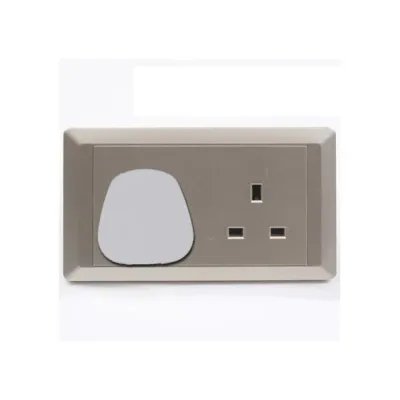
Singapore homes primarily use Type G electrical outlets, which feature three flat, rectangular pins arranged in a triangle. Many of these wall plates also include individual rocker switches to turn the power on and off at the wall.
Standard plug protectors designed for international markets often fail to fit Type G sockets properly. For example, some sliding covers may block the manual power switch or fail to accommodate the wider footprint of a Type G plug.
Furthermore, bulky plug heads, such as large power adapters, USB charger bricks, or right-angled cables, may not fit inside standard sliding covers or slim outlet boxes. Always check the manufacturer’s diagrams and product packaging to confirm explicit compatibility with Type G configurations.
Daily Convenience and Aesthetics
Your childproofing choices will directly impact your daily routine. Using plug caps on an outlet you access multiple times a day quickly becomes frustrating, as you must constantly find a safe place to store the loose caps while the outlet is active.
Sliding covers offer excellent convenience, requiring no extra parts to store or manage. However, they do require a bit of technique to slide and insert the plug simultaneously, which can sometimes feel stiff or awkward with certain plug designs.
Outlet boxes are the least aesthetically pleasing option due to their size, and they can prevent you from pushing sofas or cabinets flush against the wall. Additionally, dust and grime can accumulate in the sliding tracks of covers or around the seals of enclosure boxes, requiring periodic cleaning to maintain smooth operation.
Decision Framework: Matching Protectors to Your Needs
To finalize your childproofing plan, use these clear, condition-based rules to choose the right protector for each outlet in your home:
- Choose Plug Protector Caps if: The outlet is located in a low-traffic area, is rarely or never used, and you can guarantee that any removed caps will be stored immediately in a secure, high cabinet out of your child's reach.
- Choose Sliding Socket Covers if: The outlet is used daily for temporary appliances, you prefer a clean and seamless visual appearance, and you primarily use standard-sized plugs without bulky transformer blocks.
- Choose Full Outlet Box Enclosures if: The outlet powers a stationary appliance that remains plugged in constantly, the plug head is unusually large, or you need to prevent a toddler from pulling on the power cable.
- Verify First if: You are renting your home and are restricted from replacing wall plates, or if your outlets are located in damp environments like kitchens or bathrooms, where you must ensure the protector does not compromise the outlet's moisture protection.
Installation Guidelines and Ongoing Safety Checks
Proper installation is just as important as choosing the right product. Simple insert caps require no tools, but other solutions demand careful handling to avoid electrical hazards.
For surface-mounted adhesive covers or simple plug inserts, installation is straightforward and does not require touching any internal wiring. However, if you are installing replacement faceplates or hardwired sliding covers, you must turn off the main power at your home’s circuit breaker before starting, or consult a licensed electrician to perform the installation safely.
Once installed, establish a routine to perform regular visual and physical checks on all protectors. Inspect the plastic for signs of wear, hairline cracks, or loose fittings that could allow a child to pry the protector loose.
Your clear stop-use condition is simple: immediately remove and replace any plug protector that shows signs of physical damage, fails to sit completely flush against the wall, or can be easily removed by your child. Protecting your home is an ongoing process that requires adjusting your gear as your child grows more active and curious.
Frequently Asked Questions (FAQ)
Are plug protector caps a choking hazard for toddlers?
Yes, poorly designed or loose plug protector caps can pose a serious choking hazard. If a toddler manages to pry a cap out of an outlet, the small plastic piece can easily be placed in their mouth.
To minimize this risk, always check the manufacturer’s packaging for explicit age-safety warnings or compliance with choke-tube testing standards. If you notice your child showing interest in the caps or attempting to pull them out, transition immediately to sliding socket covers or full outlet boxes.
Do I need to turn off the main power to install socket covers?
It depends on the specific type of cover you are installing. Simple surface-mounted covers that attach using adhesive backings do not require you to turn off the power, as they do not involve removing any part of the existing electrical fixture.
However, if you are installing replacement wall plates or any cover that requires unscrewing the existing faceplate, you must turn off the main power at the circuit breaker. If you feel unsure about handling the installation or working around your home’s electrical wiring, always consult a qualified electrician to complete the job safely.

Community discussion
Share your experience or ask a question. Comments are reviewed before publication.