
Choosing the right baby food maker depends on your specific meal preparation style. If you prioritize an all-in-one machine that steams and blends in a single container, dedicated baby food makers are highly convenient. However, if your goal is precision texture control, high-powered blending, and long-term utility for the whole family, a high-speed heating blender like the Plodon high-speed blender (plodon 破壁机) offers distinct advantages. The ideal choice hinges on matching motor capabilities, blade design, and container capacity to your weekly routine. Always verify specific motor wattage, material safety labels, and age-appropriateness warnings on the product packaging before purchasing.
Matching Blender Functions to Your Baby's Feeding Stages
A baby’s nutritional and developmental needs change rapidly in their first year of life. The appliance you choose must be versatile enough to transition from ultra-smooth liquids to textured mash, and eventually to chunky finger foods. Caregivers should consult a pediatrician before introducing solids, ensuring the child shows signs of developmental readiness, such as head control and interest in food.
Stage 1: Smooth Purees (6-8 Months)
During the initial stage of weaning, infants require completely smooth, lump-free purees to minimize choking hazards. The mechanical requirement here is high-speed pulverisation. When evaluating a Plodon high-speed blender (plodon 破壁机) or other baby food makers, pay close attention to the minimum blending volume and the proximity of the blades to the bottom of the jar. Standard kitchen blenders often require a large volume of food to blend effectively; otherwise, small batches of single-ingredient purees like spinach or sweet potato get trapped underneath the blades, resulting in uneven chunks. Look for models with multi-dimensional blade configurations that sweep close to the base. Caregivers must verify the manufacturer’s recommended processing times for hard root vegetables, ensuring they are fully steamed and softened before blending to protect the motor from damage.
Products mentioned in this guide
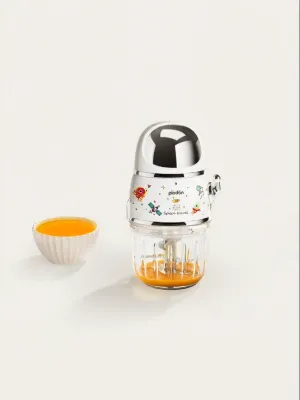
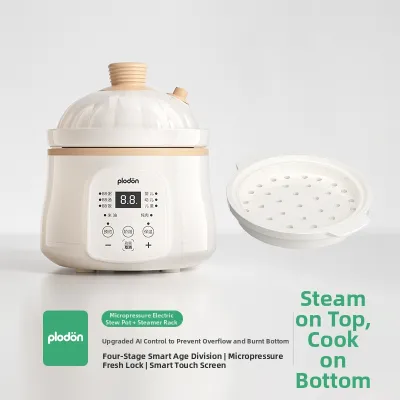
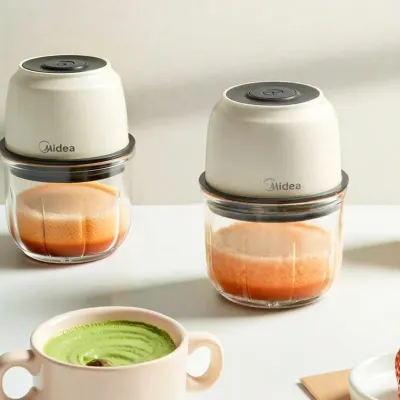
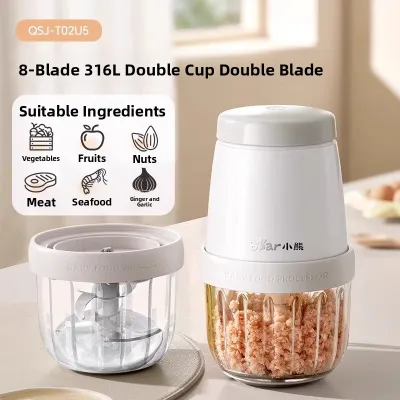
Prices are valid at publication and may change. Please refer to the product page for the latest price.
Stage 2: Mashed and Minced Textures (8-10 Months)
As infants develop their chewing and swallowing skills, they must transition away from liquid purees to coarser, mashed textures. This stage requires precise mechanical control over the blending process. Instead of continuous high-speed pulverisation, you need a reliable pulse function or variable speed controls that allow you to mince ingredients without liquefying them. Check if the brand offers dedicated “pulse” or “mince” settings, or if it includes interchangeable blades and bowl inserts specifically designed for coarser textures. Over-processing at this stage can delay the baby’s acceptance of solid textures, so having manual control over the duration and speed of the blades is essential.
Stage 3: Chunky and Finger Foods (10-12+ Months)
By the time your baby reaches late infancy, their diet will consist of chunky foods, soft pieces, and finger foods that resemble family meals. At this stage, a small-capacity, single-purpose baby food maker may begin to outlive its primary utility. Caregivers should evaluate whether the appliance can transition into a standard kitchen tool. A high-power blender, such as a Plodon high-speed blender (plodon 破壁机), offers excellent long-term utility because it can easily handle larger batches of family meals, such as smooth soups, sauces, nut milks, and dips. In contrast, a small, low-wattage steamer-blender may struggle with larger, tougher ingredients and eventually sit unused in your kitchen cabinet once the baby transitions fully to family table foods.
Plodon vs. Other Brands: Core Features to Compare
To make an informed decision, you must compare technical specifications rather than relying on marketing claims. Let’s look at how high-speed heating blenders compare to traditional baby food makers across three critical dimensions.

Blending Power and Texture Control
Compare the motor wattage and blade construction carefully. High-speed blenders typically feature motors ranging from 800 to over 1,200 watts, paired with heavy-duty, food-grade stainless steel blades. This power allows them to break down tough cell walls in vegetables and grains, achieving an exceptionally smooth consistency. Traditional baby food makers often operate on lower wattage (usually between 150 and 400 watts), which is sufficient for soft, steamed foods but may struggle with raw, fibrous, or dry ingredients. However, higher wattage alone does not guarantee superior performance. You must also check the bowl geometry; if the container is too wide or lacks physical ridges (flow disruptors) to push ingredients back toward the blades, the food will simply cling to the walls, leaving unblended chunks.
Steaming and All-in-One Convenience
The primary trade-off between an all-in-one steam-and-blend baby food maker and a standalone high-speed blender is convenience versus versatility. All-in-one models allow you to steam raw ingredients and blend them in the same cup, minimizing dirty dishes and saving counter space. However, these machines require meticulous maintenance. The integrated water tanks are prone to mineral scale buildup, especially in areas with hard water, requiring regular descaling with food-grade citric acid or vinegar. Standalone high-speed blenders, including many heating models, do not have separate steam baskets but can cook food directly using an integrated heating element at the base of the jar. If you choose a model without an integrated heating or steaming function, you will need to steam the ingredients on a separate stovetop or microwave setup before transferring them to the blender.
Capacity and Batch Preparation
Your meal preparation strategy should dictate the capacity of the appliance you choose. Small-capacity baby food makers (typically 300ml to 800ml) are ideal for preparing fresh, single-portion meals daily. They excel at processing very small quantities of food without waste. However, if you prefer batch-cooking and freezing a week’s worth of purees in silicone trays, a larger-capacity appliance is essential. High-speed blenders often feature jars ranging from 1.2 to 1.75 litres, allowing you to prepare massive batches of baby food or family-sized meals in a single run. Always check the manufacturer’s specified minimum and maximum fill lines; running a blender below its minimum fill line can cause the blades to spin dry, overheating the motor, while exceeding the maximum line can lead to dangerous overflows of hot liquids.
Decision Framework: Which Brand Setup Fits Your Routine?
To help you decide between a high-speed heating blender like a Plodon model and a traditional steam-and-blend baby food maker, consider the following conditional scenarios:
- Choose an all-in-one steam-and-blend model if:
- You prefer to make fresh, single-serving meals daily.
- You want to minimize the number of pots and pans used during prep.
- Your kitchen has limited counter space, and you prefer a compact, dedicated appliance.
- You do not plan to use the appliance for general family cooking once your baby transitions to solid table foods.
- Choose a high-speed heating blender (such as a Plodon blender) if:
- You practice batch-cooking and freeze multiple portions of baby food at once.
- You require ultra-fine purees (especially for grains, beans, or fibrous vegetables) that low-wattage motors cannot achieve.
- You want a versatile, multi-functional appliance that can prepare hot soups, soy milk, smoothies, and sauces for the entire family.
- You prefer a glass or high-grade stainless steel container over plastic blending jars.
Before making any purchase in Singapore, verify if replacement parts—such as silicone sealing rings, replacement blades, and steam baskets—are readily available from local distributors or online marketplaces. Over time, sealing rings can degrade or harbor odors, and being able to source genuine replacements locally will significantly extend the lifespan of your appliance.
Safety, Materials, and Cleaning Checks to Verify First
When preparing food for infants, safety and hygiene are paramount. Always check that any appliance you purchase complies with local safety regulations. In Singapore, look for the Enterprise Singapore Safety Mark on the plug or the appliance itself to ensure it has been tested for electrical safety.
Examine the material composition of all parts that come into contact with food. Ensure that plastic components are explicitly labeled as BPA-free, and that any glass or stainless steel components are food-grade (such as 304 or 316 stainless steel). Avoid appliances with cheap plastic jars that may degrade or leach chemicals when exposed to high temperatures during steaming or heating.
Cleaning is another critical safety factor. Verify whether the blades, sealing rings, and lids can be completely disassembled for manual cleaning or if they are dishwasher-safe. Poorly designed lids and non-removable blade assemblies often have hidden crevices where food particles can accumulate, leading to mold and bacterial growth in Singapore’s warm, humid climate. If a model features a “self-cleaning” or pulse-clean mode, remember that this is only a preliminary rinse; you must still manually disassemble and dry the parts thoroughly to prevent bacterial contamination.
Finally, always read the manufacturer’s instruction manual regarding maximum continuous run times. High-speed motors can overheat quickly if run continuously for more than a few minutes, which can damage the motor or melt internal plastic gears. Never leave a running blender unattended, and always allow the motor to cool down completely between blending cycles. If you notice any unusual burning smell or excessive heat from the base, stop use immediately and contact the manufacturer’s service center.

Community discussion
Share your experience or ask a question. Comments are reviewed before publication.