
Pigeon milk bottle detergent is a popular choice for cleaning baby feeding equipment, but determining its safety and suitability requires a close look at its specific ingredients, regional formulations, and proper usage. Because chemical formulations can vary by region and product line, verifying the exact label on your physical bottle is the most reliable way to ensure it meets your safety standards.
Standard household dishwashing liquids are often formulated to strip heavy grease from adult cookware, frequently relying on strong synthetic surfactants, artificial colorants, and intense fragrances. These ingredients can leave behind a microscopic chemical film that is difficult to rinse away completely, posing a potential risk of ingestion for infants whose digestive and immune systems are still developing. A dedicated baby bottle cleanser, such as the one offered by Pigeon, aims to address this concern by utilizing milder, often plant-derived cleaning agents that rinse off more easily.
However, safety is not an absolute guarantee inherent in a brand name alone. The safety of any bottle detergent depends heavily on how it is formulated, how thoroughly it is rinsed, and whether the caregiver follows the manufacturer’s instructions. By understanding how to read the ingredient list, verifying safety certifications, and executing proper washing and sterilization protocols, you can confidently maintain a clean and hygienic feeding environment for your infant.
Products mentioned in this guide
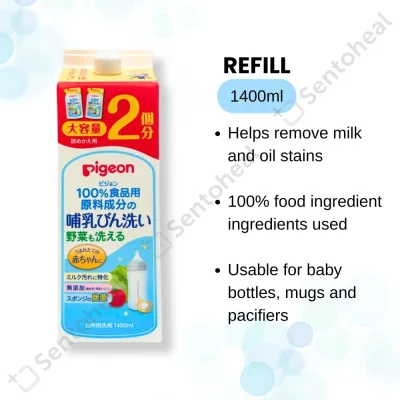
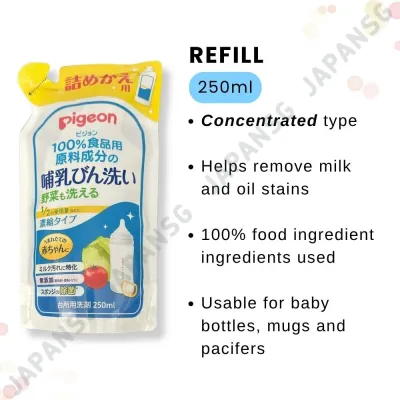
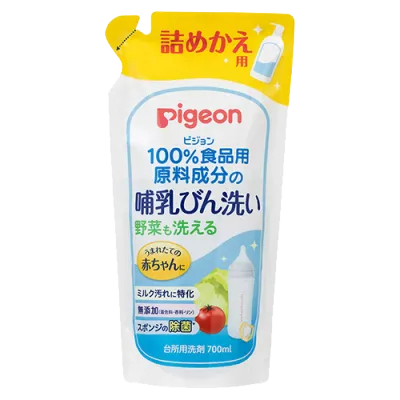
Prices are valid at publication and may change. Please refer to the product page for the latest price.
Identifying Core Ingredients on the Product Label
To evaluate the safety of Pigeon milk bottle detergent, your first step should always be to inspect the ingredient list printed on the back of the packaging or detailed on the official brand website for your specific region. Formulations are frequently updated or customized for different international markets to comply with local chemical regulations and consumer preferences. Consequently, a bottle purchased in Singapore may have a slightly different ingredient profile than one sourced from another country, making direct label inspection indispensable.
When reading the label, look closely at the primary surfactants, which are the active cleaning agents responsible for lifting dirt and oils. Plant-derived surfactants are commonly preferred in baby detergents due to their gentle nature. These are often identified by chemical names indicating their natural origins, such as those derived from coconut or palm oil (for example, decyl glucoside, coco-glucoside, or lauryl glucoside). If the label lists synthetic surfactants like sodium lauryl sulfate (SLS) or sodium laureth sulfate (SLES), note that while these are highly effective foaming agents, they can sometimes be more drying to the caregiver’s hands or require more rigorous rinsing to ensure no residue remains.
In addition to identifying the active cleaning agents, caregivers should actively verify the absence of harsh chemical additives that are unnecessary for cleaning baby bottles. Check the label to ensure the formula is free from synthetic dyes, which are added purely for aesthetic appeal, and strong artificial fragrances that can cling to silicone teats and alter the taste of milk. Phosphates, which are sometimes used in industrial detergents to soften water but can cause environmental harm, and parabens, which serve as synthetic preservatives, should also be absent from a high-quality baby bottle cleanser.
Verifying Safety Standards for Baby Feeding Items
Evaluating the safety profile of a bottle detergent involves looking for specific, verifiable claims and certifications on the packaging. Many baby bottle cleansers feature terms such as “food-grade,” “food-contact safe,” or “100% food-grade ingredients.” These designations indicate that the ingredients used in the formulation are cleared for contact with items that enter the mouth, offering reassurance that minor, microscopic traces left after rinsing are highly unlikely to cause harm. However, caregivers should look for official regulatory marks or independent testing seals rather than relying solely on marketing text.

For caregivers who spend significant time hand-washing bottles, the detergent’s impact on skin health is another crucial safety consideration. Look for labels indicating that the product has been “dermatologically tested” or is “hypoallergenic.” In Singapore’s warm and humid climate, frequent hand-washing can strip the skin of its natural moisture, leading to contact dermatitis or eczema flare-ups. A dermatologically tested formula is verified to minimize skin irritation, making the washing process much more comfortable for parents and helpers alike.
Furthermore, you must cross-reference the detergent’s instructions with the specific materials of your baby’s feeding gear. Baby bottles are manufactured from a variety of materials, including borosilicate glass, polypropylene (PP), polyphenylsulfone (PPSU), and food-grade silicone. While glass is highly resistant to chemical degradation, certain plastics and silicones can degrade, discolor, or absorb odors if exposed to incompatible cleaning agents or excessive soaking. Check the manufacturer’s warnings on both the detergent bottle and your feeding equipment to ensure compatibility, preserving the structural integrity and lifespan of your bottles.
Assessing Effectiveness Against Milk Fat and Protein Residue
Breast milk and infant formula are complex emulsions rich in lipids (fats) and proteins, which naturally adhere to the inner surfaces of bottles, teats, and pump parts. Standard water alone cannot break down these stubborn organic bonds, often leaving behind a greasy, translucent film. Baby-specific detergents utilize specialized surfactants that lower the surface tension of water, allowing it to surround, emulsify, and lift these fat globules and protein chains away from the bottle walls so they can be easily flushed away during rinsing.
To determine if your detergent is performing effectively, you should rely on clear, observable indicators rather than assumptions. After washing and drying, inspect the bottles under direct light. A successful wash will leave the bottle walls completely clear, with no visible cloudy film, white residue, or water beading, which typically indicates remaining grease. Additionally, perform a smell test: there should be absolutely no lingering sour milk odors or strong chemical perfume scents, both of which suggest that organic residue or detergent film is still present on the surface.
If you notice a persistent cloudy buildup or a sticky biofilm—which can harbor harmful bacteria—you may need to adjust your washing technique rather than simply using more detergent. Pre-soaking feeding items in warm water immediately after use prevents milk proteins from drying and hardening against the plastic. Utilizing a dedicated, soft-bristled bottle brush and a smaller teat brush ensures that mechanical friction reaches every crevice, particularly the hard-to-clean collar threads and the tip of the silicone nipple where residue tends to accumulate.
Proper Dilution, Washing, and Rinsing Protocols
To ensure that no chemical residue remains on your baby’s feeding items, it is vital to follow precise dilution and washing protocols. Many caregivers mistakenly apply concentrated detergent directly onto a bottle brush, which can lead to excessive sudsing and make thorough rinsing incredibly difficult. Instead, consult the product label for the manufacturer’s recommended dilution ratio. Typically, this involves mixing a small, measured pump of detergent with a specific volume of warm water in a clean basin, creating a mild soapy solution that is highly effective yet easy to rinse away.
Rinsing is perhaps the most critical step in the entire cleaning process. Every washed item must be rinsed thoroughly under clean, running water. Caregivers should rub the surfaces of the bottles and teats with clean fingers while rinsing; any slippery or soapy sensation indicates that detergent residue is still present. Continue rinsing until the surfaces feel completely squeaky-clean to the touch. In Singapore, where water efficiency is highly valued, using a dual-basin method—one for washing and a continuous stream or clean bath for rinsing—can help achieve a residue-free finish efficiently.
It is equally important to understand the distinction between cleaning and sterilizing. Pigeon bottle detergent is designed to clean by removing organic soils, grease, and surface bacteria, but it does not sterilize the equipment. Once the bottles are thoroughly washed and rinsed, they must undergo a sterilization process—such as steam, boiling water, or UV sterilization—to eliminate any remaining pathogens. Always consult your pediatrician or local health guidelines to determine the appropriate sterilization frequency based on your baby’s age, health status, and developmental stage.
Frequently Asked Questions (FAQ)
Can I use Pigeon bottle detergent to wash fruits and vegetables?
Whether you can use this detergent for fresh produce depends entirely on the specific formulation and labeling of the bottle you have purchased. Some versions of Pigeon bottle cleanser are explicitly labeled as multi-purpose washes suitable for bottles, toys, and fruits or vegetables, backed by food-grade ingredient certifications. If your physical bottle explicitly states it is safe for fruit and vegetable washing, you may use it according to the dilution instructions provided on the label, ensuring you rinse the produce thoroughly under running water for at least thirty seconds. However, if your bottle’s packaging only specifies use for baby bottles and feeding accessories, you should avoid using it on food items, as the formulation may not be intended for direct ingestion.
What should I do if my baby shows signs of irritation after using washed bottles?
If your infant exhibits signs of oral irritation, unexplained fussiness during feeding, or skin redness around the mouth after using washed bottles, you should take immediate precautionary steps. Stop using the detergent immediately and thoroughly re-wash all feeding equipment, pacifiers, and pump parts using plain, hot water and a clean brush, followed by a full sterilization cycle to remove any potential chemical residues. Monitor your baby closely and consult a qualified pediatrician for a professional medical evaluation to determine the exact cause of the irritation. Do not attempt to self-diagnose the issue or assume it is solely caused by the detergent, as infant sensitivities can stem from a wide range of environmental, dietary, or dermatological factors.

Community discussion
Share your experience or ask a question. Comments are reviewed before publication.