
Selecting the right laundry detergent for your baby involves looking closely at the ingredient list on the back of the packaging. When evaluating a product like the Pigeon liquid detergent refill, parents often seek a balance between effective stain removal and gentle care for delicate skin. Infant skin is significantly thinner, more permeable, and less oily than adult skin, making it highly susceptible to irritation from harsh chemical residues left on clothing fibers. Choosing a liquid refill is a practical, eco-friendly, and cost-effective way to keep up with the endless cycles of baby laundry, but understanding what goes into the formula is key to protecting your child’s developing skin barrier.
While specific formulations can vary slightly by region and product line, baby-specific detergents generally rely on mild surfactants, targeted enzymes, and gentle stabilizers to lift tough milk, food, and bodily fluid stains. By learning how to decode these ingredient lists, you can make informed purchasing decisions that keep your baby’s clothes clean, soft, and safe to wear.
Understanding Common Ingredients in Baby Detergents and Their Functions
To evaluate any baby detergent effectively, it helps to understand the primary classes of ingredients used in these formulations and how they behave during the wash cycle. Every ingredient serves a specific purpose, from breaking down organic soils to keeping the liquid stable on your laundry shelf.
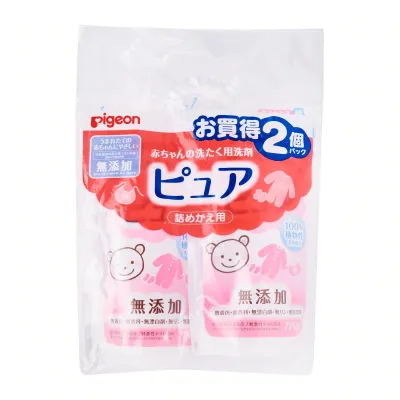
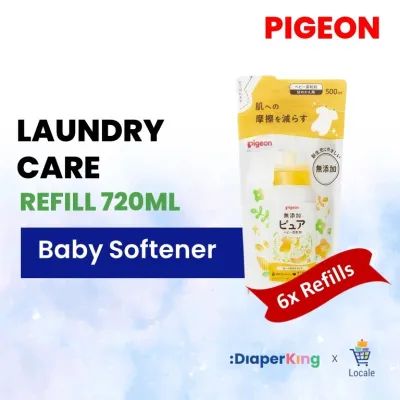
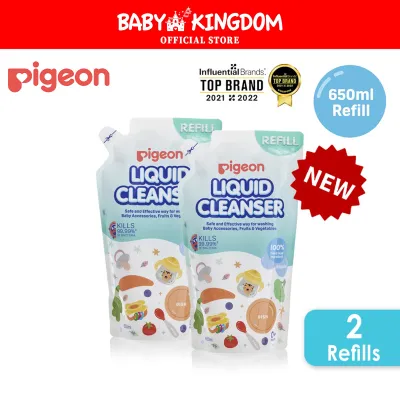
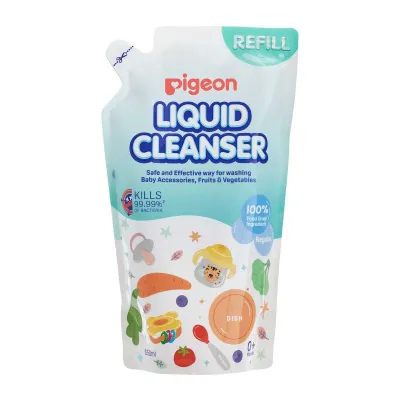
Products mentioned in this guide
![Pigeon Baby Laundry Detergent 450ml Refill [New & Improved]](https://img.lazcdn.com/g/p/a4badfa68bfac414453a403e6bcc3ffa.png_400x400q80.png_.webp)
![[6-Pk] Pigeon Liquid Cleanser Refill 650ml [Exp:2028]](https://img.lazcdn.com/g/p/9b388095b25ffc97428971ef201d38c9.png_400x400q80.png_.webp)
Prices are valid at publication and may change. Please refer to the product page for the latest price.
Surfactants
Surfactants, or surface-active agents, are the core cleaning workhorses of any detergent. They work by lowering the surface tension of water, allowing it to wet fabrics more thoroughly and penetrate deep into fibers. Surfactant molecules have a dual nature: one end is attracted to water (hydrophilic), while the other end is attracted to dirt and oils (hydrophobic). During a wash cycle, the hydrophobic ends attach to milk fats, spit-up, and sebum, while the hydrophilic ends pull the dirt into the wash water to be rinsed away. Baby detergents typically utilize mild, non-ionic or amphoteric surfactants derived from natural sources like coconut or corn. These are chosen because they are less likely to bind to skin proteins and cause irritation compared to the harsh anionic surfactants, such as Sodium Lauryl Sulfate (SLS), commonly found in standard adult detergents.
Enzymes
Enzymes are specialized proteins that act as catalysts to accelerate the breakdown of specific types of organic stains. Because babies are prone to protein-rich stains from breast milk, formula, and spit-up, as well as starch-rich stains from weaning foods, enzymes are highly valuable additions to baby detergents. Protease enzymes target and break down protein stains, amylase enzymes break down starches, and lipase enzymes target fats and oils. By breaking these complex molecules into smaller, water-soluble fragments, enzymes allow surfactants to wash them away easily, often without requiring high water temperatures. While enzymes are highly effective and biodegradable, residual enzymes left on fabric can occasionally irritate babies with extremely sensitive skin or conditions like eczema.
Preservatives and Stabilizers
Liquid detergents contain a significant amount of water, which makes them highly susceptible to microbial growth, including bacteria, mold, and yeast. This is especially true for liquid refill formats that may be stored in warm, humid laundry areas or under-sink cabinets. Preservatives, such as sodium benzoate or phenoxyethanol, are essential to inhibit microbial growth and ensure the product remains safe to use throughout its shelf life. Stabilizers and chelating agents are also added to prevent the ingredients from separating over time and to bind minerals in hard water, ensuring the surfactants can perform optimally.
Fragrances and Dyes
Fragrances and dyes are added to detergents purely for aesthetic appeal. Dyes give the liquid a clean, appealing color, while fragrances mask the natural scent of the raw chemical ingredients and leave a fresh scent on washed clothes. However, synthetic fragrances and artificial colorants are among the most common triggers for contact dermatitis and skin sensitization in infants. For this reason, many high-quality baby detergents are formulated without added dyes, and they either use extremely low levels of hypoallergenic fragrances or are completely unscented.
How to Evaluate Detergent Ingredients for Sensitive Baby Skin
When shopping for a Pigeon liquid detergent refill, reading beyond the marketing claims on the front of the packaging is essential for verifying the product’s suitability for your baby’s skin type.

First, look closely at claims such as “hypoallergenic” or “dermatologically tested.” While these labels indicate that the manufacturer has conducted safety evaluations—often involving patch testing on human volunteers under dermatologist supervision—they are not standardized medical terms. A product labeled hypoallergenic can still contain ingredients that trigger a reaction in a highly sensitive individual. Always cross-reference these claims with the actual ingredient list printed on the back of the refill pouch to check for any known personal irritants.
Next, check the label for the presence of optical brighteners. Optical brighteners are synthetic chemicals designed to absorb ultraviolet light and emit blue light, making fabrics appear whiter and brighter than they actually are. These chemicals do not contribute to the actual cleanliness of the clothing; instead, they are formulated to remain embedded in the fabric fibers after rinsing. Because they stay on the clothes, they can easily rub off onto your baby’s skin, potentially causing friction-induced irritation or allergic reactions. Opting for formulas free from optical brighteners is highly recommended for newborns.
Finally, maintain a healthy skepticism regarding “plant-based” or “natural” marketing labels. While plant-derived surfactants and botanical extracts are often milder and more environmentally friendly than petroleum-based alternatives, “natural” does not automatically mean “allergen-free.” For example, natural essential oils (such as lavender, chamomile, or citrus oils) contain complex organic compounds that are known skin sensitizers. If your baby has a compromised skin barrier, even a purely plant-based fragrance or botanical extract can trigger redness or dryness. Checking for a simplified, transparent ingredient list with minimal additives is the safest approach.
Practical Steps to Test and Monitor Skin Reactions
Before committing to washing your baby’s entire wardrobe with a new detergent, establishing a careful testing and monitoring routine can help you identify potential skin sensitivities early.
Start by washing a small test batch of baby clothes, such as a few onesies or washcloths, using the new detergent. Once the garments are dry, inspect them closely. Feel the fabric to ensure it does not feel stiff or scratchy, which can indicate that detergent residue has not been fully rinsed out. Take a sniff of the fabric; a strong, lingering perfume scent suggests a high concentration of fragrance compounds remaining in the fibers, which may pose a risk to sensitive skin.
Dress your baby in the test garments and monitor their skin closely over the next 24 to 48 hours. Pay particular attention to areas where clothing fits snugly or causes friction against the skin, such as the neck, wrists, thighs, and the diaper line. Look for early signs of irritation, including localized redness, dry or rough patches, or small raised bumps. If your baby’s skin remains clear and comfortable, you can safely proceed to wash the rest of their laundry with the detergent.
To minimize the risk of residue buildup, always follow the manufacturer’s dosage guidelines printed on the Pigeon liquid detergent refill packaging. Over-dosing is a common mistake that leads to excess suds, which washing machines cannot rinse away effectively. If you suspect your baby has mild skin sensitivity, consider adjusting your washing machine settings to include an extra rinse cycle. This simple step helps flush out any lingering surfactants or enzymes from the fabric fibers. Additionally, ensure your washing machine itself is clean by running a regular hot-water maintenance cycle to clear out old detergent buildup.
When to Stop Using the Detergent and Seek Medical Advice
Even when using a dedicated baby detergent, some infants may still experience adverse skin reactions. Knowing when to stop using a product and when to consult a healthcare professional is crucial for your baby’s comfort and health.
If your baby develops a persistent rash, hives, or localized dry patches that do not improve after you have reduced the detergent dosage or added extra rinse cycles, stop using the detergent immediately. Switch back to washing their clothes with plain water or a known, safe alternative while their skin heals. Continuing to expose sensitive skin to an irritating substance can worsen the reaction and compromise the skin barrier further.
It is important to differentiate between detergent-related contact dermatitis and other common infant skin conditions. Contact dermatitis typically presents as red, itchy, or dry patches that align closely with the areas of skin in direct contact with clothing. In contrast, conditions like heat rash (miliaria) often appear in skin folds where sweat accumulates, while infantile acne typically limits itself to the face. If the rash is widespread, accompanied by dry, scaly patches on the cheeks or joints, it may be infantile eczema, which requires a tailored skincare regimen.
If your baby’s skin rash becomes raw, starts to ooze, spreads rapidly, or causes obvious distress—such as crying during dressing or scratching at the skin—seek an evaluation from a qualified pediatrician or pediatric dermatologist. Do not rely on continuous trial-and-error product switching, as this can delay proper diagnosis and treatment. A medical professional can help identify the exact cause of the irritation and prescribe appropriate soothing treatments to restore your baby’s skin health.
Frequently Asked Questions (FAQ)
Do I need to use a special baby detergent for newborns?
Yes, using a specialized baby detergent or a highly gentle, fragrance-free alternative is strongly recommended for newborns. A newborn’s skin barrier is still developing and is significantly thinner than adult skin, making it highly vulnerable to chemical irritants. Standard household detergents often contain optical brighteners, strong synthetic fragrances, and harsh surfactants designed to tackle heavy adult soils, all of which can easily trigger irritation or contact dermatitis in a newborn. Always check the manufacturer’s packaging for age suitability and specific usage instructions to ensure the product is appropriate for newborn care.
Can I mix liquid baby detergent with fabric softeners?
It is generally not recommended to mix liquid baby detergent with fabric softeners when washing infant clothing, cloth diapers, or baby towels. Fabric softeners work by leaving a thin chemical coating over fabric fibers to make them feel softer. This coating can trap residual detergent and moisture within the fibers, reduce the natural absorbency of towels and cloth diapers, and potentially compromise the flame-retardant properties of baby sleepwear. Furthermore, fabric softeners are often heavily fragranced, increasing the risk of skin irritation. Always check the detergent manufacturer’s label for compatibility and safety guidelines.

Community discussion
Share your experience or ask a question. Comments are reviewed before publication.