
Evaluating the specific ingredients in your baby’s laundry detergent is an essential step in protecting their delicate skin barrier. While Pigeon is a household name for infant care, detergent formulations can vary significantly depending on the region of purchase, local manufacturing standards, and periodic product updates. Because of these variations, the physical label on your specific Pigeon laundry refill pouch is the ultimate source of truth. By learning how to decode this label, you can identify the active cleaning agents, enzymes, and preservatives in the formula, ensuring they align with your baby’s skin sensitivity and your household’s washing habits.
How to Read the Ingredient List on Your Pigeon Laundry Refill
Locating the ingredient list on a Pigeon laundry refill pouch requires looking past the front-facing marketing claims. Turn the pouch over to the back panel, where you will typically find a dense block of text containing the usage instructions, safety warnings, and the ingredient declaration. In many markets, this list is printed near the bottom or side of the packaging, sometimes in multiple languages depending on where the product was imported.
When reading this list, keep in mind that ingredients are legally required to be listed in descending order of concentration. The first ingredient listed is almost always water (aqua), which acts as the liquid carrier for the active cleaning agents. The next three to five ingredients represent the primary surfactants and active cleaning components that do the heavy lifting during the wash cycle. Ingredients listed near the very end of the list, such as fragrances, preservatives, or pH adjusters, are present in much smaller percentages.
Products mentioned in this guide
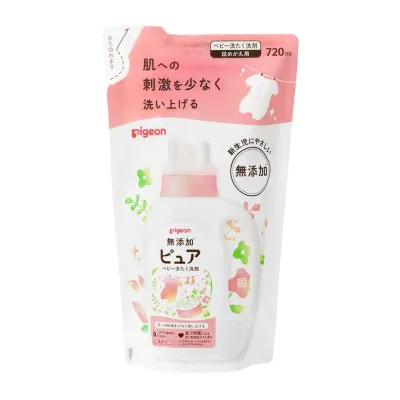
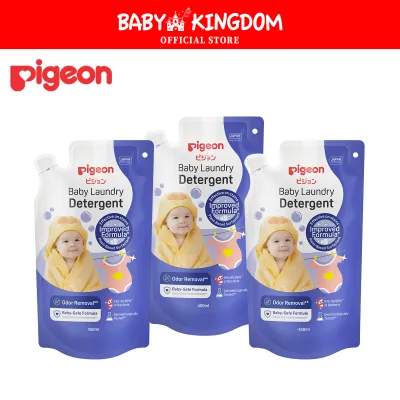
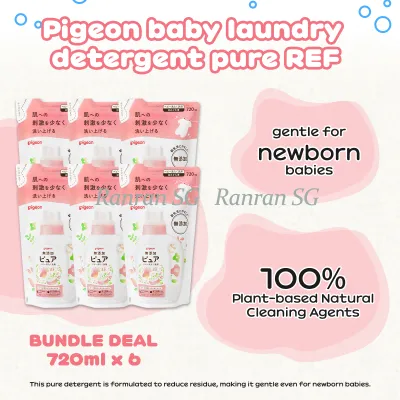
Prices are valid at publication and may change. Please refer to the product page for the latest price.
It is also important to distinguish between standard chemical nomenclature and marketing terms. While the front of the pouch might highlight “natural coconut extract,” the actual ingredient list on the back will use technical names like Potassium Cocoate or Sodium Laureth Sulfate. Understanding this International Nomenclature of Cosmetic Ingredients (INCI) system allows you to identify exactly what chemical compounds will come into contact with your baby’s clothing.
Key Ingredient Categories to Check on the Pigeon Label
To make sense of the chemical names on your Pigeon laundry refill, it helps to group them into functional categories. Baby detergents are formulated differently from standard adult detergents, prioritizing mildness while still attempting to break down organic infant stains.

Surfactants and Cleaning Agents
Surfactants, or surface-active agents, are the core cleaning components of any detergent. They work by lowering the surface tension of water, allowing it to wet fabrics more thoroughly and penetrate fibers to lift away dirt, body oils, and milk residues. On a baby laundry label, you will want to check whether these surfactants are plant-derived or synthetic.
Many baby-specific formulas utilize plant-derived surfactants, such as those derived from coconut or palm oil. These ingredients, which may appear on the label as Lauryl Glucoside, Coco-Glucoside, or Potassium Cocoate, are generally selected because they tend to rinse out of fabric fibers more easily than heavy synthetic alternatives. Ensuring that surfactants rinse away completely is crucial, as any detergent residue left on a baby’s clothes can rub against their skin and cause friction-induced irritation.
Enzymes and Stain Lifters
Biological enzymes are specialized proteins added to detergents to target and break down specific types of organic stains. Because babies are prone to spit-up, milk spills, and diaper leaks, a high-quality baby detergent often relies on these targeted enzymes to clean clothes effectively without requiring harsh scrubbing or high wash temperatures.
When reviewing your Pigeon refill label, look for ingredients ending in “-ase.” Common examples include Protease, which targets protein-based stains like breast milk and formula; Amylase, which breaks down starch-based baby foods; and Lipase, which addresses fats and oils. In Singapore, where most households wash laundry using ambient-temperature water to conserve energy and protect delicate fabrics, these enzymes are highly beneficial because they remain active and effective in cool water cycles.
Preservatives, Fragrances, and Additives
Liquid detergent refills contain a high percentage of water, making them highly susceptible to bacterial and mold growth over time. To ensure the product remains safe and shelf-stable in Singapore’s hot, humid climate, manufacturers must include preservatives. Common preservatives to look for on the label include Phenoxyethanol, Sodium Benzoate, or Methylisothiazolinone.
While preservatives are necessary for product safety, other additives like synthetic fragrances and optical brighteners are purely cosmetic. Optical brighteners are chemical dyes that absorb ultraviolet light and emit blue light, making yellowed fabrics look whiter; however, they are designed to remain on the fabric after rinsing, which can trigger skin reactions in sensitive infants. Carefully check the label to see if the formula contains added “Parfum” or fragrance, as fragrance-free options are generally safer for newborns and infants with highly reactive skin.
Evaluating the Formula for Your Baby's Specific Skin Needs
Once you have decoded the ingredient list on your Pigeon laundry refill, you can evaluate whether the formulation matches your baby’s unique skin profile. Newborn skin is up to thirty percent thinner than adult skin, making it far more permeable to topical chemicals and environmental irritants. If your family has a history of eczema, asthma, or contact allergies, you should cross-reference the detergent’s ingredients with any specific guidance provided by your pediatrician.
Do not rely solely on front-of-pack claims like “hypoallergenic” or “dermatologically tested.” While these terms indicate that the manufacturer has conducted basic safety screening, they are not standardized legal definitions. A product labeled “hypoallergenic” can still contain mild fragrances or specific preservatives that might trigger a reaction in a highly sensitive child. Always verify the actual ingredient list to ensure it is free from common irritants like synthetic dyes, optical brighteners, and strong artificial perfumes.
If your baby currently suffers from active eczema flare-ups, diaper rash, or dry, peeling skin, minimizing chemical exposure is paramount. In these scenarios, opting for a formula with the shortest possible ingredient list—specifically one that excludes fragrances and harsh sulfates—can help prevent further disruption to the skin’s natural moisture barrier.
Safe Usage, Patch Testing, and When to Stop
Introducing a new laundry detergent, even one formulated specifically for babies, should always be done with care. Before washing your baby’s entire wardrobe with a newly purchased Pigeon refill, perform a simple patch test. Wash a single small item, such as a baby mitten or a washcloth, in the new detergent, dry it thoroughly, and place it on your baby’s skin for a few hours. Monitor the area over the next twenty-four to forty-eight hours for any signs of redness, tiny bumps, or unusual dryness.
Proper dosing is also critical to preventing skin irritation. Many modern Singaporean homes utilize high-efficiency (HE) front-loading washing machines, which use significantly less water than traditional top-loaders. If you overdose the detergent in a low-water cycle, the machine may not be able to rinse the soap away completely, leaving a concentrated chemical residue on the clothing fibers. Always follow the dosage guidelines printed on the back of the Pigeon refill pouch, adjusting the amount downward for smaller loads.
If you notice your baby developing unexplained skin redness, hives, dry patches, or if they begin scratching at their clothes, stop using the detergent immediately. Re-wash their current wardrobe using plain water or a known safe, fragrance-free alternative to strip away any lingering residues. If the skin irritation does not clear up within a few days, or if it appears to cause your baby discomfort, consult a qualified pediatrician for a professional evaluation.
Frequently Asked Questions (FAQ)
Can I use Pigeon baby laundry detergent for the whole family's clothes?
Yes, you can safely use Pigeon baby laundry detergent to wash adult clothing, and doing so can be highly beneficial if adults in your household suffer from sensitive skin or eczema. However, keep in mind that baby detergents are formulated to be exceptionally mild, meaning they may struggle to remove heavy adult stains, industrial grease, or strong body odors from synthetic athletic wear. Additionally, because baby detergents are specialized products, using them for the entire household’s laundry will increase your monthly utility and grocery budget, as the cost per wash is typically higher than standard adult detergents.
Does the refill pouch have the exact same ingredients as the original bottle?
In most cases, a brand’s refill pouch is designed to contain the exact same formulation as the original bottled version of the same product line. However, because manufacturers occasionally update their formulas to meet new regulatory standards or improve performance, you should never assume they are identical. Always compare the ingredient list on the back of the refill pouch with the list on your original bottle before mixing them. If you notice a change in the ingredients, it is best to finish the remaining liquid in your original bottle completely and wash the container thoroughly before pouring in the new refill liquid.

Community discussion
Share your experience or ask a question. Comments are reviewed before publication.