
Choosing the right laundry detergent for your baby involves balancing skin safety, stain removal, and household budget. While Pigeon laundry capsules offer a convenient, pre-measured option, comparing them against other baby detergents available in Singapore requires looking past marketing claims. This guide provides a practical framework to help you decode ingredient labels, evaluate real-world cleaning performance, and calculate the true cost per wash, ensuring you make an informed purchase decision based on your family’s specific needs.
Parents in Singapore often find themselves overwhelmed by the sheer variety of baby-specific laundry products on supermarket shelves and online marketplaces. The choice between a modern laundry capsule and a traditional liquid or powder detergent is not merely about convenience; it directly impacts how effectively you can manage common infant skin concerns and stubborn daily stains. By understanding the structural differences between these product formats, you can establish a laundry routine that protects your baby’s delicate skin barrier while keeping household chores manageable.
Understanding Baby Detergent Formulations
When evaluating baby laundry detergents, the ingredient list on the back of the packaging is far more reliable than any front-label marketing claims. Baby skin is significantly thinner and more permeable than adult skin, making it highly susceptible to irritation from harsh chemical residues. Parents should actively check for the presence of potential irritants such as optical brighteners, synthetic dyes, and strong artificial fragrances. Optical brighteners, which are chemical compounds designed to remain on fabrics to make clothes appear whiter and brighter, can sometimes trigger contact dermatitis in infants with sensitive skin.
Products mentioned in this guide
![[2-Pack] Pigeon Baby Laundry Capsule 42Pcs](https://img.lazcdn.com/g/p/f764ebc514e9ff8b00a3be562f37422f.png_400x400q80.png_.webp)
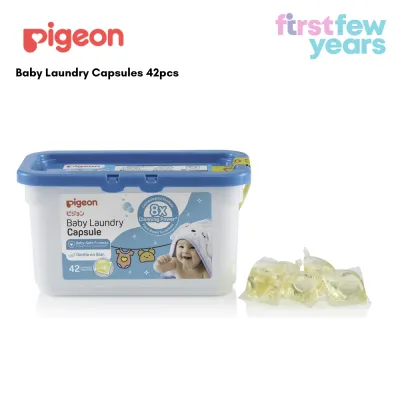
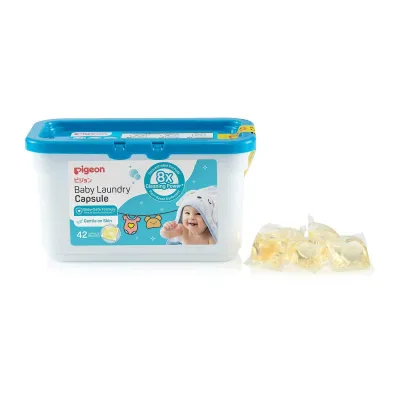
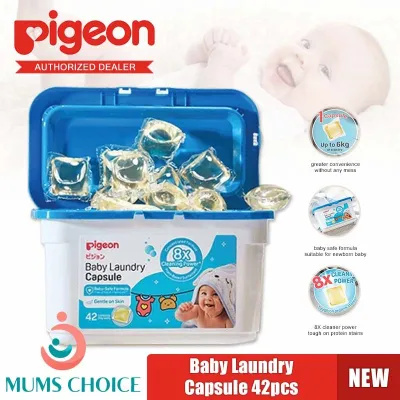
Prices are valid at publication and may change. Please refer to the product page for the latest price.
To verify skin-safety claims, look for recognized dermatological testing seals and hypoallergenic certifications rather than relying on generic self-declared labels. Independent third-party certifications provide a higher level of assurance that the formulation has undergone rigorous safety assessments. Additionally, check if the detergent is formulated with plant-derived surfactants, which tend to be gentler on the skin compared to petroleum-based alternatives. If the product contains enzymes, verify which types are used; while enzymes are highly effective at breaking down organic stains, some highly sensitive babies may react to specific enzyme residues.
Preservatives are another critical component to inspect. Many conventional detergents use strong preservatives like methylisothiazolinone (MIT) or parabens to extend shelf life, but these are known allergens for sensitive skin. Look for formulations that utilize milder, food-grade preservatives or are completely free from these compounds. If your baby has a diagnosed skin condition, such as severe eczema or pediatric dermatitis, it is always advisable to consult a qualified pediatrician or dermatologist before introducing any new laundry product to their garments, regardless of how gentle the packaging claims the product to be.
Evaluating Cleaning Power for Baby Stains
Evaluating the cleaning power of a baby detergent requires understanding the specific types of stains your household encounters daily. Infant clothing is regularly subjected to protein-rich stains like breast milk, formula, and spit-up, as well as complex organic stains from fruit purees, vegetable mash, and diaper leaks. To break down these tough soils effectively without relying on harsh bleaching agents, a detergent typically needs targeted enzymes. For instance, protease enzymes are essential for dismantling protein stains, while amylase helps break down starches from baby food.

The effectiveness of these enzymes is highly dependent on wash conditions, particularly water temperature. Parents should cross-reference the manufacturer’s wash temperature guidelines on the detergent packaging with their washing machine’s cycle capabilities. While many modern baby detergents are formulated to perform well in cold water, some enzymes require slightly warm water—typically between 30°C and 40°C—to activate fully and lift stubborn grease or protein residues. Ensuring your washing machine is set to the correct temperature for the chosen detergent is key to achieving optimal stain removal.
Because water quality and washing machine technology vary across households, checking verified purchaser reviews on local ecommerce platforms can provide valuable real-world context. Look for feedback from other parents in Singapore who share details about their specific washing setups, such as whether they use front-load or top-load machines. Keep in mind that local water is generally soft, which helps detergents lather and rinse away more easily, but cycle settings like “baby care” or “extra rinse” will still play a significant role in the final cleaning outcome and residue removal.
Convenience and Dosage: Capsules vs. Liquids and Powders
The debate between laundry capsules and traditional liquid or powder detergents largely centers on daily convenience and dosing flexibility. Pigeon laundry capsules offer a highly streamlined, pre-measured solution that eliminates the need for measuring cups, reducing the risk of accidental spills and over-pouring. This “toss-and-go” method is incredibly convenient for busy parents managing multiple household tasks simultaneously. However, this convenience comes with a trade-off: capsules do not allow for adjustable dosing. If you frequently wash small loads, hand-wash delicate bibs, or need to pre-treat a single heavily soiled item, a capsule cannot be easily divided, which can lead to product waste.
In contrast, liquid and powder detergents offer complete control over dosage, allowing you to scale the amount of detergent precisely to the size of the laundry load and the level of soiling. This flexibility is particularly useful during the early newborn weeks when laundry loads are frequent but small. However, liquid detergents require careful measurement; using too much can leave a soapy residue on baby clothes, while using too little can result in poor cleaning performance and the buildup of body oils on the fabric.
Safety is another paramount consideration when choosing the capsule format. Because laundry capsules are highly concentrated and often brightly colored, they can pose a serious safety hazard if young children mistake them for toys or candy. It is critical to store all laundry capsules in their original, child-resistant packaging, placed securely on a high shelf or in a locked cabinet completely out of sight and reach of children. Additionally, to prevent skin irritation from undissolved detergent, parents must ensure the capsule film dissolves completely during the wash cycle. This is achieved by placing the capsule directly at the back or bottom of the washing machine drum before loading any clothes on top, allowing maximum exposure to water from the start of the cycle.
Calculating True Value and Cost Per Wash
To determine whether Pigeon laundry capsules or alternative liquid detergents make financial sense for your household, you must look beyond the retail price of the package and calculate the true cost per wash. Comparing a box of capsules directly to a bottle of liquid detergent can be misleading because their concentration levels and recommended dosages differ significantly. A highly concentrated liquid detergent may require only a small capful per load, whereas a diluted alternative might require twice that amount, altering the actual value proposition.
To calculate the cost per wash, use the following straightforward formula:
Cost per Wash (S$) = Total Purchase Price (S$) / Total Number of Standard Wash Loads
For laundry capsules, the calculation is simple because one capsule typically equates to one standard wash load. For example, if a pack of capsules costs S$18.00 and contains 30 capsules, the cost per wash is S$0.60. For liquid detergents, you must divide the total volume of the bottle by the manufacturer’s recommended dosage volume for a standard load to find the total number of washes, then divide the purchase price by that number.
When performing these calculations, remember to factor in variables that affect the final purchase price. Buying in bulk, utilizing subscription savings on local ecommerce platforms, or taking advantage of promotional discounts at local supermarkets can significantly lower your long-term costs. Additionally, consider potential shipping fees for online orders, as heavy liquid bottles or bulky capsule tubs can sometimes incur higher delivery charges if minimum spend thresholds are not met. By standardizing your comparison to the cost per single wash load, you can make an objective financial decision.
Decision Framework: Choosing the Right Baby Detergent
Choosing the right baby laundry detergent ultimately depends on aligning your household’s specific routine, budget, and baby’s skin needs with the strengths of each product format.
Choose Pigeon laundry capsules if:
- You prioritize maximum convenience and want to save time by eliminating measuring and pouring from your daily laundry routine.
- Your household consistently runs standard, full-sized laundry loads that match the pre-measured dosage of a single capsule.
- You have verified the ingredient list on the packaging and are satisfied that the formulation aligns with your baby's skin tolerance.
- The calculated cost per wash fits comfortably within your monthly household budget.
Choose alternative liquid or powder detergents if:
- You frequently run small, partial loads or need to hand-wash delicate baby items, requiring precise control over detergent dosage.
- You require specific heavy-duty enzymes or pre-treatment capabilities to tackle stubborn, set-in stains on a regular basis.
- You want to minimize your environmental footprint or household expenses by purchasing ultra-concentrated liquids in bulk refill pouches.
Verify first if:
- Your baby has a history of severe skin sensitivities, contact dermatitis, or eczema. Before fully transitioning to any new detergent, wash a single garment first, perform a patch test by having your baby wear it, and monitor their skin closely for any signs of redness or irritation. Always consult a qualified pediatrician if you are unsure about specific ingredient safety.
Frequently Asked Questions (FAQ)
Are Pigeon laundry capsules safe for newborn skin?
To determine if Pigeon laundry capsules are suitable for your newborn, you should carefully inspect the product packaging for specific dermatological test marks, age-recommendation labels, and complete ingredient transparency. While many baby-specific detergents are formulated to be gentle, newborn skin is exceptionally delicate and can react to ingredients that are generally considered safe for older infants. If your newborn has highly sensitive skin, a family history of allergies, or shows signs of dryness, it is highly recommended to consult a pediatrician before introducing any new laundry product to their clothing.
Can I use baby laundry capsules for the whole family's clothes?
Yes, you can use baby laundry capsules for the entire family’s laundry, which can greatly simplify your household routine by eliminating the need to separate loads. However, you should consider the cleaning limitations of gentle baby formulations when dealing with heavily soiled adult clothing, stubborn outdoor dirt, or strong sweat odors, as baby detergents may lack the aggressive surfactants needed for these stains. Additionally, because specialized baby detergents often carry a premium price tag, you should calculate the cost per wash in S$ to ensure that using it for all household laundry remains economically practical for your budget.
What should I do if a capsule doesn't dissolve completely?
If you find undissolved capsule residue on your baby’s clothes, it is usually caused by overloading the washing machine, using water temperatures below the manufacturer’s recommended minimum, or placing the capsule incorrectly in the drum. To resolve this, always place the capsule at the very back or bottom of the empty drum before adding the laundry, ensuring it has direct contact with water. If residue occurs, immediately re-wash the affected garments on a warm rinse cycle without adding more detergent to prevent skin irritation, and check your washing machine’s filter for blockages. If the issue persists despite following these steps, stop use and contact the manufacturer for guidance.

Community discussion
Share your experience or ask a question. Comments are reviewed before publication.