
When preparing for a newborn’s arrival, choosing a laundry detergent is just as critical as selecting their skincare. A baby’s skin is incredibly delicate, making it highly susceptible to irritation from chemical residues left on clothing. If you are considering Pigeon Baby Liquid Detergent, you are likely wondering whether its specific formulation is truly safe for your infant’s sensitive skin. Generally, this detergent is formulated with mild, plant-derived cleaning agents designed to minimize skin irritation, but verifying the exact ingredients on your specific packaging remains essential.
Many parents in Singapore opt for the convenient pigeon liquid refill format to keep up with the endless cycles of baby laundry. While the brand is widely trusted, understanding what goes into the formula helps you make an informed decision for your family. By analyzing the active components, safety profiles, and proper washing techniques, you can ensure your newborn’s clothes remain clean, soft, and completely safe to wear.
What Are the Key Ingredients in Pigeon Baby Liquid Detergent?
To evaluate whether a detergent is suitable for a newborn, you must first understand its core components. Baby laundry detergents generally rely on a combination of surfactants, enzymes, preservatives, and sometimes mild fragrances. Surfactants are the primary cleaning agents responsible for lowering the surface tension of water, allowing it to penetrate fabrics and lift away dirt, oils, and organic matter.
Products mentioned in this guide
![Pigeon Baby Laundry Detergent 450ml Refill [New & Improved]](https://img.lazcdn.com/g/p/a4badfa68bfac414453a403e6bcc3ffa.png_400x400q80.png_.webp)
Prices are valid at publication and may change. Please refer to the product page for the latest price.
In premium baby care lines like Pigeon’s, manufacturers frequently prioritize plant-derived surfactants over traditional synthetic alternatives. Plant-derived surfactants, often sourced from coconut or palm oil, are structurally milder on human skin. Traditional synthetic surfactants, such as sodium lauryl sulfate (SLS), are highly effective at stripping grease but can be overly harsh, potentially damaging the fragile skin barrier of a newborn baby.
Enzymes are another common inclusion in modern baby detergents. These naturally occurring proteins target specific types of stains: proteases break down milk and spit-up stains, while amylases target starch-based residues. While enzymes are highly effective at cleaning without requiring harsh scrubbing, some extremely sensitive infants may react to enzyme residues. Therefore, formulations can vary significantly between standard multi-care variants and specialized sensitive skin lines.
Furthermore, chemical formulations are not static; they often vary based on the manufacturing region and the specific product variant you purchase. For example, a formula distributed in one country may contain different preservatives or fragrance profiles than one sold in another. Because manufacturers periodically update their formulations to improve performance or comply with local regulations, you should always inspect the physical product label for the most current ingredient list rather than relying solely on front-of-pack marketing claims.
Are These Ingredients Safe for Newborn Skin?
A newborn baby’s skin is fundamentally different from adult skin. The outer layer, known as the stratum corneum, is up to 30% thinner, making it highly permeable and far more vulnerable to absorbing environmental chemicals. Consequently, any detergent residue left on clothing fibers after a wash cycle can easily migrate to the baby’s skin, potentially causing irritation or allergic reactions.

To minimize this risk, reputable baby detergents are formulated to respect the skin’s natural pH level. Healthy skin is slightly acidic, typically maintaining a pH between 4.5 and 5.5, which forms a protective barrier called the acid mantle. Safe baby detergents are usually pH-neutral or mildly acidic to prevent disrupting this delicate balance. Washing baby clothes in highly alkaline detergents can strip the skin of its natural lipids, leading to severe dryness and vulnerability to pathogens.
In addition to maintaining pH balance, high-quality baby detergents intentionally exclude several common irritants. These typically include phosphates, which are environmental pollutants that can also irritate the skin, and fluorescent brighteners (or optical brighteners), which are designed to remain on fabric fibers to reflect light and make clothes look whiter. Because optical brighteners do not rinse out easily, they are a frequent source of contact dermatitis in infants.
It is vital to understand that terms like “plant-based” or “natural” do not automatically guarantee that a product is universally hypoallergenic. Natural plant extracts, essential oils, and coconut-derived compounds can still trigger allergic reactions in sensitive individuals. Every infant’s immune and skin systems are unique, meaning even the mildest botanical ingredient can occasionally cause a reaction.
As a parent, you should actively monitor your baby’s skin for any signs of irritation or contact dermatitis. These symptoms typically manifest as localized redness, dry or flaky patches, small bumps, or an unexplained rash in areas where clothing rubs closely against the skin, such as the neck, thighs, and wrists. If you observe any of these adverse reactions, establish a strict safety rule: stop using the detergent immediately, wash all affected garments in plain water to remove residues, and consult a pediatrician or dermatologist for professional guidance.
Pigeon Liquid Refill vs. Standard Bottles: Is the Formula the Same?
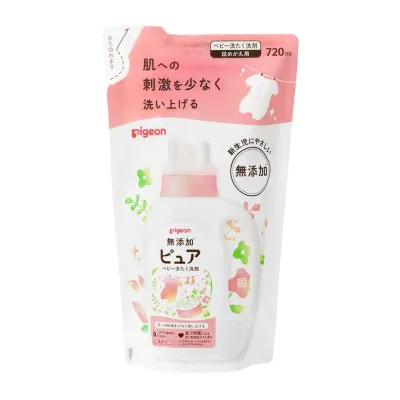
When shopping for baby laundry supplies, you will frequently encounter the pigeon liquid refill pouches alongside the standard rigid plastic bottles. A common concern among parents is whether the packaging type influences the chemical composition, safety, or overall cleaning performance of the detergent. You can rest assured that the liquid refill pouches contain the exact same detergent formulation as the standard bottles.
Choosing the refill format offers several practical advantages, particularly for households in Singapore. In a typical local apartment or HDB flat, storage space is often highly constrained. Flexible refill pouches take up significantly less room in utility closets compared to bulky, rigid plastic bottles. Additionally, purchasing refills reduces overall plastic waste and typically offers a lower cost per wash, helping you manage your household budget more effectively in terms of Singapore Dollars (SGD).
However, utilizing flexible refill packaging requires specific safety precautions. Refill pouches are made of pliable plastic that can easily be squeezed, punctured, or torn by curious toddlers. The bright packaging and liquid contents can be highly appealing to young children, posing severe risks of accidental ingestion, chemical eye exposure, or choking hazards from the plastic caps.
To prevent accidents, always store refill pouches in high, closed cabinets equipped with child-proof locks. If you prefer, you can safely decant the liquid from the refill pouch into an empty, thoroughly cleaned, and clearly labeled original Pigeon detergent bottle. Never pour the detergent into beverage bottles or food containers, as this can lead to dangerous accidental consumption by other family members.
How to Read the Label and Identify Potential Irritants
Empowering yourself to read and understand the ingredient panel on your baby’s detergent packaging is one of the best ways to protect their skin health. When examining a Pigeon detergent label, keep in mind that ingredients are listed in descending order of concentration. The ingredients listed at the very top of the panel make up the majority of the product, while those at the bottom are present in only trace amounts, such as preservatives or fragrances.
It is equally important to demystify common marketing claims found on detergent bottles. Phrases like “hypoallergenic,” “dermatologically tested,” and “pediatrician approved” are designed to reassure consumers, but they have specific meanings. “Hypoallergenic” simply means the product is formulated with ingredients that are less likely to cause allergic reactions; it is not a legal guarantee of zero reactions. “Dermatologically tested” indicates that the product was tested on human subjects under the supervision of a skin specialist to check for irritation, but it does not account for every individual baby’s unique sensitivities.
If your baby has a diagnosed skin condition, such as infant eczema, or has known allergies, you must take extra precautions. Work closely with your pediatrician or dermatologist to identify specific triggers, which often include certain synthetic fragrances, colorants, or specific preservatives like methylisothiazolinone (MIT). Always cross-reference your doctor’s list of identified irritants with the physical ingredient list on the back of the detergent packaging before making a purchase.
Safe Washing Practices for Newborn Clothes
Selecting a mild detergent is only half the battle; how you wash your newborn’s clothes plays an equally critical role in preventing skin irritation. One of the most common mistakes parents make is using too much detergent. Many believe that extra soap results in cleaner clothes, but the opposite is true. Excess detergent creates a surplus of suds that cannot be easily rinsed away, leaving a microscopic layer of chemical residue trapped within the fabric fibers that will rub directly against your baby’s skin. Always follow the manufacturer’s precise dosing instructions based on your load size.
To ensure all traces of surfactants and soil are completely removed, utilize your washing machine’s extra rinse cycle. This is especially important when washing items that have prolonged, direct contact with your baby’s skin, such as cloth diapers, swaddles, fitted crib sheets, and undershirts. If your washing machine allows you to select water temperatures, a warm wash can also help dissolve detergent more effectively, though you should always verify the care labels on the garments first.
Additionally, make it a habit to wash all newly purchased baby clothes, blankets, and towels before their very first use. Brand-new textiles often carry manufacturing dust, chemical finishing agents used to keep fabrics wrinkle-free during shipping, and excess dyes. A quick wash with a gentle baby detergent removes these potential irritants before they ever touch your newborn’s skin.
Finally, maintain a dedicated laundry routine for your infant’s items. Keep baby clothes separate from heavily soiled adult clothing, such as work uniforms, outdoor athletic gear, or pet bedding. Adult garments can carry harsh chemicals, industrial grease, strong perfumes, or pet dander that can easily cross-contaminate your baby’s laundry during a combined wash cycle.
Frequently Asked Questions (FAQ)
Can I use Pigeon baby detergent for the whole family's laundry?
Yes, you can safely use Pigeon baby detergent for the entire household’s laundry. This approach is highly beneficial if adult family members suffer from sensitive skin, eczema, or contact dermatitis. However, keep in mind that baby detergents are formulated to be exceptionally gentle, meaning they may not have the heavy-duty chemical strength required to lift tough adult stains, such as industrial grease, heavy sweat, or deeply embedded outdoor dirt.
Does Pigeon baby liquid detergent contain optical brighteners?
Pigeon baby liquid detergents are generally formulated without optical brighteners to minimize the risk of skin irritation for newborns. Optical brighteners are synthetic chemicals designed to remain on fabrics to make them appear brighter, which can easily trigger contact dermatitis on delicate skin. To be absolutely certain, you should always verify the ingredient list on the specific packaging of the product you are purchasing, as regional formulations can vary.
How should I store the Pigeon liquid refill pouch safely?
In Singapore’s warm and humid climate, storing your pigeon liquid refill pouch correctly is essential to maintain the stability of its formula. Store the pouch in a cool, dry place away from direct sunlight, such as a high laundry cupboard. Always ensure the cap is tightly sealed to prevent moisture from entering. Most importantly, keep the flexible pouch completely out of reach and sight of infants and toddlers to prevent accidental squeezing, ingestion, or choking hazards.

Community discussion
Share your experience or ask a question. Comments are reviewed before publication.