
Quick Answer: Are Pigeon Detergent Ingredients Safe for Babies?
Pigeon baby laundry detergents are formulated specifically for sensitive infant skin and are generally considered safe for washing baby clothes, cloth diapers, and bedding. The brand designs these formulas to lift organic baby stains without leaving harsh chemical residues that could compromise a newborn’s delicate skin barrier.
However, because Pigeon offers multiple product variations—including liquid concentrates, powder formulas, antibacterial options, and unscented lines—the exact ingredient profile varies by specific variant and regional market. While the brand avoids major known skin irritants, parents of babies with diagnosed skin conditions, severe allergies, or eczema should always inspect the physical ingredient label on their specific bottle before use to ensure compatibility with their child’s unique skin needs.
Breaking Down the Formula: Common Ingredients in Pigeon Baby Detergent
Understanding what goes into your baby’s laundry detergent helps demystify how these products clean effectively while remaining gentle. Unlike standard adult detergents, which often prioritize aggressive stain removal using complex synthetic compounds, baby-specific detergents rely on simplified, milder formulations.
Products mentioned in this guide
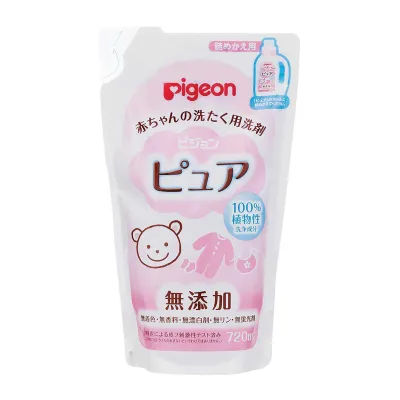
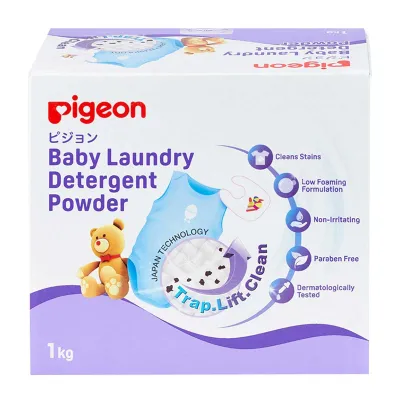
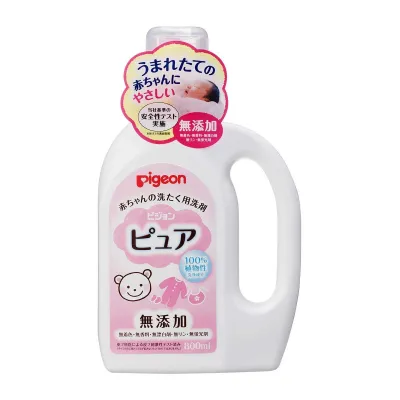
Prices are valid at publication and may change. Please refer to the product page for the latest price.

Cleaning Agents (Surfactants)
Surfactants, or surface-active agents, are the core cleaning components of any laundry detergent. They work by lowering the surface tension of water, allowing it to wet fabrics more thoroughly and penetrate fibers. Each surfactant molecule has a hydrophilic (water-attracting) head and a hydrophobic (water-repelling but oil-attracting) tail. The tail attaches to oily soils, lift them from the fabric, and suspends them in the water so they can be rinsed away.
In Pigeon baby detergents, these cleaning agents are typically mild, plant-derived surfactants, such as those derived from coconut or palm kernel oil (for example, alkyl polyglucosides or mild anionic surfactants). Infant skin is up to 30% thinner than adult skin, making it highly susceptible to absorbing chemical residues left on clothing. By utilizing plant-derived surfactants, these formulas clean fabrics effectively without leaving behind the aggressive synthetic residues common in heavy-duty adult detergents, which can strip the natural lipids from a baby’s skin barrier.
Stain Fighters (Enzymes)
Babies are prone to producing organic, protein-heavy stains from breast milk, infant formula, spit-up, and early solid foods like fruit and vegetable purees. Standard surfactants alone struggle to break down these complex organic proteins. To address this, baby detergents often incorporate specific enzymes—such as proteases to break down protein stains, amylases to target starches, and lipases to break down fats and oils.
These enzymes act as biological catalysts, cutting complex stain molecules into smaller, water-soluble fragments that the surfactants can easily wash away. While enzymes are highly efficient and safe for fabrics, they must be thoroughly rinsed out. If active enzyme residues remain trapped in fabric fibers, they can reactivate when they come into contact with a baby’s sweat, potentially causing localized skin redness or chafing. Consequently, using the correct water volume and ensuring a thorough rinse cycle are essential steps when using enzyme-based detergents.
Shelf-Life and Scent (Preservatives and Fragrances)
Liquid detergents consist primarily of water, which makes them highly vulnerable to microbial contamination once opened. In tropical, high-humidity environments like Singapore, where ambient indoor temperatures frequently hover around 30°C, mold spores, bacteria, and yeast can multiply rapidly inside a detergent bottle. To prevent this, Pigeon formulations include mild, food-grade or cosmetic-grade preservatives (such as sodium benzoate) to maintain product stability and safety over time.
When it comes to sensory appeal, Pigeon offers both lightly scented and fragrance-free options. The scented variants use low-allergen fragrance profiles designed to minimize the risk of respiratory or dermal sensitivity. However, synthetic fragrances remain a common trigger for contact dermatitis in newborns. For infants under three months old, or those with highly reactive skin, opting for Pigeon’s fragrance-free, unscented variants is the safest choice to eliminate unnecessary aromatic compounds from their immediate environment.
What Pigeon Typically Excludes to Protect Sensitive Skin
Equally important to what is inside a baby detergent is what has been left out. Baby-safe laundry formulas are defined by their “free-from” claims, which target specific chemicals commonly found in conventional household detergents that pose risks to infant skin.
- Optical Brighteners: Also known as fluorescent whitening agents, these synthetic chemicals do not actually clean clothes. Instead, they deposit a microscopic film on fabric fibers that absorbs ultraviolet light and emits blue light, making yellowed fabrics appear whiter and brighter. Because these chemicals are designed to remain on the fabric even after rinsing, they are in constant contact with the baby's skin, which can trigger friction-induced irritation and allergic reactions in newborns.
- Phosphates: Historically used to soften water and improve washing efficiency, phosphates are highly irritating to sensitive skin. Furthermore, when discharged into waterways, they contribute to environmental degradation by fueling harmful algal blooms. Pigeon excludes these compounds to protect both infant skin and local aquatic ecosystems.
- Harsh Synthetic Dyes: Artificial colorants are added to adult detergents purely for aesthetic appeal. Because dyes serve no functional cleaning purpose and introduce unnecessary chemical complexity to the formula, Pigeon excludes them to reduce the risk of contact allergies.
- Aggressive Bleaching Agents: Chlorine-based bleaches are highly corrosive to skin and can release irritating fumes that affect a baby's sensitive respiratory tract. Pigeon relies on gentle, plant-based cleaning mechanisms rather than harsh chemical oxidizers.
While these exclusions are standard across most of Pigeon’s baby care lines, parents should remain vigilant. Manufacturers periodically update their formulations, and parallel-imported products from different regions may carry slightly different ingredient profiles. Always cross-reference these “free-from” claims with the physical ingredient list printed on your specific packaging.
How to Verify the Ingredients on Your Specific Pigeon Bottle
Because Pigeon products are distributed globally, bottles sold in Singapore may originate from different manufacturing facilities, including Japan, Indonesia, or Malaysia. This regional distribution means packaging layouts, language, and labeling depth can vary.
To verify the ingredients on your specific bottle, locate the back label. On many Pigeon bottles, the full ingredient list is printed directly on the plastic bottle or on a paper label. In some cases, particularly with Japanese-market imports, the detailed chemical breakdown may be located beneath a peel-back sticker or represented by a QR code that links directly to the manufacturer’s local safety data sheet. Look for specific terms such as “non-ionic surfactants” or “plant-derived cleaning agents” to confirm the gentle nature of the formulation.
If you encounter an abbreviated label that lists broad categories (such as “surfactants 15%” and “preservatives”) rather than individual chemical names, or if the text is in a language you cannot read, take extra precautions. If your baby has a known allergy to a specific compound, contact Pigeon’s authorized local distributor in Singapore to request a complete ingredient disclosure before exposing your child’s clothing to the product.
Best Practices for Washing Baby Clothes Safely
Choosing a gentle detergent is only the first step; how you manage your laundry routine plays a critical role in preventing skin irritation and preserving fabric quality.
Correct Dosing
More detergent does not equal cleaner clothes. Overusing detergent creates an excessive amount of suds that modern high-efficiency (HE) washing machines cannot fully rinse away, leaving a soapy, sticky residue on fabrics that traps dirt and irritates skin. Conversely, under-dosing leaves organic soils behind, allowing bacteria to multiply in the damp fibers. Always use the measuring cap provided and strictly follow the dosage guidelines based on your load size and local water conditions.
The Extra Rinse
To guarantee that all surfactant and enzyme residues are completely flushed from your baby’s clothing, always program your washing machine to run an extra rinse cycle. This is particularly important in Singapore, where front-loading washing machines are common; these machines are highly water-efficient but sometimes require an additional rinse phase to thoroughly clear out dense fabric weaves like cotton swaddles and heavy sleep sacks.
Pre-Washing New Items
Never place brand-new clothes, bedding, or soft toys directly on your baby without washing them first. During manufacturing, packaging, and shipping, fabrics are treated with chemical sizing agents, starches, and anti-wrinkle finishes (which can include formaldehyde) to keep them looking crisp on store shelves. A thorough wash with Pigeon baby detergent removes these industrial residues and any dust accumulated during transit.
Patch Testing
If your baby has highly sensitive or reactive skin, perform a simple patch test before washing their entire wardrobe in a new detergent. Wash a single item, such as a small swaddle or a cotton onesie, using the new detergent. Have your baby wear or use this single item for 24 to 48 hours while monitoring their skin. If you observe any signs of contact dermatitis—such as localized redness, dry patches, or small bumps—discontinue use immediately, wash the item again with plain water, and consult your pediatrician.
Frequently Asked Questions (FAQ)
Can I use regular Pigeon detergent for adult clothes?
Yes, you can safely use Pigeon baby detergent to wash adult clothing. It is highly effective at cleaning everyday garments, particularly delicate fabrics and undergarments that benefit from a milder wash. However, because baby detergents are optimized to target organic, protein-based infant stains, they may lack the heavy-duty synthetic degreasers and chemical solvents required to remove stubborn adult stains, such as industrial grease, heavy makeup, or thick outdoor grime.
Is Pigeon baby detergent suitable for babies with eczema?
While Pigeon offers mild, fragrance-free variants that are designed to minimize irritation on sensitive skin, eczema is a complex medical condition that compromises the skin barrier. What works for one baby may trigger a flare-up in another. If your baby has been diagnosed with eczema, consult your pediatrician or dermatologist before introducing any new laundry product, and always opt for the unscented, dye-free formulas rather than the scented versions.
Do I need to use a fabric softener with Pigeon baby detergent?
It is generally recommended to avoid using standard household fabric softeners on baby clothes. Conventional softeners work by depositing a thin, chemical film (often containing synthetic fragrances and quaternary ammonium compounds) over fabric fibers to make them feel slick. This film can irritate sensitive skin and significantly reduce the natural absorbency and breathability of cotton baby clothes and cloth diapers. If you feel a softening agent is necessary, choose a specialized, plant-based baby fabric softener, use it sparingly, and ensure the items undergo a thorough rinse cycle.

Community discussion
Share your experience or ask a question. Comments are reviewed before publication.