
Choosing a laundry detergent for your newborn requires careful attention to ingredients, as a baby’s skin is significantly thinner and more sensitive than adult skin. Pigeon baby detergents are popular choices for parents, but verifying the specific formulation on your product’s packaging is essential to ensure it meets your newborn’s needs. By understanding how to read the label and identifying key ingredient categories, you can make an informed decision that keeps your baby’s clothes clean and their skin comfortable.
How to Locate and Verify the Ingredient List
To ensure you know exactly what goes onto your newborn’s clothing, start by examining the physical packaging of your Pigeon baby detergent. The complete ingredient list is typically printed on the back or side panel of the bottle or refill pouch. Because formulations can change or vary by region, checking the physical label of the specific bottle in your hands is the most reliable way to verify what is inside.
If the packaging has limited space or uses regional language terms, you can consult the official Pigeon website for your region or contact their customer service department directly. Requesting a detailed safety data sheet or formulation disclosure can clarify any unfamiliar chemical names. This step is particularly important because a product purchased in Singapore may have a slightly different formulation or ingredient concentration compared to versions imported from other countries.
Products mentioned in this guide
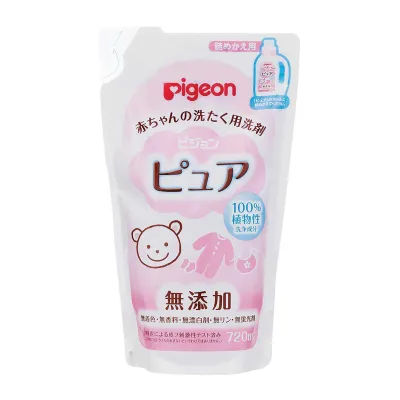
Prices are valid at publication and may change. Please refer to the product page for the latest price.
Keep in mind that Pigeon offers multiple product lines, including liquid detergents, powder detergents, and specialized laundry tablets. Each of these formats relies on different chemical structures to maintain stability and cleaning power. Always verify the exact product variant you own rather than relying on general online reviews or outdated ingredient lists. Additionally, check for any batch numbers or manufacturing dates printed on the container, as these can help customer support provide the exact formulation details for your specific bottle.
Evaluating Detergent Safety for Newborn Skin
When assessing any baby detergent, it is helpful to look past broad marketing terms like “hypoallergenic,” “gentle,” or “baby-safe.” While these labels indicate the manufacturer’s intended use, they are not standardized medical terms. To truly evaluate safety, you must look at the actual chemical profile listed on the back of the packaging.

Many manufacturers seek third-party dermatological testing or pediatrician recommendations to support their mildness claims. Look for specific seals or statements on the Pigeon packaging that indicate the formula has undergone dermatological testing. These certifications suggest the product was evaluated for skin irritation potential under controlled conditions, though they do not guarantee a complete absence of reactions.
It is important to recognize that skin safety is highly individual. A detergent that works perfectly for one newborn might trigger mild irritation or dryness in another, especially if your baby has an underlying condition like eczema. Rather than searching for a universally perfect product, focus on identifying formulas with minimal additives and learning how to monitor your baby’s skin for individual sensitivity. Understanding your baby’s unique skin barrier is the most effective way to choose a compatible product.
Key Ingredient Categories to Check on the Label
Understanding the basic components of a baby detergent makes reading the ingredient list much easier. Most formulations consist of a few primary categories: cleaning agents to remove dirt, additives to improve scent or appearance, and stabilizers to keep the product fresh. By breaking down these categories, you can quickly identify which ingredients are necessary and which ones you might prefer to avoid. This systematic approach allows you to make confident decisions when comparing different baby care products on the shelf.
Surfactants and Cleaning Agents
Surfactants are the active cleaning agents that lift dirt, oils, and organic stains from fabric fibers so they can be washed away. On your Pigeon detergent label, look to see if the surfactants are plant-derived, such as those sourced from coconut or palm, or petroleum-based. Plant-derived surfactants are often preferred for baby laundry because they tend to degrade easily and can be formulated to be exceptionally mild on sensitive skin.
When reviewing the surfactant names on the label, you may see terms like alkyl ether sulfate or cocamidopropyl betaine. You can cross-reference these specific names with manufacturer safety databases or consumer safety guides to verify their mildness profiles. If the label only lists broad terms like “anionic surfactants,” you can contact the manufacturer to request the specific chemical names if your baby has known skin allergies. Knowing the exact surfactant type helps you avoid ingredients that have previously caused skin dryness or irritation in your family.
Fragrances, Dyes, and Optical Brighteners
Fragrances and dyes are common cosmetic additives that make laundry smell fresh and look clean, but they serve no functional role in removing dirt. For newborns, many pediatricians recommend choosing fragrance-free and dye-free detergents to minimize the risk of contact dermatitis. Check the Pigeon label to confirm whether the product contains added perfumes or artificial colorants, or if it is explicitly marked as dye-free.
Optical brighteners are chemical compounds that absorb ultraviolet light and emit blue light, making fabrics appear whiter and brighter. These chemicals are designed to remain in the fabric fibers after rinsing, which means they stay in direct contact with your baby’s skin. If you want to avoid these residues, check the product packaging to ensure it is formulated without optical brighteners. Even natural essential oils used for fragrance can sometimes trigger reactions, so a completely unscented option is often the safest starting point for a newborn.
Preservatives, Enzymes, and Stabilizers
Liquid detergents require preservatives to prevent the growth of bacteria, mold, and yeast in the bottle over time. Common preservatives must be carefully balanced to ensure they protect the product without causing skin sensitization. When checking the label, look for the specific preservatives used and verify that they comply with modern safety standards for baby care products.
Enzymes are biological catalysts added to detergents to break down tough organic stains, such as milk, formula, or baby food. While enzymes are highly effective at cleaning, some babies with extremely sensitive skin may react to residual enzymes left on clothing. If your Pigeon detergent contains enzymes, you can minimize potential irritation by ensuring the clothes undergo a thorough rinsing process. Some parents prefer to use enzyme-free formulas for the first few weeks of a newborn’s life, transitioning to enzyme-containing formulas only when the baby starts eating solid foods and producing tougher stains.
Monitoring Your Newborn's Skin Reaction
Even when using a highly rated baby detergent, the ultimate test of safety is how your newborn’s skin reacts in daily life. When washing your baby’s clothes with a new detergent for the first time, consider running a simple patch test. Wash just one or two garments, such as a bodysuit or a swaddle blanket, and have your baby wear them for a few hours while you monitor their skin.
Observe your baby closely for any visible signs of skin irritation, particularly in areas where clothing fits snugly or where sweat accumulates, such as the neck, thighs, and armpits. Look for localized redness, dry or flaky patches, tiny bumps, or unexplained fussiness that might indicate itching or discomfort. If you notice any of these signs, it is best to stop using the detergent immediately.
If a skin reaction occurs, temporarily switch to washing your baby’s clothes in plain water or a known hypoallergenic, fragrance-free alternative. If the irritation does not clear up within a few days, or if it appears to cause your baby significant discomfort, consult a pediatrician or a pediatric dermatologist. They can help determine whether the reaction is related to the laundry detergent or another environmental factor. Remember to also wash any bedding, towels, or adult clothing that frequently comes into contact with your baby’s skin using the same gentle washing method.
Frequently Asked Questions (FAQ)
Can I use regular Pigeon detergent for a newborn?
Regular household detergents often contain stronger surfactants, synthetic fragrances, and optical brighteners designed for heavy adult soils, which can be too harsh for a newborn’s delicate skin barrier. Pigeon’s baby-specific detergent lines are formulated with milder cleaning agents and fewer potential irritants to reduce the risk of skin reactions. Always check the product label to ensure the specific bottle you are using is explicitly formulated and labeled for infant use. If you are washing the entire family’s laundry together, switching everyone to a gentle baby-safe formula can help protect your newborn from residue on adult clothes.
Do I need to double-rinse baby clothes washed with Pigeon detergent?
While Pigeon baby detergents are formulated to rinse away cleanly, running an extra rinse cycle is a highly effective precaution for newborns. This is especially helpful if your baby has extremely sensitive skin, if you live in an area with hard water, or if you are washing heavily soiled items that required a slightly larger dose of detergent. Checking the usage instructions on your specific Pigeon bottle will provide the manufacturer’s recommended dosage to help prevent excess residue build-up. Ensuring your washing machine is not overloaded also helps the rinse cycle work more efficiently.

Community discussion
Share your experience or ask a question. Comments are reviewed before publication.