
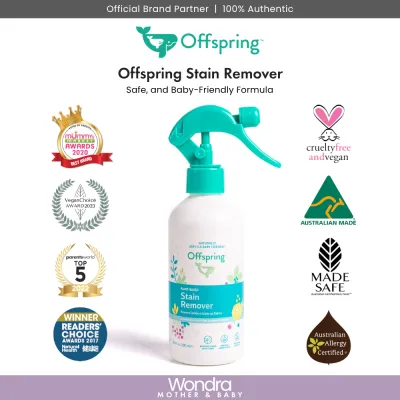
To determine if Offspring stain remover is safe for baby clothes, parents must evaluate its specific ingredient deck against known infant skin irritants. While the brand positions itself as a baby-friendly option, formulations can change over time, making a manual check of the product label and safety data sheets essential. Infant skin is significantly thinner and more permeable than adult skin, meaning any residue left on fabrics can easily cause contact dermatitis or irritation.
In warm and humid climates like Singapore, sweat can react with fabric residues, further exacerbating skin sensitivities. Consequently, relying on general brand reputation is not enough; parents must learn how to read and verify the actual ingredient deck of any product that comes into contact with infant garments. This guide outlines how to audit the ingredients of Offspring stain remover and establish a safe laundry routine for your household.
How to Verify the Exact Ingredient List
To confirm what is inside your bottle of Offspring stain remover, always start with the physical product label. The back-of-bottle ingredient deck is the most legally binding and accurate representation of what is in that specific batch. Because retail stock can sometimes sit on shelves or in warehouses through formulation transitions, the physical bottle in your hand is always more reliable than online marketing copy.
Products mentioned in this guide
Prices are valid at publication and may change. Please refer to the product page for the latest price.
For a deeper look into the chemical safety profile, search the manufacturer’s official website for the Safety Data Sheet (SDS) or a dedicated ingredient disclosure page. An SDS provides comprehensive details regarding chemical stability, potential hazards, and first-aid measures that are often omitted from standard retail packaging. If this document is not readily downloadable, contacting the brand’s customer service department directly is a reliable way to request the most current formulation sheet.
It is vital to recognize that front-label marketing terms such as “natural,” “plant-based,” “eco-friendly,” or “hypoallergenic” are not strictly regulated in the cleaning product industry. A product labeled “natural” may still contain plant-derived compounds that are known skin sensitizers or allergens. True safety verification requires looking past these promotional claims and auditing the specific chemical names listed in the fine print.
Identifying Baby-Safe Cleaning Agents
When reviewing the ingredient list of a baby-safe stain remover, look for mild, plant-derived surfactants. Surfactants are the primary cleaning agents that lift dirt and oils from fabric fibers. Look for non-ionic surfactants derived from coconut or corn, such as coco-glucoside, decyl glucoside, or lauryl glucoside, which clean effectively without leaving harsh, irritating residues on the fabric.

Enzymes are another highly effective category of ingredients for treating organic baby stains. Specific enzymes target different types of soil: proteases break down protein-based stains like breast milk, infant formula, and spit-up, while amylases target starch-based stains from baby food and purees. While enzymes are generally safe and highly efficient at low temperatures, they must be thoroughly rinsed out of the fabric to prevent any potential skin irritation in highly sensitive newborns.
A safe formulation should also maintain a neutral or slightly acidic pH that closely matches the natural pH of human skin, which sits around 5.5. Highly alkaline cleaning agents can disrupt the skin’s acid mantle, leading to dryness, redness, and increased susceptibility to infections. Checking if the manufacturer specifies a pH-balanced formula can help ensure the treated clothing remains gentle against your baby’s skin.
Finally, verify that the product is completely free of optical brighteners. These synthetic chemicals do not actually clean clothes; instead, they deposit a microscopic chemical film on the fabric fibers that reflects ultraviolet light to make garments appear whiter and brighter. This chemical residue remains on the clothing after washing and can rub off onto your baby’s skin, potentially causing contact dermatitis, especially in warm, humid climates where sweat increases skin permeability.
Harsh Chemicals to Cross-Check on the Label
Synthetic fragrances and phthalates are among the most common triggers for skin allergies and respiratory irritation in infants. Manufacturers often use the generic term “fragrance” or “parfum” on labels to protect proprietary scent blends, which can mask dozens of individual synthetic chemicals. Even natural essential oils, while derived from plants, contain volatile organic compounds like limonene or linalool that can trigger sensitive infant skin and should ideally be avoided in newborn laundry.
Preservatives are necessary in liquid cleaning products to prevent the growth of bacteria and mold, but some are far too harsh for baby clothes. Avoid products containing parabens or isothiazolinones, such as methylisothiazolinone (MI) and methylchloroisothiazolinone (MCI). These compounds are powerful contact allergens that have been restricted in many cosmetic applications but can still appear in household cleaning products.
Chlorine-based bleaching agents should also be avoided in baby laundry. While highly effective at removing stains and whitening fabrics, chlorine bleach is incredibly harsh on delicate cotton fibers, causing them to degrade prematurely. Furthermore, any lingering chlorine residue can cause severe skin irritation, respiratory discomfort, and can react negatively with other household cleaning agents.
Lastly, check the label for synthetic dyes and harsh sulfates like Sodium Lauryl Sulfate (SLS) or Sodium Laureth Sulfate (SLES). Dyes are purely aesthetic additions that serve no functional purpose in removing stains, yet they introduce unnecessary chemical exposure to your baby’s skin. Sulfates, while effective at creating foam, are highly stripping and can damage the lipid barrier of sensitive skin if not completely rinsed from the fabric.
Safe Application and Patch Testing Steps
Before applying any stain remover to a highly visible area of your baby’s clothing, perform a hidden patch test. Apply a single drop of the diluted product to an inconspicuous area, such as an inside seam, hem, or the inner lining of a pocket. Allow it to sit for the manufacturer’s recommended duration, rinse it thoroughly, and let it dry completely to check for any fabric discoloration, color bleeding, or structural damage to the fibers.
Always adhere strictly to the manufacturer’s recommended dwell time when treating stains. Leaving a concentrated stain remover on fabric for longer than directed—or letting it dry completely into the fibers—can lock the chemical residues into the weave, making them incredibly difficult to rinse out. Once the dwell time is complete, wash the garment thoroughly, and consider running an extra rinse cycle to ensure all active cleaning agents are completely flushed from the fabric.
Caregivers must remain vigilant for any stop-use indicators during and after the laundering process. If you notice persistent chemical odors on the dry clothing, fabric stiffness, or unexpected color fading, discontinue use of the product. Most importantly, monitor your baby’s skin closely; any localized redness, dry patches, hives, or signs of discomfort where the treated clothing touches their skin are immediate signals to stop using the product and re-evaluate your laundry routine.
Frequently Asked Questions (FAQ)
Do I need a dedicated stain remover for baby clothes?
While it is possible to manage basic laundry with a single gentle detergent, a dedicated baby-safe stain remover is highly beneficial for targeted treatment. Standard adult detergents and stain removers are formulated to tackle heavy industrial soils, synthetic oils, and outdoor dirt, often relying on aggressive surfactants, optical brighteners, and heavy synthetic perfumes. These ingredients are highly unsuitable for the delicate skin of infants.
Baby stains are unique, consisting primarily of organic proteins, fats, and starches from milk, formula, spit-up, and early solid foods. A dedicated baby stain remover is specifically formulated to target these organic bonds using mild surfactants and targeted enzymes. This allows you to spot-treat stubborn messes effectively without exposing the rest of the garment—or your baby’s skin—to unnecessary, harsh systemic chemicals.
What should I do if my baby develops a rash after washing?
If your baby develops a skin rash, hives, or dry, itchy patches, stop using the suspected stain remover or detergent immediately. Strip the baby’s bedding and clothing, and re-wash them in hot water without any detergent, or use a double-rinse cycle with a known safe, fragrance-free alternative to remove any lingering chemical residues. Keep the baby in loose-fitting, untreated cotton clothing to minimize further friction and irritation.
Monitor the rash closely and consult a pediatrician or qualified dermatologist for an accurate diagnosis and treatment plan. Do not apply over-the-counter medicated creams, steroid ointments, or heavy lotions without professional medical guidance, as these can sometimes exacerbate contact dermatitis on compromised infant skin. Keep a detailed log of any new household products, including detergents, soaps, or fabric softeners, to help your doctor identify the potential trigger.

Community discussion
Share your experience or ask a question. Comments are reviewed before publication.